









You don't need a fancy gym or a whole room full of machines to get a great workout. Seriously, just a pair of dumbbells can take you pretty far. They're super accessible, and you can hit pretty much every muscle group with them. Think about it – you can work your arms, legs, chest, back, and core, all with these simple weights. It's a really efficient way to train, especially if you're short on time. Instead of spending hours splitting your workouts by body part, a full-body dumbbell session gets a lot done in a shorter period. This approach can lead to solid gains in strength and muscle size, especially when you're starting out or just want to keep things streamlined.
Key Takeaways
- Dumbbell workouts are great for building strength all over and also help with balance and stability.
- Using dumbbells for exercises that work one side of your body at a time helps fix strength differences and makes you move better overall.
- To get the most out of your dumbbell workouts, focus on doing the moves right and picking weights that challenge you.
- Full body dumbbell exercises are efficient, meaning you can work many muscles in one session, saving you time.
- Consistency is key; keep at it and adjust your weights as you get stronger to keep seeing results.
Essential Dumbbells For Your Home Workout
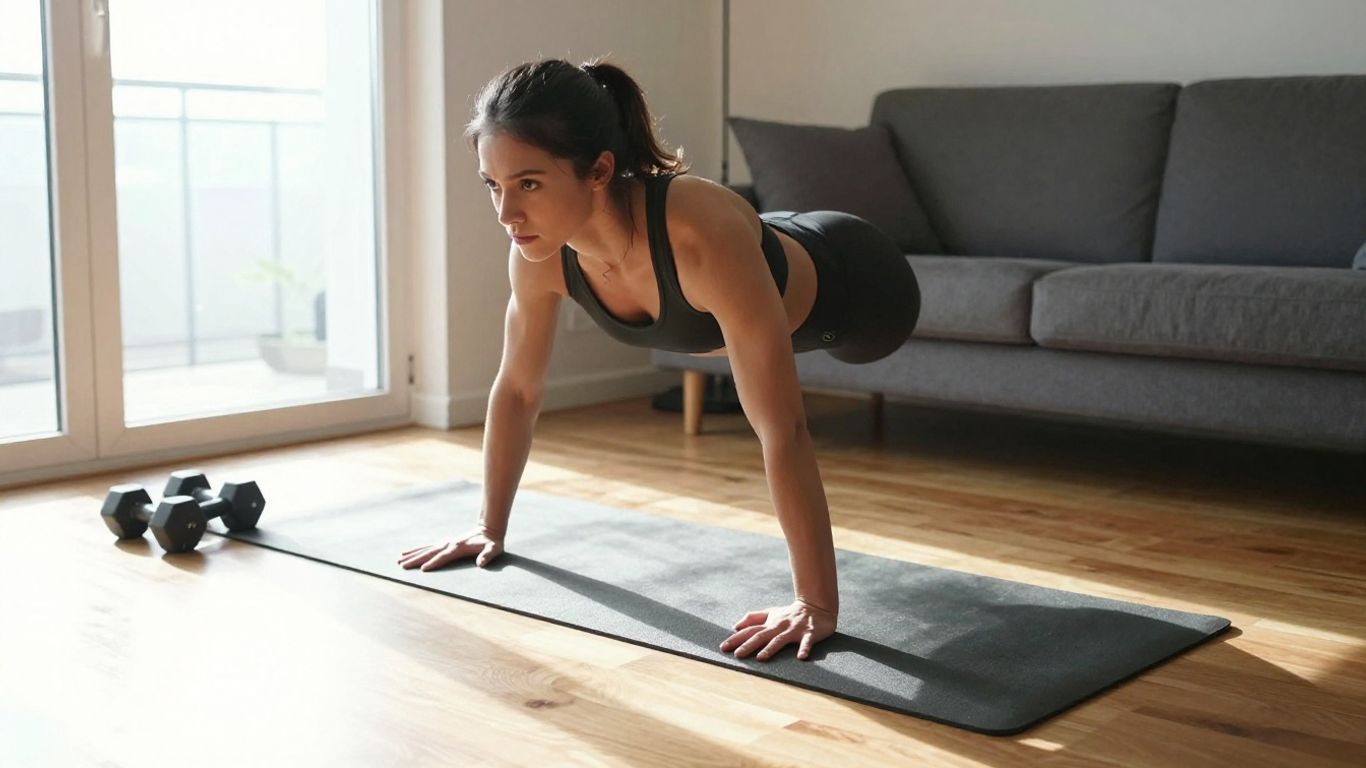
You don't need a fancy gym or a whole room full of machines to get a great workout. Seriously, just a pair of dumbbells can take you pretty far. They're super accessible, and you can hit pretty much every muscle group with them. Think about it – you can work your arms, legs, chest, back, and core, all with these simple weights. It's a really efficient way to train, especially if you're short on time. Instead of spending hours splitting your workouts by body part, a full-body dumbbell session gets a lot done in a shorter period. This approach can lead to solid gains in strength and muscle size, especially when you're starting out or just want to keep things streamlined.
Selecting The Right Dumbbell Weight
Everyone wonders: how heavy should these dumbbells be? Start with something you can control for the whole set without your form breaking down, but not so light it feels like a breeze. If you finish your reps and think you could’ve done twice as many, bump it up a bit. On the flip side, if you’re swinging or straining to finish, that’s too much weight. Try challenging yourself every few weeks by going up a notch—progress is the point. The goal is to find a weight that challenges you by the last few reps but allows you to maintain good form throughout.
Here's a general guide to help you pick the right weight:
- Beginner: Focus on learning the movements. Lighter weights (5-15 lbs) are good for upper body, while slightly heavier (15-25 lbs) might be suitable for lower body exercises.
- Intermediate: You're comfortable with most exercises and can handle more resistance. Weights might range from 15-30 lbs for upper body and 30-50 lbs for lower body.
- Advanced: You have solid strength and technique. You might be using weights from 30+ lbs for upper body and 50+ lbs for lower body, depending on the specific exercise.
Remember, this is just a starting point. Your individual strength will vary. It's always better to start lighter and increase as needed. You can find reliable options like the CAP Barbell Rubber Hex Dumbbell in various weights to suit your progression.
Beginner To Advanced Weight Recommendations
Choosing the correct weight is key to making progress and staying safe. It's not just about lifting the heaviest thing you can find; it's about picking a weight that allows you to complete your target repetitions with good form. If you can easily do more reps than prescribed, the weight is too light. Conversely, if you struggle to complete the minimum number of reps or your form breaks down significantly, the weight is too heavy.
Here’s a sample table to give you an idea:
| Exercise | Beginner (lbs) | Intermediate (lbs) | Advanced (lbs) |
|---|---|---|---|
| Goblet Squat | 15-25 | 30-45 | 50+ |
| Overhead Press | 10-20 | 25-35 | 40+ |
| Romanian Deadlift | 15-30 | 35-55 | 60+ |
| Bicep Curl | 8-15 | 20-30 | 35+ |
| Dumbbell Bench Press | 10-20 | 25-40 | 45+ |
Picking the right weight is a balance. You want to feel challenged by the last few reps of each set, but not so challenged that your form suffers. As you get stronger, gradually increase the weight or the number of reps you do. This principle, known as progressive overload, is what drives muscle growth and strength gains over time.
Don't be afraid to experiment a little to find what feels right for each exercise. What feels heavy for a squat might feel light for a bicep curl. Listen to your body, focus on controlled movements, and you'll be well on your way to a great workout.
Preparing For Your Full Body Workout Routine At Home With Dumbbells
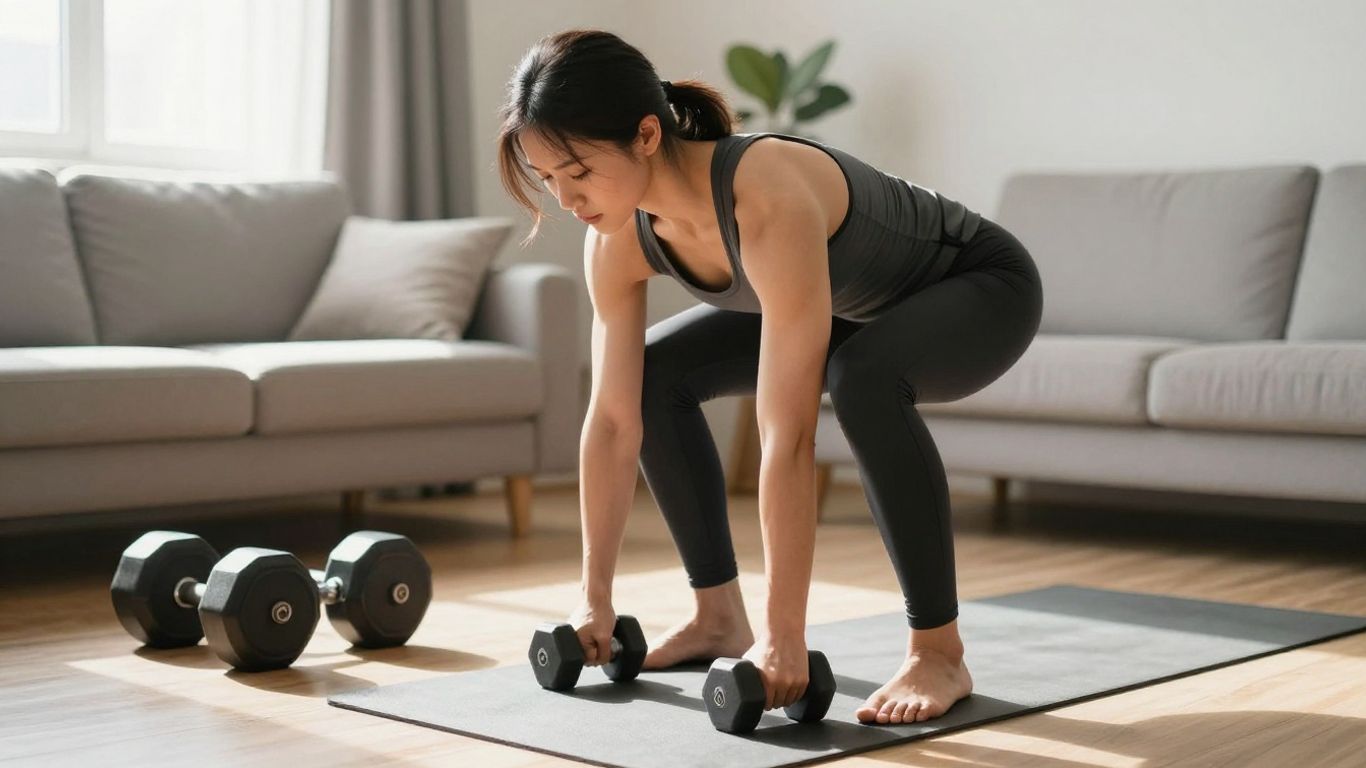
Before you even think about picking up those dumbbells for your main workout, it's super important to get your body ready. Think of it like prepping your car for a long road trip – you wouldn't just hop in and go, right? Same idea here. We need to wake up those muscles and get your mind in the game.
Dynamic Warm-Up Movements
Forget static stretching where you just hold a position. For a workout like this, we want to get your blood flowing and your joints moving through their full range of motion. This helps prevent injuries and makes your actual workout feel way better. Here are a few things to get you started:
- Single-Dumbbell Halo: Grab a lighter dumbbell (maybe 5-10 lbs) and hold it with both hands. Slowly circle it around your head, keeping your core tight. Go in one direction for about 10 reps, then switch directions. This gets your shoulders and upper back ready.
- Rear Delt Fly: With a light dumbbell in each hand, hinge at your hips like you're about to do a bent-over row, but keep your arms mostly straight. Let the dumbbells hang down, then lift them out to the sides, squeezing your shoulder blades together. Do about 10 reps. This targets those often-neglected muscles in the back of your shoulders.
- Dumbbell Goblet Squat (Light): Hold a lighter dumbbell vertically against your chest. Perform a few squats, focusing on going as deep as you comfortably can. Aim for about 10 reps. This primes your hips, knees, and ankles for the heavier squats to come.
- Elbow Plank: Get into a plank position on your forearms. Hold it for about 30 seconds, focusing on keeping your body in a straight line from head to heels. This wakes up your core muscles.
Importance Of Body Awareness
This is a big one, and honestly, it's something people often skip. Knowing how your body feels and moves is key to getting the most out of your workout and staying safe. It's about listening to your body, not just pushing through pain.
When you're doing an exercise, pay attention to what muscles are working. Are you feeling it in your glutes during a squat, or is it mostly in your knees? Is your back rounding during a row, or are you feeling it between your shoulder blades? This feedback is gold. It tells you if you need to adjust your form, lighten the weight, or maybe even take a rest day. Don't just go through the motions; be present with every single rep. This mindful approach will make a huge difference in your results and help you avoid common workout injuries.
Compound Dumbbell Exercises For A Complete Physique
Compound dumbbell exercises are the backbone of a solid home workout. They hit more than one muscle group at once, saving you time while building balanced strength. Instead of moving just your arms or legs, you're getting your heart rate up, breaking a good sweat, and making real progress—all with a couple of dumbbells.
Lower Body Strength With Goblet Squats
Goblet squats might look simple, but don't judge too soon. You hold one dumbbell at your chest and drop into a deep squat, then push back up. This move brings your thighs, glutes, and even your core into the game—no machines needed.
Key points to remember:
- Keep your elbows tucked in.
- Push your knees out as you lower down.
- Avoid letting your heels lift off the ground.
| Experience | Recommended Weight (lbs) |
|---|---|
| Beginner | 15–25 |
| Intermediate | 30–45 |
| Advanced | 50+ |
Doing goblet squats regularly wakes up muscles in your hips and core you probably didn’t even know you had.
Upper Body Power Through Dumbbell Presses
The dumbbell press is pretty much the king for upper body work at home. Whether you do them on a bench or the floor, both your chest and shoulders work hard. Your triceps join in too.
To get the most out of your presses:
- Keep your shoulders down and back.
- Lower the dumbbells slowly so you don’t bounce or strain.
- Drive the weights up with power, but control the top of the movement.
Presses come in a few versions:
- Floor press (if you don’t have a bench)
- Seated or standing overhead press
- Alternating arm press for more core focus
Back Development With Bent-Over Rows
No pull-up bar? No problem. Bent-over rows with dumbbells make sure your back muscles don’t get left out. You’re working everything from your middle back down to your lower back and even your arms a bit.
A few things to check your form:
- Hinge from your hips, not your lower back.
- Keep your chest lifted to keep from rounding your back.
- Squeeze your shoulder blades together every rep.
Add these compound moves to your routine a few times a week. Mix and match to stay interested, or pair them up for a full-body rush. The combo of squats, presses, and rows? That’s your ticket to stronger, more capable muscles, even when you’re just working out at home.
Maximizing Your Full Body Dumbbell Workout Efficiency
So, you've got your dumbbells and you're ready to get after it. That's great! But how do you make sure every single session counts? It's not just about lifting the weights; it's about being smart with how you do it. We're talking about getting the most bang for your buck, time-wise and effort-wise.
The Power Of Complexes
Think of complexes as a circuit, but you don't put the dumbbells down between exercises. You pick up your weights and go through a series of moves back-to-back, only resting after you've finished the whole sequence. This is a fantastic way to pack a lot of work into a short amount of time. It really challenges your endurance and keeps your heart rate up, giving you a bit of a cardio blast along with your strength training. It also forces you to focus on smooth transitions between movements, which is good practice for real-life activities.
Unilateral Training Benefits
Working one limb at a time, like with single-arm rows or lunges, is called unilateral training. This is super important because most of us have a stronger side. When you do exercises that work both sides equally, your stronger side often takes over. Unilateral work makes each side work on its own, helping to even out strength differences. This leads to better balance, improved coordination, and can even help prevent injuries by creating a more balanced body. Plus, it mimics everyday tasks like carrying a heavy bag or lifting a child, making you stronger for daily life.
Functional Fitness Enhancements
Functional fitness is all about training your body for real-life activities. Dumbbells are perfect for this. Exercises like farmer's walks, where you just hold heavy dumbbells and walk, build grip strength and core stability. Goblet squats and lunges mimic movements like sitting down and walking upstairs. By focusing on these types of movements, you're not just building muscle; you're building a body that's more capable and resilient for whatever life throws at you. It's about practical strength, not just looking good at the beach (though that's a nice bonus too!).
Being deliberate with your movements is key. Don't just go through the motions. Focus on controlling the weight through the entire range of motion, both on the way up and the way down. This mindful approach makes a huge difference in how effective your workout is and helps keep you safe.
Structuring Your Dumbbell Training Schedule
Alright, so you've got your dumbbells, you've warmed up, and you're ready to crush some workouts. But how often should you actually be doing these things? And how do you make sure you're getting stronger over time? Let's break it down.
Frequency For Optimal Recovery
When you're training at home with dumbbells, finding the right balance between working out and resting is key. You don't want to be so sore you can't move, but you also want to give your muscles enough stimulus to grow. For a full-body routine, hitting each muscle group 2-3 times a week is usually a good sweet spot. This allows for enough recovery time between sessions.
- Beginner: Aim for 2 full-body workouts per week, with at least one rest day in between.
- Intermediate: You might be able to handle 3 full-body workouts per week, again, making sure there's a day of rest between each.
- Advanced: Some folks can manage 4 sessions, but this often involves splitting the body or using different training styles on different days to avoid overtraining.
Listen to your body. If you're feeling run down or your performance is dropping, take an extra rest day. It's better to be consistent than to push too hard and get injured.
Progressive Overload Techniques
Just doing the same workout over and over won't get you very far. To keep seeing results, you need to challenge your body a bit more each time. This is called progressive overload, and it's the main driver of strength and muscle gains. With dumbbells, there are a few ways to do this:
- Increase the Weight: This is the most obvious one. If you can comfortably complete your target reps with good form, it's time to grab slightly heavier dumbbells for your next session.
- More Reps: Stick with the same weight, but try to do more repetitions within your set. For example, if you usually do 10 reps, aim for 11 or 12.
- More Sets: Add an extra set to your exercises. If you were doing 3 sets, try doing 4.
- Decrease Rest Time: Shorten the rest periods between your sets. This makes the workout more metabolically demanding.
- Improve Form/Tempo: Sometimes, just slowing down the eccentric (lowering) part of a lift or focusing on a tighter contraction counts as a challenge.
The goal isn't to lift the heaviest weight possible right away. It's about making small, consistent improvements over time. Think of it like climbing a ladder; each rung represents a slightly harder challenge that gets you closer to your fitness goals.
Here’s a simple way to track your progress:
| Workout Date | Exercise | Weight (lbs) | Reps | Sets | Notes |
|---|---|---|---|---|---|
| 2026-03-30 | Goblet Squat | 30 | 12 | 3 | Felt good |
| 2026-04-02 | Goblet Squat | 30 | 14 | 3 | Pushed hard |
| 2026-04-06 | Goblet Squat | 35 | 10 | 3 | New weight |
Advanced Dumbbell Complexes For Conditioning
Alright, so you've built a solid foundation with the previous complexes. Now it's time to really push your conditioning and see what you're made of. These advanced complexes are designed to get your heart pumping and test your endurance, all while keeping things interesting with dumbbell work. Remember, the goal here is to keep moving through the exercises with minimal rest until the complex is complete. This is where you'll see some serious improvements in your overall fitness.
Complex One: Strength and Endurance
This first complex is all about combining strength movements with a bit of a grind to build up that muscular endurance. You'll be moving through cleans, push presses, and front squats. Focus on using your legs for power on the cleans and push presses, and really brace your core during the front squats. The key is to maintain good form even when you start to feel fatigued.
- Dumbbell Clean: 5 sets of 3 reps. Explode through your hips to bring the dumbbells up.
- Dumbbell Push-press: 5 sets of 3 reps. Use your legs to drive the weight overhead.
- Dumbbell Front Squat: 5 sets of 3 reps. Hold the dumbbells at your chest and squat deep.
Rest for 60-90 seconds between rounds.
Complex Two: Power and Agility
Ready to get a little quicker and more explosive? This complex focuses on movements that demand speed and coordination. We're talking about exercises that will challenge your ability to move fast and stay controlled. This is a great way to work on your athleticism. You can find some great dumbbell workout plans to help structure this type of training here.
- Alternate Hammer Curl (Split Stance): 2 sets of 10 reps per arm. Keep your torso upright.
- Single-Arm Standing Shoulder Press (Split Stance): 2 sets of 10 reps per arm. Focus on a stable base.
- Split Jump: 2 sets of 20 reps. Explosive jumps switching legs.
- Dumbbell Thruster: 2 sets of 10 reps. A squat combined with an overhead press.
Rest for 60 seconds between rounds.
Complex Three: Core and Stability
Now, let's really zero in on that core and overall stability. These exercises might not look like typical core work, but trust me, you'll feel it. We're going to work through movements that require you to stabilize your body under load, which is super important for everything you do.
When performing these, focus on keeping your core tight throughout each movement. Think about bracing your abs as if you were about to get punched. This will protect your spine and make the exercises much more effective for building true core strength.
- Dumbbell Single-Arm Snatch: 2 sets of 10 reps per arm. Keep your core tight and posture solid.
- Dumbbell Farmer's Carry: 2 sets of 100 feet. Try to lean into the weight to stay upright.
- Turkish Get-Up: 2 sets of 8 reps per arm. Focus on a smooth, controlled movement.
- Renegade Row: 2 sets of 10 reps per arm. Widen your stance for better hip stability.
Wrapping It Up
So, that's the rundown on getting a solid full-body workout right at home with just a couple of dumbbells. You don't need a fancy gym or a ton of equipment to make real progress. Stick with these moves, focus on doing them right, and don't be afraid to push yourself a little as you get stronger. Building strength takes time, but every single workout counts. It's not about being perfect, it's about showing up and putting in the effort. Whether you're just starting out or you've been exercising for a while, this routine can help you build muscle, feel more balanced, and just generally feel better. So grab those dumbbells, get moving, and see what you're capable of!
Frequently Asked Questions
Can I get a good full-body workout using only dumbbells?
Absolutely! Dumbbells are super versatile. You can work almost every muscle in your body using just a pair of them. They help you get stronger all over and even improve your balance and how well your body works together for everyday tasks.
What are the main benefits of using dumbbells for exercise?
Dumbbells are great because they make your muscles work harder to keep you steady. This helps prevent injuries and makes your movements smoother. Plus, they let you move your arms and legs in ways that feel more natural, which is awesome for your overall fitness.
What kind of dumbbells should I start with?
For beginners, it's best to pick weights that let you do about 12 to 15 reps while keeping good form. Usually, something between 5 to 25 pounds is a good starting point. As you get stronger, you can always move up to heavier ones.
How do I make sure I'm doing the exercises correctly?
Focusing on how you move is super important. Make sure you're in control of the weight throughout the whole exercise. It's better to use a lighter weight and do it right than to use a heavy one and risk getting hurt or not working the right muscles.
How often should I do dumbbell workouts?
For a full-body workout, doing it 2 to 3 times a week is usually a good plan. Make sure you have rest days in between so your muscles can recover and get stronger. Listening to your body is key!
What if I want to make my workouts harder over time?
That's called progressive overload! You can do this by using slightly heavier dumbbells, doing more repetitions, or doing more sets. You can also try different workout techniques, like doing fewer reps with a heavier weight or doing exercises faster but with control.


0 comments