











Most people shopping for a trampoline size are actually asking two different questions at once. One is about a backyard trampoline for kids, where the number describes a big steel ring in the grass. The other is about an indoor rebounder you will stand on for twenty minutes before work. The measurements sound similar. The decisions are not.
This piece is about the second one. If the yard is what you are sizing up, read our guide to choosing the right round trampoline size for your backyard instead. If you are choosing a mini trampoline for fitness, the diameter changes how the bounce feels, how much room you need around it, and whether accessories will fit. Here is how to think it through before you spend money on the wrong number.
How trampoline size is measured
The size on the label is almost always the outside frame diameter, measured edge to edge across the widest point. It is not the bounce surface. On any rebounder, the mat sits inside the frame, and between mat and frame you have bungees or springs plus a protective cover. That perimeter eats into the number you paid for.
So a rebounder described as 40 inches gives you a jump surface noticeably smaller than 40 inches across. Same with 48. This matters for two reasons:
- Foot placement. The usable mat is where you land, and a bigger frame buys you more of it.
- Floor space. The frame diameter, plus feet or legs that may splay outward slightly, is what your floor has to accommodate.
If you are comparing two products with different numbers, check what each brand is measuring. If a listing only quotes a mat size, that is a different measurement than a frame size, and comparing them directly will mislead you.
Round, square and octagonal
Round is the standard shape for fitness rebounders because the tension pulls evenly toward the centre, which naturally guides you back to the middle of the mat. Square and octagonal models exist and give you slightly more surface in the corners, but they also give you corners, which is where a foot can land on an uneven part of the mat. For bouncing in place, round is the simpler choice.
What actually changes when the diameter grows
People assume a bigger rebounder means a higher bounce. That is not really it. Bounce height comes from the tension system, the bungees or springs, and your own force. What diameter changes is margin for error.
More room for your feet
On a smaller mat, your feet are close together and close to the perimeter. That is fine for a steady jog in place. Start doing jumping jacks, twists, side to side steps or anything where your feet travel outward, and the extra inches on a larger mat stop feeling like a luxury.
A wider stance feels safer
If you are tall, heavier, over 60, returning from an injury, or simply nervous about balance, a wider frame gives you a bigger target. You do not have to think about where the edge is. That single thing is why a lot of people who tried a small rebounder years ago and gave up do better on a larger one.
The trade is footprint and portability
Every inch of diameter is an inch you have to store, carry and step around. A smaller rebounder slides under a bed or behind a couch more easily and moves between rooms without a second thought. A larger one tends to live where you put it. Neither is wrong. Be honest about whether it is going to stay out or get put away, because a trampoline in a closet gets used roughly never.
The measurement most people forget: ceiling height
Nobody asks about vertical clearance until their knuckles find a light fixture. Do this before you order:
- Stand where the rebounder will go and measure floor to ceiling.
- Subtract the height of the mat off the floor when someone is standing on it. The mat sinks under load, so this is less than the frame height on paper.
- Subtract your own height.
- What is left is your bounce room, and you want more of it than you think. A health bounce, where your feet barely leave the mat, needs very little. Anything with knees up, arms overhead or a genuine jump needs plenty.
Basements, converted attics and rooms with sloped ceilings are where this goes wrong. Also check what is above the exact spot: pendant lights, ceiling fans, sprinkler heads, smoke detectors. Move the rebounder a foot to the left rather than living with a hazard over your head.
Floor space: the frame plus a working perimeter
The frame diameter is a minimum, not a plan. You need space to get on and off, space to set a water bottle where you will not kick it, and clearance so your elbows do not meet a bookshelf on a lateral move. Give yourself room to swing your arms out to the sides at full extension while standing on the mat.
Two practical notes. First, tape the diameter out on the floor with painter's tape before buying. It takes two minutes and it is much more convincing than a number on a screen. Second, measure your doorways and stairwell turns if the rebounder ships assembled or gets assembled somewhere other than its final home.
Size and accessories have to match
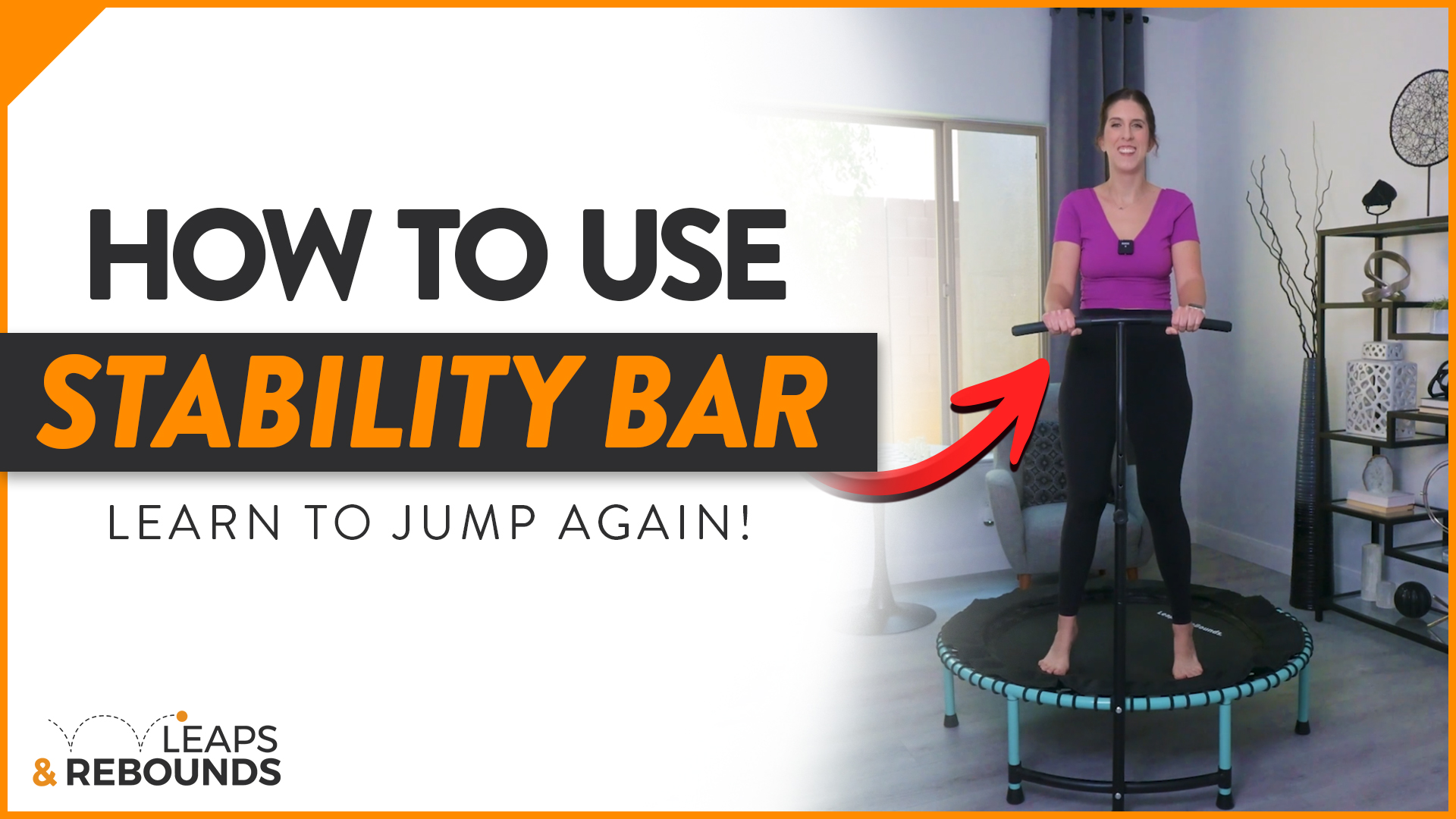
This is the part that catches people out. A stability bar is not universal. It clamps or mounts to a specific frame, so a bar built for one diameter will not fit another. If you want a handle to hold, choose the trampoline and the bar as a set rather than adding one later and hoping.
For a 40 inch frame, the matching option is the 40 inch fitness trampoline stability bar. For a 48 inch frame, you want the 48 inch fitness trampoline stabilizer bar. Same idea, different frame, not interchangeable.
A bar is worth considering if any of the following is true for you: you have balance concerns, you are coming back from a knee or ankle issue, you want to do single leg work, or you would simply bounce more confidently with something to hold for the first few weeks. Plenty of people use one at the start and stop reaching for it later. It is easier to have it and not need it.
Bungee count and tension matter as much as diameter
Once you have settled the size question, the feel of the bounce comes down to the tension system. Bungee rebounders are quieter than spring models and give a softer, deeper landing, which is the whole point for low impact work. More bungees around a larger perimeter distributes load more evenly. If you can, stand on any rebounder you are considering and shift your weight around the mat. Notice whether the resistance feels consistent as you move off centre.
A short way to decide
- Tight on space, want it stored between sessions, mostly gentle bouncing and jogging in place: the smaller diameter is fine and will get used more because it is easy to move.
- Room to leave it out, taller or heavier frame, balance concerns, or you plan on varied workouts with a wide stance: go larger and do not look back.
- Genuinely between the two: pick the larger one. Nobody complains about extra mat. People do complain about feeling like they are jumping on a dinner plate.
Trampoline sizes are worth thinking about for ten minutes and not worth agonising over for a week. Measure your ceiling, tape your floor, match your accessories to the frame, then get on it and bounce. If you are still weighing indoor against outdoor, the backyard sizing guide covers the outdoor side, and there are more rebounding guides on the blog once you have your size sorted.


0 comments