











If you type "biological fitness" into a search bar, you get two very different answers stacked on top of each other. One comes from evolutionary biology and has nothing to do with your workout. The other is what most people actually mean: how well your body is functioning compared to how well it should be functioning for your age.
Both are worth understanding, because the biology definition explains why the second one matters at all.
What biological fitness means in biology
In evolutionary biology, fitness is a measure of reproductive success. An organism with high fitness passes on more of its genes to the next generation. That is the whole definition. It is not about strength, speed, or endurance except where those traits happen to help an organism survive long enough to reproduce and raise offspring.
This trips people up because the word carries a gym connotation in everyday English. In biology, a slow, unremarkable animal that produces many surviving offspring has higher fitness than a fast, powerful one that produces none. Fitness is the outcome, not the effort.
Absolute fitness and relative fitness
You will see two versions of the term. Absolute fitness describes how much an individual's genetic contribution changes from one generation to the next. Relative fitness compares one individual or genotype against others in the same population. Relative fitness is the more useful of the two for describing natural selection, because selection works on differences, not raw numbers.
Either way, none of this tells you whether to do cardio on Tuesday. So why does the phrase keep showing up in fitness searches?
Why people search "biological fitness" and mean something else
The everyday use borrows the biology framing and points it at the individual. In that sense, biological fitness means the condition of your body's systems, your heart, lungs, muscles, bones, and nervous system, measured against the demands of ordinary life rather than against a photo.
It is a more honest question than "am I in shape." Being in shape is a look. Biological fitness is a set of capacities: can you carry the groceries up two flights, can you catch yourself when you trip, can you recover from a hard day without needing three days off.
This is also where the idea of biological age comes from. Chronological age is the number of birthdays. Biological age is an estimate of how your body is actually holding up. Two people the same age can be years apart in how their heart, muscles, and balance perform. That gap is the part you have some control over.
The traits that carry the most weight
If you want to train biological fitness in the practical sense, a short list does most of the work.
- Aerobic capacity. How much work your heart and lungs can sustain. This is the single trait most associated with how well people function later in life.
- Muscle mass and strength. Muscle is metabolically active tissue and it protects joints. It is also the thing that quietly disappears if nothing asks it to stay.
- Balance and proprioception. Your ability to know where your body is in space and correct when it drifts. This one is easy to ignore until it is gone.
- Bone loading. Bone responds to being loaded. Sitting does not load it.
- Recovery. How quickly you return to baseline. A body that recovers well can train more often, and frequency is where progress lives.
Notice what is not on that list: body weight on its own, or how you look in a mirror. Those correlate loosely with the traits above and get treated as if they are the traits themselves.
Frequency beats intensity for most people
Here is the practical problem. The traits above respond to regular, repeated stimulus. Not to one brutal session a month. The people who improve their functional capacity are almost always the people who moved often, not the ones who trained hardest in short bursts and then stopped.
Which means the real constraint is not motivation. It is whether the thing you chose is something you can do four or five times a week without your knees, back, or schedule filing a complaint. Running builds excellent aerobic capacity and is brutal on joints that are already unhappy. Lifting builds strength and requires setup, space, and a warmup. Walking is sustainable and light on the aerobic side unless you push the pace or find hills.
Where rebounding fits
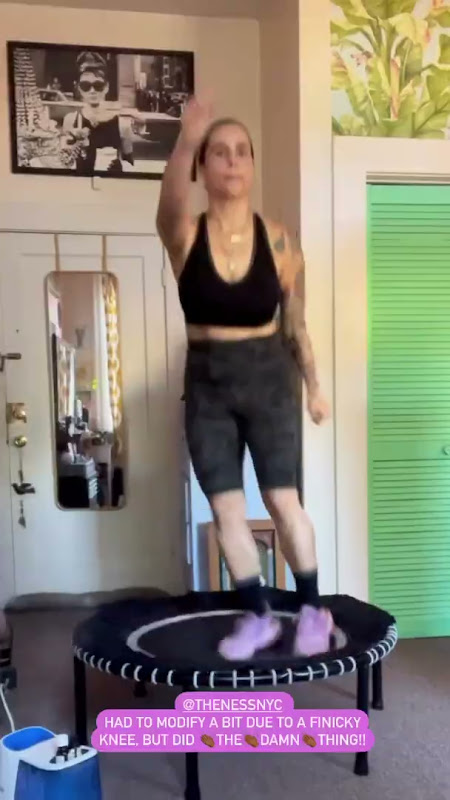
A bungee rebounder covers an unusual amount of that list at once. The bungee cords absorb impact instead of sending it up through your ankles and knees, so the joint cost per session is low. Your heart rate climbs quickly, because you are moving your whole body against gravity in a continuous rhythm. And the surface is unstable in a small, manageable way, which means your ankles, hips, and core are making constant micro corrections. That is balance training you do not have to schedule separately.
It also solves the frequency problem, which is the one that actually decides outcomes. A rebounder sits in your living room. There is no drive, no changing room, no weather. Ten minutes is a real session. That is not a small detail. It is the difference between training three times a week for years and training hard for six weeks in January. If you are new to it, the workout breakdowns and beginner guides on the Leaps and Rebounds blog will give you something to follow for the first month.
Balance work only helps if you stay on the mat
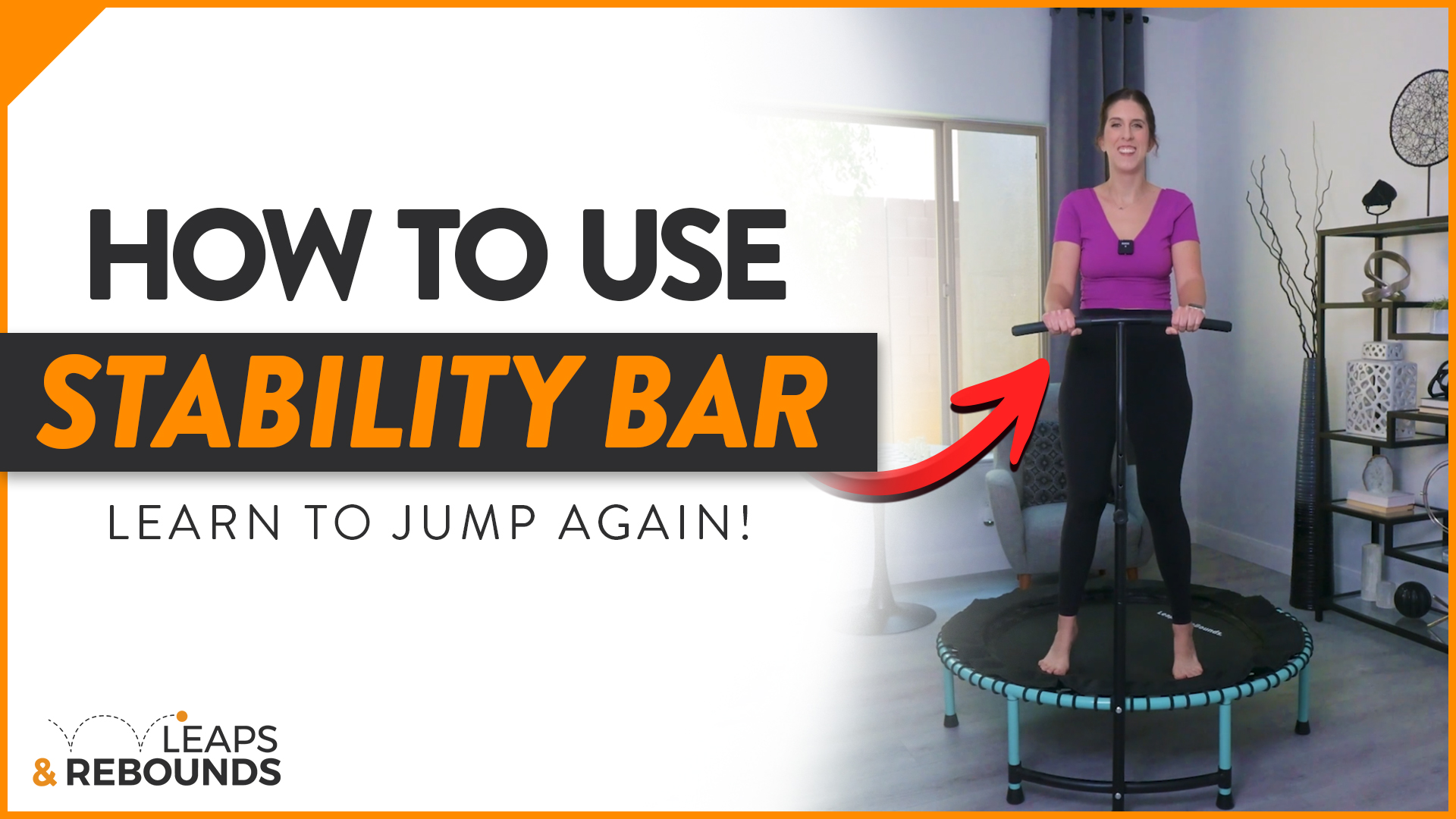
If balance is one of the traits you are trying to build, and it should be, you need a way to work near the edge of your ability without falling off it. That is the case for a stability bar. It gives you something to hold while you try single leg work, twists, or higher intensity intervals, and then you let go once you trust the movement.
Match the bar to your rebounder size. The 40 inch fitness trampoline stability bar pairs with the smaller mat, and the 48 inch fitness trampoline stabilizer bar fits the larger one. Both do the same job: they make the first few weeks less nervous, and later on they let you train harder than you would risk without a handhold.
If you are older, returning from an injury, or simply have not done anything on an unstable surface in years, get the bar. The point of balance training is to spend time slightly off balance, and you will do far more of that when the consequence of a wobble is your hand tightening on a rail.
A reasonable weekly shape
Nothing complicated. Most weeks, aim for:
- Three or four short rebounding sessions, mixing steady bouncing with harder intervals
- One or two strength sessions, bodyweight or weights, whatever you will actually do
- Some walking, ideally outside
- At least one session where you deliberately challenge balance, single leg work or eyes-closed holds with the bar in reach
That is enough to move the traits that define biological fitness in the practical sense. It is not enough to make you an athlete, and it is not trying to be.
The honest limits
Training changes your capacity. It does not stop time, and no exercise reverses aging in any literal sense. Genetics, sleep, food, stress, and luck all have a say. Anyone selling you a guaranteed number of years back is selling something.
What is reasonable to expect is that the gap between what your body can do and what you would like it to do gets smaller, and that it stays smaller for longer. That is a modest claim, and it is the one worth training for. For more on building a routine you will keep, read the rest of our articles here.


0 comments