









So, you want to get stronger and bigger, huh? That's awesome. But sometimes, just hitting the gym hard without a plan can lead to burnout or even injury. We've all been there, right? You go all out for a few days and then need a week off. That's not the way to do it. If you're looking for a solid 7-day gym workout plan to build muscle effectively, you've come to the right place. We're going to break down how to structure your week so you can hit those gains without wrecking yourself. It’s all about being smart with your training and recovery.
Key Takeaways
- A structured 7-day gym workout plan helps prevent burnout and injury by balancing training with rest.
- Clearly define your fitness goals (muscle gain, strength, etc.) to tailor your workout schedule.
- Listen to your body; a 7-day split means each workout can be shorter, but recovery is even more important.
- Proper nutrition, especially adequate protein and calorie intake, is vital for muscle repair and growth on a demanding schedule.
- Consistency and gradual progression are more important than pushing yourself too hard every single day.
1. Bench Press
Alright, let's talk about the bench press. This is a king among exercises for building up your chest, shoulders, and triceps. It's one of those moves that just feels powerful when you do it right. Getting your form dialed in is super important here, not just for hitting those muscles effectively, but also for staying safe.
When you're setting up, make sure your feet are flat on the floor, driving through your heels. Squeeze your glutes – seriously, clench them – and pull your shoulder blades back and down. This creates a stable base and helps protect your shoulders. Lower the bar to your mid-chest, then press it straight back up. Don't bounce it off your chest, and try not to let your elbows flare out too wide. The descent should be controlled, taking about 2-3 seconds, while the press back up should be more explosive.
Here’s a quick rundown on how to approach it:
- Setup: Lie on the bench with your eyes under the bar. Grip the bar slightly wider than shoulder-width.
- Execution: Unrack the bar, lower it slowly to your chest, and then press it back up powerfully.
- Breathing: Take a big breath before you lower the bar, hold it as you press, and exhale at the top.
It's a compound movement, meaning it works multiple muscle groups at once, which is why it's so good for overall upper body strength. You'll see it in a lot of different workout splits, often on chest day or as part of a full-body routine. Getting a solid bench press foundation can really set you up for success in other lifts too. Remember, consistency is key. Aim for a weight that challenges you within the target rep range, but don't sacrifice form for heavier weight. It's better to do fewer perfect reps than more sloppy ones. Mastering the bench press involves precise form for maximum gains and safety. Key technique elements include maintaining an elbow angle of 70-75° from the torso, avoiding excessive tucking or splaying. This optimal position engages chest muscles effectively while minimizing strain. You can find more details on proper technique for the barbell bench press.
A balanced program uses both compound and isolation exercises. Compound lifts build the foundation, while isolation exercises refine and add detail. Using a mix of free weights, different types of dumbbells, specialized strength machines, versatile cable systems, and bodyweight exercises provides diverse challenges for optimal results.
2. Squats
Alright, let's talk about the squat. This exercise is often called the king of all exercises, and honestly, it's not hard to see why. It hits a huge number of muscles all at once, especially in your legs and glutes, but your core gets a serious workout too. Getting the form right is pretty important before you start loading up the bar, though.
When you're squatting, aim to bring your thighs to about parallel with the floor. That's usually a good target for building muscle. It's not just about how low you go, but how you control the whole movement, both on the way down and on the way back up. Mastering the basic barbell squat is a foundational step for many other lifts.
Here’s a simple way to think about performing a barbell back squat:
- Setup: Get the barbell onto your upper back, resting it on your traps. Your feet should be about shoulder-width apart, with your toes angled out just a bit.
- Descent: Keep your chest up and your back straight. Lower yourself by bending your knees and pushing your hips back, like you're trying to sit down in a chair.
- Depth: Keep going down until your thighs are at least parallel to the ground. Watch that your knees track over your toes and don't let them cave inward.
- Ascent: Push through your heels to get back to the starting position. Squeeze your glutes hard at the very top.
Practicing with just the bar or even bodyweight squats first is a smart move if you're new to this. You can also explore different squat variations later on, like front squats or goblet squats, to work your muscles in slightly different ways. The main thing is to get the basic barbell squat down pat.
Remember, consistency really matters. Try to include squats in your leg workouts regularly to see the best results. Don't be shy about starting with lighter weights to really nail the technique. If you're looking to rapidly increase your squat max, implementing a structured strength program that includes progressive overload and a frequency of 2-3 times per week can make a big difference. This approach can lead to significant improvements.
3. Deadlifts
The deadlift is a powerhouse exercise, hitting almost everything from your hamstrings and glutes all the way up your back and even your grip. If you're looking to build overall strength and muscle, this lift is pretty much a must-do. It mimics real-life movements like picking things up, so it translates well beyond the gym.
Getting the form right is the most important part. You don't want to be messing around with bad technique, especially when you start adding weight. Focus on keeping your back straight and your chest up throughout the entire lift.
Here’s a basic rundown:
- Stand with your feet about hip-width apart, with the barbell over the middle of your feet.
- Hinge at your hips and bend your knees to grip the bar just outside your knees. Keep your back flat.
- Drive through your heels and push your hips forward to lift the bar. Keep it close to your body.
- Lower the bar with control by hinging at your hips first, then bending your knees.
Here’s a general idea for sets and reps, but remember to adjust based on your own strength and goals:
| Level | Sets x Reps | Rest |
|---|---|---|
| Beginner | 3 x 8-10 | 2-3 minutes |
| Intermediate | 4 x 6-8 | 2-3 minutes |
| Advanced | 4-5 x 4-6 | 3-5 minutes |
Don't rush the process. It's better to do fewer reps with perfect form than to try and lift too much weight with sloppy technique. Your back will thank you later. Warm-ups for your hips and hamstrings can make a big difference before you start pulling heavy.
If you're struggling with grip, consider using straps or chalk. Sometimes, plateaus happen because of weak grip strength or not warming up properly. Mastering the barbell deadlift is a journey, so be patient and consistent.
4. Pull-Ups
Pull-ups are a serious test of your upper body strength. They really hit your lats, biceps, and back muscles hard. When you first try them, they might seem impossible, and that's okay. You're lifting your entire body weight, after all. It takes practice.
Getting better at pull-ups is all about consistency and building up that strength gradually.
Here’s a breakdown of how to approach them:
- Start with assistance: If you can't do a full pull-up yet, use an assisted pull-up machine or resistance bands. This lets you practice the movement pattern with less weight.
- Focus on form: Aim for a full range of motion. Go all the way up until your chin clears the bar, and then lower yourself slowly and under control. Don't just drop.
- Build volume: Even if you can only manage a few reps, do multiple sets. Try to add one or two reps each week. Small gains add up.
Here’s a general guideline for sets and reps, but adjust based on your current ability:
| Level | Sets x Reps | Rest |
|---|---|---|
| Beginner | 3 x 3-5 | 90-120 sec |
| Intermediate | 3 x 6-10 | 90-120 sec |
| Advanced | 3 x 10-15 | 90-120 sec |
Don't get discouraged if pull-ups feel tough right now. Every single rep you complete is a step towards a stronger upper body. If you're looking for ways to improve your pull-up game, there are specific exercises that can help build the necessary strength to progress from beginner to advanced levels.
Pull-ups are a fantastic bodyweight exercise. They build a strong back and arms. The key is to stick with it, even when it feels hard. Progress might be slow, but it's definitely achievable with regular effort and the right approach.
5. Lunges
Lunges are a seriously effective exercise for your legs and glutes. They work your quads, hamstrings, and glutes all at once, and they're great for improving your balance too. You can do them with just your body weight, or add dumbbells for an extra challenge.
Here's the basic idea:
- Stand up straight, holding dumbbells at your sides if you're using them.
- Take a big step forward with one leg. Lower your body until both knees are bent at about a 90-degree angle. Your front knee should be right over your ankle, and your back knee should be close to the floor.
- Push off with your front foot to get back to where you started.
- Switch legs and do it again. Keep alternating sides.
It's a good idea to start with bodyweight lunges to get the form right. Once you feel steady, you can grab some weights. There are also variations like reverse lunges and walking lunges that can mix things up. Lunges are a compound movement, meaning they hit multiple muscles, making them super efficient for building strength and burning calories. Don't skip these!
When you're performing lunges, focus on keeping your torso upright. This helps to isolate the target muscles and prevents you from leaning too far forward, which can put unnecessary strain on your lower back. Proper form is key to getting the most out of this exercise and staying injury-free.
There are tons of ways to switch up your lunges to keep things interesting and target muscles differently. Exploring different lunge variations can help you address any imbalances and build more well-rounded leg strength.
6. Dumbbell Shoulder Press
The dumbbell shoulder press is a solid choice for building up those deltoids, the muscles that give your shoulders their shape and strength. It's a compound movement, meaning it works more than one joint, which is great for overall muscle development. Using dumbbells allows for a more natural range of motion compared to barbells, potentially leading to better muscle engagement.
When you're doing these, think about pressing the weight straight up, but also slightly back, as if you're pushing it towards the ceiling behind you. This helps target the front and side parts of your shoulder more effectively. Keep your core tight throughout the movement to keep your body stable. Don't let your lower back arch too much; that's a sign you might be using too much weight or not controlling the descent.
Here’s a general idea of how to approach it:
- Setup: Sit on a bench with back support, or stand with your feet shoulder-width apart. Hold a dumbbell in each hand at shoulder height, palms facing forward.
- Press: Exhale and press the dumbbells straight up overhead until your arms are almost fully extended. Keep the movement controlled.
- Lower: Inhale and slowly lower the dumbbells back to the starting position.
For building muscle, aim for a weight that challenges you within the rep range. You don't want to go too light, or you won't stimulate growth. On the flip side, lifting too heavy with bad form can lead to problems. A common rep range is 8-12 reps for 3-4 sets. This exercise is great for building shoulder strength and size, and it can also help improve your posture. Remember, dumbbells offer greater range of motion and allow for independent arm movement, which can lead to increased muscle activation and potentially better results [c308].
It's easy to get caught up in lifting heavy, but don't forget about the quality of each rep. Focus on feeling the muscles working, and if you feel any sharp pain, stop. There are plenty of ways to adjust the weight or your form to make it work for you.
7. Seated Rows
Seated rows are a fantastic exercise for building up your back muscles, especially the lats and rhomboids. This exercise is great for developing that V-taper look and improving your posture. It's a great way to isolate your back muscles and really feel them working. You can do these on a machine, which offers a bit more stability, or with dumbbells if you want to challenge yourself a bit more.
When you're doing seated rows, focus on pulling the weight towards your torso, squeezing your shoulder blades together at the top of the movement. Don't just yank the weight; control it on the way down too. It's easy to cheat by using momentum, but that takes away from the muscle-building benefits. Keep your core tight throughout the entire movement to protect your lower back.
Here’s a general guideline for sets and reps:
- Muscle Group: Back (Lats, Rhomboids)
- Sets: 3-4
- Reps: 10-15
Remember, the goal is to feel the muscles in your back working. If you're feeling it too much in your lower back, you might be using too much weight or not keeping your back straight enough. It's better to go lighter and nail the form than to risk an injury. Using a Seated Row Machine can help you focus on the contraction.
Pay attention to your form on every single rep. It's easy to get lazy, but that's when injuries happen. Think about the squeeze at the top and the controlled release on the way back.
8. Tricep Dips
Alright, let's talk about tricep dips. These are a fantastic bodyweight exercise for building up the back of your arms, the triceps. You don't need much equipment, just a sturdy bench, a chair, or parallel bars. The key here is to control the movement and focus on feeling the burn in your triceps, not straining your shoulders.
Here's how to do them properly:
- Setup: Place your hands shoulder-width apart on the edge of a bench or chair, fingers pointing forward. Extend your legs out in front of you, with your heels on the floor. The straighter your legs, the harder it will be. For an easier version, bend your knees.
- Descent: Slowly lower your body by bending your elbows. Keep your back close to the bench or chair. Go down until your elbows are at about a 90-degree angle, or as far as you can comfortably go without pain.
- Ascent: Push yourself back up to the starting position, focusing on squeezing your triceps at the top. Try to keep your body as close to the bench as possible throughout the entire movement.
If you find standard dips too easy, you can make them harder by adding weight or elevating your feet. Using parallel bars can also increase the challenge. Remember, form is everything. If you're feeling any sharp pain in your wrists or shoulders, stop. It's better to do fewer reps with good form than many with bad form. Listen to your body! You can find a great video tutorial on how to perform tricep dips with correct technique if you want to see it in action.
For an easier modification, bending your knees significantly reduces the load on your arms, making the exercise more accessible for beginners. This allows you to build strength gradually before progressing to the full version.
9. Bicep Curls
Bicep curls are a staple for a reason. They directly target those muscles in your upper arm, helping them grow and get stronger. It's not just about looking good; stronger biceps can actually help you out with other lifts, like rows and pull-ups, making those movements feel easier.
The basic idea is simple: grab a weight, keep your elbows tucked in, and curl the weight up towards your shoulders, then lower it back down slowly. But there's a bit more to it if you want to get the most out of them. You've got options too – dumbbells, barbells, cables, even resistance bands can all be used for curls, so you don't have to do the same thing every time. Exploring different biceps curl variations can keep things interesting and challenge your arms in new ways.
Here’s a quick rundown on how to do a standard dumbbell curl:
- Starting Position: Stand with your feet about shoulder-width apart, holding a dumbbell in each hand with your palms facing forward. Keep your elbows close to your sides.
- The Curl: Keeping your upper arms still, exhale and curl the weights up towards your shoulders. Squeeze your biceps at the top for a second.
- The Lower: Inhale and slowly lower the dumbbells back to the starting position. Don't just let them drop; control the movement.
Try to avoid swinging your body to lift the weight. The goal is to isolate the biceps. If you find yourself using momentum, it's a sign the weight might be too heavy, or you need to focus more on controlling the eccentric (lowering) part of the lift. Slow and steady wins the race here.
When you're starting out, a good range to aim for is 3-4 sets of 8-12 repetitions for barbell curls, or 10-15 reps if you're using dumbbells. As you get stronger, you can explore more advanced techniques or try out different curl exercises to keep progressing.
10. Leg Press
The leg press is a solid choice for hitting your lower body without the same stability demands as squats. It's a machine-based exercise, which means you can often load up more weight and really focus on pushing through your quads, hamstrings, and glutes. This exercise is fantastic for building overall leg mass and strength.
When you're on the leg press machine, think about controlling the weight throughout the entire movement. Don't just let it drop quickly on the way down, and don't bounce it off the top. A controlled tempo helps you get more out of each rep and keeps your joints safer.
Here’s a general idea of how to approach it:
- Foot Placement: Experiment with where you place your feet on the platform. A higher placement tends to target your hamstrings and glutes more, while a lower placement hits your quads harder. Shoulder-width apart is a good starting point.
- Depth: Lower the weight until your knees are close to your chest, but don't let your lower back round off the seat. You want a good stretch in your hamstrings without compromising your back.
- Push: Press the weight back up using your legs, focusing on squeezing your glutes and quads at the top. Avoid locking your knees out completely.
Most people find success with a rep range of 8-12 for building muscle, but you can adjust this based on your goals. If you're looking for pure strength, you might go a bit lower in reps with heavier weight. The leg press machine offers a versatile way to develop all major lower body muscles.
Remember to warm up properly before jumping into heavy sets. A few minutes of light cardio and some dynamic stretching can make a big difference in how you feel and perform. Don't forget to cool down afterward too.
It's a great exercise to include if you want to give your legs a serious workout, especially if you're looking for an alternative or supplement to squats. You can find a lot of good information on proper leg press technique to make sure you're getting the most out of it.
11. Hamstring Curls
Hamstring curls are a solid exercise for really targeting the back of your thighs. You know, those hamstrings? They're super important for everything from running to just standing up straight. Doing these can help build strength back there and also help keep your knees feeling good.
You can do hamstring curls in a few different ways, but the most common is using a machine.
Here's a quick rundown of how to do a lying hamstring curl:
- Setup: Lie face down on the hamstring curl machine. Adjust the pad so it rests just above your ankles. Grab the handles in front of you for stability.
- Execution: Curl your heels up towards your glutes, squeezing your hamstrings. Try to keep your hips pressed into the bench. Control the movement as you slowly lower your legs back down.
- Focus: Concentrate on feeling the contraction in your hamstrings. Don't let momentum take over; a slow, controlled negative is just as important as the curl itself.
It's pretty straightforward, but paying attention to the form makes a big difference. You don't want to feel it too much in your lower back, so keep that hips down.
Remember, your hamstrings are key players in many movements. Strengthening them can help with overall leg power and even reduce the risk of strains when you're doing other exercises like squats or deadlifts. Don't skip them!
If you don't have access to a machine, there are other ways to work those hamstrings, like using resistance bands or even doing stability ball hamstring curls. It's all about finding what works for you and sticking with it. Hamstring exercises can really make a difference in your leg development.
12. Calf Raises
Don't forget about your calves! They're often overlooked, but strong calves can really help with your overall leg strength and even your balance. Calf raises are a simple yet effective way to target these lower leg muscles.
There are a few ways to do them. You can do standing calf raises, either with just your body weight or holding dumbbells for extra resistance. Another option is seated calf raises, which hit the muscles a bit differently. For standing calf raises, find a stable surface to stand on, like a weight plate or a step, so you can get a better stretch at the bottom.
Here's a basic breakdown:
- Starting Position: Stand with the balls of your feet on the edge of a step or weight plate, with your heels hanging off. Hold dumbbells if you're adding weight.
- The Movement: Slowly lower your heels as far as you can to feel a stretch in your calves. Then, push up onto your tiptoes as high as possible, squeezing your calf muscles at the top.
- Repetitions: Aim for 3-4 sets of 15-20 reps. Focus on a controlled movement, pausing briefly at the top.
Incorporating calf raises into your routine can improve ankle stability and contribute to better athletic performance. They're a great addition to any leg day, helping to build well-rounded leg development and reduce strain on your ankles and feet.
While they might seem small, your calf muscles play a big role in walking, running, and jumping. Giving them some attention can make a noticeable difference in your overall leg power and even help prevent injuries down the line. It's worth the extra few minutes to get them done.
13. Hammer Curl
Hammer curls are a great addition to any arm workout, and they hit your biceps and forearms a little differently than standard curls. This exercise is fantastic for building thickness in your arms. Instead of your palms facing up like a regular dumbbell curl, you'll hold the dumbbells with your palms facing each other, like you're holding a hammer. This grip engages the brachialis and brachioradialis muscles more, which can lead to overall bigger arms.
Here's a quick rundown on how to do them:
- Stand with your feet about shoulder-width apart, holding a dumbbell in each hand with your palms facing your body.
- Keep your elbows tucked in close to your sides.
- Curl the weights up towards your shoulders, maintaining that neutral grip. Focus on squeezing your biceps and forearms at the top.
- Slowly lower the dumbbells back down to the starting position with control.
When you're doing hammer curls, try to avoid swinging the weights. It's better to use a weight you can control for the full range of motion. Aim for about 3 sets of 10-15 reps. You can find more details on proper hammer curl technique if you want to nail the form.
This exercise is pretty straightforward, but paying attention to the details makes a big difference. Don't let your ego pick the weight; let your arms do the work. A controlled movement will give you much better results than just flinging the weights around. It's all about that mind-muscle connection, you know?
Hammer curls are a solid choice whether you're using dumbbells or even certain types of barbells. They're a good way to add some variety and hit your arm muscles from a slightly different angle, which can help break through plateaus. Plus, they're pretty forgiving on the wrists for some people compared to other curl variations.
14. Treadmill
The treadmill is a gym staple for a reason. It's a super versatile piece of equipment that can be used for everything from a gentle walk to a high-intensity sprint. You can really tailor your workout to your fitness level and goals.
When you're planning your cardio session, think about what you want to achieve. Are you aiming for endurance, or are you looking to burn a lot of calories quickly? For longer, steady-state cardio, you might aim for a 60-minute session. This could be a brisk walk or a jog at a moderate pace. If you're new to this, starting with 15-20 minutes is totally fine, maybe even breaking it up with short rests.
Here’s a quick breakdown of how you might use it:
- Steady-State Cardio: Aim for a consistent pace for an extended period (e.g., 30-60 minutes). This is great for building stamina.
- Interval Training: Alternate between high-intensity bursts and recovery periods. For example, sprint for 30 seconds, then walk for 60 seconds, and repeat.
- Warm-up/Cool-down: Use it for 5-10 minutes at a low intensity before or after your main strength training.
Most treadmills have pre-set programs that can change the speed and incline for you, which is a nice way to keep things interesting. You can also manually adjust these settings to match your desired workout intensity.
Don't forget to stay hydrated, especially during longer treadmill sessions. Keeping water handy is always a good idea, and for really extended workouts, consider electrolytes.
It's a solid choice for getting your heart rate up and improving your cardiovascular health without having to worry too much about the weather outside.
15. Elliptical Trainer
The elliptical trainer is a fantastic piece of equipment for getting in a solid cardio workout without putting too much stress on your joints. It mimics the motion of running or walking but in a gliding, low-impact way. This makes it a great option if you're recovering from an injury or just want to give your knees and ankles a break.
It's a full-body workout if you engage your arms too. Many people just focus on their legs, but by pushing and pulling the handles, you can get your upper body involved, which means you're burning more calories and working more muscles at once.
Here’s a quick rundown of why it's a good choice:
- Low Impact: Easy on the joints, suitable for most fitness levels.
- Cardiovascular Health: Great for strengthening your heart and improving stamina [a061].
- Calorie Burn: Effective for burning calories and aiding in fat loss.
- Full Body Engagement: Can work both upper and lower body simultaneously.
When you're on the elliptical, you can adjust the resistance and incline to make your workout harder or easier. Some machines even have pre-programmed workouts that change the intensity for you, which can keep things interesting. Don't be afraid to experiment with different settings to find what challenges you the most.
Using the elliptical trainer is a smart way to boost your aerobic fitness. It's a machine that offers a lot of bang for your buck, providing a good workout for your heart and lungs while also being kind to your body. You can really tailor the intensity to your needs, making it a versatile tool in your fitness arsenal.
Think about incorporating it into your routine a couple of times a week, maybe on days when you want a good cardio session but don't want to pound the pavement. It's a reliable way to improve your overall physical fitness [d25f].
16. Stationary Bike
The stationary bike is a solid choice for getting your heart rate up without putting too much stress on your joints. It's a great way to warm up before lifting weights or to cool down afterward. You can also use it for dedicated cardio sessions, especially if you're looking for a low-impact option.
You can adjust the resistance to make your workout harder or easier, which is pretty handy. This means whether you're just starting out or you've been hitting the gym for years, the bike can still give you a good challenge. It's a versatile piece of equipment that fits into almost any workout plan.
Here’s a quick look at how you might use it:
- Warm-up: 5-10 minutes at a low resistance to get your blood flowing.
- Cardio Session: 20-45 minutes at a moderate to high resistance, aiming for a steady pace.
- HIIT: Alternate between 30 seconds of high-intensity pedaling and 60 seconds of recovery for 15-20 minutes.
It's a good way to improve your cardiovascular fitness and burn some calories. Plus, you can zone out a bit and just pedal away. It's a good way to improve your cardiovascular health.
Using a stationary bike is a straightforward way to get a good cardio workout. You don't need to worry about balance or coordination like you might with other cardio machines. Just hop on, set your resistance, and pedal. It's that simple to get your heart pumping and build some endurance.
17. Foam Roller
Alright, let's talk about the foam roller. You've probably seen them around the gym, these big foam cylinders, and maybe wondered what all the fuss is about. Well, they're actually pretty awesome for helping your muscles recover after a tough workout. Think of it as a way to give yourself a massage, but you're doing it yourself.
Using a foam roller can help ease muscle tightness and those annoying knots that pop up. It's a form of self-myofascial release, which sounds fancy, but it just means you're applying pressure to release tension in the fascia, the connective tissue around your muscles. It might feel a little uncomfortable at first, especially on sore spots, but that's usually a good sign it's working.
Here’s a quick rundown on how to use it:
- Legs: Sit on the floor with the roller under your thighs. Use your hands to support yourself and slowly roll from your knees to your hips. You can cross one leg over the other to put more pressure on one side. Do the same for your hamstrings, calves, and even your glutes.
- Back: Lie on your back with the roller under your upper back. Support your head with your hands and gently roll from your mid-back up to your shoulders. Be careful not to roll too low on your back.
- Shoulders and Lats: Lie on your side with the roller under your armpit area. Roll up and down your side, targeting that lat muscle.
When you find a spot that feels particularly tight or tender, try to hold there for about 30 seconds. You should feel the discomfort lessen. It's a great way to improve your flexibility and get ready for your next session. You can find some good instructions on how to target specific areas here.
Don't expect miracles overnight. Consistency is key with foam rolling. Aim to use it a few times a week, especially after your hardest workouts, and you'll start to notice a difference in how your muscles feel and recover. It's a simple tool that can make a big impact on your overall fitness journey.
18. Dumbbells
Dumbbells are like the Swiss Army knife of the gym – seriously versatile. You can use them for pretty much any exercise, targeting any muscle group you want. They're fantastic for both building strength and adding definition. Whether you're a beginner just figuring things out or a seasoned lifter, dumbbells are a must-have in your workout arsenal.
Think about it: you can do presses, rows, curls, lunges, squats – the list goes on and on. They allow for a greater range of motion compared to machines, which can be great for muscle activation. Plus, because you're using one in each hand (or one at a time for unilateral work), they really help you iron out any strength imbalances between your left and right sides. This unilateral training is super important for overall balance and preventing injuries down the line.
Here's a quick look at how you might incorporate them:
- Upper Body: Think dumbbell bench presses, overhead presses, rows, and bicep curls. You can hit your chest, shoulders, back, and arms all with just a pair of dumbbells.
- Lower Body: Don't forget your legs! Dumbbell squats, lunges (walking or stationary), and Romanian deadlifts are all excellent choices.
- Core: You can even add weight to core exercises like Russian twists or use them for stability challenges.
When you're picking weights, aim for something that challenges you within a certain rep range. For strength, you might go heavier for fewer reps (like 6-10), and for muscle growth (hypertrophy), a bit lighter for more reps (like 10-15). It's all about finding that sweet spot where you feel the muscle working hard without sacrificing form. Remember, proper form is key to getting the most out of your dumbbell workouts and staying injury-free.
Dumbbells are great because they force your stabilizing muscles to work harder than machines do. This means you're not just working the target muscle, but also all the little muscles around it that help you stay balanced and controlled. It's a more functional way to build strength.
Don't be afraid to experiment with different types of dumbbell exercises. You can find tons of variations for every muscle group, which keeps things interesting and helps you keep progressing. Whether you're doing a full-body workout or a split routine, dumbbells can be the backbone of your training. They're a staple for a reason, offering a straightforward path to building muscle and getting stronger. You can find a great variety of dumbbell exercises to suit your goals.
19. Barbells
Barbells are pretty much the backbone of any serious strength training program. You see them everywhere in the gym, and for good reason. They're incredibly versatile, allowing you to load up a lot of weight for compound movements that hit multiple muscle groups at once. Think about the classic barbell bench press – it's a staple for building chest and arm strength. Or the barbell squat, which is a powerhouse for your legs and core.
Using a barbell lets you progressively overload your muscles, which is key for getting stronger and bigger over time. You can adjust the weight easily by adding or removing plates, making it simple to tailor your workouts to your current strength level. This is super important for making consistent gains.
Here are some common barbell exercises:
- Bench Press: Great for chest, shoulders, and triceps. You can do flat, incline, or decline variations.
- Squats: Works your quads, hamstrings, glutes, and core. Back squats and front squats are popular choices.
- Deadlifts: A full-body exercise that hits your back, legs, and grip strength.
- Overhead Press: Builds shoulder and triceps strength.
- Rows: Targets your back muscles.
When you're starting out with barbells, it's really important to focus on your form. Watching videos or getting a quick session with a trainer can make a big difference. Trying to lift too much too soon can lead to injuries, and nobody wants that. It's better to master the movement with lighter weight first. You can find a lot of different workout plans that use barbells and dumbbells as the primary equipment.
Remember, barbells are tools. They can help you build serious strength, but they demand respect. Proper technique and gradual progression are your best friends here. Don't be afraid to start light and focus on mastering each lift before you start chasing big numbers. Your body will thank you later.
20. Resistance Machines
Resistance machines are a solid choice for gym-goers, especially when you're just starting out or want to focus on specific muscle groups without worrying too much about balance and stability. They guide your movement, which can be super helpful for learning proper form and reducing the risk of injury. Think of them as your personal trainers, keeping you on track.
These machines are great for isolating muscles and building strength progressively. They offer a controlled environment to push yourself. For beginners, a circuit using just a few key machines can be a fantastic way to build confidence and get a feel for different movements. For instance, a leg press machine allows you to load up weight and focus on your quads and glutes without the same technical demand as a barbell squat. Similarly, a chest press machine provides a stable platform to work your pecs and triceps.
Here’s a look at how you might incorporate them:
- Leg Press: Excellent for lower body strength, targeting quads, hamstrings, and glutes. You can adjust the foot placement to emphasize different muscles.
- Chest Press Machine: Works your chest, shoulders, and triceps. It's a good alternative to free weights if you're still developing upper body strength.
- Lat Pulldown Machine: A great way to build back width, targeting your lats. It's often used as an alternative to pull-ups when you can't quite do them yet.
- Seated Cable Row: Focuses on your mid-back and biceps, helping to improve posture and build thickness in your back.
- Shoulder Press Machine: Targets your deltoids (shoulders) and triceps in a stable, controlled manner.
Using resistance machines can be a smart way to add volume to your workouts, especially when you're aiming for hypertrophy (muscle growth). They allow you to push closer to failure safely because the machine supports the weight. Just remember to control the movement and not let the machine do all the work for you. It's about using the machine to challenge your muscles, not letting it dictate the pace.
While free weights often get more attention for functional strength, machines have their place. They can be particularly useful for accessory work or when you need to deload or focus on recovery. Many gyms have a wide array of resistance machines designed for every part of your body, making it easy to create a balanced workout.
21. Kettlebell
Kettlebells are pretty awesome, honestly. They look like a cannonball with a handle, and they let you do a whole bunch of different movements that are great for building strength and getting your heart rate up. Unlike dumbbells, where you're mostly just lifting and lowering, kettlebells let you swing, press, and pull in ways that feel more dynamic.
The kettlebell swing is probably the most famous move, and for good reason. It's a killer for your hamstrings, glutes, and lower back, plus it gets your cardio going. But don't stop there. You can do goblet squats, which are fantastic for learning proper squat form, or even kettlebell deadlifts to build that posterior chain strength. They're super versatile.
Here are a few key kettlebell exercises to get you started:
- Kettlebell Swing: The foundational move. Focus on hinging at your hips, not squatting, and driving the kettlebell up with your glutes and hamstrings.
- Goblet Squat: Hold the kettlebell at your chest and perform a squat. Great for learning depth and keeping your chest up.
- Kettlebell Clean and Press: A more complex move that brings the kettlebell from the floor to a racked position at your shoulder, then presses it overhead.
- Farmer's Walk: Simply hold a kettlebell (or two) in each hand and walk. It's surprisingly tough on your grip and core.
When you're picking out kettlebells, you'll see them in different weights. Start lighter than you think you need to, especially for swings, and focus on getting the technique down. You can find some good beginner guides on kettlebell exercises to help you nail the form. It's way better to do a bunch of reps with good form than to risk an injury trying to go too heavy too soon. They're a great addition to any gym bag for a quick, effective workout.
Kettlebells are fantastic for developing functional strength, which is the kind of strength you use in everyday life. They combine strength training with a cardio element, making them super efficient for busy schedules. Plus, they don't take up much space, so you can even use them at home if you have a bit of room.
Don't be afraid to experiment with different weights and exercises as you get more comfortable. You can really build a solid foundation of strength and conditioning with just a couple of kettlebells. They're a staple for a reason, and once you get the hang of them, you'll see why so many people love them for building strength and confidence.
22. Medicine Ball
Medicine balls are surprisingly versatile tools that can add a whole new dimension to your workouts. They're not just for throwing around; you can use them for a ton of different exercises that hit everything from your core to your legs.
Using a medicine ball can help you build explosive power and improve your coordination. Think about it – many movements involve rotation and controlled power, which is exactly what these balls are good for.
Here are a few ways you can incorporate them:
- Core Strength: Try Russian twists with a medicine ball, holding it with both hands and rotating your torso from side to side. You can also do medicine ball slams, where you lift the ball overhead and forcefully slam it down. This is a great full-body move that really works your abs and back.
- Upper Body Power: Medicine ball push-ups are a good option. Place your hands on the ball during a push-up, or alternate placing one hand on the ball as you push up. This instability really challenges your shoulders and chest.
- Lower Body and Cardio: Squat throws are another excellent exercise. Hold the ball at your chest, squat down, and then explosively throw the ball upwards as you stand. You can also do lunges while holding a medicine ball, or even incorporate them into dynamic warm-ups.
Medicine balls come in various weights, so it's important to pick one that challenges you without compromising your form. Starting too heavy can lead to injury, while too light won't give you the desired stimulus. It's a good idea to have a couple of different weights on hand if possible.
Don't underestimate the power of these simple spheres. They can really help you build power and strength in ways you might not expect. Just remember to focus on controlled movements, especially when you're starting out.
23. Jump Rope
Don't underestimate the humble jump rope. It might seem like a simple playground toy, but it's actually a powerhouse for your fitness routine. Jumping rope is an incredibly efficient way to boost your cardiovascular health and improve coordination. It gets your heart pumping, burns a ton of calories, and helps you develop better agility and footwork. Plus, it's super portable, so you can take it pretty much anywhere.
When you're looking to add some cardio that's a bit different from the usual treadmill or elliptical, give jump roping a shot. It's a fantastic way to switch things up and challenge your body in new ways. You can use it for warm-ups, cool-downs, or even as the main event for a high-intensity interval training (HIIT) session. It really gets your muscles working, from your calves and quads to your shoulders and core, especially when you start doing more complex footwork.
Here’s a quick look at how you might incorporate it:
- Warm-up: 5-10 minutes of light jumping to get your blood flowing.
- HIIT: Alternate 30 seconds of intense jumping with 30 seconds of rest for 10-15 minutes.
- Skill Practice: Dedicate time to learning new jump rope tricks or improving your speed.
It's a great tool for improving your speed and reflexes, which can translate to better performance in other sports or activities. Just remember to start slow if you're new to it. Getting the rhythm down takes a little practice, and you might want to start on a softer surface to be easier on your joints. You can also find tons of variations online to keep things interesting.
Jumping rope is a fantastic exercise for building leg strength and improving balance. It works your quads, hamstrings, and glutes, and you can even do them with dumbbells for added resistance. Focusing on proper form is key to getting the most out of this movement and avoiding injury.
Seriously, don't sleep on the jump rope. It's a cheap, effective, and fun way to add some serious bang for your buck to your gym sessions.
24. Yoga Mat
Alright, let's talk about the humble yoga mat. You might think it's just for yoga, but honestly, it's a pretty handy piece of gear for all sorts of gym activities. It’s your personal, portable workout space.
Think about it. When you're doing floor exercises, like crunches, planks, or even some stretching, having a mat makes a huge difference. It gives you a bit of cushioning, which is nice for your joints, especially your knees and elbows. Plus, it stops you from sliding around like a greased-up watermelon on the gym floor. That grip is pretty important, right?
Here’s why you should probably have one with you:
- Comfort: It adds a soft layer between you and the hard gym floor.
- Grip: Most mats have a surface that helps you stay put, even if you get a little sweaty.
- Hygiene: It’s your own clean space, separate from whatever might be on the gym floor.
- Floor Protection: It stops your shoes or equipment from scratching up the gym's flooring.
Using a yoga mat can really change how you feel about doing certain exercises. It makes things feel more stable and just generally more pleasant, especially if you're doing something that requires you to be on the ground for a while. It’s a simple thing, but it adds a lot to your workout experience.
Whether you're doing some light stretching on an active recovery day or getting down for some core work, a good yoga mat is a solid investment. It’s not just for yogis; it’s for anyone who wants a bit more comfort and stability during their gym sessions.
25. Resistance Bands and more
Beyond the big iron and fancy machines, there's a whole world of fitness tools that can seriously shake up your routine. Resistance bands, for instance, are absolute game-changers. They're super portable, meaning you can get a solid workout in pretty much anywhere – hotel room, park, even your living room. Don't underestimate their power just because they're lightweight.
These bands come in different strengths, so you can easily adjust the challenge. You can use them for a ton of exercises, from mimicking traditional weightlifting moves to adding extra resistance to bodyweight exercises. Think of adding a band to your squats or using them for pull-aparts to work your upper back. They're also fantastic for warming up and improving flexibility.
Here's a quick look at how you might incorporate them:
- Warm-up: Band pull-aparts, monster walks, arm circles.
- Strength Training: Banded squats, glute bridges with bands, banded rows, chest presses.
- Accessory Work: Adding resistance to isolation exercises like bicep curls or triceps extensions.
When you're looking to add variety or need a travel-friendly option, resistance bands are a smart choice. They offer a different kind of tension than weights, which can be great for hitting muscles in new ways and preventing plateaus. Plus, they're really gentle on your joints, making them a good option if you're dealing with any aches or pains.
And 'more' is the key word here. Think about things like medicine balls for explosive core work, jump ropes for quick cardio bursts, or even just a good old yoga mat for stretching and floor exercises. Don't forget about stability balls or kettlebells, which can add a whole new dimension to your training. The goal is to keep your body guessing and avoid getting stuck in a rut. Mixing up your equipment keeps things interesting and helps you keep making progress.
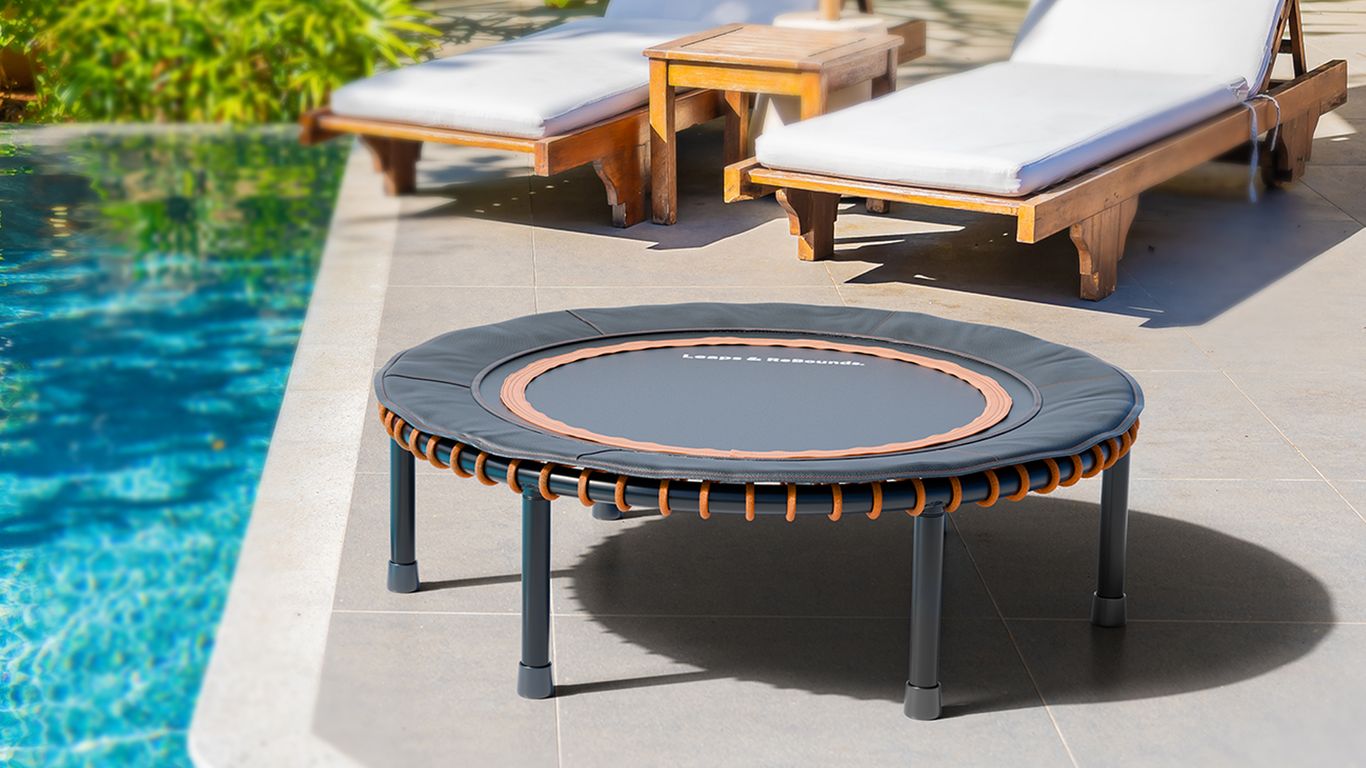
Want to add more to your fitness routine? Besides our amazing mini trampolines, we also offer other great gear like resistance bands. These are perfect for adding an extra challenge to your workouts, whether you're at home or on the go. Ready to boost your fitness game? Visit our website today to explore all our products and find the perfect additions to your home gym!
Wrapping It Up
So, you've got the plan. This 7-day gym routine is your starting point for getting stronger and seeing real changes. But remember, it's not just about showing up and lifting weights. Your body needs fuel, and it definitely needs rest to actually get stronger. Don't be afraid to switch things up a bit if something doesn't feel right or if life gets in the way. The most important thing is to keep showing up, even on days you're not feeling it. Stick with it, be consistent, and you'll start noticing the difference before you know it.
Frequently Asked Questions
What's the best way to start a 7-day gym plan?
To kick off your 7-day gym plan, first figure out what you want to achieve, like building muscle or losing weight. Then, be real about how many days you can actually go to the gym each week. A good plan mixes workouts with rest days so your body can recover and get stronger.
How do I make sure I'm not overtraining?
Overtraining happens when you work out too hard for too long without enough rest. Listen to your body! If you feel super tired, sore all the time, or just not motivated, it's a sign you need more rest. It's better to take an extra day off than to push through and get hurt.
What is 'progressive overload' and why is it important?
Progressive overload means slowly making your workouts harder over time. This could mean lifting a little more weight, doing more reps, or resting less between sets. It's like telling your muscles they need to keep growing and getting stronger because the challenge is increasing.
How important is nutrition and sleep for my gym results?
Nutrition and sleep are super important, almost as much as your workouts! Eating enough protein helps your muscles repair and grow. Getting good sleep allows your body to recover fully. Think of them as the building blocks and the repair crew for your fitness gains.
Can I switch exercises if I don't like them or don't have the equipment?
Absolutely! This plan is a guide, not a strict rulebook. If you don't like an exercise or can't do it, swap it for something similar that works the same muscles. For example, if you can't do pull-ups, try lat pulldowns on a machine. The goal is to work the intended muscles effectively.
What should I do on rest days?
Rest days are crucial for muscle repair and growth! You can either take a complete break or do 'active recovery.' Active recovery means doing light activities like walking, gentle stretching, or yoga. It helps blood flow to your muscles without adding more stress, aiding your recovery.


0 comments