
Starting a fitness routine can feel a bit overwhelming, especially when you're trying to figure out what to do right in your own living room. You see all those fancy gyms and equipment, and it's easy to think you need all that to get a good workout. But honestly, you don't. This guide is all about making things simple. We're going to walk through how to get a solid full body workout for beginners at home, using just what you likely have around. No complicated moves, no confusing schedules, just a straightforward way to get stronger and feel better.
Key Takeaways
- You don't need a gym to get a great workout; a full body workout for beginners at home is totally achievable.
- Focus on basic movements like squats, lunges, push-ups, rows, and planks to work all your major muscles.
- Consistency is more important than intensity when you're starting out. Aim for 2-3 sessions per week.
- Listen to your body and allow for rest days. Muscles grow when you're recovering, not just when you're exercising.
- Progressive overload, like doing a few more reps or using slightly heavier weights, is how you keep getting stronger over time.
Why Choose A Full Body Workout At Home For Beginners
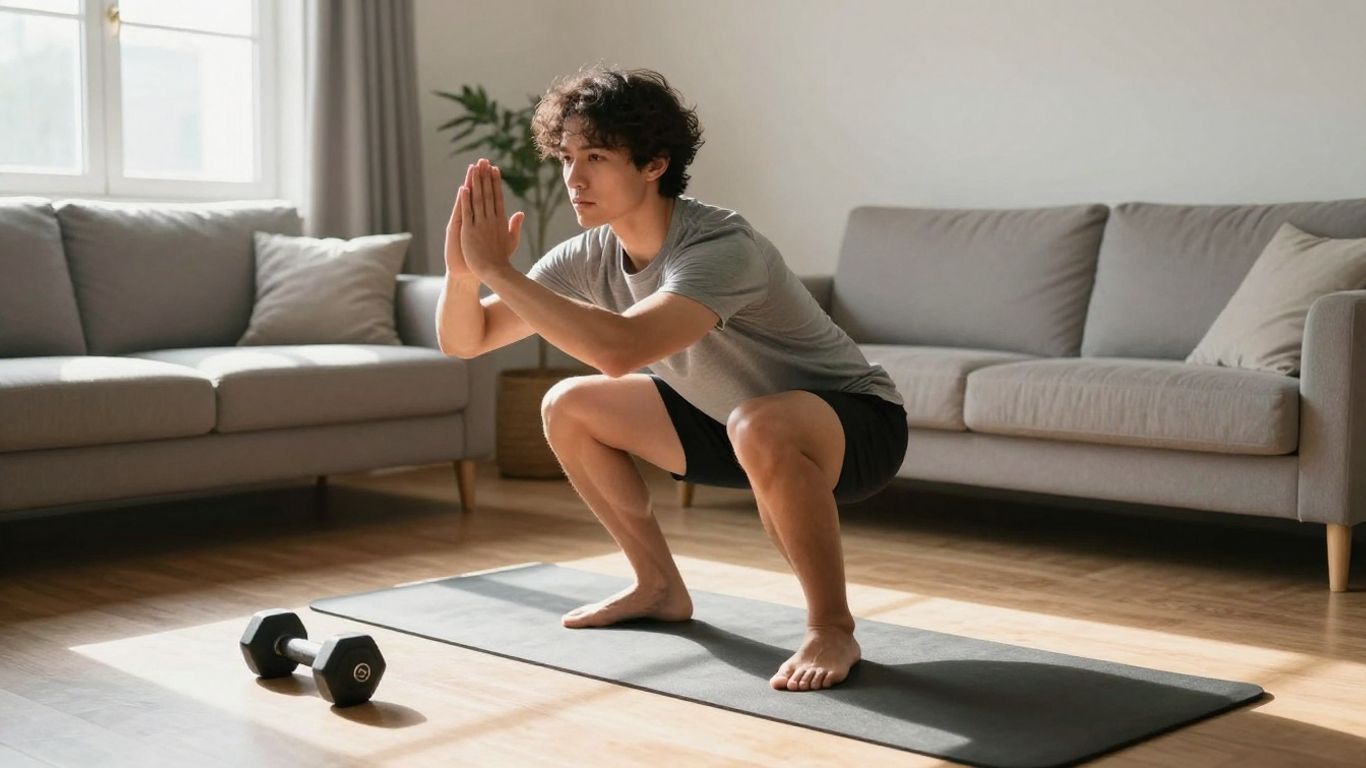
Starting a fitness journey can feel a bit like trying to assemble furniture without instructions – confusing and maybe a little intimidating. But what if I told you there's a straightforward way to build strength and get fitter, right from your living room? That's where the full-body workout comes in. Instead of dedicating separate days to different muscle groups, a full-body routine works everything in one go. This means you're hitting your legs, chest, back, arms, and core all in the same session. It’s a smart approach, especially when you're just starting out.
Build Foundational Strength
Think of a full-body workout as laying the groundwork for a strong house. You're focusing on the big, basic movements that work multiple muscles at once. These compound exercises are fantastic for learning how to move your body correctly and efficiently. Getting these foundational movements down early helps build a solid base, making it easier to progress to more challenging exercises later on. It’s about building a capable body, not just isolated muscles.
Time-Efficient Training
Let's be real, finding time to exercise can be tough. A full-body workout is a real game-changer for busy schedules. You can get a complete session done in about 45 to 60 minutes. Plus, you only need to do it a few times a week. This means less time spent planning and traveling to a gym, and more time actually working out and then getting on with your day. It’s about making fitness fit into your life, not the other way around.
Science-Backed Benefits
It's not just about convenience; this method actually works. Research suggests that training each muscle group more frequently, like you do in a full-body routine (typically 2-3 times per week), can lead to better muscle growth and strength gains compared to hitting each muscle only once a week. Your body gets more opportunities to stimulate muscle protein synthesis and practice the movements, which helps you get stronger faster. It’s a simple, effective strategy backed by how our bodies respond to training.
For beginners, consistency and proper form are far more important than lifting heavy weights or doing complicated routines. A full-body approach simplifies things, allowing you to focus on learning the basics and building a habit of movement.
Here’s a look at how often you might structure your week:
- Day 1: Full Body Workout
- Day 2: Rest or light activity (like a walk)
- Day 3: Full Body Workout
- Day 4: Rest or light activity
- Day 5: Full Body Workout
- Day 6 & 7: Rest
This schedule gives your muscles the time they need to recover and rebuild, which is when the actual growth happens. Pushing too hard, too soon, can lead to burnout or injury, and that's definitely not the goal here.
Essential Equipment For Your Home Workout
You don't need a fancy gym or a ton of gear to get a great full-body workout at home. Honestly, most of what you need, you probably already have lying around. The goal here is to keep it simple and accessible so you can actually stick with it.
Dumbbells For Progression
A pair of dumbbells is probably the most versatile piece of equipment you can get for home workouts. If you can swing it, having a few different weights is ideal. This lets you pick the right challenge for different exercises. For example, you might use lighter dumbbells for bicep curls and heavier ones for squats. As you get stronger, you can gradually increase the weight you're lifting. This is a key part of getting stronger over time. If buying multiple sets isn't in the cards right now, adjustable dumbbells are a fantastic option that save space and money in the long run.
Household Item Alternatives
Don't have dumbbells? No problem! You can get creative with everyday items. Think about things you can grip and lift that have some weight. Water bottles, milk jugs filled with water or sand, or even a sturdy backpack filled with books can work. For resistance, you can use things like towels (imagine pulling it apart during exercises) or even resistance bands, which are relatively inexpensive and take up very little space. The main idea is to find things that allow you to add a little resistance to your movements.
Utilizing Furniture Safely
Your furniture can also be a workout buddy. A sturdy chair or bench can be used for exercises like step-ups, triceps dips, or Bulgarian split squats. Just make sure whatever you're using is stable and won't slide or tip over. A wall is great for wall push-ups or wall sits. Always test the stability of any furniture you plan to use before putting your full weight on it. Safety first, always!
Remember, the most important thing is to get moving. Don't let a lack of equipment be the reason you don't start. Your body weight is a powerful tool on its own, and with a little creativity, you can build a solid routine.
Structuring Your Full Body Workout At Home For Beginners
So, you've got your equipment sorted and you're ready to get moving. That's fantastic! Now, let's talk about how to put it all together so it actually works for you. It's not just about doing random exercises; it's about having a plan.
Understanding Workout Frequency
When you're just starting out, your body needs time to adjust and recover. Trying to do too much too soon can lead to feeling wiped out or even getting hurt, and that's definitely not the goal. For most beginners, aiming for 2 to 3 full-body workouts per week is a sweet spot. This gives your muscles enough stimulus to grow stronger without overdoing it.
Here’s a simple way to think about your week:
- Day 1: Full Body Workout
- Day 2: Rest or light activity (like a walk)
- Day 3: Full Body Workout
- Day 4: Rest or light activity
- Day 5: Full Body Workout
- Day 6 & 7: Rest
This kind of schedule lets you train consistently while still giving your body the downtime it needs.
The Importance of Rest Days
Seriously, don't skip these. Rest days aren't lazy days; they're when the magic happens. Your muscles actually repair and grow stronger when you're resting, not when you're in the middle of a set. Think of it like this: you put in the work at the gym (or your living room), and then your body rebuilds itself to be tougher for the next session. Skipping rest can actually slow down your progress and increase your risk of injury.
Your body is a complex system, and it needs balance. Pushing it hard all the time without recovery is like trying to drive a car with the gas pedal stuck down – eventually, something's going to break.
Workout Duration For Beginners
As a beginner, you don't need to spend hours in your workout space. A good, solid full-body session should take around 30 to 45 minutes. This is usually enough time to get through a decent number of exercises, hit all your major muscle groups, and maybe even add a little cardio finisher if you're feeling up to it. Focusing on quality over quantity is key here. Make sure each rep counts, you're using good form, and you're challenging yourself appropriately. Once you're comfortable with this duration and intensity, you can gradually increase it, but for now, keep it manageable. It's better to have a shorter, effective workout you can stick with than a long, grueling one that makes you dread your next session.
Key Exercises For A Full Body Workout At Home For Beginners
Alright, let's get down to the nitty-gritty of what you'll actually be doing in your workout. The goal here is to hit all the major muscle groups without needing a gym full of machines. We're focusing on movements that work multiple parts of your body at once – these are often called compound exercises, and they're super efficient.
Lower Body Movements
Think about exercises that get your legs and glutes working. These are the big movers, so getting them strong is a great start.
- Squats: This is like sitting down and standing up from an invisible chair. Keep your chest up, back straight, and try to get your thighs parallel to the floor if you can. Your knees should track over your toes.
- Lunges: Step forward with one leg, bending both knees to about 90 degrees. Your front knee should be over your ankle, and your back knee should hover just off the floor. Push off your front foot to return to the start. Alternate legs.
- Glute Bridges: Lie on your back with your knees bent and feet flat on the floor. Lift your hips off the ground, squeezing your glutes at the top. Lower back down slowly.
Upper Body Pushing and Pulling
For your upper body, we need to cover both pushing movements (like pushing a door open) and pulling movements (like pulling a rope).
- Push-ups: Start in a plank position. Lower your chest towards the floor, keeping your body in a straight line. Push back up. If regular push-ups are too tough, try them on your knees or against a wall.
- Rows: You can do these with dumbbells, resistance bands, or even household items like filled water bottles. Hinge at your hips, keeping your back straight. Pull the weight towards your chest, squeezing your shoulder blades together. Lower with control.
- Overhead Press: Using dumbbells or similar weights, start with them at shoulder height. Press them straight up overhead until your arms are fully extended. Lower them back down slowly.
Core Strengthening Exercises
Your core is your body's powerhouse. A strong core helps with almost every movement you do.
- Plank: Get into a push-up position, but rest on your forearms instead of your hands. Keep your body in a straight line from head to heels. Don't let your hips sag or rise too high.
- Bird-Dog: Start on your hands and knees. Extend one arm straight forward and the opposite leg straight back, keeping your core tight and your back flat. Hold for a second, then return to the start and switch sides.
- Crunches: Lie on your back with your knees bent. Place your hands lightly behind your head or across your chest. Lift your shoulders off the floor, engaging your abs. Lower back down.
Remember, the goal isn't to be perfect right away. Focus on controlled movements and good form. It's better to do fewer reps with good form than many with sloppy technique. Your body will thank you for it later.
Progressing Your Full Body Workout At Home For Beginners
So, you've got the hang of the basic moves and you're showing up for your workouts. That's fantastic! But to keep getting stronger and seeing results, you can't just do the same thing forever. Your body is smart; it adapts. That's where the idea of 'progressive overload' comes in. It's basically a fancy way of saying you need to gradually challenge your muscles more over time. Think of it like learning to ride a bike. First, you just needed to balance. Then, you learned to pedal. Eventually, you're tackling hills. Your workouts should follow a similar path.
The Principle of Progressive Overload
This is the core idea behind getting stronger. You need to consistently ask your muscles to do a little bit more than they're used to. This doesn't mean going all out every single time, but rather making small, consistent increases. There are a few ways to do this:
- Increase the weight: If you're using dumbbells, try using a slightly heavier pair for your next set or workout. If you're using household items, maybe fill your water bottles a bit more.
- Do more repetitions (reps): If you can comfortably do 10 squats, try for 11 or 12 next time. Aim to add just one or two extra reps per set.
- Do more sets: If you're doing 3 sets of 10 reps, try doing 4 sets of 10 reps.
- Decrease rest time: Shortening the time you rest between sets can make the workout more challenging.
- Improve your form: Sometimes, just focusing on doing the exercise with better control and a fuller range of motion is a form of progression.
When to Increase Intensity
Figuring out when to push a little harder is key. A good rule of thumb is to increase the challenge when the current weight or number of reps feels manageable. If you can easily complete all your target reps for all your sets with good form and don't feel particularly challenged by the last couple of reps, it's probably time to step it up. For example, if you're aiming for 3 sets of 10 squats and you find yourself breezing through the last few reps of the third set, consider adding a little weight or aiming for 11 reps next time.
It's not about hitting a specific number of reps or lifting a certain weight on a deadline. It's about listening to your body and making smart adjustments. If you're consistently hitting your rep goals for an exercise and it's starting to feel easier, that's your signal to make it a bit tougher.
Listening To Your Body
This is probably the most important part of progressing safely. Your body sends signals, and learning to read them is a skill. Muscle soreness is normal, especially when you're starting out or trying a new exercise. You might feel a bit stiff or achy the day after a workout. That's usually okay. However, sharp, sudden pain during an exercise is a red flag. That's your body telling you to stop. Pushing through actual pain can lead to injuries, which will set you back way more than taking an extra rest day or modifying an exercise.
Pay attention to how you feel not just during the workout, but also in the days that follow. Are you recovering well? Do you have enough energy? If you're constantly exhausted or feeling pain, you might be doing too much too soon. It's better to progress slowly and consistently than to push too hard and get injured. Remember, consistency over intensity is the name of the game when you're building a foundation.
Nutrition And Recovery For Beginners
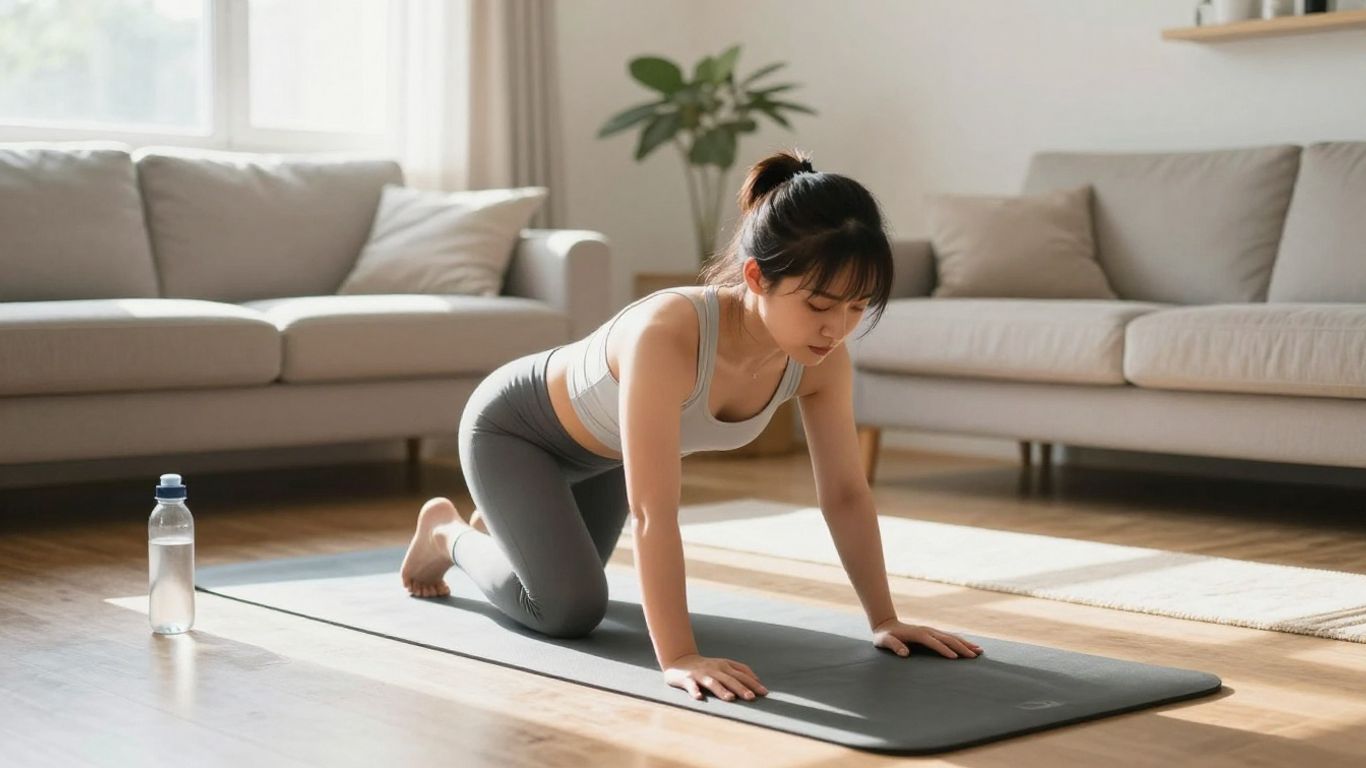
Fueling Your Workouts
Look, working out is great, but what you put into your body matters just as much, if not more. You can't out-train a bad diet, as they say. Think of your body like a car; you wouldn't put cheap gas in a sports car and expect it to perform well, right? Same idea here. Your muscles need the right fuel to repair and grow after you've worked them. This means making sure you're getting enough protein, which is like the building blocks for your muscles. Carbohydrates are your energy source, so don't shy away from them, especially around your workouts. Healthy fats are important too, for all sorts of bodily functions. Getting your nutrition sorted is a smart first step before you even worry too much about the workout itself.
The Role of Hydration
Water. It sounds simple, but it's so easy to forget about. Staying hydrated is super important for everything your body does, including exercise. When you're working out, you sweat, and you lose fluids. If you don't replace them, you can start to feel tired, your performance can drop, and you might even get a headache. Aim to drink water throughout the day, not just when you're thirsty. Keep a water bottle handy and sip on it regularly. It really makes a difference in how you feel during and after your workouts.
Understanding Muscle Soreness
So, you're going to be sore after your first few workouts. It's pretty normal, especially when you're new to this. This feeling is often called Delayed Onset Muscle Soreness, or DOMS. It's basically your muscles telling you they've been challenged and are starting to adapt. However, it's important to know the difference between that general achiness and actual pain. Sharp, sudden pain is a sign to stop what you're doing. But that dull soreness? That's usually okay and will fade over a day or two. Don't let it scare you off; it's a sign you're making progress. As you get fitter, you'll likely experience less soreness, which is a good thing!
Keep Going!
So there you have it – a simple way to get started with full body workouts right at home. Remember, the biggest step is just beginning. Don't worry about doing everything perfectly from day one. Focus on showing up, moving your body, and listening to what it needs. Consistency is your best friend here. Keep at it a few times a week, and you'll start to notice a difference. You've got this!
Frequently Asked Questions
How often should I do a full body workout at home?
For beginners, aiming for 2 to 3 full body workouts per week is a great starting point. It's super important to give your body days off in between to rest and rebuild. Think of it like this: workout, rest, workout, rest, and so on. This helps your muscles recover and get stronger without overdoing it.
What basic equipment do I really need for a home workout?
You don't need a lot to start! A pair of dumbbells is really helpful for adding a bit of challenge as you get stronger. If you have a few different weights, that's even better. But honestly, you can get a fantastic workout using just your body weight. Sometimes a sturdy chair or bench can be useful too, but it's not a must-have.
Can I build muscle with just bodyweight exercises at home?
Absolutely! You can definitely build muscle using only your body weight. The trick is something called 'progressive overload.' This means you keep making the exercises a little harder over time, like doing more repetitions, slowing down the movement, or decreasing your rest time. Your muscles will adapt and grow stronger.
How long should my home workouts be?
When you're starting out, aim for your workouts to be around 45 to 60 minutes long. This usually includes a short warm-up to get your body ready, the main part of your workout, and a cool-down with some stretching. This amount of time is usually enough to get a good session in without being too long.
Should I feel sore after every workout?
Feeling a little sore after a new workout is normal, especially at first. It's called DOMS (Delayed Onset Muscle Soreness). However, you shouldn't feel sharp pain, and the soreness should get less over time as your body gets used to the exercises. The goal is to get stronger, not to constantly feel sore. If you feel pain, stop the exercise.
What's the best way to get stronger over time?
The key to getting stronger is to gradually challenge your body more. This is called progressive overload. You can do this by lifting slightly heavier weights, doing a few more reps of an exercise than you did last time, or shortening the rest periods between sets. Just aim to do a little bit more each week or so to keep making progress.




0 comments