









Starting a fitness routine can feel a bit overwhelming, especially if you're new to it all. You might be wondering what exercises to do, how often, and if you even need fancy equipment. Well, good news! You can get a great full-body workout right in your living room with just your body weight. This 20-minute workout for beginners is designed to be simple, effective, and easy to follow, helping you build a solid foundation for your fitness journey.
Key Takeaways
- Focus on doing each exercise with good form, even if it means doing fewer reps. Quality over quantity is the name of the game when you're starting out.
- Listen to your body. It's okay to take short breaks when you need them. As you get stronger, you'll be able to do more.
- Consistency is key. Try to do this workout 2-3 times a week to see progress and build strength.
- This routine uses only your body weight, so you don't need any special equipment or a gym membership. Perfect for home workouts!
- Remember to warm up for a few minutes before starting to get your muscles ready and prevent injuries.
1. Bodyweight Squats
Alright, let's kick things off with the bodyweight squat. This is a foundational movement, and for good reason. It works a bunch of muscles all at once – think your quads, glutes, and hamstrings. Getting the form right is way more important than how many you do.
Here’s how to do it:
- Stand with your feet about shoulder-width apart. Your toes can point slightly outward, whatever feels natural.
- Imagine you're about to sit down in a chair. Lower your hips back and down, keeping your chest up and your back straight. Don't let your knees go past your toes.
- Go as low as you comfortably can, aiming to get your thighs parallel to the floor if possible.
- Push through your heels to stand back up.
Try to keep the movement smooth and controlled. Don't just drop into the squat or pop back up. It’s about building strength and control, not speed.
Remember, if you feel any sharp pain, stop. It's better to do fewer reps with good form than to push through something that feels wrong. Listen to your body; it's your best guide.
2. Push-Ups
Push-ups are a classic for a reason. They work your chest, shoulders, and triceps all at once. Getting your form right from the start is super important to avoid any strain.
Here's how to do them:
- Start in a high plank position. Your hands should be a little wider than your shoulders, and your body should form a straight line from your head to your heels. This foundational stance is key for engaging the right muscles.
- Bend your elbows, lowering your chest towards the floor. Keep your core tight so your hips don't sag.
- Push back up to the starting position. Try to make the movement smooth and controlled.
If doing a full push-up feels too tough right now, don't sweat it! You can totally modify it. Try doing them on your knees, or even against a wall. It's all about building that strength gradually. You can find more details on proper push-up form here.
Remember, consistency beats intensity when you're starting out. Aim for good form over doing a ton of reps. As you get stronger, you'll naturally be able to do more.
Try to aim for about 10 reps to start, and see how that feels. You can always adjust based on your energy levels.
3. Reverse Lunges
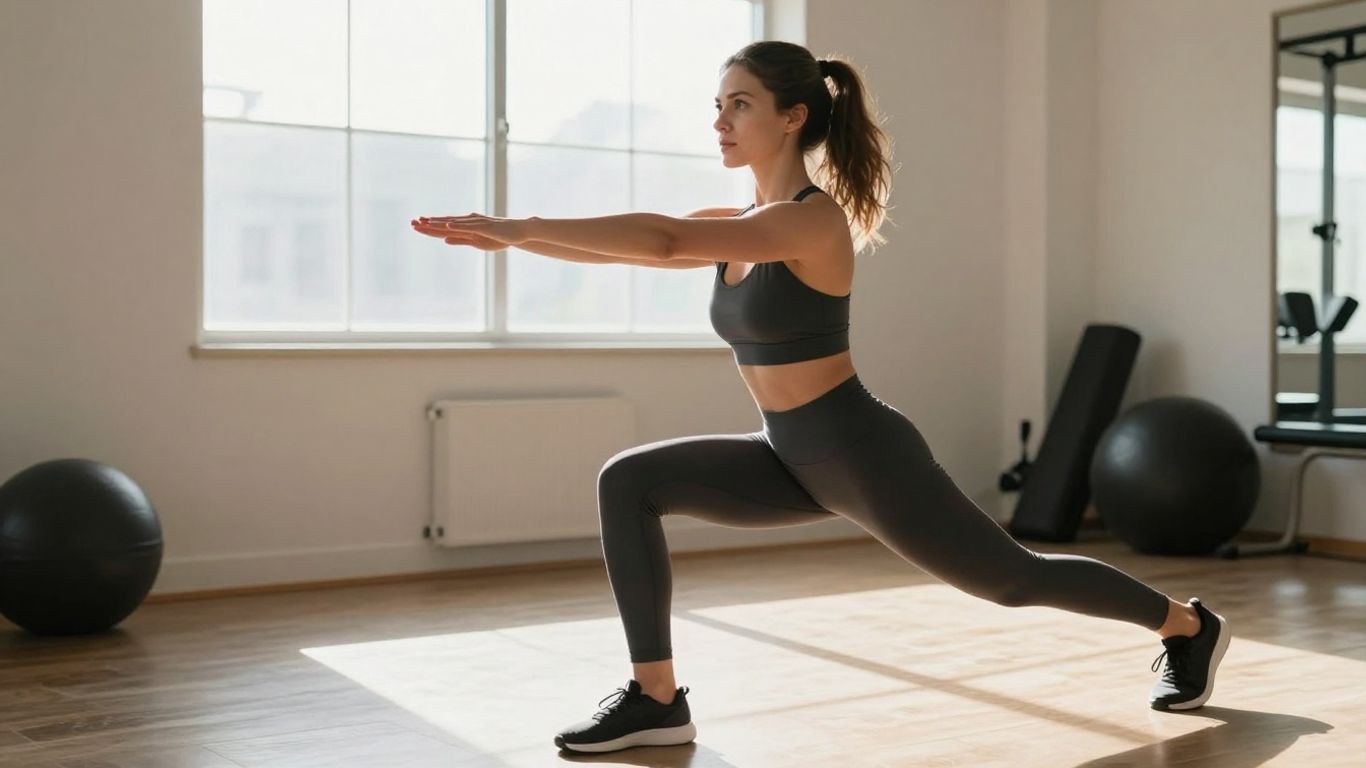
Alright, let's talk about reverse lunges. These are a fantastic way to work your legs and glutes, and they're generally easier on the knees than forward lunges. The key is to step backward with control.
Here's how to do them:
- Start standing tall, feet hip-width apart. Keep your core tight.
- Take a big step backward with one leg. As you step, bend both knees.
- Lower your back knee towards the floor, aiming for about a 90-degree angle in both legs. Your front knee should be directly over your ankle.
- Push off your back foot and drive through your front heel to return to the starting position.
- Repeat on the other side.
It's really important to focus on your form here. You don't want your front knee to go way past your toes, and try to keep your upper body upright. If you need a little extra cushion for your back knee, you can always put a mat or a folded towel down. This exercise really targets your glutes and quads, giving you a good burn. You can find more details on proper reverse lunge form if you want to be extra sure.
Don't rush through these. Slow and steady wins the race, especially when you're starting out. Feeling the muscles work is way more important than just getting the reps done quickly.
4. Glute Bridges
Glute bridges are a fantastic way to wake up those glutes and hamstrings, and they're super simple to do right on the floor. You don't need any fancy equipment for this one, just your own body and a bit of space.
Here's how to do them:
- Lie on your back with your knees bent and your feet flat on the floor, about hip-width apart. Your arms should be resting by your sides, palms down.
- Engage your core and squeeze your glutes. Lift your hips off the floor until your body forms a straight line from your shoulders to your knees. Think about pushing through your heels.
- Hold that top position for a second, really feeling the squeeze in your glutes, then slowly lower yourself back down.
The key here is to focus on that glute squeeze at the top. It's easy to just lift your hips without really activating the muscles you're trying to work. Try to avoid arching your lower back too much; the movement should come from your hips and glutes.
This exercise is great because it targets the muscles that help with posture and stability, which are important for almost everything you do, from walking to sitting.
Aim for about 10-15 repetitions for a set. If you want to make it a bit harder, you can try holding the top position for a few extra seconds or even try a single-leg glute bridge once you're comfortable.
5. Wall Squats
Alright, let's talk about wall squats. These are pretty neat because they give you a bit of extra support while you're working on your leg muscles. Think of the wall as your trusty sidekick, helping you hold that squat position a little longer.
This exercise is great for building strength in your quads, glutes, and hamstrings. It's a good way to get a solid squat in without worrying as much about balance, which is super helpful when you're just starting out.
Here's how to do them:
- Stand with your back flat against a wall. Your feet should be about shoulder-width apart and a little bit out in front of you – maybe a step or two.
- Slide down the wall, bending your knees until your thighs are parallel to the floor. It should feel like you're sitting in an invisible chair. Make sure your knees are stacked right over your ankles.
- Hold this position for a few seconds. Try to keep your core tight and your back pressed against the wall.
- Push through your heels to slide back up the wall to your starting position.
Try to do this for about 30-45 seconds, and then take a short break. We'll repeat this a few times.
Remember, the goal here is to feel the burn in your legs, not to strain your back. Keep your posture good and focus on controlled movements. If 90 degrees is too much at first, just go down as far as you comfortably can.
6. Jumping Jacks
Alright, let's talk about jumping jacks. These are a classic for a reason. They get your heart rate up fast and work a bunch of muscles all at once. It's a fantastic way to warm up or get your cardio in.
Here's how to do them:
- Start standing with your feet together and your arms at your sides.
- Jump your feet out wider than shoulder-width apart while simultaneously bringing your arms overhead.
- Jump your feet back together and bring your arms back down to your sides.
- Keep going! Aim for a steady rhythm.
If regular jumping jacks feel like too much, especially on your knees, you can try a modified version. Instead of jumping, just step one foot out to the side while raising your arms, then bring it back in. Alternate sides. It's still a great way to get moving. You can find more details on how to perform them correctly.
Jumping jacks are a great full-body movement that can be done almost anywhere. They're simple, effective, and you can adjust the intensity to fit your fitness level. Don't underestimate the power of this basic exercise!
Try to do these for about a minute. If you're just starting out, focus on getting the movement down. Speed can come later. It's all about consistency and building a good foundation.
7. Planks
Planks are a fantastic way to build core strength. This exercise works your entire midsection, including your abs, obliques, and lower back. It also engages your shoulders and glutes, making it a great full-body stabilizer.
To get into a plank position, start on your hands and knees. Then, extend your legs back so you're on your toes, and rest your weight on your forearms instead of your hands. Make sure your body forms a straight line from your head all the way down to your heels. Don't let your hips sag down or pike up too high.
Here's a quick breakdown:
- Starting Position: Forearms on the ground, elbows directly under your shoulders.
- Body Alignment: Keep your body in a straight line from head to heels. Imagine a ruler laid across your back.
- Core Engagement: Actively pull your belly button towards your spine.
- Breathing: Breathe steadily. Don't hold your breath.
If holding a full plank is too tough right now, you can modify it by dropping to your knees. Just make sure you keep that same straight line from your head to your knees and maintain core engagement. It's all about building that strength gradually.
The plank might seem simple, but holding a solid position requires a lot of control. Focus on maintaining good form over how long you can hold it. Quality reps are always better than sloppy ones, especially when you're just starting out.
8. Lunges
Lunges are a fantastic exercise for working your legs and glutes. They really help with balance and building strength in each leg individually. It's a move that looks simple, but getting the form right makes a big difference.
Here's how to do a basic lunge:
- Stand tall with your feet about hip-width apart.
- Take a step forward with one leg, landing on your heel first, then your foot.
- Lower your body until both knees are bent at about a 90-degree angle. Your front knee should be directly over your ankle, and your back knee should be hovering just off the floor.
- Push off with your front foot to return to the starting position.
- Repeat on the other side.
Focus on keeping your torso upright throughout the movement and try not to let your front knee go past your toes. It might feel a little wobbly at first, and that's totally normal. Just try to control the movement as you go up and down. If stepping forward feels like too much, you can always try stepping backward instead for a reverse lunge, which some people find a bit easier to control.
9. Good Mornings
Good Mornings are a fantastic exercise for hitting your hamstrings and glutes, and they also do wonders for your lower back. It might sound a little odd, but trust me, it's a great way to build strength in that posterior chain. This movement helps prepare your body for more complex lifts down the line.
Here's how to do them:
- Stand with your feet about hip-width apart, knees slightly bent. You can hold a light weight across your upper back or just use your bodyweight to start.
- Keeping your back straight and your core tight, hinge at your hips. Imagine you're trying to push your hips backward.
- Lower your torso forward until it's almost parallel to the floor, or as far as you can comfortably go while maintaining that straight back.
- Squeeze your glutes and hamstrings to pull yourself back up to the starting position.
Remember, the goal here isn't to bend your back like a noodle. Keep that spine nice and neutral throughout the entire movement. It's all about that hip hinge!
Start with just bodyweight to get the form down. Once you feel comfortable, you can add a light dumbbell or kettlebell. Aim for about 10-12 repetitions for 2-3 sets. This exercise is a great way to start your mornings with simple exercises designed to energize you and prepare you for the day ahead, all while preventing pain and injury. Start your mornings with simple exercises.
10. Birddogs
Bird dogs are a fantastic exercise for building core strength and improving balance. They work your abs, back, and glutes all at once, and they're pretty gentle on your joints, which is a big plus when you're just starting out.
Here's how to do them:
- Start on your hands and knees, with your hands directly under your shoulders and your knees directly under your hips. Keep your back flat and your core tight.
- Slowly extend your right arm straight forward and your left leg straight back at the same time. Try to keep your hips level and avoid arching your back.
- Hold this position for a second or two, focusing on keeping your body stable.
- Return to the starting position with control.
- Now, extend your left arm forward and your right leg back. Again, keep everything steady.
- Return to the start.
That's one rep. Aim for about 8-10 reps on each side to start. The key is to move slowly and with control, not to rush through it.
This exercise really helps connect your brain to your muscles, making sure you're engaging the right areas. It might feel a little wobbly at first, but that's totally normal. Just keep practicing, and you'll get steadier.
11. Arm Circles
Arm circles are a fantastic way to get your shoulders warmed up and ready for action. They're super simple but really do the job of loosening up those shoulder joints.
Here's how to do them:
- Stand with your feet about shoulder-width apart. Let your arms hang straight down by your sides.
- Start making small circles with your arms, moving them forward. Keep the circles small at first and gradually make them bigger as you feel more comfortable.
- Continue for about 30 seconds, then switch directions and make circles backward for another 30 seconds.
Focus on smooth, controlled movements rather than speed. You should feel a gentle stretch in your shoulders and upper back.
You can do these standing or even sitting down if you prefer. The main goal is to get blood flowing to the shoulder muscles and prepare them for more strenuous activity. Don't worry if you don't have a huge range of motion right away; that's what the warm-up is for!
12. Sumo Squats
Alright, let's talk about Sumo Squats. These are like your regular squats, but with a wider stance. Think of a sumo wrestler getting ready to rumble – that's the kind of wide stance we're going for here.
This wider stance really hits your inner thighs and glutes a bit more than a standard squat. It's a great way to add some variety and target those muscles differently.
Here's how you do them:
- Start standing with your feet much wider than shoulder-width apart. Your toes should be pointing outwards, maybe at a 45-degree angle.
- Keeping your chest up and your back straight, lower your hips down as if you're going to sit in a chair. Make sure your knees track in the same direction as your toes.
- Go down as far as you comfortably can, aiming to get your thighs parallel to the floor.
- Push through your heels to stand back up to the starting position.
Try to do these for about 40 seconds, then take a 20-second break. We'll do a few rounds of these.
Remember, the key here is to control the movement. Don't just drop down. Think about engaging your muscles throughout the entire range of motion. It might feel a little awkward at first with the wide stance, but stick with it!
13. Crunches
Alright, let's talk about crunches. These are a classic for a reason, really targeting those abdominal muscles. They're pretty straightforward, but getting the form right makes a big difference.
Here's how to do them:
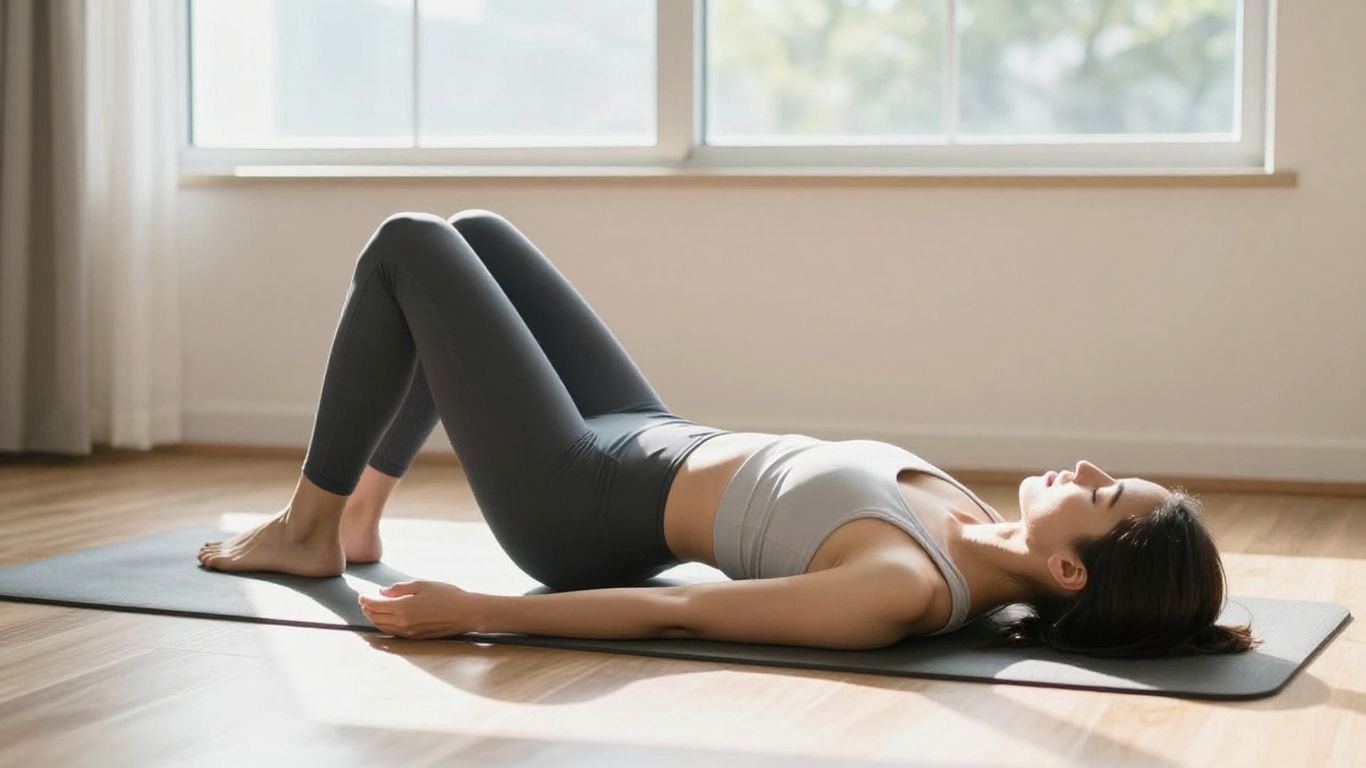
- Lie on your back with your knees bent and feet flat on the floor. You can place your hands behind your head, but don't pull on your neck – just lightly support it. Or, cross your arms over your chest.
- Engage your core and lift your head and shoulders off the floor. Focus on using your abs to pull your rib cage towards your hips.
- Slowly lower back down to the starting position. Try to keep the movement controlled, not jerky.
The key is to really feel your abs working, not just yanking your head up.
It's easy to rush through crunches, but taking your time and focusing on the contraction will give you a much better workout. Think about squeezing those abdominal muscles at the top of each rep. If you find standard crunches a bit tough on your neck, you can try placing a small towel or cushion under your lower back for a little support. This exercise is a great way to build up your core strength and is a solid addition to any beginner routine.
Remember, the goal here isn't to see how many you can do in a minute, but to perform them with good form and feel the muscles working. Quality over quantity, always.
14. Knee Push-Ups
Alright, so push-ups can be a bit tough when you're just starting out. That's totally normal! Knee push-ups are a fantastic modification that lets you work on the same muscles – your chest, shoulders, and triceps – without putting as much strain on your body. It's all about building that strength gradually.
Here's how to do them:
- Get down on your hands and knees. Your hands should be a little wider than shoulder-width apart, and your knees should be directly under your hips.
- Walk your hands forward a bit so that your body forms a straight line from your head to your knees. Keep your core tight so you don't sag in the middle.
- Lower your chest towards the floor by bending your elbows. Try to get your chest as close to the ground as you can while keeping good form.
- Push back up to the starting position. That's one rep!
Remember, the goal here is to maintain that straight line from your head to your knees. Don't let your hips drop or stick up too high. It's better to do fewer reps with good form than to rush through them and do them incorrectly. As you get stronger, you can try moving your knees further back or eventually progress to full push-ups.
Knee push-ups are a stepping stone. They help you build the necessary strength and muscle endurance to eventually perform standard push-ups. Focus on controlled movements and feeling the muscles in your chest and arms work.
15. Walking Jacks
Walking jacks are a fantastic low-impact alternative to traditional jumping jacks, making them a great choice if you're just starting out or if high-impact moves aren't your favorite. They still get your heart rate up and work your whole body, but with less stress on your knees and ankles.
This exercise is perfect for warming up or as a cardio finisher.
Here's how to do them:
- Start standing with your feet together and your arms at your sides.
- Step your right foot out to the side while simultaneously raising both arms overhead. Keep your arms straight or slightly bent.
- Bring your right foot back to the center and lower your arms back to your sides.
- Repeat the movement on the left side, stepping your left foot out and raising your arms.
- Continue alternating sides for the desired duration.
Think of it as a modified jumping jack where you step one leg out at a time instead of jumping. You can adjust the speed to match your fitness level. Go slower if you need to focus on form, or pick up the pace to make it more challenging.
Walking jacks are a smart way to boost your cardiovascular health without the jarring impact. They help improve coordination and can be done almost anywhere, making them a super convenient addition to your routine.
Keep Moving Forward!
So, you've just completed your first 20-minute full-body workout. That's awesome! Remember, starting is often the hardest part, and you've already done that. This routine is a fantastic stepping stone. Don't worry if it felt tough; that's totally normal. The key now is to keep showing up. Try to do this workout a few times a week, listen to your body, and celebrate those small wins. As you get stronger, you can always make it a bit harder. You've got this!
Frequently Asked Questions
How often should I do this 20-minute workout?
For best results, try to do this workout 2 to 3 times a week. Give your body a day of rest between workouts so your muscles can recover and get stronger. Consistency is key!
What if some exercises are too hard for me?
That's totally normal when you're starting out! Many exercises have easier versions. For example, you can do push-ups on your knees or against a wall. Listen to your body and choose the version that feels right for you. The goal is to move safely and effectively.
Do I really need to warm up?
Yes, warming up is super important! It gets your blood flowing and prepares your muscles for exercise, which helps prevent injuries. Simple movements like marching in place, doing high knees, or arm circles for about 3-5 minutes are great ways to warm up.
How long should I rest between exercises and sets?
In this routine, you'll typically do an exercise for 40 seconds and then rest for 20 seconds. You'll also take a longer break, about 1 minute, between full rounds of the exercises. Don't be afraid to take a few extra seconds if you need it, especially at first.
What's the most important thing to remember?
Focus on doing each exercise correctly, with good form. It's better to do fewer repetitions perfectly than to do many with bad form. Good form helps you work the right muscles and avoids injuries.
Can I build muscle with just bodyweight exercises?
Absolutely! By consistently challenging yourself – maybe by doing a few more reps each week or trying slightly harder versions of exercises – you can definitely build muscle and get stronger using just your body weight.


0 comments