










Starting a fitness routine can feel a bit overwhelming, especially if you're new to it all. You might be wondering what exercises to do, how often, and if you even need fancy equipment. Well, good news! You can get a great full-body workout right in your living room with just your body weight. This 20 minute workout for beginners is designed to be simple, effective, and easy to follow, helping you build a solid foundation for your fitness journey.
Key Takeaways
- Focus on doing each exercise with good form, even if it means doing fewer reps. Quality over quantity is the name of the game when you're starting out.
- Listen to your body. It's okay to take short breaks when you need them. As you get stronger, you'll be able to do more.
- Consistency is key. Try to do this workout 2-3 times a week to see progress and build strength.
- This routine uses only your body weight, so you don't need any special equipment or a gym membership. Perfect for home workouts!
- Remember to warm up for a few minutes before starting to get your muscles ready and prevent injuries.
1. Bodyweight Squats
Let's start with the bodyweight squat. This is a really solid move that works a lot of your lower body muscles all at once – think your thighs, your butt, and your hamstrings. Getting the form right is way more important than trying to do a million of them.
Here’s how to do it:
- Stand with your feet about as wide as your shoulders. Your toes can point out a little bit, whatever feels comfortable.
- Pretend you're about to sit down on a chair. Lower your hips back and down, keeping your chest up and your back straight. Try not to let your knees go way past your toes.
- Go down as far as you can without feeling pain, aiming to get your thighs roughly parallel to the floor if that's possible for you.
- Push through your heels to stand back up to where you started.
Remember to focus on a smooth, controlled movement. Don't rush through it. It's better to do fewer squats with good form than many with bad form.
2. Push-Ups
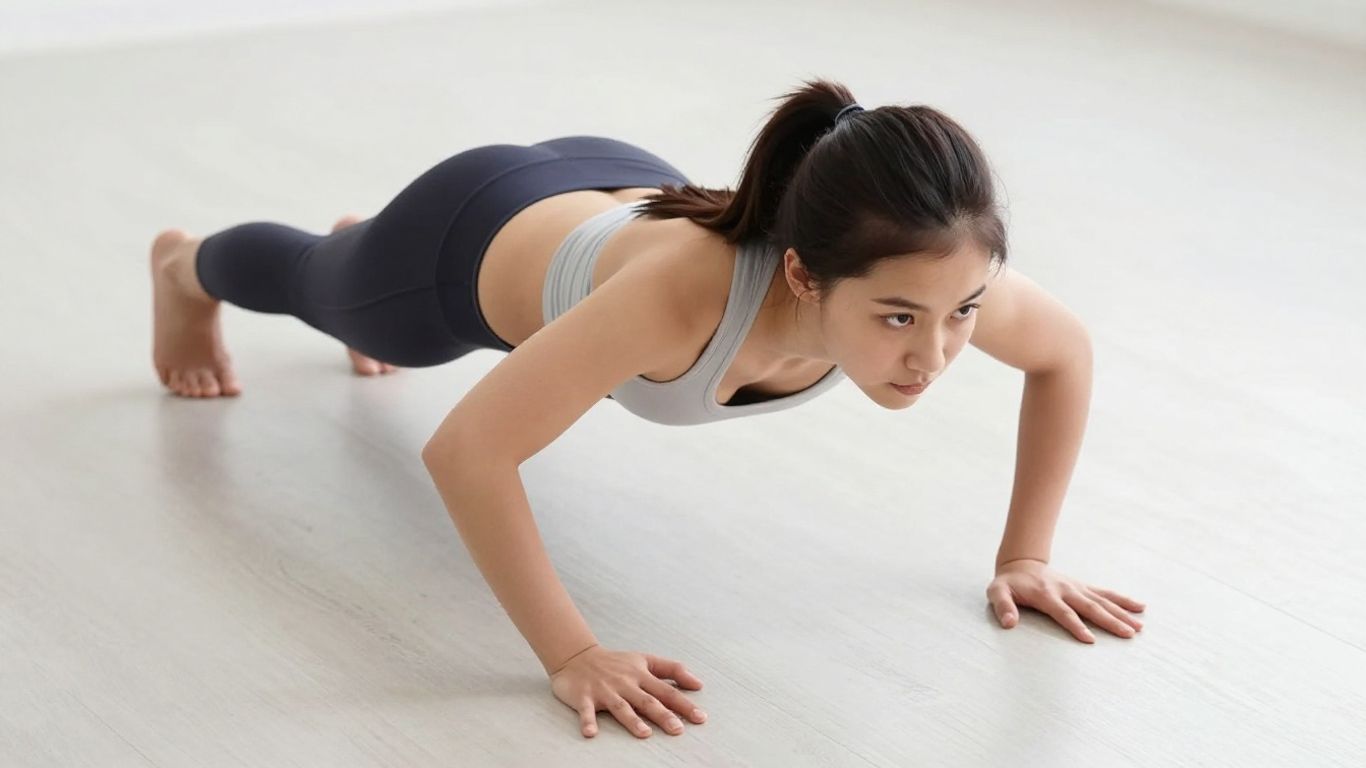
Push-ups are a real classic, and for good reason. They hit your chest, shoulders, and triceps all at once, giving you a solid upper body workout. Getting the form right from the get-go is pretty important to avoid any weird strains.
Here’s the basic idea:
- Start in a high plank position. Your hands should be a bit wider than your shoulders, and your body needs to be a straight line from your head all the way down to your heels. This setup is key for actually working the right muscles.
- Bend your elbows, letting your chest get closer to the floor. Keep your stomach muscles tight so your hips don't start to droop.
- Push back up to where you started. Try to make the whole movement smooth and controlled, not jerky.
Now, if a full push-up feels like a bit much right now, that's totally fine! You can totally modify it. Try doing them on your knees, or even leaning against a wall. It's all about building that strength up gradually. The goal here isn't to do a million reps, but to do them well.
Remember, consistency is way more important than intensity when you're just starting out. Focus on doing them with good form rather than just trying to get a lot done. As you get stronger, you'll naturally be able to do more.
Try aiming for about 8-10 reps to start, and see how that feels. You can always adjust based on how you're feeling that day.
3. Reverse Lunges
Reverse lunges are a great way to build leg strength and improve balance, and they're often a bit kinder on the knees than forward lunges. The main idea is to step backward with control, lowering your body into a lunge position.
Here's how to get started:
- Begin standing tall with your feet about hip-width apart. Keep your core engaged to help with stability.
- Take a controlled step backward with one leg. As you step, bend both knees, lowering your hips towards the floor.
- Aim to get your front knee directly over your ankle, forming roughly a 90-degree angle in both legs. Your back knee should hover just above the ground.
- Push off with your back foot, driving through the heel of your front foot to return to the starting standing position.
- Switch legs and repeat the movement.
Try to keep your torso upright throughout the exercise. It’s easy to lean too far forward or backward, but staying tall helps you work the right muscles more effectively. Don't rush the movement; focus on smooth transitions and feeling the muscles in your front leg and glutes working. If you need a little extra padding for your back knee, a folded towel or a mat can be helpful.
Remember, the goal is to build strength and control. Focus on the quality of each repetition rather than just getting a certain number done. If you feel any sharp pain, stop and reassess your form.
4. Plank
Alright, let's talk about the plank. This move is a total powerhouse for your core, which is basically your body's stability center. Think of it as building a strong foundation for everything else you do, from lifting weights to just standing up straight.
The plank is all about holding a static position to build endurance and strength in your midsection. It works your abs, your lower back, and even your shoulders and glutes. It might look simple, but holding a good plank takes real effort and control.
Here’s how to get into it:
- Start on your hands and knees, then extend your legs back so you're on your toes.
- Lower yourself onto your forearms, making sure your elbows are directly under your shoulders.
- Keep your body in a straight line from your head all the way down to your heels. No sagging hips or piked-up butts allowed!
It's super important to keep your core tight throughout the entire hold. Imagine pulling your belly button towards your spine. This engagement is what protects your back and really makes the exercise effective. Don't forget to breathe; holding your breath won't help anyone.
If a full plank feels like too much right now, don't sweat it. You can totally modify it by dropping to your knees. Just make sure you still keep that straight line from your head down to your knees and keep that core engaged. It's all about building up gradually. You can find more tips on proper plank form.
Try to hold this position for about 20-30 seconds to start. Focus on maintaining good form rather than just seeing how long you can last. Quality over quantity, always!
5. Mountain Climbers
Mountain climbers are a fantastic exercise that really gets your heart rate up while working your core and your legs. Think of it like running, but you're staying in one spot. It's a great way to add some cardio intensity to your routine without needing any equipment.
Here's how to do them:
- Start in a high plank position, like you're about to do a push-up. Your hands should be directly under your shoulders, and your body should form a straight line from your head to your heels.
- Bring one knee forward towards your chest, keeping your foot off the ground. Then, quickly switch legs, bringing the other knee forward.
- Continue alternating legs as fast as you can, mimicking a running motion. Try to keep your hips as steady as possible and avoid letting them bounce up and down too much.
The key is to keep your core engaged throughout the entire movement. This helps stabilize your body and makes the exercise more effective. If you find it too challenging at first, you can slow down the pace or even step your feet forward instead of 'running' them.
Mountain climbers are a dynamic exercise that can significantly boost your cardiovascular fitness and build core strength. They mimic the motion of climbing, engaging multiple muscle groups simultaneously. Focus on maintaining good form to get the most out of this exercise and prevent any strain.
Aim to perform mountain climbers for about 45 seconds to a minute. You can adjust the duration based on your fitness level. This exercise is a great addition to any workout, helping you burn calories and improve your stamina. For more ways to maximize calorie burn in short periods, check out HIIT workouts.
6. Glute Bridges
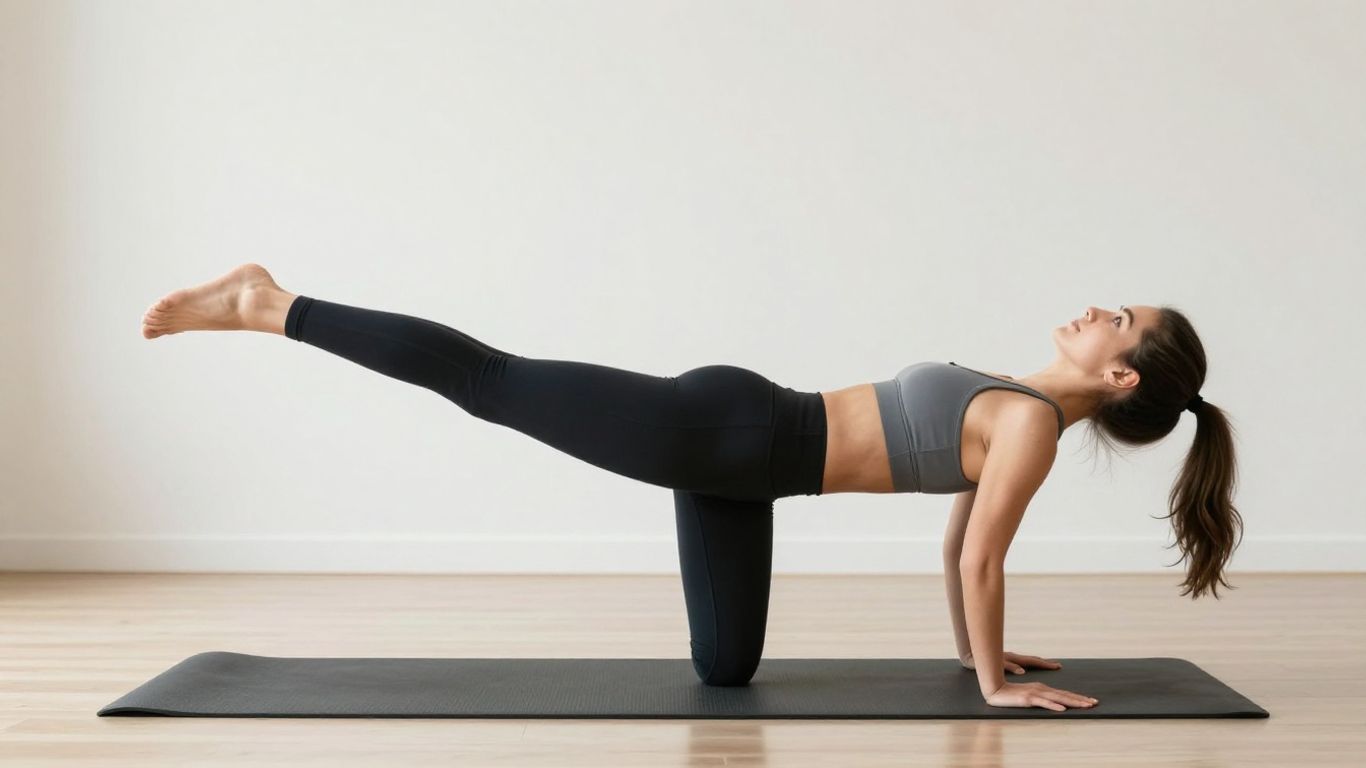
Glute bridges are a fantastic way to wake up those glutes and hamstrings, and they're super simple to do right on the floor. You don't need any fancy equipment for this one, just your own body and a bit of space. This exercise is great because it targets the muscles that help with posture and stability.
Here's how to do them:
- Lie on your back with your knees bent and your feet flat on the floor, about hip-width apart. Your arms should be resting by your sides, palms down.
- Engage your core and squeeze your glutes. Lift your hips off the floor until your body forms a straight line from your shoulders to your knees. Think about pushing through your heels.
- Hold that top position for a second, really feeling the squeeze in your glutes, then slowly lower yourself back down.
Try to keep the movement smooth and controlled. Don't just drop into the squat or pop back up. It’s about building strength and control, not speed. The key here is to focus on that glute squeeze at the top. It's easy to just lift your hips without really activating the muscles you're trying to work. Try to avoid arching your lower back too much; the movement should come from your hips and glutes. You can find more details on proper glute bridge form if you want to be extra sure.
Aim for about 10-15 repetitions for a set. If you want to make it a bit harder, you can try holding the top position for a few extra seconds or even try a single-leg glute bridge once you're comfortable.
7. Jumping Jacks
Alright, let's talk about jumping jacks. These are a classic for a reason. They get your heart rate up fast and work a bunch of muscles all at once. It's a fantastic way to warm up or get your cardio in.
Here's how to do them:
- Start standing with your feet together and your arms at your sides.
- Jump your feet out wider than shoulder-width apart while simultaneously bringing your arms overhead.
- Jump your feet back together and bring your arms back down to your sides.
Keep going! Aim for a steady rhythm.
If regular jumping jacks feel like too much, especially on your knees, you can try a modified version. Instead of jumping, just step one foot out to the side while raising your arms, then bring it back in. Alternate sides. It's still a great way to get moving.
Jumping jacks are a great full-body movement that can be done almost anywhere. They're simple, effective, and you can adjust the intensity to fit your fitness level. Don't underestimate the power of this basic exercise!
Try to do these for about two minutes. If you're just starting out, focus on getting the movement down. Speed can come later. It's all about consistency and building a good foundation.
8. Modified Burpees
Alright, let's talk about burpees. Now, the full burpee can be a bit intense, especially when you're just starting out. But the modified version? It's a fantastic way to get that full-body workout and boost your heart rate without all the jumping and the full push-up.
Think of it as a more beginner-friendly way to get the benefits of a burpee. We're going to take out the explosive jump and the push-up part for now, focusing on the movement itself. This makes it much more accessible and still really effective for building stamina.
Here’s how to do a modified burpee:
- Start standing with your feet about shoulder-width apart.
- Hinge at your hips and bend your knees to place your hands on the floor in front of you.
- Step your feet back one at a time until you're in a plank position. Make sure your body forms a straight line from your head to your heels.
- Step your feet back forward, one at a time, to return to the squat position.
- Stand back up tall.
The key is to move with control through each step. Don't rush it. Focus on engaging your core as you step back into the plank and step forward to return to the squat. This exercise is a great way to get your cardiovascular system working and build strength in your legs, core, and shoulders.
You can do these for a set amount of time, maybe 30-45 seconds, and then take a short break. As you get more comfortable, you can gradually increase the time or even add in a push-up when you're in the plank position if you feel ready. It's all about progressing at your own pace.
9. Arm Circles
Alright, let's get those shoulders feeling loose and ready. Arm circles are super simple, but they really help get the blood flowing to your shoulder joints and the muscles around them. Think of it as giving your shoulders a gentle wake-up call before we move on to anything more intense.
Here’s how to do them:
- Stand with your feet about shoulder-width apart. Let your arms hang straight down by your sides.
- Start making small circles with your arms, moving them forward. Keep the circles small at first and gradually make them bigger as you feel more comfortable.
- Continue for about 30 seconds, then switch directions and make circles backward for another 30 seconds.
The key is to move smoothly and with control, not to rush. You should feel a gentle stretch in your shoulders and upper back. Don't worry if you don't have a huge range of motion right away; that's what this warm-up is for! You can do these standing or even sitting down if that feels better for you today. The main goal is just to get things moving and prepare them for the rest of the workout.
10. Marching in Place
Marching in place is a fantastic way to get your blood flowing and your body ready for more intense activity, or it can serve as a gentle cool-down. It’s a simple movement that almost anyone can do, regardless of their fitness level. You can do this while watching TV, listening to a podcast, or even during a phone call.
The key is to make it purposeful and engaging. Don't just shuffle your feet; lift your knees with a bit of energy and swing your arms naturally. This turns a basic movement into a mini-cardio session.
Here’s how to make the most of it:
- Start Slow: Begin with a relaxed pace, just getting your legs moving.
- Increase Intensity: Gradually lift your knees higher and pick up the speed. Imagine you're marching with a bit of pep in your step.
- Add Arm Movement: Swing your arms in opposition to your legs – right arm forward with left leg, and vice versa. This engages your upper body and burns a few more calories.
- Vary It: Try marching in place with high knees, or add a slight twist to your torso as you march.
This exercise is great for improving circulation and can be a good option for bone health if you're looking for low-impact ways to stay active. It's a versatile move that fits easily into any part of your day.
Marching in place might seem too simple to be effective, but when done with intention, it can significantly contribute to your overall activity levels. It's about consistency and making movement a regular part of your routine, even in small doses.
Keep Moving Forward!
So, you've just finished your first 20-minute workout. That's a huge step, and honestly, just starting is often the hardest part. This routine is a great way to build a solid base. Don't worry if it felt challenging; that's completely normal when you're beginning. The main thing now is to keep it up. Try to do this workout a few times each week, pay attention to how your body feels, and give yourself credit for those small victories. As you get stronger, you can always make it a bit tougher. You've totally got this!
Frequently Asked Questions
How often should I do this 20-minute workout?
Aim to do this workout about 2 to 3 times each week. Giving your body rest days in between is important so your muscles can recover and get stronger. Consistency is more important than doing it every single day!
What if some exercises are too hard for me?
That's totally normal when you're starting out! Many exercises have easier versions. For example, you can do push-ups on your knees instead of your toes, or use a wall for support. Always focus on doing the movement correctly rather than pushing yourself too hard.
Do I really need to warm up?
Yes, warming up is super important! It gets your blood flowing, wakes up your muscles, and helps prevent injuries. Spend about 3-5 minutes doing light activities like marching in place, arm circles, or high knees before you start the main workout.
How long should I rest between exercises and sets?
This routine suggests 20 seconds of rest after each exercise and a 1-minute break between the three rounds. Listen to your body, though! If you need a few extra seconds to catch your breath, take them. As you get fitter, you'll naturally need less rest.
What's the most important thing to remember?
Focus on your form! Doing an exercise with good technique is much better than doing lots of reps with bad form. Also, remember to listen to your body and stay consistent. Small, regular efforts add up to big results over time.
Can I make this workout harder as I get stronger?
Absolutely! Once this routine feels easy, you can challenge yourself. Try doing more repetitions in the time given, reducing your rest time, or moving to more advanced versions of the exercises, like jumping squats or full push-ups.


0 comments