











So, you're thinking about getting into Pilates and fitness, huh? It's a pretty solid choice for getting your body moving better and feeling stronger. This guide is all about making that journey clear and simple, whether you're just starting out or you've been at it for a while. We'll break down the basics, look at some of the gear you might use, and talk about how to make it work for you long-term. Think of it as your friendly roadmap to feeling good in your own skin.
Key Takeaways
- Start with the basics of Pilates to build a strong foundation.
- Learn about different equipment like the Reformer and Chair to add variety.
- Adjust your practice to fit your personal needs and fitness level.
- Make Pilates a regular part of your life for lasting benefits.
- Understand how Pilates works to improve your body and mind.
Mastering Pilates Fundamentals
Getting started with Pilates can feel like learning a new language, but it's really about connecting with your body in a way you might not have before. At its heart, Pilates is about control, precision, and breath. It's not just about doing the moves; it's about understanding why you're doing them and how each small adjustment makes a big difference.
Understanding Core Principles
Pilates is built on a few key ideas that guide every exercise. Think of them as the foundation for everything else you'll do.
- Centering: This is about finding your "powerhouse" – the muscles in your abdomen, lower back, hips, and glutes. It's the stable core from which all movement originates.
- Control: Every movement should be deliberate and precise. No flailing or rushing allowed! Focus on quality over quantity.
- Concentration: You need to be present in your body, paying attention to how each muscle is working and how your body feels.
- Breath: Your breath is your guide. It helps you move, supports your core, and keeps you focused. It's not just about getting air in and out; it's about using the breath to deepen the exercise.
- Precision: Aim for perfect form. It's better to do one exercise correctly than five poorly.
- Flow: Once you have the control and precision, the movements start to connect smoothly, creating a fluid, dance-like quality.
The goal isn't to become a contortionist or lift heavy weights. It's about creating a strong, balanced, and efficient body that moves well in everyday life. This mindful approach is what sets Pilates apart.
Proper Techniques and Breathing Methods
When you're starting out, focusing on the right way to move and breathe is super important. It helps you get the most out of each exercise and keeps you safe.
- Breathing: Most Pilates exercises use lateral or "rib cage" breathing. You inhale through your nose, expanding your rib cage sideways and back, keeping your abs gently pulled in. You exhale through your mouth, feeling your ribs narrow and your core engage a bit more. This keeps your core stable while you breathe.
- Core Engagement: Before you even move, learn to gently draw your belly button towards your spine. It's not about sucking in your stomach; it's a subtle muscular engagement that supports your back.
- Alignment: Pay attention to how your body is stacked. Are your shoulders over your hips? Is your spine neutral? Small tweaks in alignment can change the entire exercise.
Common Mistakes to Avoid
It's totally normal to make a few missteps when you're new to Pilates. Knowing what to look out for can help you correct them early on.
| Common Mistake | How to Fix It |
|---|---|
| Holding your breath | Focus on continuous, controlled breathing. |
| Rushing through moves | Slow down and focus on the quality of movement. |
| Stiff neck or shoulders | Relax your upper body; keep your neck long. |
| Arching the lower back | Engage your core to keep your spine stable. |
| Not using your breath | Use your breath to initiate and support movement. |
Avoiding these common issues will help you build a solid foundation and get better results from your Pilates practice.
Exploring Essential Pilates Equipment
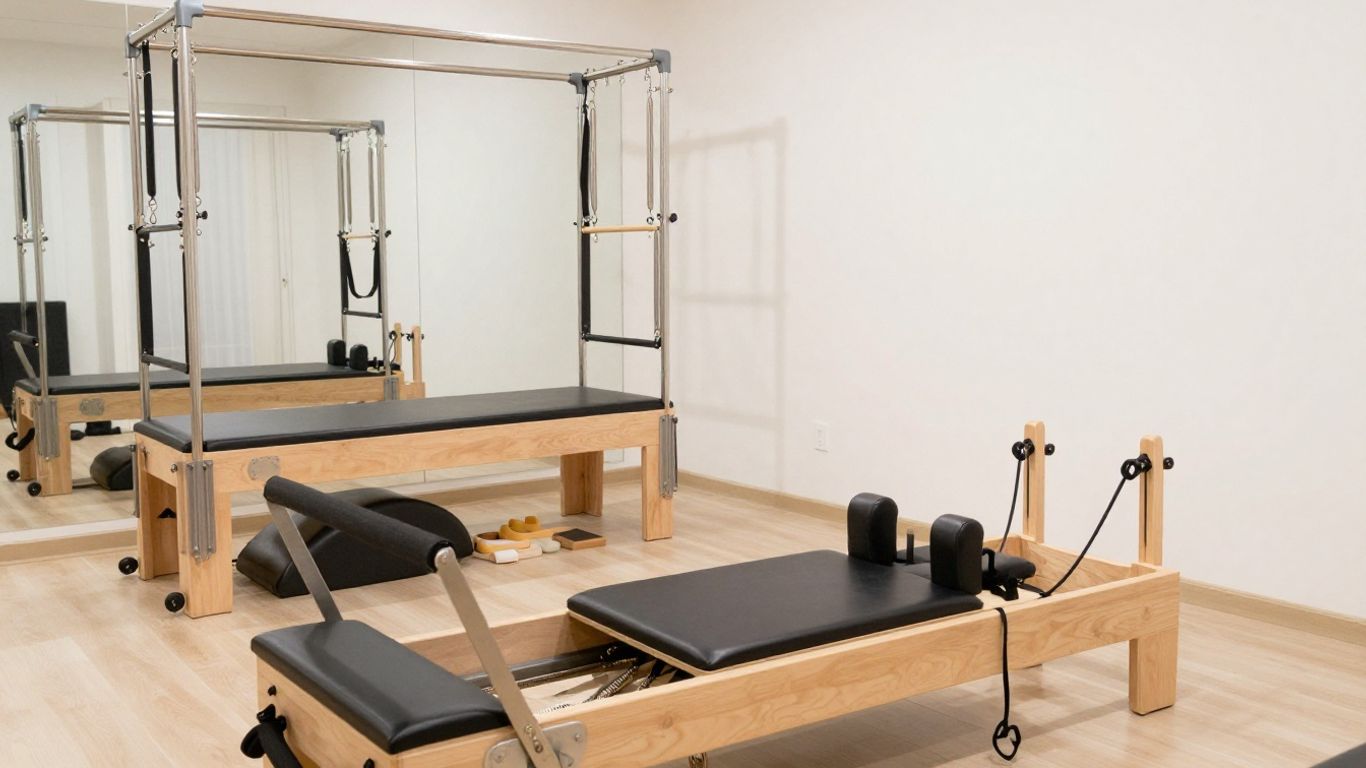
Pilates isn't just about what you do on the mat. There's a whole world of specialized equipment that can really change how you experience the practice. Think of these tools as partners in your movement journey, helping you find new ways to challenge your body and get more out of each exercise.
The Versatile Pilates Reformer
The Reformer is probably the most well-known piece of Pilates equipment. It looks a bit like a bed with a sliding carriage, springs, and straps. This setup lets you work against resistance, making exercises harder or easier depending on the spring tension. You can do so many different movements on it – from leg work that targets your glutes and hamstrings to upper body exercises that build arm strength. It's great for building strength, improving flexibility, and really working on your balance. You can even use it for exercises that help with spinal alignment and posture.
Leveraging the Pilates Chair
Don't let its name fool you; the Pilates Chair (sometimes called the Wunda Chair) is a powerhouse. It's a compact box with a pedal that moves up and down. This piece of equipment is fantastic for building strength, especially in your legs and core, but it also challenges your balance in unique ways. Because it's smaller, it often requires more precise movements and control. It's really good for exercises that focus on single-leg strength or rotational movements. It can also be a great way to work on your posture and coordination.
Utilizing Pilates Barrels and Rollers
Barrels and rollers are simpler pieces of equipment, but they offer a lot. The barrels, like the Spine Corrector or the Arc Barrel, are curved surfaces that you can use to stretch and strengthen your spine. They help you find a deeper stretch in your back and chest, and they can assist in exercises that require you to arch or round your back. Rollers are usually cylindrical and are used for self-massage to release muscle tension, but they can also be used to add an unstable surface to mat exercises, making them more challenging. They're excellent for improving flexibility and releasing tight spots in your muscles.
Using these different pieces of equipment can really open up new possibilities in your Pilates practice. They allow for a wider range of motion and can provide different types of resistance or support, which means you can target muscles in new ways and work on specific areas of your body that might be harder to reach on the mat alone. It's about finding the right tool for the job to help you move better and feel stronger.
Tailoring Your Essential Pilates & Fitness Journey
So, you've got the basics down and you're ready to make Pilates work specifically for you. That's where tailoring comes in. It's not a one-size-fits-all thing, and that's a good thing! We can adjust things for different bodies, different goals, and even different physical needs.
Pilates for Specific Needs and Conditions
Pilates is surprisingly adaptable. Whether you're dealing with a past injury, managing a chronic condition like back pain, or just want to be more mindful of your body as you age, there are ways to modify exercises. For instance, someone recovering from a knee injury might focus on controlled leg movements with less resistance, while a senior might prioritize balance and gentle strengthening. It's all about listening to your body and working with a qualified instructor who can guide you on what's safe and effective.
Adapting Exercises for All Fitness Levels
This is a big one. You don't have to be a super-athlete to do Pilates. The beauty of it is that you can start right where you are. Beginners might focus on foundational movements on the mat or with very light resistance on equipment. As you get stronger, you can gradually increase the challenge. Think of it like this:
- Beginner: Focus on proper form and basic muscle engagement. Exercises are slower and simpler.
- Intermediate: Introduce more complex movements and slightly increased resistance. You'll start to feel more flow.
- Advanced: Challenge yourself with faster tempos, more dynamic transitions, and higher resistance levels.
The key is progression, not perfection from day one.
Progressive Programming for Consistent Results
Just showing up isn't enough; you need a plan that helps you grow. Progressive programming means slowly increasing the difficulty of your workouts over time. This could mean adding more repetitions, increasing the resistance, holding poses longer, or moving to more challenging exercise variations. It's about consistently challenging your body just enough to stimulate change without causing burnout or injury. A good program will have phases, allowing your body to adapt before moving to the next level. This structured approach is what leads to real, lasting improvements in strength, flexibility, and overall well-being.
Making Pilates a regular part of your routine means being smart about how you progress. It's not about doing the hardest thing possible every time, but about consistently showing up and gradually asking a little more of your body. This thoughtful approach prevents plateaus and keeps your body adapting and getting stronger over the long haul.
Integrating Pilates into Your Lifestyle
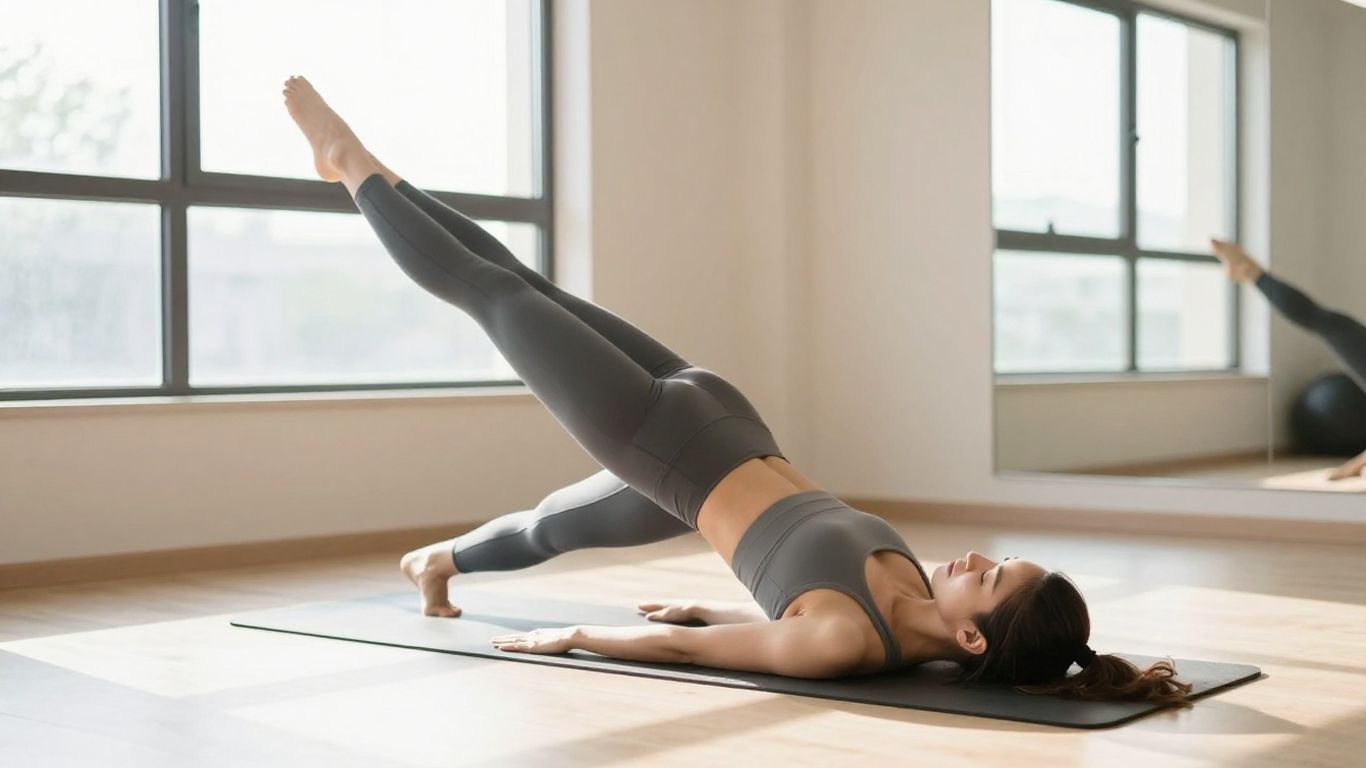
So, you've been doing Pilates, maybe on the mat, maybe on a reformer, and you're feeling pretty good. But how do you make sure this isn't just a phase? How do you weave it into your actual life so it sticks? It's not just about showing up for a class or two a week; it's about making it a part of how you move and think every day. Making Pilates a consistent part of your routine is the real game-changer for long-term health.
Building a Lifelong Fitness Habit
Turning Pilates into a habit isn't about forcing yourself to do it when you don't feel like it. It's about making it so ingrained that it feels natural. Think about it like brushing your teeth – you just do it. For Pilates, this means finding a rhythm that works for you. Maybe it's a quick 20-minute session first thing in the morning before the day gets crazy, or perhaps it's a longer session on the weekend when you have more time. The key is regularity. Even short, consistent sessions add up way more than sporadic marathon workouts.
Here are a few ideas to get you started:
- Schedule it: Put your Pilates sessions in your calendar like any other important appointment. Treat it with the same respect.
- Find your tribe: Working out with a friend or joining a regular class can provide accountability and make it more enjoyable.
- Listen to your body: Some days you'll have more energy than others. Adjust your workout accordingly, but don't skip it entirely. A gentle session is better than nothing.
- Track your progress: Seeing how far you've come can be a huge motivator. Note down how you feel after each session, or any small improvements you notice.
Enhancing Body Awareness and Mind-Body Connection
Pilates is famous for making you really feel what your body is doing. It's not just about moving your limbs; it's about understanding which muscles are working, how your spine is aligned, and how your breath supports your movement. This heightened awareness doesn't just stay on the mat. You start noticing how you sit at your desk, how you stand in line, or how you lift heavy objects. This connection between your mind and body is pretty powerful. It helps you move more efficiently in everyday life, which can prevent injuries and reduce strain.
The focus required in Pilates trains your brain to be more present. You learn to tune into your body's signals, understanding its limits and capabilities. This mindful approach extends beyond your workout, influencing how you interact with the world around you and making you more attuned to your physical well-being.
Achieving Total Body Transformation
When people talk about transformation, they often think of dramatic weight loss or huge muscle gains. While Pilates can certainly contribute to those goals, the real transformation is often more subtle and profound. It's about building functional strength, improving your posture so you stand taller and feel more confident, and increasing your flexibility so everyday movements become easier. You might find that aches and pains you've lived with for years start to fade. It's a holistic change that affects how you look, how you feel, and how you move through life. It's about becoming a more capable, resilient, and comfortable version of yourself.
The Science Behind Essential Pilates & Fitness
Pilates isn't just about stretching and looking good; there's some real science behind why it works so well for your body. It's all about how you move and how your muscles work together. The core idea is to build a strong, stable center that supports everything else you do. Think of your core muscles – the ones deep inside your abdomen and back – as the foundation of a house. When that foundation is solid, the rest of the structure is much more stable and can handle more stress.
How Pilates Strengthens Your Core
Pilates really focuses on engaging those deep core muscles, often called the 'powerhouse'. It's not just about doing crunches. Instead, it uses controlled movements to teach your body how to activate these muscles correctly during every exercise. This consistent, mindful engagement builds endurance and strength in your core in a way that traditional exercises might miss. It's about quality of movement, not just quantity. This focus on deep muscle activation is a key reason why Pilates strengthens your core so effectively.
Improving Posture and Enhancing Mobility
Ever notice how some people just seem to stand taller and move more freely? Pilates plays a big role in that. By strengthening the muscles that support your spine and pelvis, it helps to correct imbalances that lead to slouching or stiffness. When your core is strong and your alignment is better, your joints have more space to move, which can reduce aches and pains. This improved alignment and muscle balance also means you can move with more ease throughout your day, whether you're reaching for something on a high shelf or just walking down the street.
The Benefits of Mindful Movement
One of the coolest parts of Pilates is how it connects your mind and body. You have to really pay attention to how your body feels and moves. This isn't just about avoiding injury; it's about building a better connection with yourself. This awareness can spill over into other parts of your life, making you more present and less stressed.
- Increased Body Awareness: You start to notice subtle things about your posture and movement patterns.
- Better Muscle Control: You learn to isolate and engage specific muscles more effectively.
- Reduced Stress: Focusing on breath and movement can have a calming effect.
The consistent practice of controlled movements, paired with focused breathing, creates a feedback loop that trains the nervous system to maintain better posture and efficient movement patterns even outside of your workout. It's like reprogramming your body's default settings for better performance and comfort.
Keep Moving Forward
So, that’s a look at how Pilates and fitness can really make a difference. It’s not just about looking good, it’s about feeling good in your own skin, moving better every day, and building a body that can keep up with whatever life throws at you. Whether you’re just starting out or you’ve been at it for a while, remember that consistency is key. Keep showing up for yourself, listen to your body, and don’t be afraid to try new things. You’ve got this.
Frequently Asked Questions
What exactly is Pilates and why is it good for me?
Pilates is a way of exercising that focuses on making your body stronger from the inside out. It's all about using your muscles in a smart way to improve how you move, stand, and feel. Think of it as building a super strong center for your body, which helps with everything from sitting up straight to running faster. It's great because it's gentle on your joints but really works your muscles deeply.
Do I need special equipment to start Pilates?
You can definitely start with just a mat! Many basic Pilates moves can be done right on the floor. However, there are cool pieces of equipment like the Reformer, Chair, and Barrels that add extra challenge and can help you get even better results. You don't need them to begin, but they can be a fun addition as you get more into it.
Is Pilates only for people who are already fit?
Not at all! Pilates is amazing because it can be changed for pretty much anyone. Whether you're just starting out, have been exercising for years, or are recovering from an injury, the moves can be adjusted. It's designed to meet you where you are and help you get stronger and more flexible safely.
How often should I do Pilates to see results?
Consistency is key! Aiming for 2-3 times a week is a great goal to start seeing and feeling a difference. Even doing it once a week can help. The most important thing is to find a routine that you can stick with long-term, rather than doing too much too soon and burning out.
What's the difference between Pilates and regular exercise like going to the gym?
While gym workouts often focus on lifting heavy weights or doing cardio, Pilates is more about control, precision, and connecting your mind to your body. It builds deep core strength, improves your posture, and increases your flexibility in a way that feels different from typical gym routines. It's less about brute force and more about smart, controlled movement.
Can Pilates help with back pain or poor posture?
Absolutely! Pilates is fantastic for building a strong core, which acts like a natural corset for your spine. This support can significantly help reduce back pain. It also teaches you how to stand and sit taller, naturally improving your posture and making you look and feel more confident.


0 comments