












Key Takeaways
Adopting a consistent planking routine offers a effective path toward long-term postural health and core stability. These foundational movements can be scaled easily, making them accessible regardless of your current experience level.
- Planks effectively target the deep stabilizing muscles including the transversus abdominis.
- Gradual progression from knee planks to dynamic variations supports continuous strength gains.
- Proper technique prioritizes a neutral spine over the total duration of the hold.
- Regular practice enhances functional balance for everyday activities and athletic endeavors.
- Combining static holds with varied intervals optimizes muscle endurance and recovery.
The health and fitness benefits of planks
Integrating the plank exercise into your weekly motion patterns contributes to a more resilient physical foundation. By concentrating on stabilizing your midsection, you avoid the excessive strain that traditional sit-ups often place on delicate lumbar tissues.
Activation of the deep core stabilizers
Deep core engagement refers to the recruitment of muscles, such as the transversus abdominis, which reside beneath the more visible abdominal muscles. These stabilizers act as a natural corset for your torso, providing the bedrock support necessary for nearly all complex limb movements.
Improving functional posture for daily tasks
When your foundational muscles are conditioned, carrying groceries, sitting at a desk, or picking up heavy objects becomes significantly easier. You will likely notice a reduction in midday fatigue as your muscular structure maintains proper alignment without requiring intense conscious effort for every small movement.
Enhancing balance and muscular coordination
Incorporating regular isometric core strength training helps your body react more efficiently to environmental stressors. As your muscles learn to fire in unison, your perceived coordination during sports or uneven terrain traversal will naturally improve, leading to greater confidence in your physical capabilities.
How to perform a standard plank with perfect form
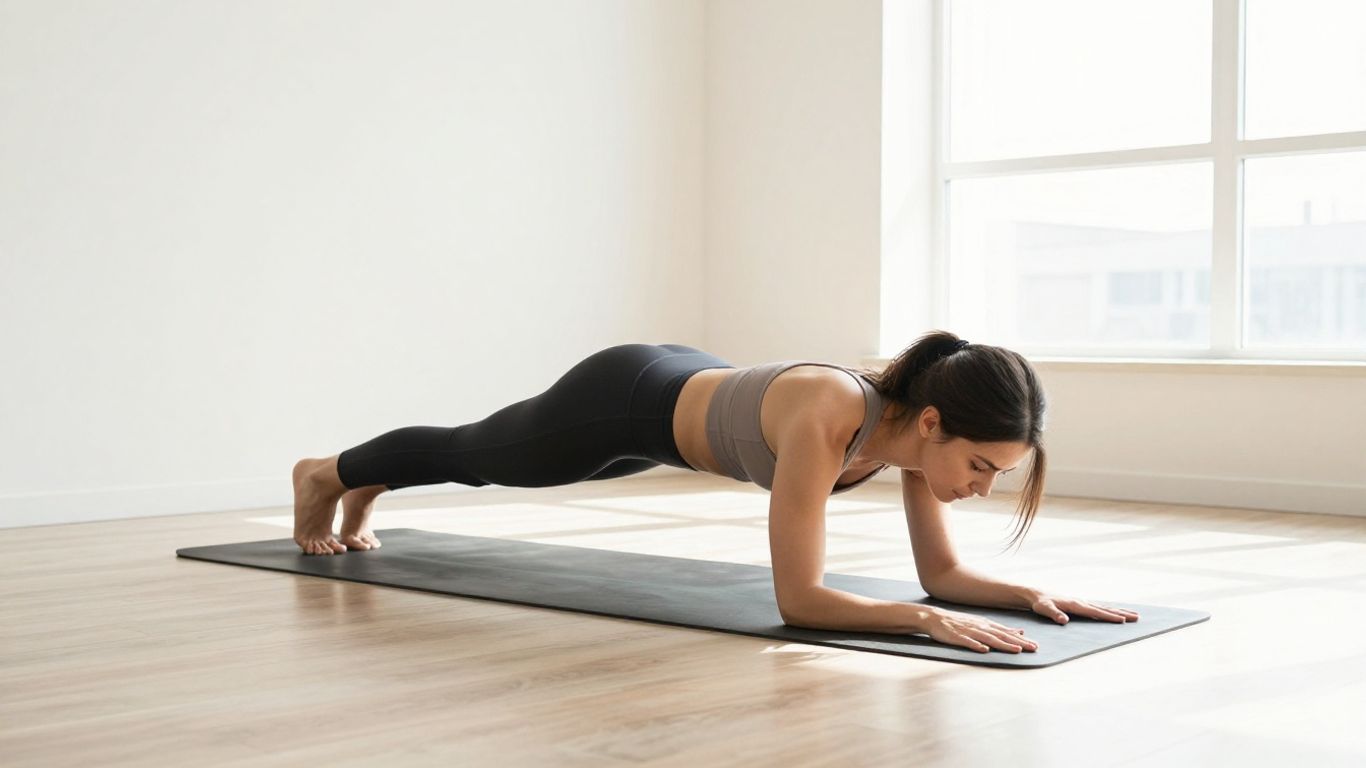
Learning proper form is vital for long-term progress because it ensures you are stressing the intended muscle groups rather than compensating with weaker structures like the neck or lower back. Even if you hold the pose for only a brief period, the quality of contraction dictates the effectiveness of the session.
Positioning your elbows and shoulders
Begin by placing your forearms on the floor, ensuring your joints are aligned directly beneath your shoulders to support the load equally through your arms. If you allow your elbows to drift forward or backward, you disrupt the support chain, which frequently leads to unnecessary strain.
Maintaining a neutral spine and pelvic tilt
Your back should resemble a straight line, avoiding both the excess arching associated with sagging hips and the rounding caused by lifting your pelvis too high. Imagine drawing your belly button toward your spine to keep the midsection locked in a controlled, stiff position.
Engaging the glutes and quadriceps
While your core does the primary heavy lifting, your legs and glutes must not remain dormant during the hold. Squeezing your glutes together forces the hips into an optimal position and ensures that your entire posterior chain contributes to the overall stability of the hold.
Common alignment mistakes to avoid
Focusing on the feeling of being long rather than just looking flat will prevent common errors such as dropping the head or allowing the shoulder blades to wing out. When you prioritize a neutral spine throughout engagement, you minimize the risk of irritation and maximize the return on your time spent training.
Essential plank variations for all fitness levels
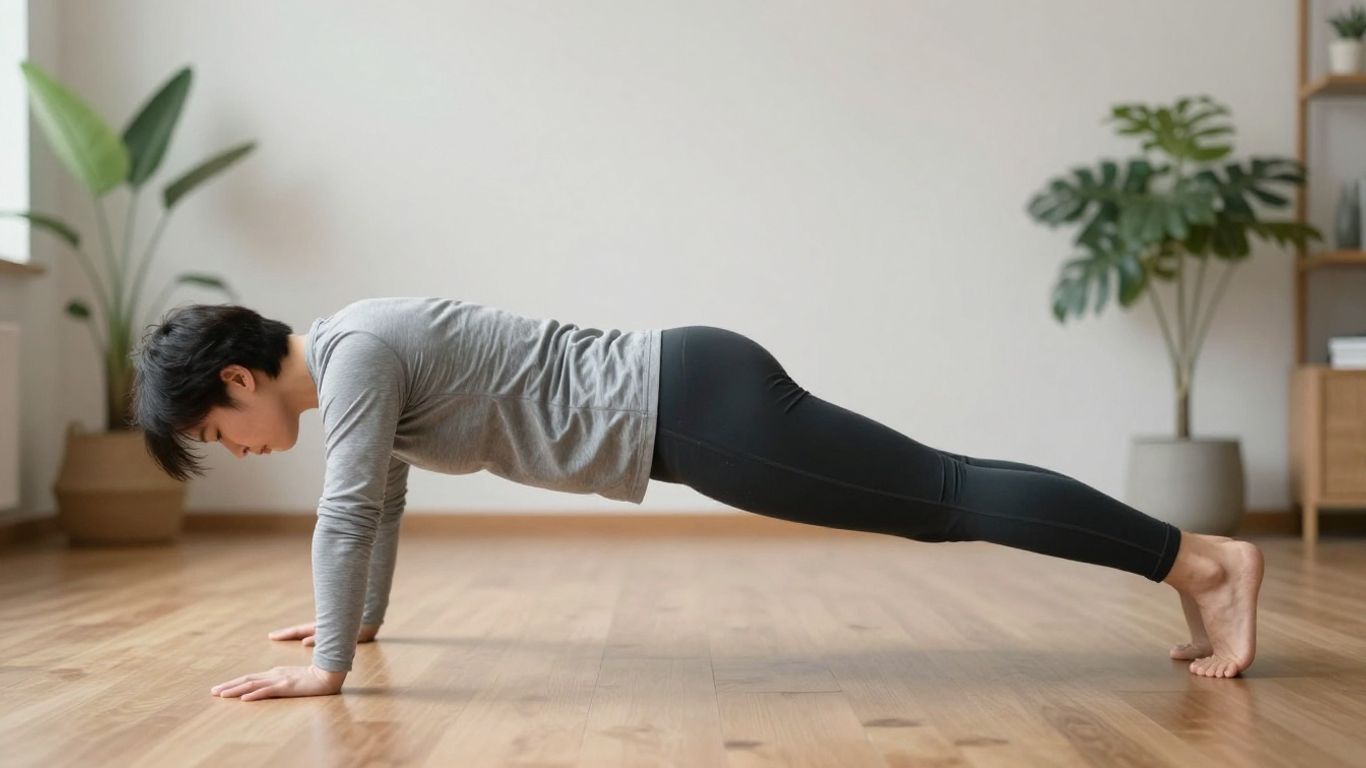
Building complexity should only happen once established patterns feel reliable and pain-free, ensuring you do not develop bad habits under load. Varying your plank variations keeps your training fresh while preventing the plateaus common with static holds.
Modifications for beginners to build foundational strength
If the standard forearm position is too taxing, starting with the knees on the floor effectively reduces the lever length of your body. This allows you to build necessary muscle activation before moving toward more strenuous, full-body unsupported holds.
Dynamic variations to increase heart rate
Once you have mastered stability, you can introduce movement such as shoulder taps or knee-to-elbow tucks to challenge your coordination under varying center-of-gravity shifts. These active transitions make the workout feel more like a comprehensive physical fitness session than a static hold.
Advanced movements for improved athletic performance
For those seeking greater intensity, elevating the feet on a bench or using a stability ball forces your muscles to stabilize at high, inconsistent angles. Such movements are typically reserved for individuals who have already developed a consistent, fatigue-resistant core structure.
Side planks for lateral core engagement
Side variations demand that the obliques work to prevent the hips from drooping toward the floor, providing a unique training stimulus that linear holds cannot replicate. These lateral holds are essential for anyone who wants to balance their muscular development across the entire torso.
Integrating planks into a consistent workout routine
Finding a rhythm in your training schedule is the most effective way to see measurable progress in your muscular endurance. Treat these holds as a baseline skill that bridges your other movements, rather than a standalone event that feels isolated from your broader fitness goals.
Recommended hold times and sets for muscle endurance
Aiming for three sets of 45-second intervals is a standard target for general populations looking to increase their stamina. You should log your progress, focusing more on the quality of the squeeze than the total count, as shown in the breakdown below:
| Level | Duration | Sets | Focus |
|---|---|---|---|
| Beginner | 20 seconds | 3 | Form stability |
| Intermediate | 45 seconds | 4 | Muscle activation |
| Expert | 60+ seconds | 5 | Time under tension |
Balancing planks with other core movements
- Complement your holds with dynamic rotations that work different muscle fibers.
- Avoid performing intense core work every single day to allow for adequate adaptation.
- Pair holds with posterior chain exercises to ensure balanced torso strength.
Frequency and recovery considerations
Consistent effort requires recovery to actually yield improvements in your physical capacity. Over-training leads to diminishing returns and potential minor tweaks that could put you on the sidelines, so respect your body's signals after demanding sessions.
Warm-up requirements before static holds
Never jump into a high-intensity hold with cold muscles, as the tension can be jarring to your spine. Spend five minutes performing light movement, such as walking in place or gentle torso rotations, to prime your joints and circulation for the work ahead.
Equipment and environment considerations
Choosing the right tools for the job helps remove barriers to entry and ensures your joints remain protected during long holds.
The role of exercise mats and surface types
High-density foam provides the necessary cushioning for your elbows and knees, which helps prevent unwanted bruising during longer sets. Avoid doing holds on concrete surfaces without adequate protection, as the lack of give can lead to joint discomfort.
Utilizing exercise balls for added instability
An exercise ball turns every minor sway into a test for your deep stabilizing muscles, effectively increasing the difficulty without increasing the weight. This is a common method for athletes to develop deeper core engagement.
Incorporating resistance bands for progressive overload
Resistance bands allow you to add an external force that pulls against your stability, forcing your shoulders and hips to fight lateral movement. They provide a simple, scalable way to grow stronger as your tolerance increases.
Safety precautions for those with wrist or back issues
If you have chronic pain, consider using forearm variations exclusively to keep the stress off your wrist joints. Always seek professional advice from a physical trainer if you feel sharp pain instead of the dull burn of working muscles, as your safety depends on proper modification.
Conclusion
Mastering the plank is a journey that emphasizes patience and adherence to good form over intensity or duration. By focusing on your core stability throughout your regular movement patterns, you will cultivate a robust physique that supports your active life effectively, reducing the likelihood of injuries in the years to come.
Frequently Asked Questions
Can I do planks every day?
While doing planks daily is generally safe for healthy individuals, it is often more effective to follow a structured schedule that includes rest days for muscle recovery and adaptation.
How long should I hold a plank for results?
Most practitioners find that three to four sets lasting between 30 and 60 seconds are sufficient to build significant core strength when performed with high-quality tension.
Are planks better than crunches?
Many experts prefer planks because they stabilize the entire torso without placing repetitive, unhealthy pressure on the lumbar spine that manual sit-up movements often induce.
Will planks give me a six pack?
Planks strengthen the abdominal structure but are only one component of body composition; visible muscles depend significantly on overall nutrition and body fat levels.
Should I feel my back while planking?
If you feel your lower back, it usually indicates that your core is fatigued or your form is breaking down, requiring you to rest or reduce the difficulty.
Can I use planks to help my posture?
Yes, by strengthening the deep muscles that support your spine, you increase your body's ability to maintain an upright, natural carriage during daily tasks.
What if I get bored doing static planks?
Incorporating variations and short-duration, high-intensity shifts into your routine can keep the training sessions engaging while continuing to challenge your physical endurance.


0 comments