









Building a strong back is super important, not just for how you look, but for your overall health too. Whether you're hitting the gym or working out at home, dumbbells are a fantastic tool. They're easy to use, you can adjust the weight, and they let you really focus on each side of your back. This guide is all about how to use dumbbell exercise for the back to sculpt it, improve your posture, and boost your strength.
Key Takeaways
- Dumbbells are great for back workouts because they're easy to get, you can change the weight as you get stronger, and they let you work each side of your body separately for better balance.
- Exercises like the dumbbell row, bent-over row, and single-arm row are solid moves to start with for building a stronger back.
- More challenging exercises like the Romanian deadlift, dumbbell pullover, and renegade row can add more intensity and target different back muscles.
- To get the most out of your dumbbell back workouts, make sure you warm up properly, focus on good form, and gradually increase the weight or reps over time.
- A well-trained back not only looks good but also helps you stand taller, reduces pain, and makes you stronger for sports and everyday life.
1. Dumbbell Bent-Over Row
Alright, let's talk about the dumbbell bent-over row. This is a real workhorse for building up your back muscles, hitting everything from your lats and traps to your rhomboids. It also gives your rear delts and biceps a good workout, so you're getting a lot of bang for your buck with this one.
To get started, grab a pair of dumbbells. Stand with your feet about shoulder-width apart, knees slightly bent. Hinge at your hips, pushing your butt back, so your torso is leaning forward. Aim to get your back as flat as you can, almost parallel to the floor. Let the dumbbells hang straight down with your arms extended, palms facing each other or facing your body. This is your starting position.
From here, squeeze your shoulder blades together and pull the dumbbells up towards your chest or lower ribs. Keep your elbows tucked in close to your body as you pull. Really focus on using your back muscles to lift the weight, not just your arms. At the top, give your back muscles a good squeeze for a second. Then, slowly lower the dumbbells back down to the starting position with control. Don't just let them drop.
- Keep your back flat: This is super important to protect your spine and make sure you're working the right muscles.
- Control the movement: Don't rush it. A slow, controlled pull and an even slower lower will give you better results.
- Engage your core: Keep your abs tight throughout the exercise to stabilize your body.
- Elbows close: Try to keep your elbows from flaring out too wide.
This exercise is fantastic for building thickness in your mid-back. It requires a good amount of stability, so don't be afraid to start with a lighter weight to nail the form before you start adding more. Getting this one right will make a big difference in your overall back development.
2. Single-Arm Dumbbell Row
Alright, let's talk about the single-arm dumbbell row. This is a fantastic exercise, and honestly, it's pretty similar to the bent-over row we just covered, but you do it one arm at a time. This unilateral approach is where the magic happens.
It lets you really zero in on each side of your back, which is super helpful if you've noticed one side is a bit stronger or weaker than the other. We all have those little imbalances, right? This exercise helps even things out.
Here's a common way to do it:
- Find a bench or a sturdy surface. Place one knee and the hand on the same side on the bench for support. Keep your back nice and flat, ideally parallel to the floor.
- Let the dumbbell hang straight down from your shoulder. You want a good stretch in your lat.
- Pull the dumbbell up towards your hip. Try to keep your elbow tucked in close to your body. Focus on squeezing those back muscles at the top of the movement.
- Slowly lower the weight back down. Don't just let it drop; control it.
- Finish all your reps on one side before switching to the other. This makes sure you're giving both sides equal attention.
This exercise is a great way to build back strength and hit those muscles like the lats, traps, and rhomboids. Plus, it works your core and even your biceps get a bit of a workout too. It's a solid choice for building that V-taper look if that's your goal.
When you're doing these rows, remember that form is everything. It's way better to use a lighter weight and do it perfectly than to heave a heavy weight with sloppy technique. You'll get more out of it and avoid hurting yourself. Don't be afraid to start light and build up as you get stronger.
If you're looking for a way to really focus on your back muscles and improve symmetry, the single-arm dumbbell row is definitely worth adding to your routine. It's a foundational movement for a strong, well-developed back, and you can find more information on dumbbell row variations to mix things up.
3. Renegade Row
Alright, let's talk about the Renegade Row. This move is pretty intense, but in a good way. It's not just about your back; it's a full-body exercise that really makes you work. You're basically doing a plank with dumbbells and then rowing one arm at a time. This forces your core to work overtime to keep you stable.
Here's how you can get started:
- Grab a pair of dumbbells and place them on the floor, about shoulder-width apart.
- Get into a high plank position, with your hands on the dumbbell handles. Make sure your grip is solid.
- Brace your core, squeeze your glutes, and keep your body in a straight line from head to heels.
- Now, row one dumbbell up towards your chest, keeping your elbow tucked in. Try not to let your hips twist too much.
- Lower the dumbbell back down with control and immediately row the other side.
- Keep alternating sides for your desired number of reps.
It might feel a little wobbly at first, and that's totally normal. The key is to focus on keeping your hips as still as possible. Think about it like this: the more your body tries to shift, the harder your core is working to stop it. If you find it too tough, try widening your stance a bit. This gives you a more stable base. It's a great way to build serious core strength, which helps with pretty much everything else you do in the gym, kind of like how a stronger core can help with other lifts.
This exercise is fantastic for building that solid, stable foundation. You're not just pulling weight; you're actively fighting against gravity and your own body's tendency to wobble. That fight is where the real strength gains happen, especially for your midsection and back.
4. Bent-Over Reverse Fly
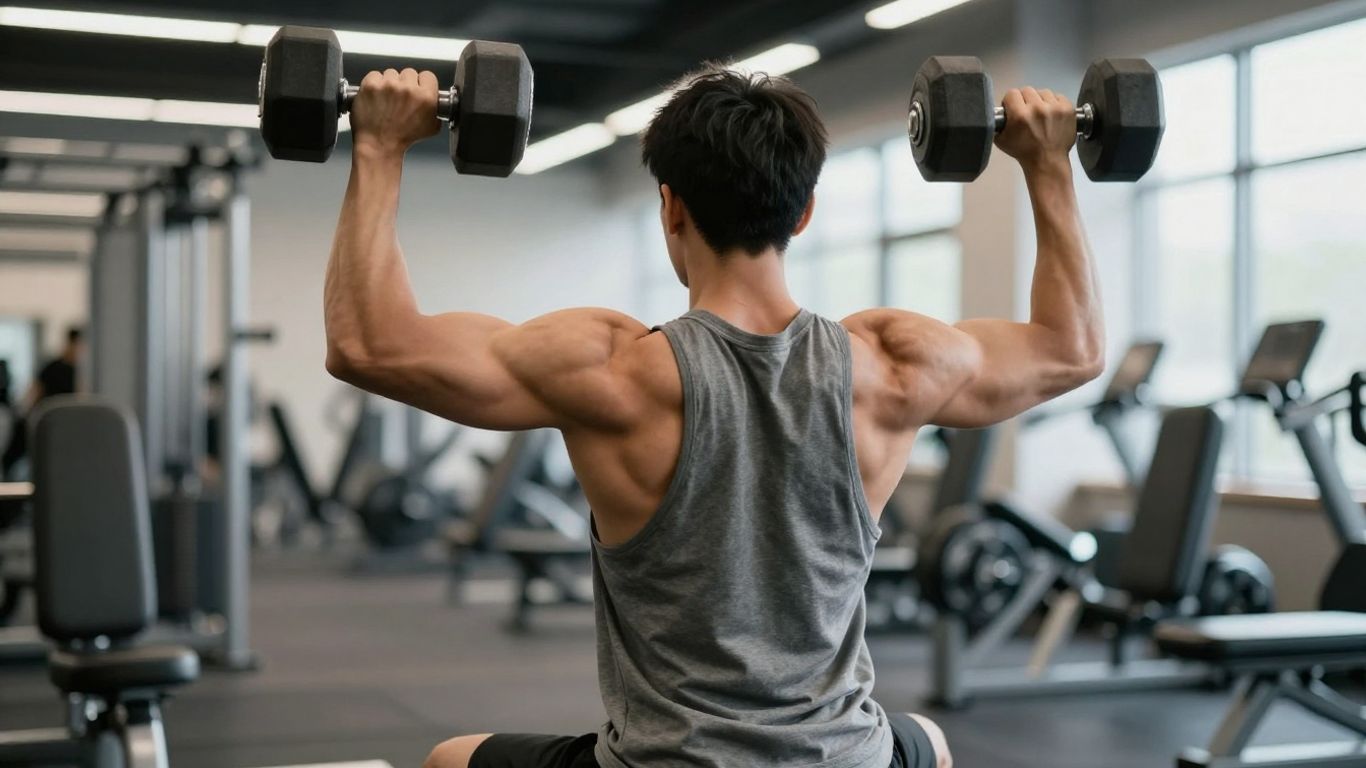
This exercise is all about hitting those muscles in the back of your shoulders, often called the posterior deltoids. They're super important for balancing out your upper body and can really help with posture, especially if you find yourself hunching over a desk or a bike a lot. Getting these muscles stronger can make a big difference in how your shoulders look and feel.
To do it, you'll want to grab a lighter pair of dumbbells. Stand with your feet about hip-width apart, knees just slightly bent. Then, hinge forward at your hips, keeping your back nice and flat, until your torso is almost parallel to the floor. Let the dumbbells hang straight down in front of you, with your palms facing each other. From here, keeping a slight bend in your elbows, lift the weights out to the sides, squeezing your shoulder blades together at the top. Think about leading with your elbows. Lower them back down slowly and with control.
Here’s a quick rundown:
- Start with lighter weights to nail the form.
- Keep your back flat throughout the entire movement.
- Focus on squeezing your shoulder blades together at the top of the movement.
- Control the weight on the way down, don't just let it drop.
It's easy to want to go heavy, but for this move, it's really about the mind-muscle connection and hitting those smaller muscles. You're building the muscles around the shoulder blade, which is great for overall shoulder health.
This exercise is fantastic for counteracting that forward-rounded posture that can creep up on us. By strengthening the muscles that pull your shoulders back, you create a more balanced and upright appearance. It’s a subtle but effective way to improve your look and feel.
5. Dumbbell Romanian Deadlift
The Dumbbell Romanian Deadlift, or RDL, is a killer for your hamstrings and glutes, but don't sleep on what it does for your back. It really works your whole posterior chain, which includes those muscles along your spine and your lower back. Getting the form right is super important here, not just for hitting the muscles but to keep your back safe. It teaches you how to hinge properly, which is a movement you use all the time, even just picking stuff up off the floor.
Here's how to do it:
- Stand with your feet about hip-width apart, holding a dumbbell in each hand. Let them hang straight down in front of your thighs.
- Keep a slight bend in your knees the whole time. Think about pushing your hips back as far as you can, like you're trying to close a door behind you with your butt.
- As your hips go back, lower the dumbbells down along your shins. Keep your back straight – no rounding! Lower them until you feel a good stretch in your hamstrings. This is usually somewhere between your knees and ankles, depending on how flexible you are.
- Now, squeeze your glutes and hamstrings to pull yourself back up to standing. Bring the dumbbells back up along your legs.
Focus on controlling the movement, especially as you lower the weight. Don't just let gravity do the work. If your back starts to round, you've gone too far down, so just come up a bit. It's way better to do fewer reps with good form than to risk hurting yourself.
This exercise is all about the hip hinge. You're not squatting; you're pushing your hips back. If you can't keep your back flat, don't go as low. Everyone's body is different, and that's okay. The goal is a good stretch in the hamstrings and a strong contraction in the glutes on the way up, all while keeping your spine neutral.
6. Suitcase Deadlift
Alright, let's talk about the Suitcase Deadlift. This move is pretty straightforward but packs a punch, especially for your lower back and those muscles along your spine. It's basically a deadlift where you're only holding a dumbbell on one side, which really makes your core work overtime to keep you from tipping over.
This exercise is fantastic for building unilateral strength and improving your core's ability to resist rotation.
Here's how you do it:
- Stand with your feet about hip-width apart. Grab a single dumbbell with one hand, letting it hang by your side. Keep your palm facing your body.
- With a slight bend in your knees and your back straight, hinge at your hips. Lower your torso and the dumbbell towards the floor, keeping the weight close to your leg. You should feel a stretch in your hamstring on the side you're holding the weight.
- Don't go lower than you can maintain a flat back. Once you feel that hamstring stretch, push through your feet to stand back up, squeezing your glutes at the top.
- Repeat on the other side with the dumbbell in your opposite hand.
It's super important to keep your core tight throughout the entire movement. Think about bracing yourself like you're about to get lightly punched in the stomach. This prevents your back from rounding and keeps the load off your spine.
The key here is to focus on the hip hinge. You're not squatting down; you're pushing your hips back. If your back starts to round, you've gone too far. It's better to do fewer reps with perfect form than to risk injury. This exercise really highlights imbalances, so pay attention to how your body feels on each side.
7. Dumbbell Pullover
The dumbbell pullover is a bit of a unique exercise because it hits both your back and your chest, and even your triceps a little. It's great for stretching out your lats, which can feel really good after a heavy lifting session. You can do this lying on a bench, or even on the floor if you don't have one handy.
This movement really helps to expand your rib cage and improve shoulder mobility.
Here's how to get it done:
- Lie on a flat bench with your feet flat on the floor. Hold one dumbbell with both hands, cupping one end of the weight with your palms and your thumbs wrapped around the handle. Extend the dumbbell straight up over your chest.
- Keeping a slight bend in your elbows, slowly lower the dumbbell back behind your head in an arc. Go as far as you comfortably can without feeling any strain in your shoulders.
- Use your chest and back muscles to pull the dumbbell back to the starting position over your chest.
When you're doing these, try to focus on feeling the stretch in your lats as you lower the weight. It's not about how much weight you can move, but more about the control and the stretch you get. You can adjust how flared your elbows are to shift the focus a bit more towards your chest or your back.
This exercise is fantastic for building that V-taper look by widening your upper back. It also helps to create a better mind-muscle connection, allowing you to really feel your back muscles working.
8. Dumbbell Shrugs
Alright, let's talk about shrugs. These are pretty straightforward but super effective for building up those traps, the muscles that run up the sides of your neck and connect to your shoulders. When you do them right, they really make your upper back look thicker and more powerful. It's not just about looks, though; strong traps can help with posture and even reduce neck strain, especially if you spend a lot of time at a desk.
To do them, grab a pair of dumbbells and let them hang by your sides. Stand tall with your feet about shoulder-width apart. Now, the key part: just lift your shoulders straight up towards your ears. Think about shrugging like you just don't care. Don't roll your shoulders forward or backward, just straight up and down. Squeeze at the top for a second, then slowly lower them back down.
Here’s a quick rundown:
- Grip: Hold dumbbells with a neutral grip (palms facing your body).
- Stance: Stand with feet shoulder-width apart, knees slightly bent.
- Movement: Lift shoulders straight up towards your ears, pause, then slowly lower.
- Breathing: Exhale as you lift, inhale as you lower.
Try to do 3 sets of 10-15 reps. You can use heavier weights for fewer reps or lighter weights for more. It really depends on what you're aiming for.
Some people like to add a little twist, like doing one arm at a time or using an incline bench for a variation, but for building pure trap mass, the basic dumbbell shrug is hard to beat. Just focus on that squeeze at the top. It's a simple move, but it gets the job done for building thicker traps.
Don't overthink it. Keep the movement controlled, and you'll feel it working.
9. Dumbbell Upright Row
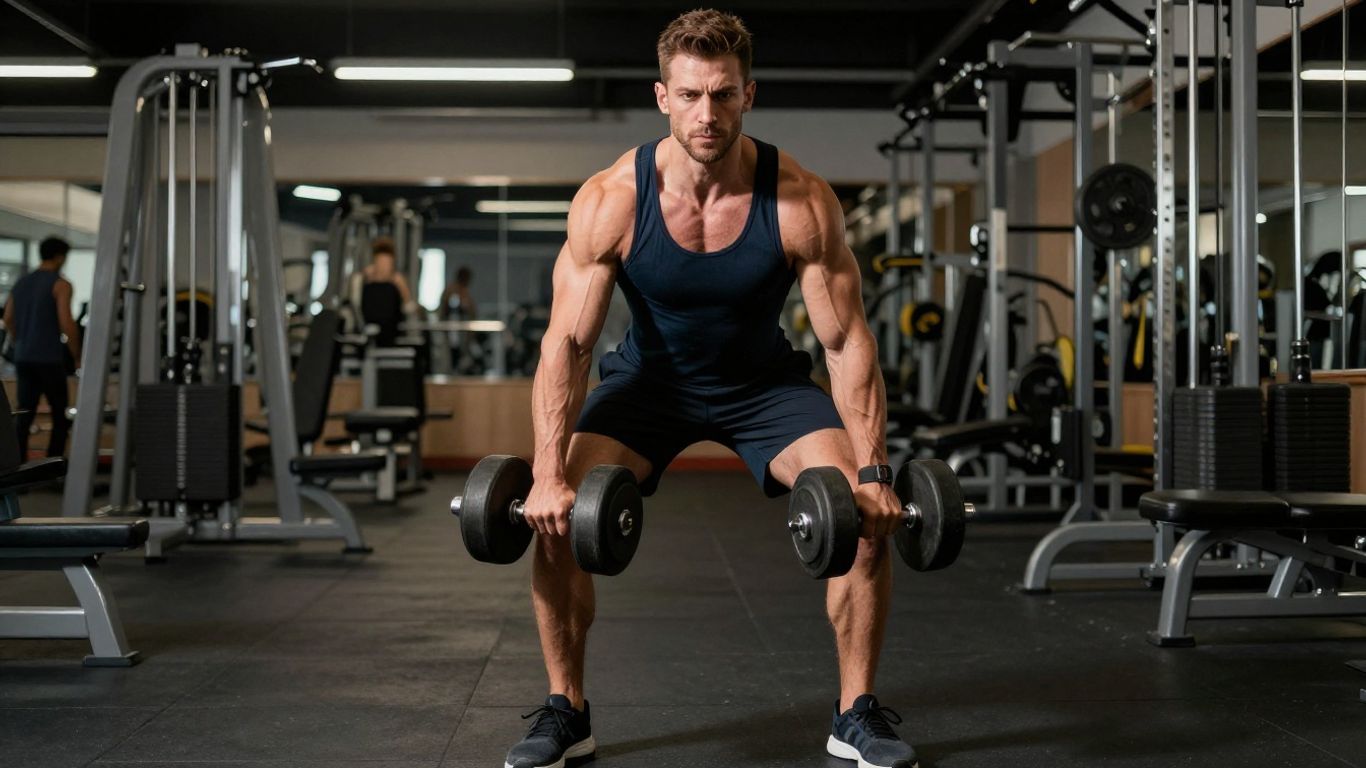
The upright row is a solid choice for hitting your upper back and shoulders, specifically the traps and deltoids. It's a bit different from the pulling movements we've covered, focusing more on that upward pull.
This exercise is great for building thickness in your traps and shoulders.
Here's how to do it:
- Start standing with your feet about hip-width apart. Hold a dumbbell in each hand with an overhand grip, letting them hang in front of your thighs. Your palms should be facing your body.
- Keeping your back straight and core tight, pull the dumbbells straight up towards your chin. Your elbows should lead the movement and point outwards, going higher than your wrists.
- Pull until the dumbbells are just below your chin, then slowly lower them back down to the starting position with control.
It's important to keep the movement controlled. Don't let the weights just drop. Also, try not to shrug your shoulders up too much at the top; the power should come from your side deltoids and traps.
Some people find that flaring their elbows too wide can put stress on their shoulder joints. If you feel any discomfort, try bringing your grip a little closer together or focusing on a slightly narrower elbow flare. It's all about finding what feels right for your body while still working the target muscles.
10. Dumbbell Incline Row
Alright, let's talk about the Dumbbell Incline Row. This one's pretty neat because it really helps you focus on your back muscles without letting you cheat with momentum. You know how sometimes with regular rows, you might swing your body a bit? Yeah, this exercise stops that.
Here's the deal with how to do it:
- Get yourself set up on an incline bench, usually around a 45-degree angle. You'll be lying chest-down on it.
- Grab a dumbbell in each hand. Let them hang straight down.
- Now, pull those dumbbells up towards your chest. Think about squeezing your shoulder blades together at the top. That's where the magic happens for your back muscles.
- Slowly lower the weights back down. Control is key here, don't just let them drop.
This variation is fantastic for really isolating your lats and upper back. It takes a lot of the strain off your lower back, which is a big win if you've ever had any issues there. Plus, by changing the angle, you hit those muscles a little differently than other row variations.
You'll want to aim for about 3 sets of 8 to 12 reps. Make sure you're keeping your core tight throughout the movement. It's easy to forget about that when you're focused on pulling, but it helps keep your body stable and your back safe. Don't be afraid to start with a lighter weight to get the form just right before you start loading up.
Your Stronger Back Awaits
So, there you have it. Building a stronger, more capable back doesn't need a fancy gym or a pile of equipment. Just a pair of dumbbells and a willingness to put in the work. We've gone over some solid moves, from the trusty dumbbell row to the challenging Romanian deadlift, and talked about why hitting those back muscles matters. Remember to focus on your form, listen to your body, and don't be afraid to gradually add a little more weight as you get stronger. Consistency is key here. Stick with it, and you'll start to notice a difference – not just in how your back looks, but in how you feel and move every day. Now, go grab those weights and get to it!
Frequently Asked Questions
What are the best dumbbell exercises for building a strong back?
Some top dumbbell exercises for your back include the Bent-Over Row, Single-Arm Dumbbell Row, Renegade Row, Bent-Over Reverse Fly, Dumbbell Romanian Deadlift, Suitcase Deadlift, Dumbbell Pullover, Dumbbell Shrugs, and Dumbbell Upright Row. These moves target different muscles in your back, helping you build strength and muscle.
Can I build back muscle using only dumbbells?
Absolutely! Dumbbells are great for back workouts. Exercises like rows, deadlifts, pullovers, and reverse flies can effectively build back muscle. By focusing on good form and challenging yourself with the weight, you can definitely grow your back muscles with just dumbbells.
How often should I do dumbbell back exercises?
For most people, working your back with dumbbells 1-2 times per week is a good starting point. Make sure you give your muscles enough time to recover between workouts, usually at least 48 hours. Listening to your body is key!
What's the most important thing to remember when doing dumbbell back exercises?
The most crucial thing is to focus on your form. It's better to use a lighter weight with perfect form than a heavy weight with bad form. This helps prevent injuries and makes sure you're actually working the right muscles. Keep your back straight and control the movement.
How do I know if I'm lifting the right amount of weight?
You should feel challenged by the last couple of reps in each set, but still be able to maintain good form. If you can easily do more reps than planned, the weight might be too light. If you can't complete the reps with good form, it's too heavy. Start lighter and gradually increase as you get stronger.
Why is having a strong back important?
A strong back is vital for good posture, which helps you stand taller and can reduce back pain. It also supports your body in everyday activities, like lifting and carrying things, and improves your overall athletic performance. Plus, a well-developed back looks great!


0 comments