











So, you've heard about the plank plank exercise, right? It seems like everyone's doing it, and for good reason. This move is a total game-changer for your core, but it's surprisingly easy to mess up. We're going to break down why planks are so good, how to actually do them right, and some ways to switch things up so you don't get bored. Whether you're just starting out or you've been working out for ages, there's something here for you.
Key Takeaways
- The plank plank exercise is a staple for building core strength, engaging muscles from your abs to your back and glutes.
- Proper form is more important than how long you hold a plank; focus on full-body tension and a neutral spine.
- Common mistakes include sagging hips, a raised butt, and not engaging the core enough, which reduces benefits and increases injury risk.
- Plank variations exist for all fitness levels, from beginner knee planks to advanced dynamic movements.
- Integrate planks into your routine 2-4 times a week, focusing on holding for about a minute with good form before progressing.
Understanding The Plank Plank Exercise
So, you think you know the plank? It’s one of those exercises that seems super simple on the surface – just get on the floor and hold yourself up, right? Well, yes and no. While the basic idea is straightforward, there's a big difference between just doing a plank and doing one that actually gives you results. Many people end up doing planks that don't do much for their core strength because they're missing a few key details. It’s not about how long you can hold it, but how well you hold it.
The Core Benefits of Planking
Planks are a big deal in fitness for good reason. They're fantastic for building a strong core, which is way more than just your abs. A solid core helps with pretty much everything you do, from picking up groceries to playing sports. It’s your body’s stability center. When you plank correctly, you're teaching your body to brace itself, which is super important for protecting your spine. This bracing action helps create pressure inside your abdomen, acting like a natural corset for your midsection. This stability is also what allows you to transfer power efficiently between your upper and lower body, making movements like squats and deadlifts safer and more effective.
Muscles Engaged During A Plank
When you nail the plank form, you're not just working your six-pack muscles (the rectus abdominis). You're hitting a whole network of muscles. This includes:
- Transverse Abdominis: These are your deep core muscles, often called your "inner corset." They're key for stabilizing your spine.
- Obliques: These muscles run along the sides of your torso and help with rotation and side bending.
- Erector Spinae: These are the muscles that run along your spine, helping you maintain an upright posture.
- Glutes: Your butt muscles play a big role in keeping your hips stable and preventing your lower back from sagging.
- Shoulders and Back Muscles: Muscles like your rhomboids and lats also engage to keep your upper body stable.
It’s a full-body engagement, even though it looks like you’re just holding still.
Why Planks Are A Fitness Staple
Planks are a go-to exercise because they're so versatile and effective. You don't need any fancy equipment, and you can do them pretty much anywhere. Plus, they're scalable. You can make them easier or harder depending on your fitness level. This makes them a great exercise for almost everyone, from beginners just starting out to seasoned athletes. They help build that foundational core strength that supports almost every other physical activity you do. Think of it as building a strong base for your entire body.
The real secret to a great plank isn't endurance; it's about creating and maintaining tension throughout your entire body. If your hips are sagging or your butt is sticking up in the air, you're not getting the full benefit, and you might even be putting yourself at risk for injury. Focus on quality over quantity, always.
Mastering Proper Plank Form
So, you think you know how to plank? Most people do a plank, but not everyone does a good plank. It seems simple enough – get on the floor and hold. But there's a big difference between just holding a position and actually getting your core stronger from it. The real secret isn't how long you can hold it, but the tension you create throughout your entire body. Without solid form, you're just going through the motions.
Achieving Full Body Tension
This is where the magic happens. A plank isn't just an ab exercise; it's a full-body engagement. To really make it count, you need to create tension from your toes all the way to your head.
- Squeeze your glutes: This is a big one people forget. Actively clenching your butt muscles helps keep your hips in a neutral position and prevents your lower back from arching.
- Engage your core: Think about pulling your belly button towards your spine. Don't just hold it tight; actively flex your abs like you're bracing for a punch.
- Drive your arms: Whether you're on your elbows or hands, push the ground away. Imagine you're trying to fill the space between your shoulder blades. This engages your upper back and protects your shoulders.
- Straighten your legs: Squeeze your quads to keep your legs straight and engaged.
Maintaining A Neutral Spine
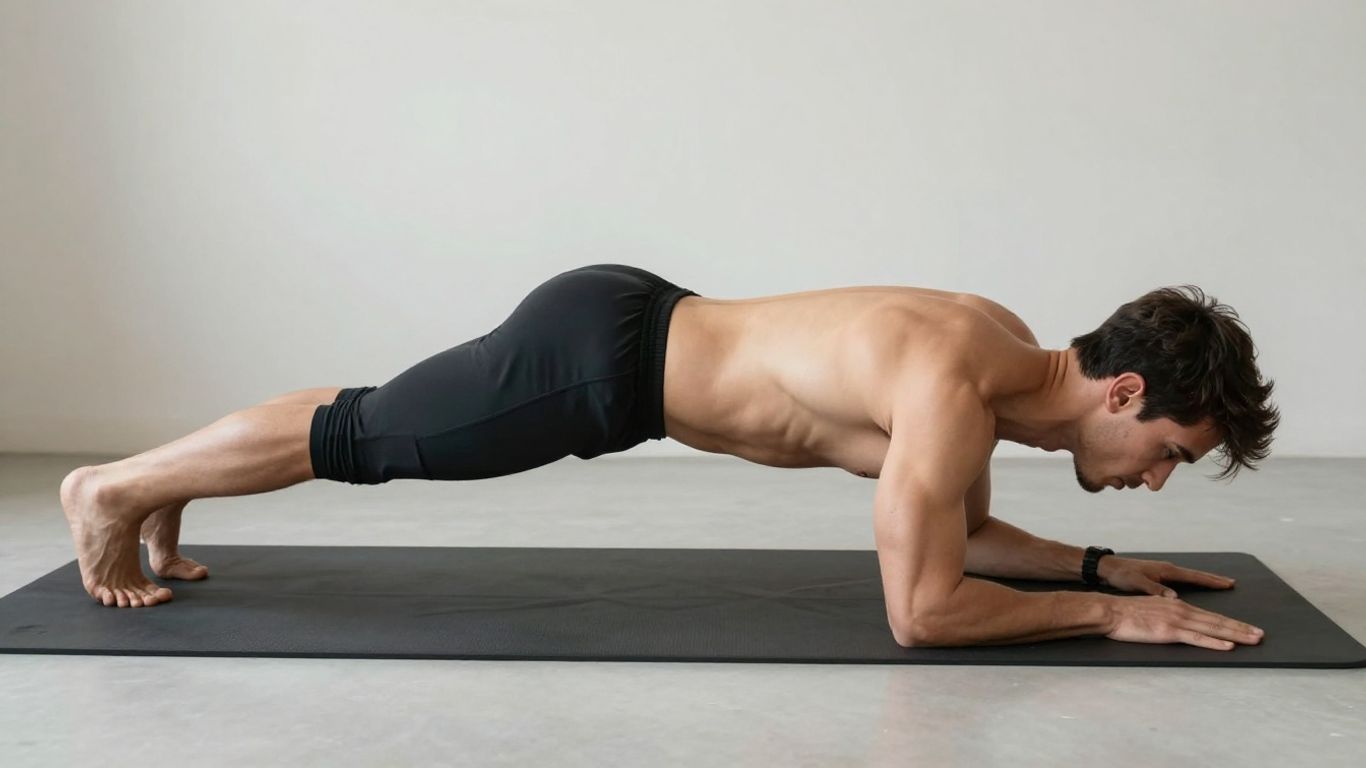
Your spine should look like a straight, flat board. No sagging hips, no butt sticking up in the air. Think about keeping your lower back long, almost like you could serve dinner off of it.
A common mistake is letting the hips drop too low, which arches the lower back. This puts a lot of strain on your spine and isn't effective. To fix this, focus on drawing your hip bones closer together. This helps activate those deep core muscles and keeps your back safe.
Common Form Mistakes To Avoid
Getting the plank wrong is surprisingly easy. Here are a few things to watch out for:
- Sagging hips: As mentioned, this is a big one that strains your lower back.
- Butt too high: This takes the work away from your core and puts it into your lower back and shoulders.
- Neck strain: Don't crane your neck up. Keep your gaze down at the floor, about a foot in front of your hands or elbows, to keep your neck in line with your spine.
- Sinking between shoulder blades: Instead of letting your shoulders collapse, actively push the floor away. This helps build upper back strength and stability. If you're struggling to see your form, try doing planks in front of a mirror or recording yourself.
Remember, it's way better to hold a perfect plank for 30 seconds than a sloppy one for five minutes. Focus on quality over quantity to build real strength.
Optimizing Your Plank Hold
So, you've got the basic plank down, or at least you think you do. But how long should you actually be holding it? And how do you make sure you're getting the most out of every second? It's not just about seeing how long you can stay in one position; it's about the quality of that hold. The real magic happens when you focus on creating and maintaining tension throughout your entire body.
How Long To Hold A Plank
Forget those marathon plank holds you might see online. Holding a plank for minutes on end with shaky form isn't doing you any favors. In fact, it can be counterproductive. The goal is to hold the position with maximum tension for as long as you can maintain perfect form. For most people, this means holds will likely be in the range of 30 seconds to a minute. Once your form starts to break – think hips dipping or butt rising – it's time to stop. Quality over quantity, always.
Breathing Techniques For Planking
Breathing might seem like a no-brainer, but it's actually pretty important during a plank. You want to breathe steadily, not hold your breath. Try to inhale through your nose and exhale through your mouth. Some people find it helpful to think about drawing their belly button towards their spine on the exhale, which can help engage the core even more. Don't let your breathing get shallow or ragged; keep it controlled.
When To Progress Your Plank Hold
Knowing when to push yourself is key. You're ready to make things tougher when you can comfortably hold a standard plank with excellent form for about 60 seconds. This doesn't mean you need to jump into the most complex variations right away. You can start by slightly increasing your hold time, aiming for maybe 75 or 90 seconds if your form stays solid. Another way to progress is by adding small movements, like alternating shoulder taps, as long as your core stays braced and your body doesn't wobble. Listen to your body; it'll tell you when it's ready for more.
Exploring Plank Exercise Variations
Once you've got the basic plank down, it's time to mix things up. Sticking with the same old thing can get boring, and honestly, your body might start to adapt, meaning you get less bang for your buck. Luckily, there are tons of ways to make planks harder, easier, or just different to keep challenging yourself.
Beginner Modifications For Planks
If the standard plank feels like too much right now, no worries. There are a few ways to dial it back so you can still get that core work in. The goal here is to build up strength without putting too much strain on your body.
- Knee Plank: This is a great starting point. Instead of being on your toes, you'll rest on your knees. Keep your body in a straight line from your head to your knees, engaging your core just like you would in a regular plank. It takes some pressure off your lower back and arms.
- Incline Plank: Find a sturdy elevated surface, like a counter or a bench. Place your hands or forearms on the edge and extend your legs back. The higher the surface, the easier it will be. This lets you practice the body alignment without the full body weight.
- Wall Plank: Stand facing a wall, about arm's length away. Place your forearms on the wall and step your feet back until your body forms a straight line from head to heels. This is the most modified version, focusing purely on core engagement.
Remember, the point of modifications is to build the strength and stability needed to progress. Don't skip them if you need them; they're a smart step, not a sign of weakness.
Intermediate Plank Challenges
Ready to step it up a notch? These variations add a bit more complexity or demand more stability, really making your core work harder.
- Plank Jacks: Start in a standard high plank (on your hands). Keeping your core tight and hips stable, jump your feet out wide, like a jumping jack, and then jump them back together. It adds a cardio element and challenges your stability.
- Shoulder Taps: From a high plank position, slowly lift one hand and tap the opposite shoulder. The key is to minimize hip rocking. You'll feel this in your obliques as they work to keep you steady.
- Long Lever Plank: In a forearm plank, walk your elbows forward, extending the lever arm. This makes the plank significantly harder because gravity has more leverage against your core. You'll need to brace much harder to keep your body straight.
Advanced Plank Variations
For those who have mastered the basic plank and its intermediate cousins, these advanced moves will really test your limits. They often involve instability, dynamic movement, or added resistance.
- Plank with Hip Dips: From a forearm plank, slowly lower one hip towards the floor, then return to center and lower the other hip. This targets the obliques intensely.
- Plank with Leg Lifts: In a high or forearm plank, lift one leg a few inches off the ground, hold briefly, and then lower it. Alternate legs. This requires significant core control to prevent your hips from tilting.
- RKC Plank: This is less about holding time and more about maximal tension. From a forearm plank, squeeze every muscle in your body as hard as you can – glutes, quads, abs, back. Hold for a short, intense burst (10-20 seconds). It's about creating maximum bracing force.
Integrating Planks Into Your Routine
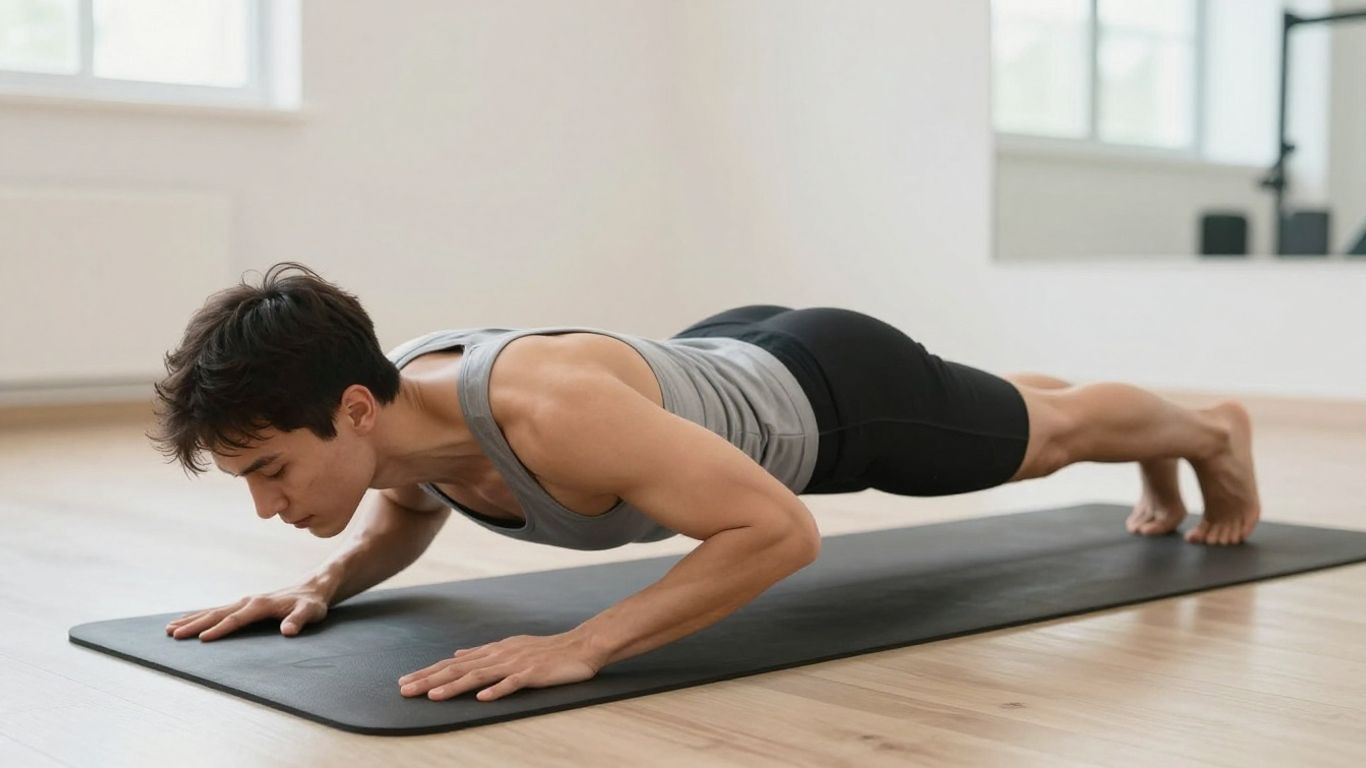
So, you've gotten the hang of the basic plank. Awesome! Now, how do you actually make this exercise a regular part of your fitness life without it feeling like a chore? It’s not just about doing a plank once in a while; it’s about consistency. The real magic happens when you weave planks into your existing workouts.
Frequency For Plank Workouts
How often should you be planking? For most people, aiming for 3-4 times a week is a solid starting point. You don't need to dedicate entire sessions to planks, but rather sprinkle them in. Think about it like this:
- Warm-up: A quick set of planks can get your core activated before a run or weightlifting session.
- During Workouts: Add a plank hold or a few reps of a plank variation between sets of other exercises.
- Cool-down: A final plank hold can help reinforce good posture as you wind down.
Adding Planks To Existing Routines
This is where the flexibility of planks really shines. You can easily slot them into almost any kind of workout. For example, if you're doing bodyweight circuits, throw in a plank hold for 30-60 seconds after your squats or push-ups. If you're into running, try doing a few sets of planks right after your run. Even if you're just doing some light stretching, a brief plank can add a bit of core work. Remember, it's better to do a few planks with perfect form than many with sloppy form. If you're looking for ways to build core strength beyond just planks, consider exercises that involve lying on your back with your legs extended and focusing on core engagement, or even holding a dumbbell while lying on your back with knees bent. Alternative core exercises can complement your planking routine.
Recognizing Signs Of Proper Form
This is super important. Doing planks incorrectly can be worse than not doing them at all. So, what should you be looking for?
- Body Alignment: Your body should form a straight line from your head to your heels. No sagging hips, and no butt sticking up in the air.
- Core Engagement: You should feel your abs and glutes working hard. Imagine you're trying to pull your belly button towards your spine.
- Breathing: Don't hold your breath! You should be able to breathe relatively normally, though it might be a bit more challenging.
If you find yourself struggling to maintain good form, it's a sign that you might be holding the plank for too long or that you need to work on strengthening your core with simpler variations. It's always better to shorten the hold time and keep that perfect line than to let your form break down. Quality over quantity, always.
Don't get discouraged if you can only hold a plank for a short time initially. Building up to a minute or more with solid form takes time and consistent effort. Keep at it, and you'll see progress.
Beyond The Basic Plank
So, you've got the standard plank down. You can hold it steady, feel the burn, and you're ready to see what else this exercise can do. That's awesome! The basic plank is a fantastic foundation, but there's a whole world of variations out there that can really shake up your core workout and target muscles in new ways. It's not just about holding still anymore; it's about adding movement, changing your base of support, and challenging your stability.
The Power Of Side Planks
When you think about core strength, you probably picture your abs. But your core is so much more than just the muscles on the front of your torso. The muscles along your sides, your obliques, are super important for twisting, bending, and keeping your body stable. Side planks are the perfect way to give these muscles some serious attention. They're also great for your shoulders and hips.
Here's how to get started with a basic side plank:
- Lie on your side with your legs stacked and your elbow directly under your shoulder.
- Engage your core and lift your hips off the ground, creating a straight line from your head to your feet.
- Hold this position, focusing on keeping your hips from sagging.
The side plank is a powerhouse for building lateral core stability.
Dynamic Plank Movements
Once you're comfortable with static holds, it's time to add some action. Dynamic plank variations involve moving parts of your body while maintaining the plank position. This makes the exercise more challenging and works your core's ability to stabilize during movement, which is pretty much what we do all day long. Think about reaching, tapping, or even stirring. The stir the pot exercise is a great example of a dynamic move that really targets those deep stabilizing muscles.
Some popular dynamic variations include:
- Plank Shoulder Taps: From a high plank, tap your opposite shoulder with one hand, alternating sides while keeping your hips as still as possible.
- Plank Reaches: In a forearm plank, reach one arm forward, then return it, alternating arms. This challenges your balance and shoulder stability.
- Plank Jacks: Similar to a jumping jack, but with your hands on the ground in a high plank position, jump your feet out wide and then back together.
Plank Variations For Specific Goals
Depending on what you're trying to achieve, you can tweak plank variations. Want to build more shoulder strength? Try a long-lever plank where your hands are further forward. Need to work on hip stability? Focus on variations that require you to resist rotation. Even simple adjustments, like changing the angle of your arms or the distance between your feet, can shift the focus of the exercise. It's all about understanding how small changes can lead to big differences in muscle activation and overall strength development. Don't be afraid to experiment and find what works best for you and your fitness objectives.
Wrapping It Up
So, there you have it. Planks might seem super basic, but they're seriously effective for building a strong core. We've gone over why they're so good for you, how to actually do them right without hurting yourself, and even some ways to mix things up when you're ready for more. Remember, it's not about how long you can hold it, but how well you hold it. Keep practicing, focus on that form, and you'll definitely feel the difference. Now go get your plank on!
Frequently Asked Questions
Why are planks considered so important for fitness?
Planks are super important because they build a strong core, which is like the body's powerhouse. A strong core helps you move better, keeps your spine safe, and makes other exercises like lifting or running easier and safer. They work a lot of muscles at once, making them a really efficient way to get stronger.
How long should I actually hold a plank?
It's better to hold a plank with perfect form for a shorter time than to hold it for ages with bad form. Aim for about 30 seconds to a minute, focusing on keeping your body tight and straight. As you get stronger, you can slowly increase the time, but never at the expense of good posture.
What muscles do planks work?
Planks hit a lot of muscles! They really focus on your core, including your abs (rectus abdominis), the deeper core muscles (transverse abdominis), and the sides of your waist (obliques). But they also work your lower back, your glutes (butt muscles), and even your shoulders and arms to keep you stable.
Can planks help with back pain?
Yes, planks can definitely help protect your back! By strengthening your core muscles, they help support your spine better. This can make everyday activities like lifting things or even just sitting and standing more comfortable and less likely to cause pain.
Are there easier ways to do a plank if I'm a beginner?
Absolutely! Beginners can start with modified planks, like doing them on your knees instead of your toes. This still works your core but takes some pressure off. You can also try leaning against a wall. As you get stronger, you can move to a standard plank.
How often should I do planks?
You can include planks in your workout routine two to four times a week. Listen to your body, though. If you're doing them correctly and they feel challenging but good, that's a great frequency. You can also add them to different workouts you're already doing.


0 comments