










So, you're thinking about getting a trampoline? Awesome! A trampoline can bring a ton of fun and activity to your backyard. But let's be real, picking the right one can feel a bit overwhelming with all the different sizes, brands, and features out there. This guide is here to help you figure out the biggest trampolines and what makes them great, so you can spend less time stressing and more time bouncing. We'll look at what to consider, from the frame to the safety stuff, to help you find the perfect fit for maximum fun.
Key Takeaways
- When looking at the biggest trampolines, size really matters for both fun and safety. Bigger trampolines give you more room to jump and usually a better bounce, but always check if it fits your yard with enough space around it.
- The frame strength is super important for durability. Look for thick, galvanized steel that can handle lots of jumping over time. The jumping mat material should also be tough and UV-resistant.
- Bounce quality often comes down to the springs. Longer springs generally mean a better, more comfortable bounce, giving you more airtime. Some newer designs are going springless for added safety.
- Safety features like sturdy enclosure nets and thick padding over any springs are non-negotiable, especially for the biggest trampolines. Always check the weight limits and stick to them.
- Consider if an in-ground or above-ground model works best for your space and style. In-ground ones look neater and can feel safer, but above-ground are usually easier to set up.
Understanding The Biggest Trampolines
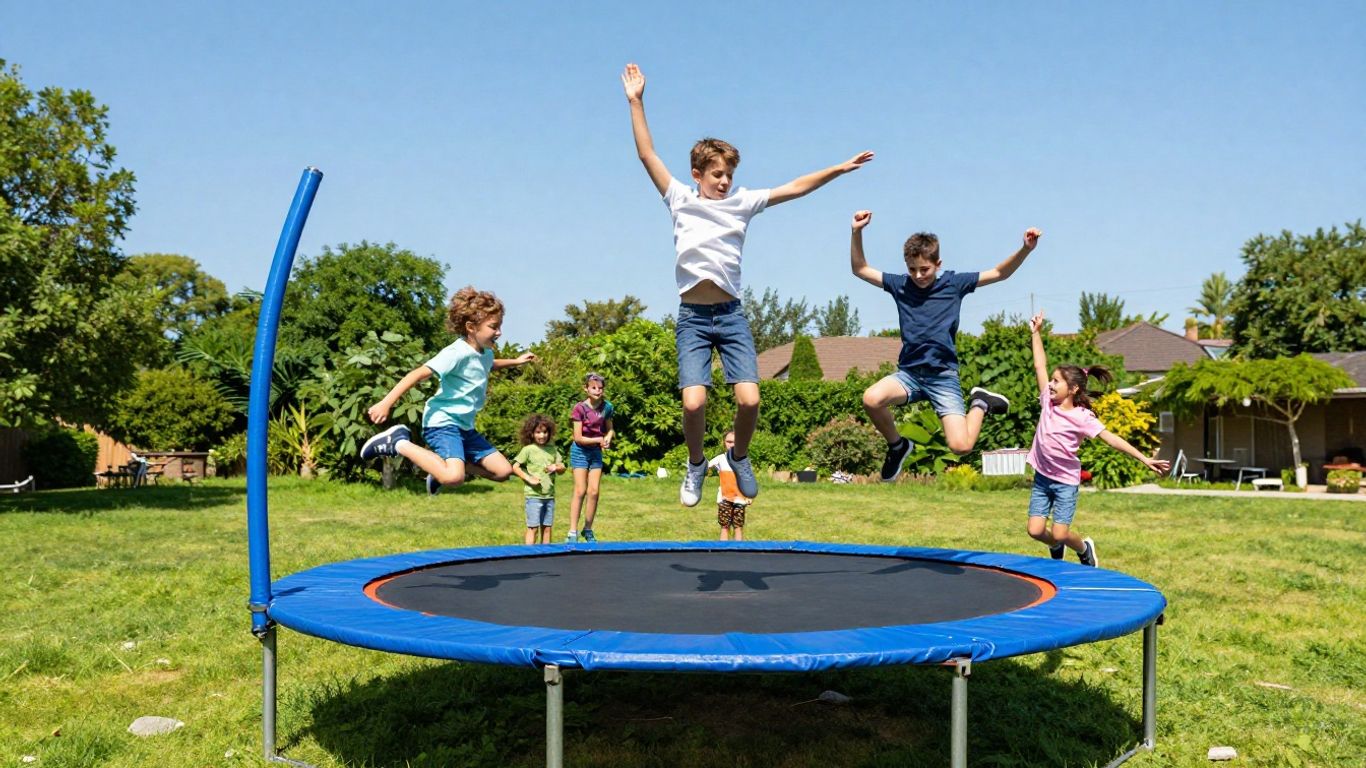
Exploring The Largest Trampoline Options
When it comes to picking out a trampoline, size is usually the first thing people notice. Huge trampolines aren't just fun—they change the whole game for yard activities. The biggest models easily fit several jumpers, making them popular for families and anyone who likes to host a crowd. Here’s a straightforward comparison of popular size options:
| Trampoline Type | Jumping Mat Size | Jumping Surface | Minimum Yard Space | Weight Capacity |
|---|---|---|---|---|
| Jumbo Square | 13 x 13 ft | 155 sq ft | 23 x 23 ft | 1500 lb |
| Large Square | 11 x 11 ft | 113 sq ft | 21 x 21 ft | 1500 lb |
| Large Oval | 8 x 13 ft | 92 sq ft | 18 x 23 ft | 1500 lb |
| Medium Round | 10 ft diameter | 79 sq ft | 20 x 20 ft | 1500 lb |
| Compact Round | 8 ft diameter | 54 sq ft | 18 x 18 ft | 1300 lb |
It’s worth remembering that the larger the trampoline, the more room you’ll need around it—not just for safety, but also to keep it easy to mow and move around. You’ll probably want at least three feet of clearance all the way around.
- Larger trampolines let several people jump together.
- More space invites bigger (and safer) tricks.
- They’re great for games or even trampoline basketball.
Understanding Trampoline Sizes And Their Impact
Choosing a size isn’t just about squeezing something into your yard—it really affects how the trampoline feels to use. Bigger trampolines:
- Allow more simultaneous users without anyone feeling cramped.
- Spread out the force of jumps, which softens the bounce.
- Make it safer because there’s less chance of bumping into the springs or each other.
Bouncing on a bigger trampoline feels less tense—more like flying and less like being shot out of a cannon. There’s just more room for everyone to have their own fun without running into each other.
Assessing Weight Capacity And User Needs
This part gets overlooked—a lot. Weight limits matter for safety and making sure your trampoline lasts. Manufacturers test these limits, so it’s not just a guideline; it’s how the trampoline is built to work.
| Trampoline Size | Typical Weight Limit |
|---|---|
| Small/Medium (8–12 ft) | 150–250 lb |
| Large (13–16 ft) | 250–400 lb |
| Heavy-Duty Models | 500+ lb |
Here are a few things to consider:
- Who’ll be using the trampoline? Teenagers, adults, small kids? The range makes a difference.
- Will you have several people jumping at once? Do the math—it adds up fast.
- Stick to the weight limits. Overloading isn’t just hard on the springs and frame; it’s also a real safety risk.
Bottom line: Don’t guess. Check the numbers, and always make sure your trampoline meets your actual needs, not just what looks cool on a website. If in doubt, choose the next size up—you’ll appreciate the extra space, and so will everyone else.
Prioritizing Safety On Large Trampolines
When you're eyeing up those massive trampolines, the sheer fun is undeniable. But let's be real, safety has to be the main event here. It's easy to get swept up in the excitement, but a few smart choices can make a world of difference. Always, always check what the manufacturer says before anyone starts bouncing.
Essential Safety Enclosures and Padding
The safety enclosure, or net, is like your trampoline's built-in bodyguard. Its job is to keep jumpers from accidentally flying off the edge. When you're checking out a trampoline, give that net a good look. Is it attached super securely? Are there any big gaps where someone could slip through? Some nets are designed to angle inward, which is a smart way to gently guide jumpers back toward the center if they get too close to the side. Then there's the padding. This covers up the metal frame and the springs – the parts that can cause the most trouble. You want padding that's thick, tough, and won't just slide off. It should also be able to handle being out in the sun without falling apart. Some trampolines even put the springs on the outside of the net, which can be a safer setup.
Here are some key safety features to keep an eye out for:
- Safety Enclosure Net: This is your first line of defense against falling off. Make sure it's securely fastened and has no large openings.
- Padding: Look for thick, durable padding that covers the springs and frame. UV resistance is a big plus so it lasts longer.
- Frame Design: Some frames are built lower to the ground, or the poles curve away from the jumping area, adding another layer of safety.
Evaluating Frame Durability and Stability
The frame is the backbone of your trampoline, so its strength and stability matter a lot. You'll want to look for frames made from sturdy materials, like galvanized steel, which holds up well outdoors and resists rust. The way the frame is put together is also important. Some designs use curved poles that arch away from the jumping space. This is a nice touch because if someone bumps into a pole, the impact is less likely to be hard. For windy areas, consider if an anchor kit is available or can be added. This helps keep the trampoline from moving or tipping over. A stable frame means a safer bounce.
The Importance of Padded Edges and Spring Covers
This padding is super important for preventing injuries. It acts as a buffer zone between the jumper and the hard metal parts of the trampoline. You want padding that's at least a few inches thick and covers the entire frame and all the springs. Check that it's securely attached and won't shift around during use. Some padding is better than others, so look for materials that are weather-resistant and won't degrade quickly in the sun. The goal is to minimize any chance of fingers, toes, or limbs getting caught in the springs or hitting the frame.
Always remember that even with the best safety features, adult supervision is non-negotiable, especially when children are using the trampoline. Setting clear rules, like only one person jumping at a time and no roughhousing, goes a long way in preventing accidents.
Here's a quick look at weight capacities, which are critical for safety:
| Trampoline Size | Typical Weight Limit |
|---|---|
| Small to Medium (8-12 ft) | 150 - 250 lbs |
| Large (13-16 ft) | 250 - 400 lbs |
| Heavy-Duty Models | 500+ lbs |
Don't guess – always check the specific recommendations from the manufacturer for the model you're interested in. They've done the testing, so they know what it can handle safely.
Key Components For A Superior Bounce
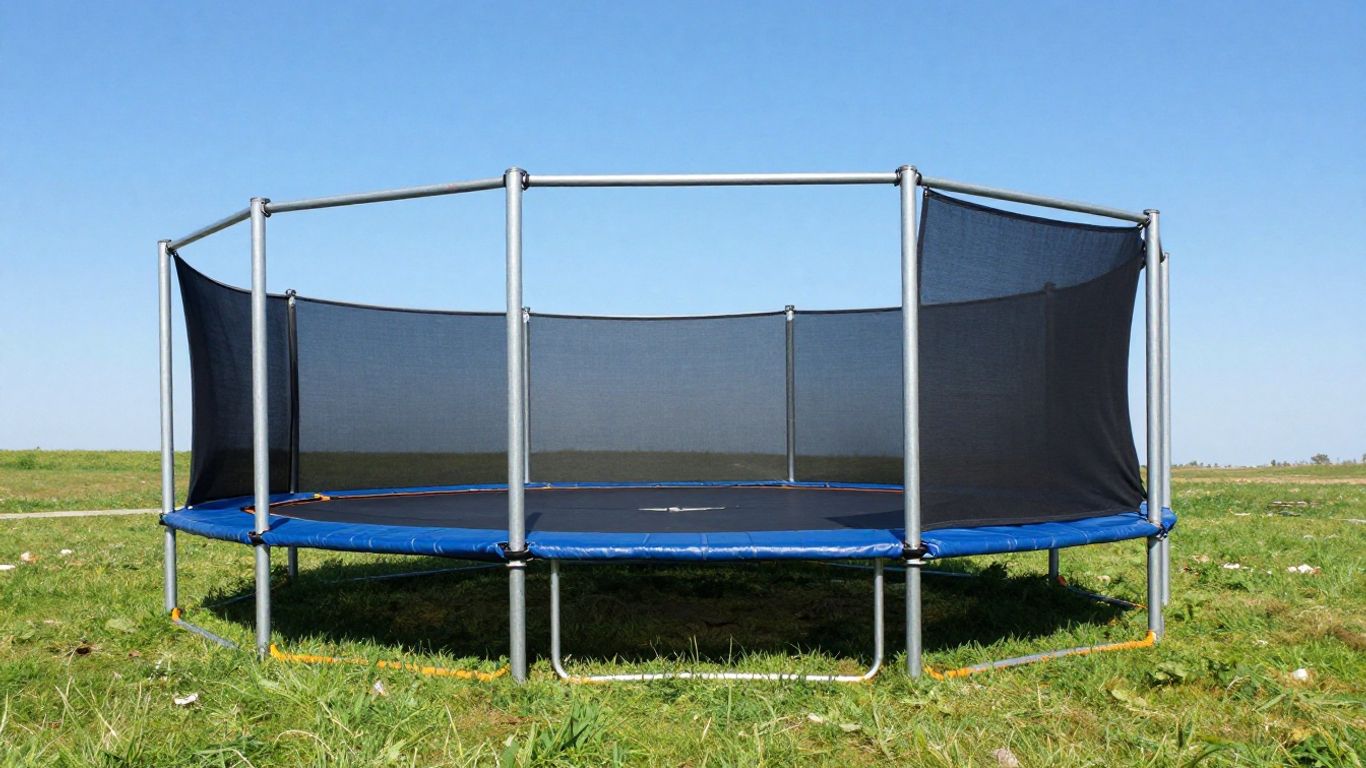
So, you're eyeing one of those massive trampolines, the kind that promises epic fun. That's awesome! But what actually makes one of these giants give you that amazing bounce and last for years? It's not just about size, believe me. We need to look at the guts of the thing – the frame, the springs, and the mat. These are the parts that really do the heavy lifting, or should I say, the heavy bouncing.
Frame Strength and Durability
The frame is basically the skeleton of your trampoline. For the big ones, you'll usually see heavy-duty galvanized steel. This stuff is treated to fight off rust and corrosion, which is a big deal if it's going to live outside. Thicker steel tubing and reinforced joints are common on larger models. This extra strength means it can handle more weight and more energetic jumping without getting wobbly or bending out of shape. A solid frame is the bedrock for safe, long-lasting fun. Some companies are so confident in their frames, they'll offer a lifetime warranty, which is a pretty good sign.
Spring Quality for Maximum Bounce
Now, the springs! This is where the magic really happens, right? Bigger trampolines often have more springs, and sometimes longer ones, than their smaller cousins. This setup is designed to give you that satisfying, high bounce. The quality of the steel used in the springs is also super important. You want springs that react well and can handle being stretched over and over without losing their zing. Some brands focus on a smoother, gentler bounce that's easier on your joints, while others aim for that super-high rebound. It really depends on what kind of jumping experience you're after. You can often find details about the number and length of springs, which is helpful for comparing.
Jumping Mat Material and Design
The mat is what you actually jump on, so its material and how it's put together matter a lot. Most good mats are made from polypropylene. It's a strong material that resists UV rays, so it can handle lots of sun without breaking down too quickly. You'll also notice the edges of the mat are usually reinforced. This is where it connects to the springs or frame, and it needs to be really tough to stop it from tearing. Some newer designs have even gotten rid of springs altogether, using flexible rods instead. This changes the bounce and can also get rid of pinch points, giving you more usable jumping space. The mat's design can even affect airflow, which plays a part in how good the bounce feels.
When you're looking at a big trampoline, think of it like buying a piece of outdoor equipment that needs to be built to last. Don't just focus on the size; consider the materials, how it's put together, and the features that contribute to both fun and safety. It's the combination of a strong frame, good springs, and a well-made mat that truly makes a big trampoline a great one.
Here's a quick look at what makes a difference:
- Frame Material: Look for galvanized steel, preferably with thicker tubing.
- Spring Count & Length: More and longer springs generally mean a higher bounce.
- Mat Material: Polypropylene is common for its durability and UV resistance.
- Stitching: Check for multiple rows of strong, reinforced stitching around the mat's edge where springs attach.
Choosing The Right Trampoline For Your Space
So, you've decided a big trampoline is the way to go. Awesome! But before you get too excited, let's talk about making sure it actually fits your yard and works for your family. It's not just about picking the biggest one you can find; it's about finding the right fit for your specific situation. You want maximum fun, right? That means thinking about space, shape, and how it all goes together.
Determining The Right Size For Your Space
This is probably the most important step. You need to measure your yard, and not just where the trampoline will sit. You've got to have plenty of clear space all around it. Think about it – if someone bounces a little off-center, you don't want them to hit a fence, a tree, or worse. A good rule of thumb is to have at least six feet of clear space on all sides. Seriously, don't skimp on this. Also, look up! Are there any low-hanging branches or power lines? You need to be clear above too. It's always better to have a bit more room than not enough. For more tips on choosing the right size and space for your trampoline, check out this guide to trampoline sizes.
Choosing Between Round, Square, And Octagonal Shapes
Trampolines come in different shapes, and each one has its own thing going on. Round trampolines are super common. They tend to bounce you back towards the middle, which is pretty neat for general bouncing and family fun. Square or rectangular trampolines often give a more powerful bounce. Serious jumpers or fitness folks might like these better. Octagonal ones are a bit less common but offer a nice balance of bounce and space. When you're picking a shape, think about who will be using it most and what kind of jumping you're hoping for.
Here's a quick rundown:
- Round: Great for general family fun, tends to direct jumpers toward the center.
- Square/Rectangular: Often provides a more powerful and even bounce, good for tricks or fitness.
- Octagonal: A less common option that balances bounce and space.
In-Ground Versus Above-Ground Considerations
This is another big decision. Above-ground trampolines are what most people picture. They're usually easier to set up and often less expensive. Plus, you can usually see them from your house, which can be nice for keeping an eye on things. On the flip side, in-ground trampolines look really neat and tidy. They blend into the yard better and can feel a bit safer because there's no big height to fall from. However, they are a lot more work to install – you'll likely need to dig a hole. So, think about your yard, your budget, and how much effort you want to put into the setup.
When you're figuring out the best trampoline for your yard, don't forget to think about how it will look and feel in your outdoor space. Sometimes the most practical choice isn't the prettiest, and vice versa. Balance is key.
Remember, the goal is to have a safe and fun addition to your backyard. Taking the time to consider these points will make a big difference in the long run.
Making An Informed Purchase
Questions To Ask Before You Buy
So, you've done your homework on sizes, safety, and bounce quality. Now it's time to get down to the nitty-gritty of actually buying. Before you hit that 'add to cart' button, take a moment to ask yourself (and the seller, if possible) a few key questions. It’s not just about picking the first shiny trampoline you see; it’s about making sure it’s the right fit for your family and your yard for years to come. Think about how much space you really have, not just for the trampoline itself, but for safe jumping all around it. Also, consider who will be using it most. Will it be mostly little ones, or are the adults planning on joining the fun? The right trampoline should be built to handle real-world use, not just theoretical weight limits. Don't be afraid to ask about the materials used and how they hold up over time, especially if you live in an area with tough weather. A good company will be upfront about these things.
Final Checklist: How To Compare Brands
When you're looking at different brands, it can feel a bit overwhelming. To make things simpler, here’s a quick checklist to run through. It helps you compare apples to apples and avoid getting swayed by fancy marketing.
- Frame: Is it made of thick, galvanized steel? Look for protective coatings that fight off rust. A sturdy frame is the backbone of a safe trampoline.
- Springs: How many are there? Are they long and designed for a smooth, responsive bounce? More springs often mean a better jump.
- Jumping Mat: Check if it's UV-resistant to prevent sun damage and if it's built to last. Some mats are designed for better airflow, which can make a difference.
- Safety Gear: How secure are the enclosure net and padding? Are there any gaps where someone could get hurt? It should all fit snugly.
- Warranty: What exactly does it cover, and for how long? Frames usually have longer warranties than nets or mats. Read the fine print!
- Certifications & Reviews: Does the brand have any safety certifications? What are other customers saying about their experience, especially when it comes to customer service?
Understanding Warranties And Certifications
A warranty is basically the manufacturer's promise about how long their product should last. It's a good indicator of how much confidence the company has in its own trampolines. Frames typically have the longest coverage, sometimes up to 10 years or even more. However, things like the jumping mat, safety net, and padding might have much shorter warranties, maybe only a year or two. It’s super important to read the warranty details carefully. You need to know what’s covered (like manufacturing defects) and what’s not (like damage from extreme weather or misuse). Some brands might also have specific certifications from safety organizations. While not always required, these can offer an extra layer of assurance that the trampoline has met certain safety standards. Don't just assume; look for proof that the brand stands behind its product.
Ready to Bounce?
So, you've looked into the big trampolines and what makes them tick. It's a lot to think about, for sure, but finding the right one really comes down to your space, who's going to be jumping, and what kind of fun you're after. Don't forget to really check out the frame, the springs, and especially those safety bits like padding and the enclosure net. It's a pretty big buy, no doubt, but getting a good quality trampoline means you're setting yourself up for years of active play and good times. Happy bouncing out there!
Frequently Asked Questions
What's the most important thing to consider when buying a large trampoline?
Safety should always come first! Make sure the trampoline has thick padding covering all the springs and a strong safety net all around it. Check that the frame is made of tough, rust-proof metal. A good warranty is also a great sign that the company believes in its product.
Are trampolines without springs safer?
Yes, trampolines that don't have exposed springs are often safer. They eliminate the risk of pinching fingers or toes. Instead, they use flexible rods or bands, which can provide a softer bounce and reduce the chance of hitting hard metal parts.
How can I tell if a trampoline is well-made?
Look for a thick, heavy frame, usually made of galvanized steel that resists rust. The jumping mat should be able to handle sunlight without fading and allow for good airflow. Longer springs typically mean a better, more comfortable bounce.
What's the difference between round and rectangular trampolines?
Round trampolines are great for general fun because their design naturally guides jumpers back to the center, making the bounce more predictable. Square or rectangular trampolines often provide a higher, more powerful bounce, which might be better if you're interested in doing flips or gymnastics.
Should I choose an in-ground or above-ground trampoline?
Above-ground trampolines are usually easier to set up and can be moved if needed. In-ground trampolines offer a sleeker look and can feel safer because there's no height to fall from, but they require digging a hole and ensuring proper water drainage underneath.
What should the weight limit be for a family trampoline?
It's wise to look for a high weight limit, typically 300 to 400 pounds or more. This ensures it's safe for multiple children to jump at the same time or for an adult to bounce with them without worrying about the trampoline breaking or tipping over.


0 comments