











Here are the main things to remember about getting fit at home.
Key Takeaways
- Strength training helps build muscle, burn fat, and improve your overall health.
- You can do effective exercise workouts for women at home with just your body or basic items.
- Start with bodyweight moves and gradually add resistance like bands or weights.
- Aim for 2-3 strength sessions per week, making sure to rest in between.
- Always warm up before and stretch after your workouts, and pay attention to how your body feels.
Getting Started With Home Exercise Workouts For Women
Starting a strength training routine at home is totally doable, and honestly, it's a game-changer for feeling stronger and more energetic. You don't need a fancy gym or a ton of equipment to get going. The biggest perk? It fits right into your life, whenever you have a spare moment. No more rushing to make a class or waiting for machines. Plus, you can do it in your PJs if you want, with zero pressure.
Understanding Strength Training Benefits
So, why bother with strength training? It's not just about lifting heavy things (though that can be part of it!). Building muscle helps your body burn calories more efficiently, even when you're just chilling. It also makes your bones stronger, which is super important as we get older. Think about everyday tasks – carrying groceries, playing with kids, even just getting up from a chair. Strength training makes all of that easier. It can even give your mood a nice little boost and help you sleep better. Seriously, the benefits go way beyond just looking toned.
Creating Your Home Workout Space
Finding a spot to exercise at home is simpler than you might think. You just need enough room to move around without bumping into furniture. Maybe it's a corner of your living room, a spare bedroom, or even a cleared-out space in the garage. You don't need much, but having a comfortable mat can make floor exercises much nicer. Think about where you can stretch out your arms and legs freely. It's all about making it work for you.
You don't need a dedicated room or a lot of fancy gear to start building strength. The most important thing is consistency and finding movements that feel good for your body. Even small spaces can become effective workout zones with a little creativity.
Essential Home Workout Equipment
While you can absolutely start with just your body weight, having a few key items can really help you progress. Here’s a quick rundown of what’s useful:
- Exercise Mat: For comfort during floor exercises like planks or crunches.
- Resistance Bands: These are super versatile and come in different strengths. Great for adding challenge to bodyweight moves or for specific exercises. You can find a good set for beginners.
- Dumbbells: Start with a lighter pair (like 3-5 lbs) and gradually increase the weight as you get stronger. You can even use household items like water bottles or cans of food in a pinch.
- Kettlebell or Stability Ball: These are great for more advanced movements and adding variety, but you can hold off on these until you're more comfortable.
Remember, you can always improvise! Water bottles, soup cans, or even bags of rice can work as weights when you're just starting out. The goal is to create resistance, and you can do that in many ways.
Fundamental Strength Exercises For Women At Home
Getting started with strength training at home doesn't have to be complicated. You can build a solid foundation using just your body weight or a few simple items you likely already have around the house. The key is to focus on proper form and gradually increase the challenge as you get stronger. These exercises are designed to work major muscle groups and can be adapted as you progress.
Bodyweight Exercises For Beginners
Bodyweight exercises are fantastic because they require no equipment and can be done anywhere. They're a great way to learn the movements and build initial strength. Focus on controlled motions rather than speed.
Here are a few to get you started:
- Squats: Stand with your feet shoulder-width apart. Lower your hips as if sitting back into a chair, keeping your chest up and back straight. Go as low as comfortable, then push back up through your heels.
- Push-ups (on knees or toes): Place your hands slightly wider than shoulder-width apart. Lower your chest towards the floor, keeping your body in a straight line. Push back up. If regular push-ups are too tough, start on your knees.
- Glute Bridges: Lie on your back with your knees bent and feet flat on the floor. Lift your hips off the ground, squeezing your glutes at the top. Lower back down slowly.
Remember, consistency is more important than intensity when you're just starting out. Aim to do these exercises a few times a week, focusing on good form.
Lower Body Strength: Lunges And Squats
Lunges and squats are powerhouses for lower body strength. They work your quads, hamstrings, glutes, and even your core. As you get more comfortable, you can start to add weight.
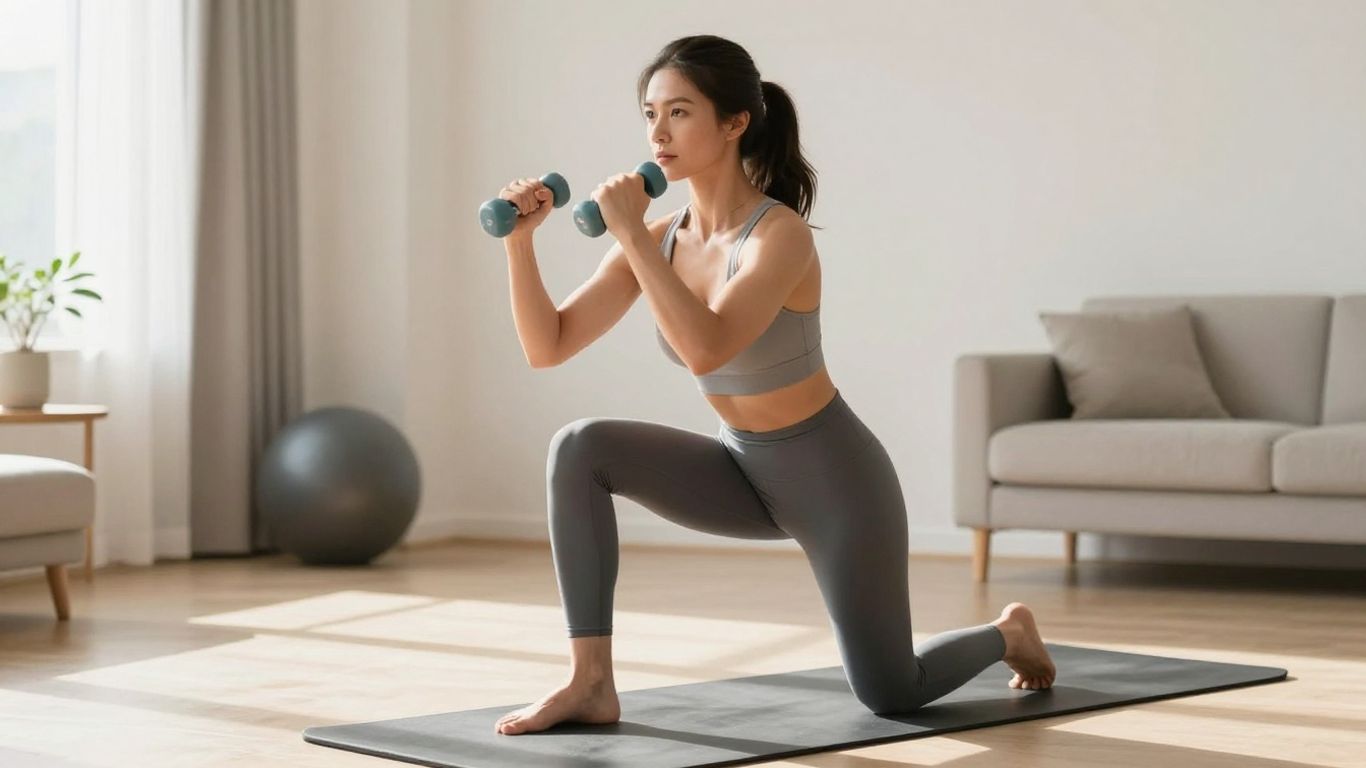
- Forward Lunges: Step forward with one leg, lowering your hips until both knees are bent at about a 90-degree angle. Your front knee should be directly above your ankle, and your back knee should hover just off the floor. Push off your front foot to return to the starting position. Alternate legs.
- Reverse Lunges: Step backward with one leg, lowering your hips until both knees are bent at about a 90-degree angle. Your front knee should be above your ankle. Push off your back foot to return to the start. Alternate legs.
For squats, you can progress by holding weights (like water bottles or dumbbells) or by increasing the number of repetitions. Learning how to perform these movements correctly is key to building strength and avoiding injury.
Core Strength: Mastering The Plank
Your core muscles are vital for stability and supporting almost every movement you make. The plank is a simple yet incredibly effective exercise for building core strength.
- Forearm Plank: Start in a push-up position, but rest on your forearms instead of your hands. Your elbows should be directly under your shoulders, and your body should form a straight line from head to heels. Engage your abs and glutes. Hold this position for as long as you can maintain good form, aiming for 30 seconds to a minute or more.
If a full plank is too challenging, you can modify it by performing it on your knees. The goal is to keep your back straight and avoid letting your hips sag or rise too high. A strong core can help with everyday activities and improve your overall athletic performance.
Adding Resistance To Your Exercise Workouts
Once you've got the hang of basic bodyweight moves, it's time to amp things up a bit. Adding resistance is how you really start to build strength and see those fitness gains. It doesn't mean you need a fancy gym membership or a ton of heavy equipment, though. There are plenty of ways to make your workouts more challenging right at home.
Using Resistance Bands Effectively
Resistance bands are super versatile and a great starting point. They're lightweight, portable, and come in different strengths, so you can easily adjust the intensity. You can use them for almost any exercise to add that extra challenge. Think of them as a way to make your muscles work harder without needing heavy weights. For example, you can loop a band around your ankles during squats or lunges to really feel it in your glutes and thighs. Or, hold a band with both hands and pull it apart to work your upper back and shoulders. It's all about creating tension.
Here are a few ways to incorporate them:
- Upper Body Pulls: Hold a band taut with arms extended, then pull it towards your chest, squeezing your shoulder blades. This is great for your back and arms.
- Lower Body Activation: Loop a band around your ankles and do side steps or leg raises to fire up your glutes.
- Adding to Squats/Lunges: Place a band above your knees to increase the challenge and focus on hip stability.
Incorporating Dumbbells And Household Weights
If you're ready to move beyond bands, dumbbells are the next logical step. You can start with a lighter pair and gradually increase the weight as you get stronger. Don't have dumbbells? No problem! Water bottles, cans of food, or even a sturdy bag filled with books can work in a pinch. The key is to find something that feels challenging by the last few reps of your set. Aim for a weight where you can complete your target reps with good form, but feel fatigued by the end. This is where you can really start to build strength efficiently.
When using weights, remember this:
If you can easily do more than 15 repetitions of an exercise with a certain weight, it's probably too light for you. Conversely, if you can't manage 8 repetitions with good form, the weight might be too heavy. Find that sweet spot where you're challenged but can maintain control.
Progressing With Kettlebells And Stability Balls
Kettlebells offer a different kind of challenge because their weight is offset, engaging more stabilizing muscles. Exercises like kettlebell swings are fantastic for building power and working your entire body. Stability balls are also excellent for adding a core challenge to exercises like push-ups or planks, or for performing hamstring curls and glute bridges. They force your body to work harder to maintain balance, which is a workout in itself. Using these tools can really help you target those smaller, supporting muscles that often get overlooked. You can find a lot of great resistance tubing and other equipment online if you're looking to expand your home gym.
Structuring Your Weekly Exercise Workouts
Putting together a solid workout week doesn't have to be complicated. The key is consistency and making sure you're giving your body enough chances to work and recover. For most women looking to boost strength and fitness at home, aiming for 2 to 3 days of strength training per week is a good starting point. These sessions don't need to be super long; 30 to 45 minutes is often plenty, especially when you're starting out. It's also important to spread these strength days out. Try not to do them back-to-back. Give your muscles at least a full day to rest and rebuild between sessions. This helps prevent overtraining and allows for better muscle growth.
Recommended Frequency and Duration
Here’s a simple way to think about your weekly schedule:
- Strength Training: Aim for 2-3 sessions per week.
- Duration: Each session can be around 30-45 minutes.
- Rest: Always include at least one rest day between strength workouts.
This structure allows your muscles to recover and get stronger. Remember, consistency is more important than intensity when you're building a habit.
Balancing Strength With Other Activities
Strength training is fantastic, but it's not the only piece of the fitness puzzle. You'll want to mix in some aerobic activity too. The general recommendation is about 150 minutes of moderate-intensity cardio each week. This could be brisk walking, cycling, or dancing. Think of it as complementing your strength work. A balanced routine keeps your heart healthy and your body functioning well overall. You might have a week where you do upper body one day, lower body the next, and then a full-body session later in the week. Or, you could alternate focus days. For example, Monday could be strength, Tuesday cardio, Wednesday rest, Thursday strength, and so on. Finding a rhythm that works for your life is the goal. Check out this sample workout plan for ideas on how to structure your week.
Listening To Your Body And Rest
This is super important, and honestly, something I sometimes forget myself. Your body will tell you what it needs if you pay attention. If you're feeling really sore or just plain exhausted, it's okay to take an extra rest day. Pushing through extreme fatigue can lead to injury. Rest isn't lazy; it's when your muscles actually repair and grow stronger. So, don't feel guilty about taking a break. It's a vital part of the process.
Rest days are not a sign of weakness; they are a strategic part of any effective fitness plan. They allow your body to recover, rebuild muscle tissue, and prevent burnout, ultimately leading to better long-term progress and reduced risk of injury. Embrace them as part of your training.
Optimizing Your Home Exercise Routine
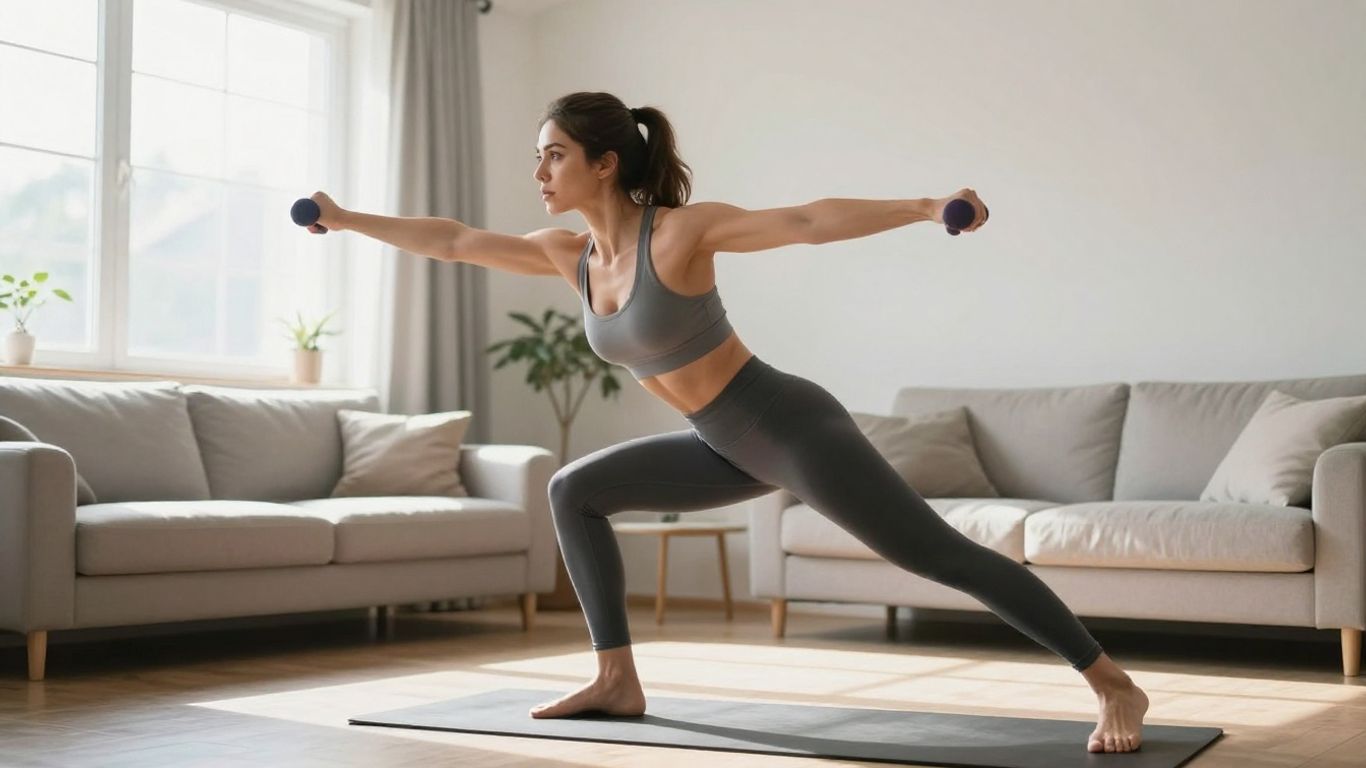
So, you've got your home workout space set up and you're getting into the swing of things with your exercises. That's awesome! But how do you make sure you're getting the most out of every sweat session? It all comes down to a few key practices: warming up properly, cooling down effectively, and paying attention to your breathing. These might seem like small details, but they really make a difference in how you feel during and after your workout, and they help prevent those annoying little aches and pains.
The Importance Of Warm-Ups
Think of a warm-up as getting your body ready for action. Jumping straight into tough exercises without preparing your muscles is like trying to start a car on a freezing morning without letting the engine warm up – it's just not going to run as smoothly. A good warm-up gets your blood flowing, gently raises your body temperature, and prepares your joints and muscles for the work ahead. This means you'll likely perform better and, more importantly, reduce your risk of pulling something or getting injured.
Here’s a simple way to warm up:
- Light Cardio: Start with 5-10 minutes of something to get your heart rate up a bit. Think marching in place, jogging lightly, or doing some jumping jacks. If you have stairs, a few trips up and down can work wonders.
- Dynamic Stretching: This involves moving your body through a range of motion. Arm circles, leg swings (forward and backward, side to side), torso twists, and hip circles are great examples. These movements mimic the exercises you'll be doing, getting your muscles ready to move.
- Movement Prep: Do a few reps of the exercises you're about to perform, but at a much lower intensity. For example, if you're doing squats, do a few shallow squats first. This really primes your body for the specific movements.
Cooling Down With Post-Workout Stretches
After you've finished your main workout, don't just stop and sit down. Your body needs a chance to gradually return to its resting state. This is where a cool-down comes in. It helps your heart rate come down slowly and can prevent that dizzy feeling some people get after intense exercise. Plus, it's the perfect time to work on flexibility.
Static stretching, where you hold a stretch for a period of time, is best for your cool-down. Focus on the major muscle groups you worked during your session. Hold each stretch for about 20-30 seconds, breathing deeply. You're aiming for a gentle pull, not pain. This helps improve your range of motion over time and can aid muscle recovery. You can find some great full-body routines that include cool-down stretches.
Breathing Techniques For Strength Training
Breathing might seem obvious, but it's a really big deal when you're lifting weights or doing challenging bodyweight moves. Holding your breath, which many people do without realizing it, can spike your blood pressure and make you feel lightheaded. It also means your muscles aren't getting the oxygen they need to perform efficiently.
The general rule for strength training is to exhale during the hardest part of the movement (the exertion) and inhale during the easier part (the release or return). For example, when you're doing a squat, you'd exhale as you stand up and inhale as you lower yourself back down. For a push-up, exhale as you push away from the floor and inhale as you lower yourself.
Proper breathing helps stabilize your core, which is super important for protecting your spine and generating power. It also helps you maintain focus and can even make your workout feel less tiring. Don't underestimate the power of a good breath!
Paying attention to these three areas – warm-ups, cool-downs, and breathing – will seriously level up your home workouts. They're not just add-ons; they're key components to making your exercise routine safe, effective, and enjoyable. Remember, consistency is key, and these practices will help you stay consistent by making sure you feel good while you're working towards your strength goals.
Debunking Strength Training Myths For Women
It's easy to get caught up in what you hear about exercise, but some common ideas about strength training just aren't true, especially for women. Let's clear up some of the confusion so you can feel confident about your workouts.
Myth: Strength training makes you bulky
This is probably the biggest myth out there. Most women will not get “bulky” from lifting weights. Building significant muscle mass like a bodybuilder requires a very specific, intense training regimen combined with a carefully controlled diet. For the average woman doing strength training a couple of times a week, the result is typically leaner, more toned muscles, not a bulky physique. You'll actually burn more calories because muscle tissue is more metabolically active than fat, even when you're resting. This can actually help you look slimmer and feel stronger.
Myth: Strength training is harmful to joints
Actually, the opposite is often true. Stronger muscles do a better job of supporting and stabilizing your joints. When your muscles are weak, your joints can be more vulnerable to injury. By strengthening the muscles around your joints, you can actually help protect them, which is especially important as we get older. It’s about using proper form and not lifting weights that are too heavy for you. If you have any concerns about your joints, it's always a good idea to talk to a doctor before starting a new exercise program talk to your doctor.
Myth: Cardio outperforms strength training for fat loss
While cardio is great for heart health and burning calories during the workout, strength training plays a huge role in long-term fat loss. Muscle burns more calories at rest than fat does. So, the more lean muscle you build through strength training, the higher your resting metabolism becomes. This means you'll burn more calories throughout the day, even when you're not exercising. The most effective approach for fat loss is usually a combination of both cardio and strength training. Aiming for at least 150 minutes of moderate aerobic activity or 75 minutes of vigorous activity each week, alongside strength training at least twice a week, is a good goal strength training benefits.
It's important to listen to your body. You should feel your muscles working and maybe a little tired afterward, but you shouldn't be in pain. If something hurts, stop and reassess your form or the weight you're using. Gradual progression is key.
Conclusion
Getting started with exercise workouts for women at home is totally doable. You don't need fancy equipment or a gym membership to get stronger and feel better. By using your own body weight or simple items around the house, you can build a solid routine. Remember to warm up, cool down, and listen to your body. Consistency is key, and soon you'll see and feel the amazing benefits. So, set up your space, pick some exercises, and start your journey to a fitter, stronger you!
Frequently Asked Questions
Do I really need equipment to exercise at home?
Not at all! Your own body weight is a great starting point. Things like squats, lunges, and push-ups require zero equipment. If you want to add a little more challenge later on, you can use things like water bottles or soup cans as weights, or grab some inexpensive resistance bands.
How often should I do these exercise workouts for women?
For best results, try to do strength training about 2 to 3 times each week. It’s good to give your muscles a day to recover between sessions, so don't do them back-to-back every single day.
What if I have an old injury or health issue?
It's always a smart idea to chat with your doctor before starting any new exercise plan, especially if you have past injuries or health concerns. They can give you the best advice for staying safe and getting the most out of your workouts.
Will strength training make me look too bulky?
That's a common worry, but for most women, it's not true. Strength training helps you build lean muscle, which actually helps you burn more calories and can make you look leaner and more toned. Getting 'bulky' usually takes a very specific type of intense training and diet that most people don't do.
How long should my home workouts be?
You can start with shorter sessions, maybe 20-30 minutes, and build up from there. The most important thing is to be consistent. Aim for around 30 to 45 minutes per session once you're comfortable, but even less is better than nothing!
What’s the difference between warming up and cooling down?
Warming up gets your body ready for exercise by getting your blood flowing and muscles loose – think light jogging in place or arm circles. Cooling down, or stretching, happens after your workout to help your muscles relax and recover, which can feel really good.


0 comments