










So, you're thinking about getting a trampoline? Awesome! A trampoline can bring a ton of fun and activity to your backyard. But let's be real, picking the right one can feel a bit overwhelming with all the different sizes, brands, and features out there. This guide is here to help you figure out the biggest trampolines and what makes them great, so you can spend less time stressing and more time bouncing. We'll look at what to consider, from the frame to the safety stuff, to help you find the perfect fit for maximum fun.
Key Takeaways
- When looking at the biggest trampolines, size really matters for both fun and safety. Bigger trampolines give you more room to jump and usually a better bounce, but always check if it fits your yard with enough space around it.
- The frame strength is super important for durability. Look for thick, galvanized steel that can handle lots of jumping over time. The jumping mat material should also be tough and UV-resistant.
- Bounce quality often comes down to the springs. Longer springs generally mean a better, more comfortable bounce, giving you more airtime. Some newer designs are going springless for added safety.
- Safety features like sturdy enclosure nets and thick padding over any springs are non-negotiable, especially for the biggest trampolines. Always check the weight limits and stick to them.
- Consider if an in-ground or above-ground model works best for your space and style. In-ground ones look neater and can feel safer, but above-ground are usually easier to set up.
Exploring the Largest Trampoline Options
Understanding Trampoline Sizes and Their Impact
If you're searching for a trampoline that promises a ton of space, you really need to get a handle on how size changes everything. Bigger doesn't just mean more room to bounce—it also affects how many people can use the trampoline at once, the kinds of activities you can do, and how much space you'll actually need in your yard.
Here's a quick comparison of some of the largest trampolines available:
| Trampoline Type | Jumping Mat Size | Total Jumping Surface | Required Yard Space | Weight Capacity |
|---|---|---|---|---|
| Jumbo Square | 13 ft x 13 ft | 155 ft² | 23 ft x 23 ft | 1500 lb |
| Large Square | 11 ft x 11 ft | 113 ft² | 21 ft x 21 ft | 1500 lb |
| Large Oval | 8 ft x 13 ft | 92 ft² | 18 ft x 23 ft | 1500 lb |
| Medium Round | 10 ft diameter | 79 ft² | 20 ft x 20 ft | 1500 lb |
| Compact Round | 8 ft diameter | 54 ft² | 18 ft x 18 ft | 1300 lb |
Small changes in size can mean a big difference in jump area and weight capacity, so make sure you know what fits your needs.
Considering Yard Space for Bigger Trampolines
Let's be honest—getting a huge trampoline is awesome until you try to squeeze it into a tiny yard. First, measure your space. Don't trust your eyes! You'll need:
- Extra clearance around the trampoline (at least 3 free feet on all sides)
- Flat, level ground for safety
- Distance from fences, trees, and garden beds
Even though a Jumbo Square needs a 23 ft x 23 ft area, adding buffer space helps keep everyone safer and makes yard work easier.
When planning for a big trampoline, don't forget accessibility for mowing or future yard changes. Once it’s set up, you won’t want to move it around!
The Benefits of Larger Jumping Surfaces
The best reason to choose a bigger trampoline, honestly, is the freedom it gives. More jumping area means:
- Multiple kids (or adults) can play without bumping each other
- Try games like dodgeball, basketball, or relay races
- Bouncing feels more comfortable and less crowded
Bigger trampolines also absorb more impact, giving a gentler, springier feel. It’s just more fun, plain and simple.
Key Features of the Biggest Trampolines
When you're looking at the really big trampolines, the ones built for maximum fun, a few things really stand out. It's not just about the size, though that's a big part of it. You want something that feels solid, gives you a great bounce, and is made with materials that will last. Let's break down what makes these giants tick.
Frame Strength and Durability
The frame is basically the skeleton of your trampoline, so it needs to be tough. Most of the larger models use heavy-duty galvanized steel. This isn't just any steel; it's treated to resist rust and corrosion, which is super important if your trampoline is going to live outside year-round. You'll often see thicker steel tubing and reinforced joints on these bigger models. This extra beef means they can handle more weight and more enthusiastic bouncing without wobbling or bending. A strong frame is the foundation for safe and long-lasting fun. Some brands even offer lifetime warranties on their frames, which tells you they're confident in their build quality.
Spring Quality for Maximum Bounce
Ah, the springs! This is where the magic happens, right? For the biggest trampolines, you'll find they often use more springs, and sometimes longer ones, than smaller models. This setup is designed to give you that satisfying, high bounce. The quality of the steel used in the springs also matters a lot. You want springs that are responsive and can handle repeated stretching without losing their springiness. Some manufacturers focus on a smoother, more joint-friendly bounce, while others aim for that super-high rebound. It really depends on what kind of jumping experience you're after. You can often find detailed specs on the number and length of springs for different models, which can help you compare.
Jumping Mat Material and Design
The jumping mat is what you actually bounce on, so its material and how it's made are pretty important. Most high-quality mats are made from polypropylene, a strong, UV-resistant material that can handle a lot of sun and use without breaking down. You'll also notice that the edges of the mat are usually reinforced. This is where it attaches to the frame or springs, and it needs to be super strong to prevent tearing. Some innovative designs, like those from Springfree, have eliminated springs altogether, using flexible rods instead. This not only changes the bounce but also removes potential pinch points and increases the usable jumping surface area. The mat's design can also affect airflow, which plays a role in the overall bounce quality.
When you're investing in a larger trampoline, think of it as buying a piece of outdoor equipment that needs to be built to last. Look beyond just the size and consider the materials, the construction, and the features that contribute to both fun and safety. It's the combination of a robust frame, quality springs, and a well-made mat that truly makes a big trampoline a great trampoline.
Prioritizing Safety on Large Trampolines
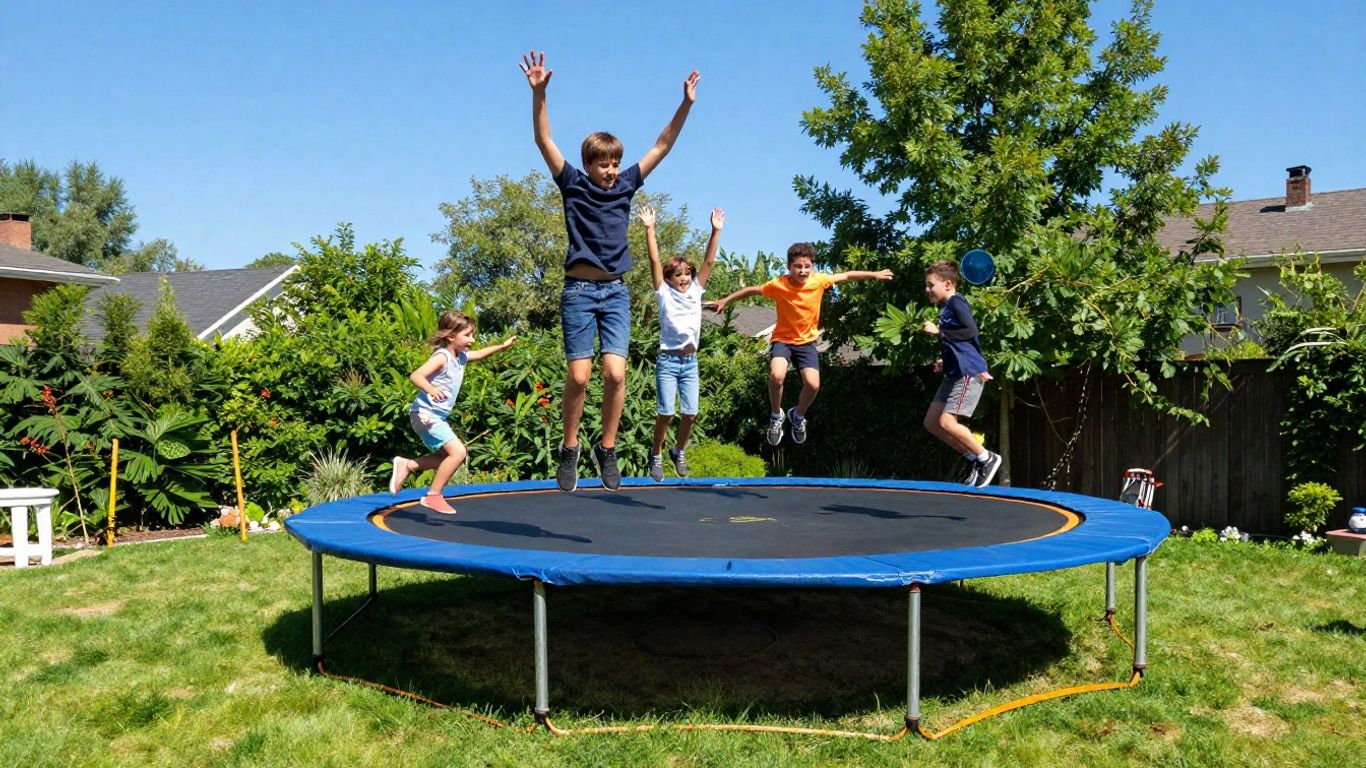
When you're looking at these giant trampolines, the fun factor is obvious, but safety really needs to be front and center. It's easy to get caught up in the excitement, but a few smart choices can make all the difference. Always check the manufacturer's guidelines before anyone jumps on.
Essential Safety Enclosures and Padding
Think of the safety enclosure, or net, as your trampoline's guardian angel. It's there to stop jumpers from accidentally bouncing off the edge. When you're checking out a trampoline, look closely at the net. Is it attached really well? Are there any big gaps where someone could slip through? Some nets are designed to lean inward, which is a neat trick to gently guide jumpers back to the middle if they get too close to the side. Then there's the padding. This stuff covers up the metal frame and the springs, which are the parts that can cause the most trouble. You want padding that's thick, tough, and won't just slide off. It should also be able to handle being out in the sun without falling apart. Some trampolines even put the springs on the outside of the net, which can be a safer setup.
Here are some key safety features to keep an eye out for:
- Safety Enclosure Net: This is your first line of defense against falling off. Make sure it's securely fastened and has no large openings.
- Padding: Look for thick, durable padding that covers the springs and frame. UV resistance is a big plus so it lasts longer.
- Frame Design: Some frames are built lower to the ground, or the poles curve away from the jumping area, adding another layer of safety.
Understanding Weight Limits for Big Trampolines
Weight limits aren't just suggestions; they're serious safety guidelines. Exceeding them puts a lot of strain on the trampoline's frame and springs, which could lead to damage or, worse, an accident. Most trampolines are made for one person at a time, and honestly, that's the safest way to go, especially if there's a big difference in weight between jumpers. Imagine a lighter person getting unexpectedly launched when a heavier person jumps. It's just not a good idea.
Here's a general idea of what you might see:
| Trampoline Size | Typical Weight Limit |
|---|---|
| Small to Medium (8-12 ft) | 150 - 250 lbs |
| Large (13-16 ft) | 250 - 400 lbs |
| Heavy-Duty Models | 500+ lbs |
Always, always check the specific recommendations from the manufacturer for the model you're interested in. They've done the testing, so they know what it can handle safely. Don't guess – check the specs!
It's easy to get caught up in the fun and forget about the numbers, but the weight limit is there for a reason. It's about making sure the trampoline stays in good shape and, more importantly, that everyone stays safe while they're having a blast. Always err on the side of caution and stick to what the manufacturer advises.
The Role of Adult Supervision
Even with all the safety features in the world, adult supervision is still super important, especially when younger kids are involved. Having an adult keeping an eye on things can prevent risky behavior and ensure everyone is following the rules, like sticking to one jumper at a time. It’s a simple rule, but it makes a big difference in preventing injuries. For added peace of mind, consider placing the trampoline on level, soft ground, and installing protective pads over the springs and frame if they aren't already well-covered. This helps prevent injuries and ensures a safer bouncing experience. You can find great options for trampoline safety pads at 38ac.
Choosing Between In-Ground and Above-Ground Giants
So, you're looking at the really big trampolines, the ones that promise epic fun. Now, the big question is whether to go for an in-ground model or stick with the classic above-ground setup. Both have their own vibe and set of pros and cons, so let's break it down.
Aesthetics and Safety of In-Ground Models
In-ground trampolines are pretty slick. You dig a hole, sink the trampoline in, and the jumping surface ends up pretty much level with your lawn. This makes your backyard look way cleaner, like it's not dominated by a giant metal structure. Plus, the lower profile means a much smaller drop if someone accidentally steps off, which is a big win for safety, especially with younger kids or if you have older folks who might use it.
However, getting one installed is a whole different story compared to just setting up an above-ground one. You're talking about digging a pretty substantial hole. This means a lot more work upfront, and you really need to think about how water will drain away so you don't end up with a soggy mess underneath. Some people opt for professional installation because, let's be honest, a weekend with a shovel isn't everyone's idea of fun.
Ease of Setup for Above-Ground Options
When most people picture a trampoline, they're thinking of the above-ground kind. These are the ones you see everywhere, and they're generally way easier to get up and running. You can usually set one up in a few hours with a friend or two. They come in all sorts of sizes, from smaller ones for the little ones to massive 14 or 15-footers that give everyone plenty of room to jump.
Setting up an above-ground trampoline is usually a straightforward process. You'll want to lay out all the parts and follow the instructions carefully. Many brands include helpful extras like stakes to keep the trampoline from shifting, which is great if you live in a windy area. It's worth checking what accessories come with your chosen model.
Here's a quick look at what to consider for each type:
-
In-Ground:
- Pros: Cleaner look, reduced fall risk, easier access.
- Cons: Significant installation effort, drainage concerns, more permanent.
-
Above-Ground:
- Pros: Easier setup, often more affordable, portable (relatively).
- Cons: Higher fall risk, can be an eyesore if not well-maintained, requires a level surface.
Drainage Considerations for In-Ground Designs
This is a big one for in-ground trampolines. You absolutely need to make sure water can drain properly from under the trampoline. If water pools there, it can lead to rust, mold, and damage to the frame and mat over time. Most installations involve creating a gravel base or a drainage system to let water escape. It's something you can't really skip if you want your in-ground trampoline to last.
Choosing between in-ground and above-ground really comes down to your priorities. If you want a cleaner look and are willing to put in the effort (or pay for it) for potentially better safety, in-ground is a solid choice. If ease of setup and a more budget-friendly option are key, the classic above-ground trampoline is probably your best bet.
Enhancing Your Trampoline Experience
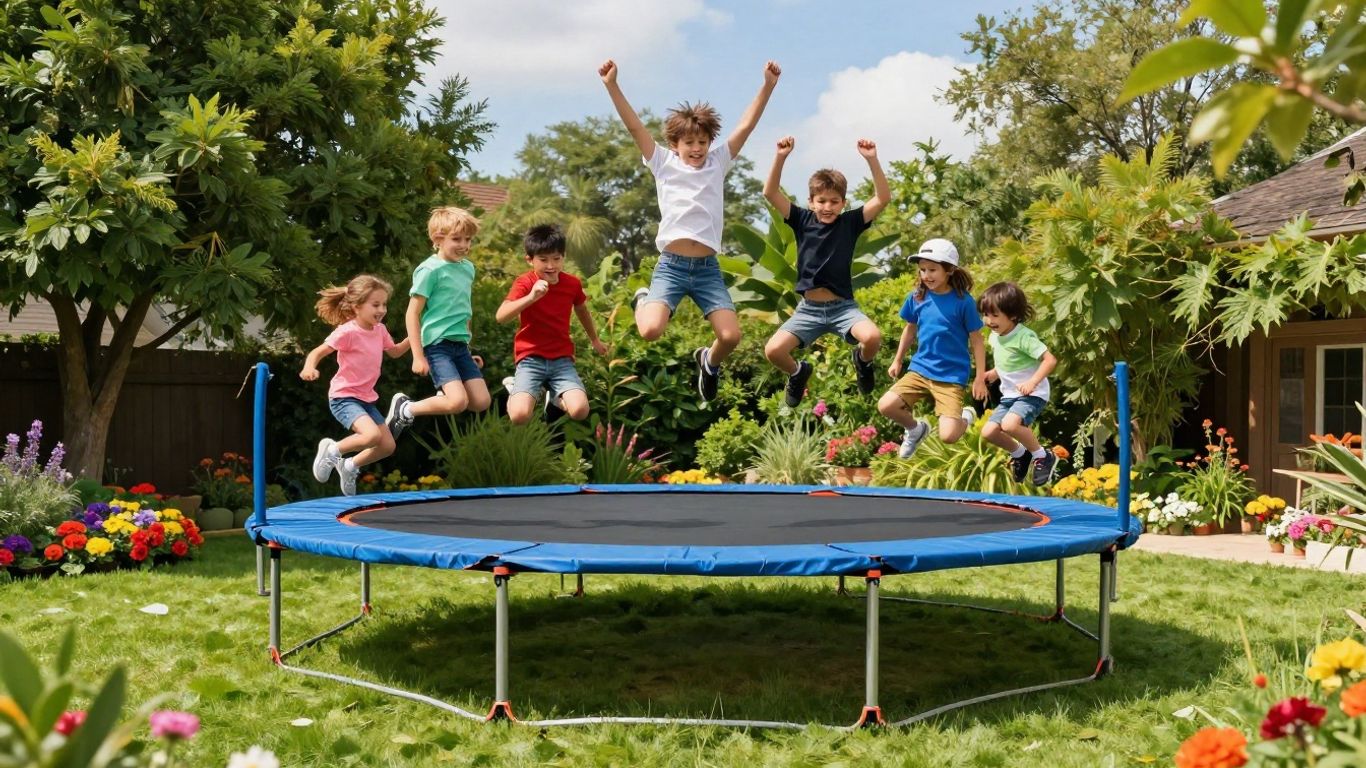
So, you've got your giant trampoline, and the bouncing is already epic. But what if you want to take the fun to the next level? That's where accessories come in. They can really change things up, making your trampoline even more awesome, practical, or even safer. It's like adding turbochargers to your fun machine!
Popular Accessories for Added Fun
There are tons of cool add-ons you can get. Think about a basketball hoop designed specifically for trampolines. It’s a fantastic way to get some friendly competition going and practice your slam dunks. Or, on a scorching summer day, a misting system can turn your trampoline into a cool, refreshing oasis. Seriously, it feels amazing when the heat is on. And for those who love bouncing after dark, LED light kits can create a pretty wild atmosphere. Imagine jumping under the stars with cool lights all around – pretty neat, right?
Here are a few ideas to get you started:
- Basketball Hoops: Perfect for some backyard slam-dunk contests.
- Misting Systems: Beat the heat and turn your trampoline into a cool zone.
- LED Light Kits: Add some flair for nighttime bouncing adventures.
- Anchor Kits: Keep your trampoline secure, especially if you live in a windy area. You don't want your giant trampoline taking flight!
- Covers: Great for protecting the mat from leaves and debris when it's not in use.
Basketball Hoops and Misting Systems
Let's talk a bit more about those basketball hoops and misting systems. The hoops are usually easy to attach to the trampoline frame and come with a backboard and a small ball. They're not for serious players, of course, but they add a whole new dimension of play. Kids and adults alike can have a blast trying to score. As for misting systems, they're usually a simple attachment that connects to your garden hose. They spray a fine mist of water, which is incredibly cooling on a hot day. It makes bouncing so much more comfortable when the sun is beating down.
Adding accessories can really make your trampoline the go-to spot for backyard entertainment. Just make sure any extras you add are compatible with your specific trampoline model and don't create new safety hazards. It's all about adding fun without compromising safety.
Lighting and Anchoring Solutions
Don't forget about lighting and anchoring. If you want to extend your trampoline fun into the evening, LED light kits are a game-changer. They can be attached around the frame or the enclosure and create a really cool visual effect. It makes nighttime bouncing feel a bit magical. On the flip side, anchoring solutions are all about security. Wind can be surprisingly strong, and you don't want your trampoline ending up in the neighbor's yard. Anchor kits typically involve stakes that go deep into the ground, securing the trampoline legs. It's a simple step that provides a lot of peace of mind, especially if you live in an area prone to strong winds.
Top Brands for the Biggest Trampolines
Springfree's Innovative Designs
Springfree really shook things up by ditching the traditional metal springs. Instead, they use flexible composite rods hidden beneath the jumping surface. This design means no more pinched fingers or accidental bumps on hard metal parts. It's a big win for safety, especially with kids around. The enclosure net is also designed to flex inward, gently guiding jumpers back to the center if they get too close to the edge. It’s a smart approach that makes a real difference in preventing common trampoline injuries.
Jumpflex's Focus on Durability
Jumpflex trampolines are built tough. They often use heavy-duty, hot-galvanized steel for their frames, which means they're coated to resist rust and bending, even in damp or coastal areas. This solid construction is a big deal if you want a trampoline that lasts for years without needing constant repairs. They also tend to use materials that are treated to handle the sun's rays, so the mat doesn't break down too quickly. It feels like a real investment in backyard fun.
Zupapa's High-Weight Capacity Models
Zupapa has some models that are great if you need a trampoline that can handle a lot of weight. For example, their 14-foot trampoline is often noted for its impressive single-jumper weight limit, sometimes reaching up to 400 pounds. While they might not always list a maximum structural weight, the high individual limit is a good sign of their sturdy build. Keep in mind that some of these higher-capacity models might have a shorter warranty period, so it's worth checking the details if long-term coverage is a priority for you. The jumping mat size can also be a bit smaller than the overall frame size due to the spring placement, so factor that in when considering how much bouncing space you'll actually have.
Ready to Jump In?
So, we've looked at a bunch of trampolines, from the super-safe springless ones to the more traditional models. Picking the right one really comes down to what you need. Think about your yard size, who's going to be jumping, and how much you want to spend. Don't forget to check out the frame, the springs, and especially the safety features like padding and enclosures. It’s a big purchase, sure, but getting a good quality trampoline means years of fun and active play for everyone. Happy bouncing!
Frequently Asked Questions
What's the most important thing to think about when buying a big trampoline?
Safety is number one! Make sure the trampoline has thick padding covering any springs and a strong net all around it. Also, check that the frame is made of tough, rust-proof metal. A good warranty is also a good sign that the company stands behind its product.
Are trampolines without springs safer?
Yes, trampolines that don't have exposed springs are often safer. They get rid of the risk of pinching fingers or toes. Instead, they use flexible rods, which can give a softer bounce and lower the chance of hitting hard metal parts.
How can I tell if a trampoline is well-made?
Look for a thick, heavy frame, often made of galvanized steel that resists rust. The jumping mat should be able to handle sunlight without fading and have good airflow. Longer springs usually mean a better, more comfortable bounce.
What's the difference between round and rectangular trampolines?
Round trampolines are great for just having fun because the springs pull you back to the middle, making the bounce predictable. Square or rectangular ones often give a higher, more powerful bounce, which is better if you're into doing flips or gymnastics.
Should I choose an in-ground or above-ground trampoline?
Above-ground trampolines are usually easier to set up and move. In-ground trampolines look nicer and can be safer because there's no height to fall from, but you'll need to dig a hole and make sure water can drain out from underneath.
What should the weight limit be for a family trampoline?
It's smart to look for a high weight limit, usually 300 to 400 pounds or more. This makes sure it's safe for multiple kids to jump at the same time or for an adult to bounce with them without worrying about it breaking or tipping over.


0 comments