












Thinking about getting some dumbbells for your home workouts? It’s a smart move. Dumbbells are super flexible and can help you work out pretty much any part of your body. But with so many options out there, picking the right ones can feel a bit overwhelming. Let’s break down what you need to know to find the best dumbbells for your exercise routine, whether you’re just starting out or you’ve been lifting for years.
Key Takeaways
- When choosing dumbbells for exercise, consider fixed weights for durability or adjustable ones for space-saving versatility.
- Look for a comfortable, secure handle grip and check the weight increments to match your training progression.
- Your fitness goals should guide your choice: beginners might start lighter, while strength trainers need a wider range.
- Materials like rubber or urethane are good for home use due to floor protection and noise reduction.
- Always think about how much space you have for storage and your budget before buying your dumbbells.
Understanding Dumbbell Types For Exercise
When you're setting up a home gym, one of the first things you'll need to figure out is what kind of dumbbells to get. It might seem simple, but there are actually a few different styles, and each has its own perks. Picking the right one really depends on how you plan to work out and how much space you have.
Fixed Dumbbells: Durability and Space Considerations
Fixed dumbbells, also called solid or traditional dumbbells, are pretty straightforward. They come in a set weight and you can't change it. Think of a pair that weighs 10 pounds and stays 10 pounds forever. They're usually made from solid metal, often coated in rubber or urethane to protect the floor and the dumbbell itself. Because they're solid, they tend to be really tough. If you're someone who might accidentally drop weights (we've all been there!), these can take a beating. They're also great if you don't want to fuss with changing weights. The downside? You need a lot of them if you want a good range of weights, which can take up a good chunk of space. If you're doing high-intensity stuff where you might drop weights, or if you just want something super durable that won't break the bank over time, fixed dumbbells are a solid choice.
Adjustable Dumbbells: Versatility and Portability
Adjustable dumbbells are the ones where you can add or remove weight plates. This is where the versatility really shines. You can go from a light weight for some arm curls to a heavier weight for squats, all with the same pair of dumbbells. This is a huge space-saver. Instead of a whole rack of fixed weights, you might only need one or two pairs of adjustable dumbbells. They're also pretty good for travel if you need to take them with you. The main thing to watch out for is the mechanism for changing the weights. Some are quick and easy, while others can be a bit fiddly. Also, if you're doing super intense workouts where you're dropping weights a lot, some adjustable designs might not hold up as well as fixed ones. But for general strength training and if you're tight on space, they're a fantastic option.
Loadable Dumbbells: Customization for Strength Progression
Loadable dumbbells are a bit like adjustable dumbbells but often built a bit more robustly, usually with a sleeve where you slide on weight plates and secure them with collars. These are often favored by people who are really focused on getting stronger over time and need to make very specific jumps in weight. Think of someone who's following a strict program and needs to add just 2.5 pounds to their lift next week. Loadable dumbbells give you that fine-tuning ability. They can be a good middle ground between fixed and typical adjustable dumbbells. They're generally quite durable, and you can customize the weight exactly how you want it. The trade-off is that changing the weights can take a bit longer than with some other adjustable types, and you'll need to buy the plates separately if you don't already have them.
Key Features of Quality Dumbbells for Exercise
Handle Grip and Ergonomics
The handle is where you connect with your weights, so it needs to feel right. A good grip prevents slipping, especially when you start sweating. Look for handles that are comfortable to hold for extended periods. Some have a slight texture, known as knurling, which adds extra grip. The diameter matters too; too thin and it might dig into your hand, too thick and it’s hard to hold onto securely. A well-designed handle makes a big difference in how safe and effective your workout feels.
Weight Increments and Range
Think about how you plan to use the dumbbells. If you're just starting out, you might need lighter weights. As you get stronger, you'll want heavier ones. Having a good range of weights available is key for progression. For exercises like bicep curls, you might use lighter weights, but for squats or presses, you'll need something heavier. Bodybuilders, for example, often need a wide variety of weights to do specific techniques like drop sets. Consider if you want a few pairs of fixed weights or a set of adjustable ones that cover a broad spectrum.
Durability and Construction Materials
This is pretty straightforward: you want weights that will last. Cheaper dumbbells might use materials that break down or wear out quickly. High-quality dumbbells are usually made from solid steel, cast iron, or have durable coatings like rubber or urethane. These materials hold up better to regular use and accidental drops. A dumbbell that can withstand drops without falling apart is a smart investment for any home gym. You don't want your weights to be the reason you have to stop your workout.
When picking out dumbbells, don't just look at the weight. The handle's feel, the range of weights available, and how well they're built all play a big part in your training experience. It's about finding tools that work with you, not against you, helping you get the most out of every rep.
Here's a quick look at some common materials:
- Rubber: Often used as a coating, it's good for protecting floors and reducing noise if dropped. It can sometimes have a distinct smell, especially if it's made with recycled materials.
- Urethane: Similar to rubber but generally more durable and less prone to odors. It's a premium option that holds up very well.
- Steel/Cast Iron: These are the core materials for many dumbbells. They are strong and dense. Often, they are coated with rubber or urethane for protection and grip. Dumbbells offer a distinct advantage over fixed machines because they allow for independent movement of each side of the body, which is great for building balanced strength.
Choosing Dumbbells Based on Your Fitness Goals
So, you've decided dumbbells are the way to go for your home workouts. Awesome! But now comes the big question: which ones are right for you? It really boils down to what you want to achieve with your training. Think about it – someone training for a bodybuilding competition will need something different than someone just looking to get a bit stronger for everyday life.
Beginner-Friendly Dumbbell Selection
If you're just starting out, the most important thing is to feel comfortable and build a solid foundation. You don't need a massive, intimidating set right away. Look for dumbbells that are easy to grip and control. Adjustable dumbbells can be a good starting point because they let you gradually increase the weight as you get stronger, without taking up a ton of space. Fixed dumbbells in lighter weights, say 5 to 20 pounds, are also great. They're straightforward – pick 'em up, put 'em down. This simplicity helps you focus on learning the movements correctly, which is super important early on.
- Start light: Focus on form over heavy lifting.
- Consider adjustable: A single pair can grow with you.
- Fixed pairs: Good for learning basic exercises like bicep curls and overhead presses.
When you're new to lifting, the goal is to learn how to move your body with added weight. It's about building coordination and getting used to the feel of resistance. Don't rush into heavy weights; mastering the basics will pay off big time down the road.
Dumbbells for Strength Training and Bodybuilding
If your aim is to pack on muscle or get seriously strong, you'll need a different approach. Bodybuilders, for example, often use techniques like drop sets and need a wide variety of weights to really isolate specific muscles. This means you'll likely want a set of fixed dumbbells with smaller weight increments, or a high-quality adjustable set that goes up to heavier weights. Having options allows you to push yourself effectively and target different muscle groups with precision. For pure strength goals, you might focus on heavier weights and fewer reps, so a set that goes up to 50, 75, or even 100 pounds could be in your future.
| Goal Type | Recommended Dumbbell Type | Key Features |
|---|---|---|
| Muscle Isolation | Fixed or High-End Adj. | Wide weight range, small increments (2.5-5 lbs) |
| Powerlifting/Max Strength | Loadable or Heavy Fixed | Ability to reach very heavy weights (50+ lbs) |
| General Hypertrophy | Fixed or Adjustable | Moderate weight range (20-50 lbs), good grip |
Dumbbells for High-Intensity Workouts
For workouts like CrossFit or circuit training where you might be doing a lot of dynamic movements, maybe even dropping the weights occasionally, durability is king. Rubber-coated hex dumbbells are often the go-to here. They're built tough, won't roll away when you set them down, and can handle a bit of abuse. You might not need a huge range of weights for these types of workouts; often, a few key weights that are used in most routines are sufficient. Think about weights that are commonly prescribed in workouts you enjoy. If you're doing a lot of Olympic lifting variations or explosive movements, you'll want something that feels secure in your hand and can withstand impact.
Material Matters: Selecting Dumbbell Construction
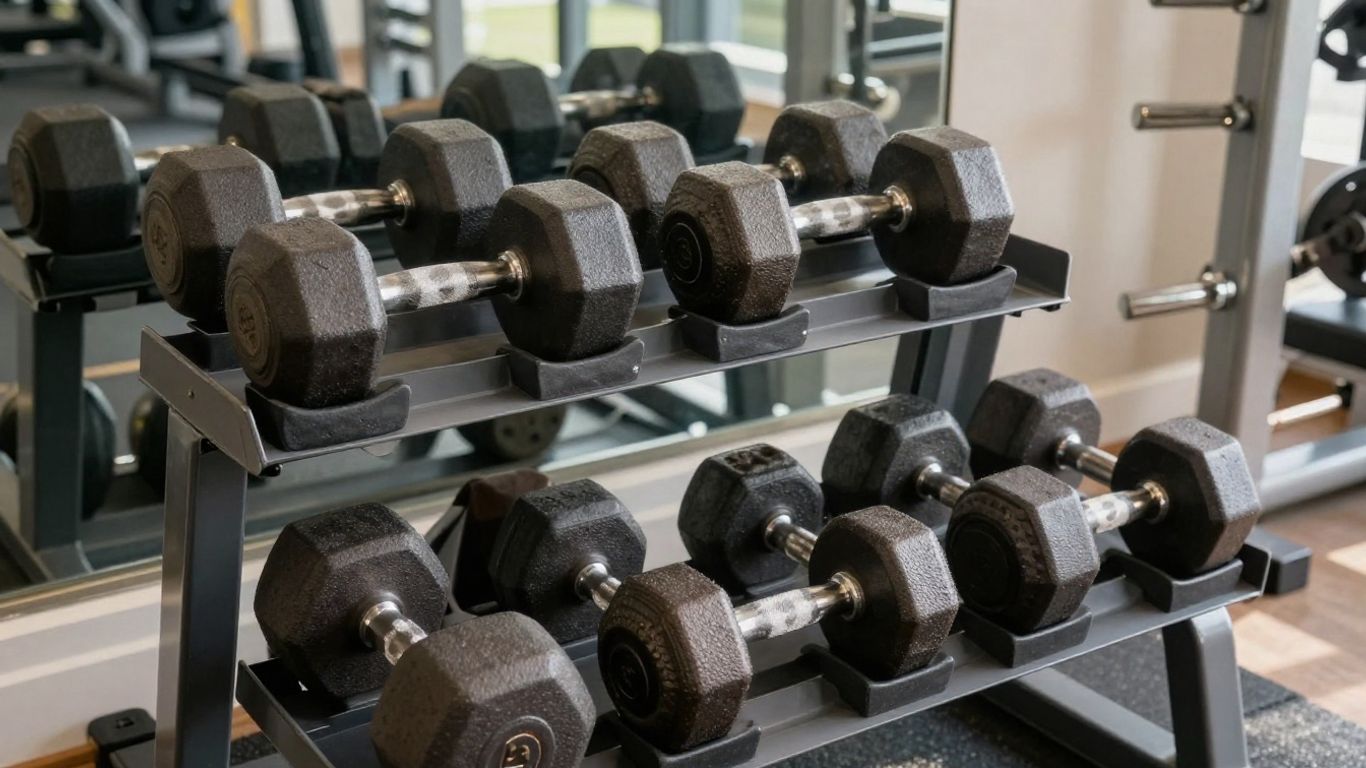
When you're picking out dumbbells, the stuff they're made of really makes a difference. It's not just about how they look, but how they feel, how long they'll last, and even how they'll sound when you put them down. Let's break down the common materials you'll run into.
Rubber and Urethane Coatings for Home Use
Rubber is probably what you'll see most often. It's a pretty good choice for home gyms because it's not too pricey and it does a decent job of protecting your floors if you happen to drop them. Think of it like a little cushion. Recycled rubber is even cheaper, but sometimes it has a bit of a funny smell. For most people just doing regular workouts, rubber holds up well, as long as you're not constantly slamming them on the ground.
Urethane is like the premium version of rubber. It's super tough and can look really sleek, but you'll definitely pay more for it. If you want something that looks high-end and can take a beating, urethane is a solid pick, but it's a bigger investment.
Steel and Cast Iron Options
Steel and cast iron are the core materials you'll find inside many dumbbells. Cast iron is usually the more budget-friendly option. It's perfectly fine, especially when it's covered by rubber or chrome. The main thing to watch out for with exposed cast iron is rust. It's not the end of the world if a little rust shows up over time, but it can eventually weaken the metal.
Steel is a bit more expensive than cast iron and doesn't rust as easily, which is a plus. However, some types of steel can be a bit more brittle. This means if you were to really stress them out over a long period, they could potentially snap. Honestly, though, you'd have to work pretty hard and for a long time to get to that point with most quality steel dumbbells.
The Benefits of Hexagonal Dumbbell Designs
| Material | Pros | Cons |
|---|---|---|
| Rubber | Floor protection, good grip, affordable | Can smell, less durable than urethane |
| Urethane | Very durable, premium look, floor-safe | Expensive |
| Cast Iron | Affordable, dense | Rusts if exposed, can be noisy |
| Steel | Durable, rust-resistant | More expensive than cast iron, can be brittle |
Many dumbbells, especially those made from cast iron, come in a hexagonal shape. This design is pretty smart for a few reasons. First off, they won't roll away when you set them down, which is a nice safety feature and keeps them from going rogue across your floor. This makes them super convenient for exercises where you might set the weights down between reps, like during push-ups or when you're transitioning between sets. Plus, the flat sides often give you a bit more grip stability when they're on the floor.
Choosing the right material isn't just about durability; it's also about how the dumbbell feels in your hand and how it interacts with your home environment. A dumbbell that's too slippery or too prone to damage can quickly become a nuisance rather than a helpful workout tool.
Practical Considerations for Home Dumbbell Sets
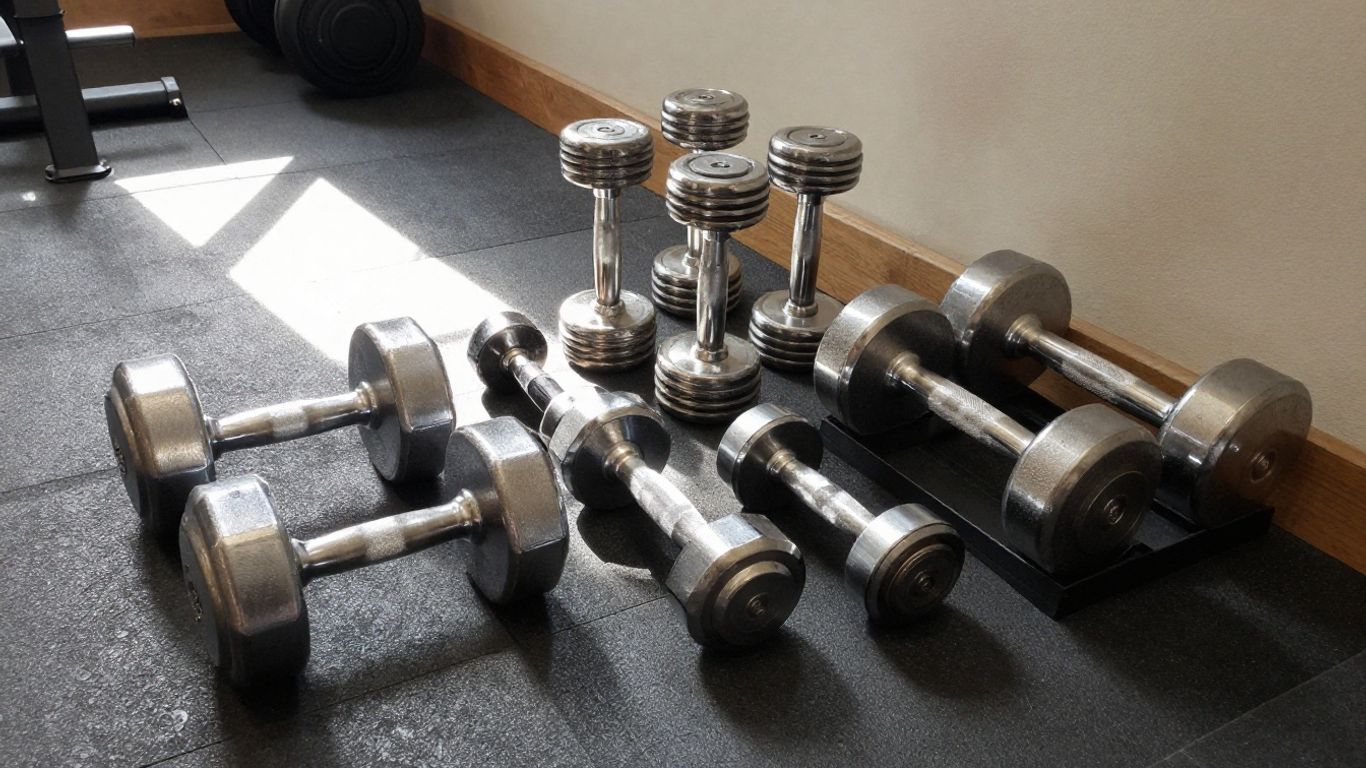
Assessing Available Space for Storage
Before you even think about buying dumbbells, take a good look at your workout space. Seriously, measure it out. If you've got a whole spare room, great! You can probably fit a full rack of fixed dumbbells. But if you're working with a corner of the living room or a small bedroom, you'll need to be more strategic. Adjustable dumbbells are a lifesaver here, taking up way less room. Even fixed dumbbells come in different sizes; hexagonal ones, for example, won't roll away and can be stacked a bit more neatly than round ones. Think about where they'll live when you're not using them – do they need to be tucked away, or can they have a dedicated spot?
Budgeting for Your Dumbbell Investment
Let's talk money. Dumbbells can range from pretty affordable to seriously pricey, depending on the type and brand. A basic set of lighter fixed dumbbells might be your entry point if you're just starting out and on a tight budget. Adjustable dumbbells often have a higher upfront cost, but they can save you money in the long run by replacing multiple pairs. Loadable dumbbells are usually somewhere in the middle. It's worth looking at the cost per pound, especially when comparing different brands or types. Don't forget to factor in potential shipping costs, too, as weights can be heavy!
The Importance of Warranty and Brand Reputation
When you're spending good money on fitness equipment, you want it to last. A solid warranty is a good indicator that the manufacturer stands behind their product. Look for at least a year, but longer is always better. Beyond the warranty, check out what people are saying about the brand. Are their dumbbells known for being durable? Do they hold up well over time, even with regular use? Reading reviews from other home gym owners can give you a real sense of a brand's quality and reliability. It’s better to invest a bit more in a reputable brand that won’t need replacing in a year or two.
Choosing the right dumbbells isn't just about picking up weights; it's about setting yourself up for consistent training. Think about how much space you actually have, how much you're willing to spend, and what kind of support you get from the company you're buying from. These practical points can make a big difference in your long-term satisfaction with your home gym setup.
Wrapping It Up
So, picking out the right dumbbells for your home gym might seem a little overwhelming at first, but it doesn't have to be. Think about how much space you've got, what kind of exercises you'll be doing most, and of course, your budget. Whether you go for a set of fixed weights that you know will last, or opt for adjustable ones to save space, the most important thing is that you find something that works for you. Getting the right gear is the first step to making your home workouts effective and enjoyable. Happy lifting!
Frequently Asked Questions
What's the main difference between fixed and adjustable dumbbells?
Fixed dumbbells are weights that have a set weight and can't be changed. They're usually really sturdy but take up more room because you need a separate dumbbell for each weight. Adjustable dumbbells, on the other hand, let you change the weight on them. This means one pair can act like many, saving space, but they might not be as tough if you drop them a lot.
Are hex dumbbells better than round ones for home use?
Yes, hex dumbbells are often better for home workouts. Their six-sided shape means they won't roll away when you put them down, which is safer and keeps them from moving around. This is super helpful during exercises where you might set them on the floor between reps.
What material is best for dumbbells at home?
For home use, rubber-coated dumbbells are a great choice. They're less likely to damage your floors if dropped, and they're usually quieter than metal ones. Urethane is also a good, durable option, though it can be a bit pricier. Basic cast iron is fine too, but might need more care to prevent rust.
How do I know what weight dumbbells to buy?
It really depends on your fitness level and what exercises you plan to do. Beginners might start with lighter weights, maybe in the 5-20 pound range. If you're doing heavy lifting, you'll need heavier ones. Having a few different pairs or an adjustable set allows you to increase the weight as you get stronger, which is called progressive overload.
How much space do I need for dumbbells?
This totally depends on the type of dumbbells you get. A full set of fixed dumbbells, with many different weights, will need a rack and a good amount of floor space. Adjustable or loadable dumbbells are much more compact and can fit in a smaller area, making them ideal for tight living spaces.
Should I worry about the handle grip on dumbbells?
Absolutely! The handle is what you hold onto, so it needs to feel good and provide a secure grip. Look for handles that have some texture, like knurling, which helps prevent your hands from slipping. A comfortable grip makes your workouts safer and more effective.


0 comments