









Thinking about getting in shape but don't want to leave the house? You're in luck! There are so many ways to get a really good workout without needing a gym membership or fancy equipment. Seriously, your own living room can become your fitness studio. We've put together a list of 20 different types of exercises at home that can help you feel stronger, boost your energy, and just generally feel better. It's all about finding what works for you and fitting it into your day.
Key Takeaways
- You can get a great workout using just your body weight, no gym required.
- These exercises can be adjusted for any fitness level, from beginner to advanced.
- Doing these exercises regularly, even for short periods, can really make a difference.
- Remember to warm up before and cool down after your workout to stay safe.
- Combining different types of exercises, like strength and cardio, gives you the best results.
1. Push-Ups
Push-ups are a classic for a reason. They're a fantastic bodyweight exercise that works your chest, shoulders, and triceps all at once. Plus, you can do them pretty much anywhere, which is a big win for home workouts.
Getting started with push-ups can feel tough, but there are ways to build up to them. The key is to focus on good form to avoid hurting yourself. Proper technique is way more important than how many you can do.
Here's a quick rundown on how to do a standard push-up:
- Start in a high plank position. Your hands should be a bit wider than shoulder-width apart, and your body should form a straight line from your head to your heels.
- Engage your core by pulling your belly button towards your spine. This helps keep your body stable.
- Lower your chest towards the floor by bending your elbows. Try to keep your elbows at about a 45-degree angle from your body, not flared straight out to the sides. This is a common mistake that can stress your shoulders [3a63].
- Push back up to the starting position, straightening your arms.
If a full push-up feels too hard right now, don't sweat it. There are modifications like knee push-ups that let you build strength progressively. It's all about finding what works for you and gradually increasing the challenge. You can find great resources online to help you master the form.
Remember, consistency is key. Even a few push-ups done with good form regularly will make a difference over time. Listen to your body and don't push too hard too soon.
2. Squats
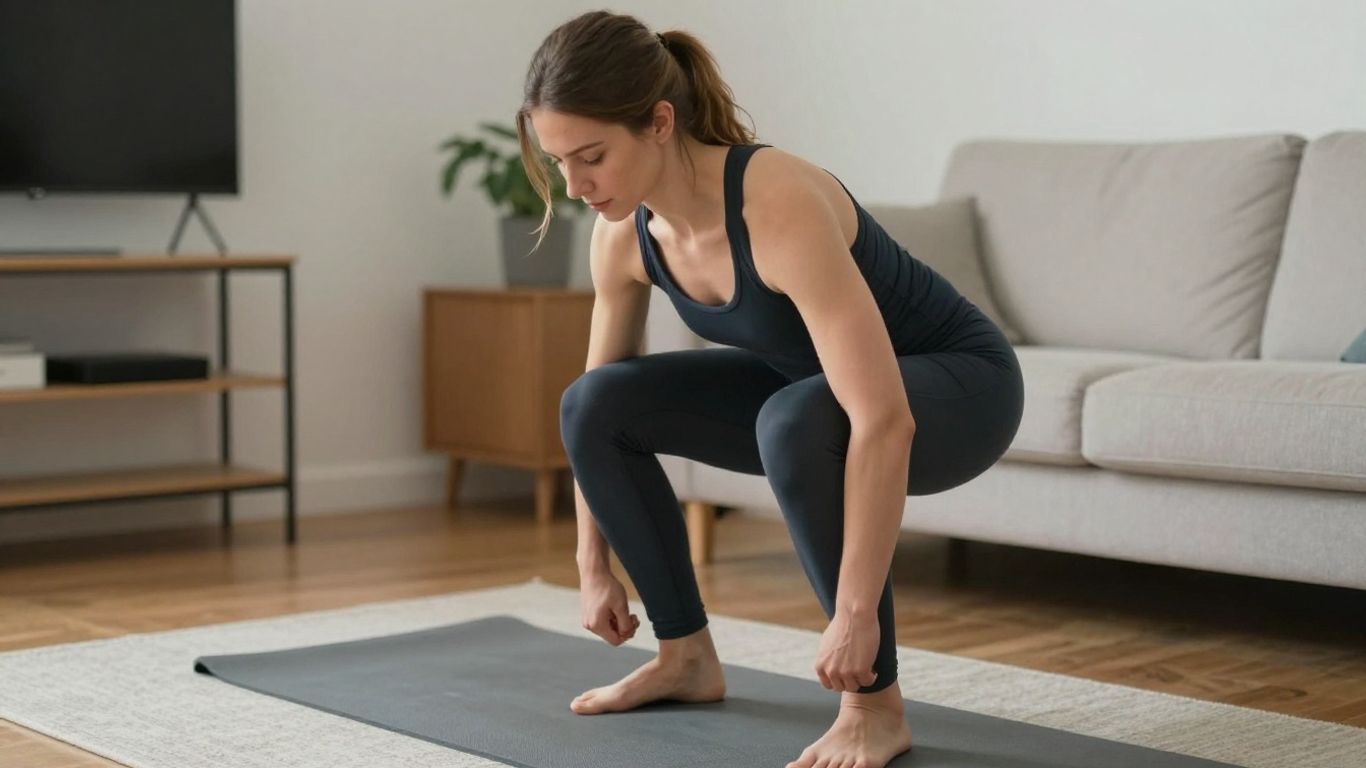
Squats are like the king of bodyweight exercises, and for good reason. They work a whole bunch of muscles at once, mainly in your legs and glutes, but they also get your core involved to keep you stable. If you're looking for one exercise to do that gives you a lot of bang for your buck, this is it.
Getting the form right is pretty important, though. You want to stand with your feet about shoulder-width apart, maybe a little wider if that feels more comfortable. Then, imagine you're about to sit down in a chair. You hinge at your hips and bend your knees, keeping your chest up and your back straight. Try to get your thighs parallel to the floor, or as low as you can go with good form. Then, push through your heels to stand back up.
Here's a quick breakdown of what you're hitting:
- Quadriceps (Quads): The muscles on the front of your thighs.
- Glutes: Your butt muscles, which are key for power and stability.
- Hamstrings: The muscles on the back of your thighs.
- Core: Your abs and lower back muscles that keep your body steady.
Don't worry if you can't go super deep at first. It's way better to do a shallower squat with perfect form than a deep one where your back rounds or your knees cave in. Focus on controlled movement on the way down and back up.
There are tons of ways to change up squats too. You can do wider stances, narrower stances, or even add a jump at the top for a cardio boost. But starting with the basic bodyweight squat is a solid move for anyone wanting to get fitter at home.
3. Lunges
Lunges are a fantastic exercise for your legs and glutes. They really work those muscles individually, which can help with balance and strength. Plus, you can do them pretty much anywhere, no equipment needed.
The basic idea is to step forward and bend both knees.
Here's how to do a standard forward lunge:
- Start standing with your feet hip-width apart.
- Take a big step forward with one leg, like your right leg.
- Lower your body until your front thigh is parallel to the floor and your back knee is hovering just above the ground. Make sure your front knee stays over your ankle.
- Push off your front foot to return to the starting position.
- Repeat on the other leg.
There are a bunch of variations too. You can do reverse lunges, where you step backward instead of forward. Or walking lunges, where you keep stepping forward into lunges without returning to the start. Jumping lunges add a plyometric element, making them way more intense. They're great for building power, but definitely a bit more advanced.
Remember to keep your core tight throughout the movement. This helps protect your back and makes the exercise more effective. Don't let your front knee go past your toes; if it does, you might need to shorten your step or focus on form.
4. Planks
Planks are a fantastic exercise for building core strength. Seriously, they work your abs, back, and even your shoulders all at once. It's like a full-body reset button for your midsection.
Getting into a basic plank is pretty straightforward. You'll want to get down on your forearms and toes, making sure your body forms a nice, straight line from your head all the way down to your heels. Think of it like a rigid board – no sagging hips or butts sticking up in the air! Keep your core pulled in tight. Holding this for even 30 seconds can feel like a challenge at first.
Here's a quick breakdown:
- Starting Position: Lie face down, then prop yourself up on your forearms and toes.
- Body Alignment: Keep your body straight, like a plank of wood. Engage your abs.
- Hold: Aim to hold the position, focusing on steady breathing.
There are also variations to keep things interesting and work different muscles. The side plank, for example, is great for hitting those oblique muscles on the sides of your torso. You just lie on your side, prop yourself up on one forearm, and lift your hips so your body is straight. It really targets those muscles that help with stability.
Don't get discouraged if you can't hold a plank for a long time when you first start. It takes practice. Focus on keeping good form – that's way more important than how long you hold it. Gradually increase your hold time as you get stronger.
5. Glute Bridge
The glute bridge is a fantastic exercise for targeting your glutes and hamstrings, and it's surprisingly effective for such a simple move. It's a great way to get those muscles working, especially if you've been sitting for a long time. Plus, it can really help with posture and might even ease some common back aches.
Here's how to do it:
- Lie on your back with your knees bent, feet flat on the floor, and about hip-width apart. Let your arms rest by your sides.
- Engage your core and squeeze your glutes. Lift your hips off the ground until your body makes a straight line from your shoulders all the way down to your knees.
- Hold that top position for a moment, really focusing on that glute squeeze. Then, slowly lower yourself back down.
The key is to really focus on squeezing those glutes at the very top of the movement.
This exercise is pretty versatile. You can make it tougher by trying single-leg glute bridges, where you lift one leg off the ground while you lift your hips. Or, you could place a weight across your hips for extra resistance. It's a move that can definitely grow with you as you get fitter.
6. Chair Squat
The chair squat is a really solid move for building up leg strength, especially if you're new to squats or just want to nail down your form. It's pretty much a regular squat, but you've got a chair there to guide you. It helps you get the feel for sitting back and keeping your chest up.
Here's the basic idea:
- Stand in front of a sturdy chair, with your feet roughly hip-width apart. You can tweak this a bit to find what feels most natural for you.
- Keep your chest lifted and your back straight. Now, hinge at your hips and bend your knees, like you're aiming to tap your backside on the chair.
- Lower yourself down until your glutes just lightly touch the chair. Try not to just fall onto it; aim for a controlled descent.
- Push through your heels to stand back up to where you started.
The main thing here is to keep the movement controlled from start to finish. It's way better to do fewer reps with good form than to rush and risk hurting yourself. You can make this exercise a bit tougher by using a lower chair, or even by just hovering your glutes right above the seat before standing back up. That variation really makes your quads and glutes work harder.
7. Knee Push-Up
Alright, so you want to get stronger with push-ups but the full version feels a bit out of reach right now? No worries, the knee push-up is your best friend. It's basically a modified push-up that lets you build up the strength needed for the real deal.
Here's how you do it:
- Get down on your hands and knees. Make sure your hands are a bit wider than your shoulders, and your knees are right under your hips.
- Walk your hands forward a little so your shoulders are now over your wrists. Keep your back straight and pull your belly button towards your spine to engage your core.
- Now, bend your elbows, letting them go out slightly to the sides, kind of like a 45-degree angle. Don't let them flare straight out.
- Lower your chest towards the floor. You don't need to touch it, just go as low as you can while keeping good form.
- Push back up to where you started, straightening your arms.
The main goal here is to keep a straight line from your head all the way down to your knees. Try not to let your hips sag down or stick way up in the air. It might feel a little weird at first, but it's a super effective way to build up the muscle needed for regular push-ups.
Remember, it's way better to do fewer knee push-ups with perfect form than to rush through a bunch with sloppy technique. This helps prevent injuries and builds a solid base for when you're ready to tackle the full push-up. Focus on smooth, controlled movements.
Think of this as a stepping stone. Don't worry about speed; just focus on doing each rep right. You can aim for a certain number of reps, like 10-12, and then rest for a bit before doing another set. As you get stronger, you'll notice you can go lower and push up with more power.
8. Marching In Place
Marching in place is a fantastic way to get your blood pumping without needing any special gear. It’s super simple and you can do it pretty much anywhere – your living room, kitchen, you name it. Think of it as a basic march, but with a little extra oomph. You want to lift your knees a bit higher than usual and really pump your arms back and forth.
This exercise is great for a few reasons:
- Warm-up: It's a perfect way to get your body ready for a more intense workout.
- Cardio Boost: Even on its own, it can get your heart rate up and burn some calories.
- Accessibility: It’s low-impact, making it suitable for almost everyone, including those just starting out or looking for something gentle.
The key is to keep moving and gradually increase the intensity. You can speed up your pace, focus on lifting those knees higher towards your chest, or even add small arm circles while you march to engage more muscles.
Don't underestimate the power of simple movements. Marching in place might seem basic, but consistent effort can lead to noticeable improvements in your cardiovascular health and overall energy levels. It’s about showing up and putting in the work, even when it’s just a simple march.
If you want to make it a bit more challenging, try alternating between a faster march and a slower one, or really focus on the height of your knee lift. It’s a really accessible exercise, especially if you're just getting back into fitness or looking for something low-impact.
9. Single Leg Stand
This exercise might seem almost too simple, but don't underestimate the single leg stand. It's a really effective way to improve your balance and wake up those smaller muscles in your legs and ankles that help you stay steady. Think about it – so much of what we do every day, like walking or reaching for something, involves balancing on one foot. Getting better at this can help prevent stumbles and make you feel more solid on your feet.
Here’s how to give it a go:
- Stand up straight with your feet about hip-width apart. Pick a spot in front of you to look at; this really helps with balance.
- Slowly lift one foot off the ground, bending your knee a little. Just lift it a few inches to start.
- Try to hold this position for about 15 to 30 seconds, keeping your core muscles tight. Focus on staying still.
- Gently bring your foot back down and then do the same thing on the other leg. Aim for the same amount of time on each side.
It's all about being controlled here. Don't rush through it. If you feel yourself wobbling, that's perfectly fine! Just try to get back to a steady position without putting your foot down. As you get more comfortable, you can try holding the pose for longer, or even try closing your eyes for a bigger challenge (but be careful if you do that!).
If holding yourself up feels too tricky at first, don't worry. You can stand near a wall or a sturdy chair and just lightly touch it with your fingertips if you start to lose your balance. With practice, you'll notice a real difference in how steady you feel.
10. Yoga Poses
Yoga is a fantastic way to work on flexibility, balance, and strength all at once, and you don't need a fancy studio to do it. Just a little bit of space and a mat (or even just a rug) will do. It's a great way to connect your mind and body, and honestly, some of these poses feel amazing after a long day.
You can get a really solid full-body workout just by stringing together a few key yoga poses. It's not just about stretching; many poses require significant core engagement and muscle activation. The key with yoga is breath and mindful movement. Don't push yourself too hard, especially when you're starting out. Focus on your form and how the pose feels in your body. It's a journey, not a race.
Here are a few poses that are great for a home workout:
- Downward-Facing Dog: This is a classic. It stretches your hamstrings, calves, and shoulders, and also strengthens your arms and legs. Start on your hands and knees, then lift your hips up and back, forming an inverted V shape with your body. Keep your hands shoulder-width apart and your feet hip-width apart.
- Warrior II: This pose builds strength in your legs and opens up your hips. Stand with your feet wide apart, turn one foot out 90 degrees, and bend the front knee over your ankle. Extend your arms out to the sides, parallel to the floor, and gaze over your front fingertips.
- Plank Pose: A core staple. Get into a straight line from your head to your heels, supporting yourself on your forearms and toes. Engage your abs and glutes to keep your body stable.
- Cobra Pose: This one is great for your spine and chest. Lie on your stomach, place your hands under your shoulders, and gently push your chest off the floor, keeping your hips on the ground. Feel the stretch in your abdomen.
- Tree Pose: Perfect for balance. Stand on one leg and bring the sole of your other foot to your inner thigh or calf (avoiding the knee joint). Bring your hands to your heart center or extend them overhead.
Remember, the goal isn't to achieve the perfect pose immediately. It's about consistent practice and listening to your body. Modifications are always okay, and the benefits come from showing up and moving.
11. Cardiovascular Exercise
Cardiovascular exercise, or cardio, is all about getting your heart rate up and keeping it there. It's a fantastic way to boost your overall health, not just for burning calories. Think of it as giving your heart and lungs a really good workout.
When you're at home, you don't need fancy equipment to get a solid cardio session in. Simple things like marching in place or dancing around your living room can make a big difference. The key is to find activities you enjoy so you'll stick with them. Consistency is way more important than intensity when you're starting out.
The Physical Activity Guidelines for Americans recommend aiming for 150 to 300 minutes of moderate physical activity each week.
Here are a few ideas to get your heart pumping:
- Jumping Jacks: A classic for a reason. Start with your feet together and arms at your sides, then jump your feet out wide while bringing your arms overhead. Jump back to the start. You can go faster or slower, and make the jumps bigger or smaller depending on how you feel.
- High Knees: Stand tall and bring your knees up towards your chest, alternating legs. Pump your arms like you're running. To make it harder, try to bring your knees higher or move faster.
- Butt Kicks: Similar to high knees, but this time you're kicking your heels up towards your glutes. Again, pump your arms and pick up the pace if you want more of a challenge.
- Imaginary Jump Rope: Pretend you have a jump rope and start jumping. You can do basic two-foot jumps, or try alternating feet. Swing your arms like you're actually holding a rope.
It might feel tough at first, and that's totally normal. You might notice one side feels significantly weaker than the other. That's common, and it's exactly why doing both sides is so important. Consistency is what will make the difference here. Try to incorporate this into your routine a few times a week, and you'll start to feel a real difference in your core stability and overall strength.
12. Side Leg Lift
This exercise is pretty straightforward but works some important muscles you might not think about much. It's all about lifting one leg out to the side while you're standing.
The main goal here is to target those hip abductor muscles, which are on the outside of your hips. These muscles are super important for stability when you walk and run, and also help keep your pelvis level. Plus, it's a good way to work on your balance.
Here's how to do it:
- Stand up tall with your feet hip-width apart. You can hold onto a wall or a chair for support if you need it.
- Shift your weight onto one leg. Keep that standing leg slightly bent, not locked out.
- Slowly lift your other leg straight out to the side. Try to keep your torso upright and don't lean too much. Only lift it as high as you can without tilting your body.
- Hold it for a second at the top, then slowly lower it back down.
- Repeat for a set number of reps, then switch legs.
This move might seem simple, but it really makes you focus on controlling the movement. It's easy to just swing your leg up, but the real benefit comes from the slow, controlled lift and lower. Pay attention to how your hips feel – they should stay pretty level.
It's a great addition if you're looking to build up your glute strength and improve your overall lower body stability. You can do a few sets of 10-15 reps on each side to start.
13. Burpees
Alright, let's talk about the burpee. This exercise is a real doozy, but it's incredibly effective for a full-body blast. It combines a squat, a plank, a push-up, and a jump all into one fluid motion. It might seem a bit much at first, and honestly, it is. But the payoff is huge. You're hitting your legs, chest, shoulders, core, and getting your heart rate way up there. It's a fantastic way to build strength and endurance simultaneously.
Here's how to break it down:
- Start standing with your feet about shoulder-width apart.
- Squat down, placing your hands on the floor in front of you.
- Kick your feet back into a high plank position.
- Perform a push-up (or skip it if you're just starting).
- Jump your feet back towards your hands, landing in a squat.
- Explode upwards into a jump, reaching your arms overhead.
- Land softly and immediately go into the next squat.
Don't get discouraged if you can't do a full push-up or jump very high initially. Focus on getting the movement pattern right. You can always modify it by stepping your feet back instead of jumping, or by omitting the push-up entirely. The goal is to build up to the full movement over time. Burpees are great for burning calories and improving your overall conditioning. You can throw them into a circuit or do them as a standalone workout. Just be prepared to feel the burn!
This exercise demands a lot of mobility in your hips and ankles, so make sure you're warmed up properly before attempting it. Don't rush the process; focus on form over speed. It's better to do fewer reps with good technique than many with sloppy form.
14. Jumping Jacks
Jumping jacks are a classic for a reason. They're a fantastic way to get your heart rate up quickly without needing any special equipment, making them perfect for a home workout. You can do them pretty much anywhere, whether you've got a huge living room or just a small corner to move in.
This exercise is a great all-around cardio move that also works your arms and legs. It's simple to learn but can be surprisingly challenging when you pick up the pace.
Here's the basic rundown:
- Start standing with your feet together and your arms down by your sides.
- As you jump your feet out to the sides, simultaneously raise your arms straight up overhead.
- Then, jump your feet back together while bringing your arms back down to your sides.
It sounds easy, but try doing them for a solid minute or two and you'll feel it! You can totally adjust the intensity, too. If you want more of a challenge, jump higher and faster. If you're just warming up or need to take it a bit easier, slow down the pace and make the movements smaller. It’s a really adaptable exercise.
Jumping jacks are a go-to for a reason. They're a simple, effective way to boost your heart rate and get your whole body moving. You can easily modify them to fit your fitness level, making them suitable for almost anyone looking to add some cardio into their routine without leaving the house.
15. Mountain Climbers
Mountain climbers are a really effective exercise that works your whole body and gets your heart pumping. Think of it like running, but you're staying in a plank position. It's a great way to build up your stamina and core strength at the same time.
Here's how to do them:
- Start in a high plank position, like you're about to do a push-up. Your hands should be directly under your shoulders, and your body should form a straight line from your head to your heels.
- Bring your right knee towards your chest, keeping your left leg extended. Your toes should be on the ground.
- Quickly switch your legs, bringing your left knee towards your chest while extending your right leg back. Keep your hips as level as possible and avoid letting them sag or rise too high.
- Continue alternating your legs as fast as you can, mimicking a running motion. The goal is to keep the movement fluid and continuous.
It's easy to rush through mountain climbers, but try to focus on controlled movements. You want to engage your core throughout the entire exercise. If you find it too difficult to keep your hips level, try slowing down the pace. This exercise is fantastic for improving cardiovascular health and building strength across various muscle groups, and you can easily do it at home without any equipment.
Mountain climbers can feel intense, but they're a great way to challenge yourself. Remember to breathe steadily and focus on maintaining good form. Don't worry if you can't do them for a long time at first; consistency is key to improving.
16. High Knees
High knees are a fantastic way to get your heart rate up and work your entire body, all without leaving your living room. It’s basically like sprinting in place, but with more focus on form and control. This exercise is great for building stamina and improving coordination.
Here’s how to do them:
- Start standing with your feet hip-width apart. Engage your core – think about keeping your stomach muscles tight.
- Begin to march in place, but lift your knees as high as you can, aiming to bring them towards your chest.
- Simultaneously, pump your arms back and forth, just like you would when running. This helps with momentum and balance.
- Alternate legs quickly, trying to maintain a steady rhythm. The goal is to keep moving continuously.
To make this exercise more challenging, you can increase the speed at which you bring your knees up and pump your arms. You can also try to bring your knees higher, closer to your chest, for an added intensity boost. If you want to really push yourself, you can even add a small jump between each knee drive.
Remember to keep your back straight and avoid leaning too far forward or backward. The movement should come from your hips and legs, with your core providing stability. Don't let your hips sag or bounce excessively; aim for a smooth, controlled motion even at a faster pace.
High knees work a lot of muscles, including your quads, hamstrings, glutes, and calves. Plus, they give your cardiovascular system a serious workout. It’s a simple move, but don't underestimate its power to get you fit.
17. Butt Kicks
Alright, let's talk about butt kicks. This is a pretty straightforward cardio move that you can do right in place, no equipment needed. It's great for getting your heart rate up and warming up those leg muscles before a more intense workout.
Here's the basic idea:
- Start standing with your feet hip-width apart.
- Begin jogging lightly in place.
- As you jog, focus on bringing your heels up towards your glutes, one leg at a time. You're essentially kicking your own butt with your heels.
- Keep your upper body relatively upright, and try to maintain a steady rhythm.
The main goal here is to get those hamstrings working and increase your heart rate. It's a simple movement, but doing it for a few minutes can really get your blood pumping. You can adjust the speed to make it more or less intense. If you want to make it a bit more challenging, try increasing the height of your heel kicks or speeding up the jogging pace.
This exercise is a good way to get some light cardio in, especially if you're short on time or space. It also helps improve hamstring flexibility and can be a good addition to a warm-up routine to prepare your legs for more demanding activities. Just focus on the motion and keeping a consistent pace.
It's not the most complex exercise out there, but don't underestimate its effectiveness for a quick cardio burst. Just keep those heels coming up towards your backside!
18. Arm Circles
Arm circles are a simple yet effective way to warm up your shoulders and upper back, or to add a bit of extra work to your routine. You can do them standing or sitting, which makes them pretty versatile.
To get started, just extend your arms straight out to your sides, keeping them level with your shoulders. Then, begin making small circles with your hands. Focus on controlled movements rather than speed.
Here’s a breakdown of how to do them:
- Forward Circles: Start by making small circles forward. Aim for about 10-15 repetitions. Keep your arms straight and engage your shoulder muscles.
- Backward Circles: After completing the forward circles, switch directions and make small circles backward. Again, aim for 10-15 reps. Try to make the circles as large as you comfortably can without straining.
- Alternating Circles: For an added challenge, you can try alternating the direction of your circles with each arm, or even try making one arm go forward while the other goes backward.
If you want to make this exercise a bit more intense, you can gradually increase the size of the circles or the number of repetitions. You can also hold light weights, like water bottles, to add resistance.
This exercise is great for improving shoulder mobility and can help prevent stiffness, especially if you spend a lot of time at a desk. Just be mindful of any existing shoulder issues and adjust the range of motion accordingly.
19. Crunches
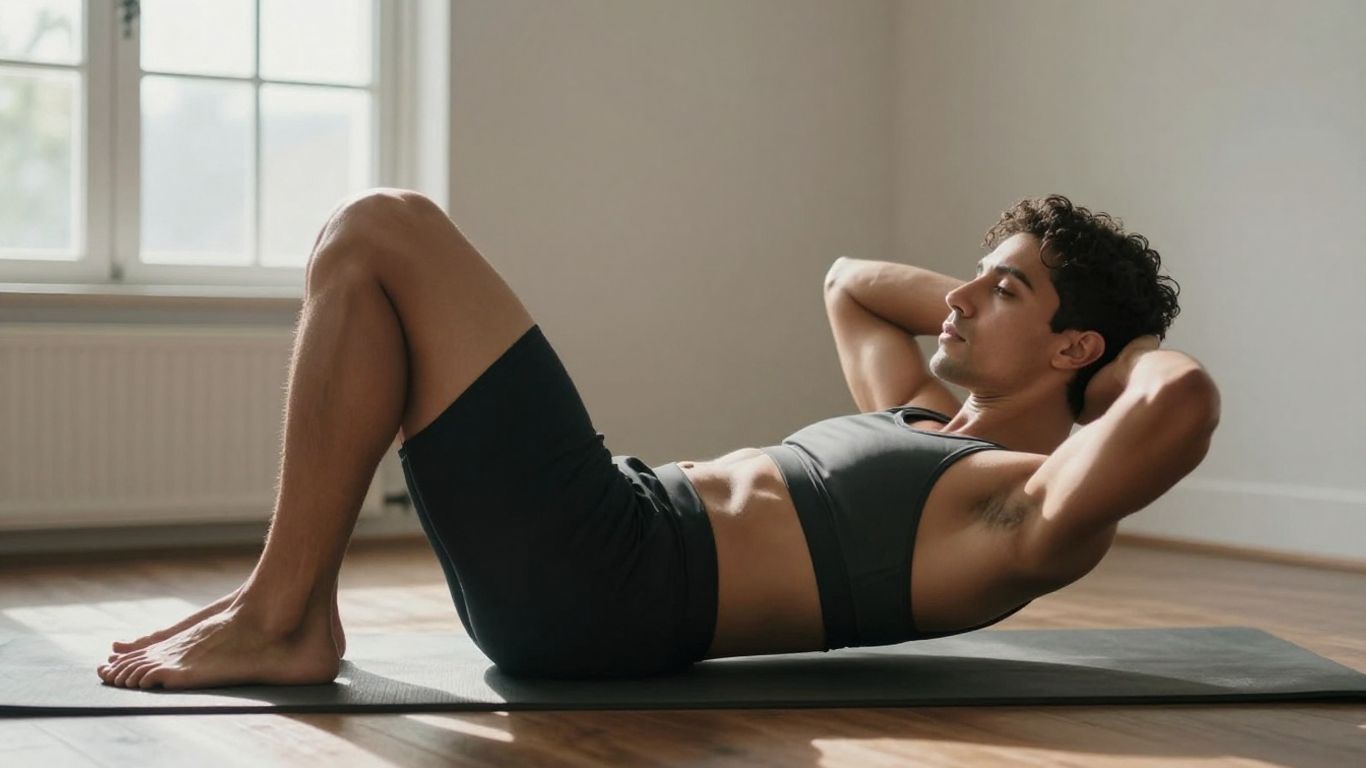
Crunches are a go-to exercise for working your abdominal muscles, and for good reason. They're pretty straightforward to do and can be done just about anywhere. The main goal is to contract your abs to lift your upper body off the floor.
To get started, lie flat on your back. It's usually best to bend your knees and place your feet flat on the floor. Some people like to hook their feet under a couch or a sturdy piece of furniture to keep them from lifting. Place your hands lightly behind your head, making sure not to pull on your neck. Elbows should be out to the sides.
From this starting position, engage your core muscles and lift your head and shoulders off the ground. Think about bringing your rib cage towards your hips. You don't need to lift very high; the focus is on the contraction of your abs. Slowly lower yourself back down with control. It’s easy to rush through these, but taking your time really makes them more effective.
Here’s a quick rundown:
- Lie on your back, knees bent, feet flat.
- Hands behind your head, elbows wide.
- Engage your core and lift your head and shoulders.
- Lower slowly and with control.
It's important to focus on the quality of the movement rather than just the quantity. If you find yourself pulling on your neck, try crossing your arms over your chest instead. Also, be mindful of not letting your lower back arch too much off the floor. You can find more tips on how to avoid common mistakes here.
While crunches primarily target the rectus abdominis (that's the 'six-pack' muscle), they also engage other core muscles to stabilize your body. Doing them consistently can help build a stronger midsection, which is good for posture and everyday movements.
20. Russian Twists
Alright, let's talk about Russian twists. This exercise is fantastic for hitting those oblique muscles on the sides of your abs, and honestly, it feels pretty good to get that rotational movement in.
Here’s how you can do them:
- Sit on the floor with your knees bent and feet flat on the ground. Lean back slightly, keeping your back straight, so your torso is at about a 45-degree angle to the floor. You should feel your abs engaging to keep you stable.
- Clasp your hands together in front of your chest. For a bit more challenge, you can hold a weight, like a dumbbell or even a heavy book.
- Twist your torso to the right, bringing your hands towards the floor next to your right hip. Keep your hips as still as possible; the movement should come from your waist.
- Return to the center, and then twist to the left, bringing your hands towards your left hip.
- Continue alternating sides. Try to do about 10-15 twists on each side to start.
Remember, the goal here isn't to swing wildly. It's about controlled movement. Focus on squeezing your obliques as you twist. If keeping your feet on the ground makes it too easy, you can try lifting them slightly off the floor for an extra challenge. This really amps up the core engagement and helps build that core strength and stability.
It might feel a little awkward at first, especially if you're not used to twisting your torso like this. Just take it slow, focus on your form, and you'll get the hang of it. It’s a great way to round out your ab workout.
Wrapping It Up
So there you have it – twenty different ways to get a solid workout right in your own living room. Who knew you could break a sweat and build strength without even leaving the house? Whether you're just starting out or you've been exercising for a while, there's something here for everyone. Remember, consistency is key, and even a quick 20-minute session can make a big difference. Don't overthink it; just pick a few exercises that look good to you and give them a try. Your body will thank you for it!
Frequently Asked Questions
Can I really get a good workout at home without any special gear?
Totally! You can build strength and get fitter using just your own body weight. Moves like squats, push-ups, and lunges work lots of muscles at once. Plus, you can do things like yoga and cardio to make your workout even better.
How long should an at-home workout usually last?
Many effective workouts you can do at home take about 20 to 30 minutes. It's more important to do them regularly a few times a week than to do one super long session.
Is it possible to build muscle by just using my body weight?
Yes, you can definitely build muscle without lifting weights. By doing exercises correctly and challenging yourself, your muscles will get stronger. As you get better, you can make the exercises harder.
What are the biggest perks of working out at home?
Working out at home is super handy because you don't waste time traveling or paying for a gym. It's great for getting stronger, having more energy, and improving your balance. Plus, many home workouts can make you feel happier and more energized.
How can I make sure I'm exercising safely at home?
Always make sure you have enough room to move around without bumping into anything. Warm up your muscles before you start and stretch afterward. Listen to your body and don't push yourself too hard, especially when you're new to exercising.
Do I need to do different exercises for cardio and strength training?
You can get both cardio and strength benefits from many exercises you do at home. For instance, jumping jacks or burpees get your heart pumping (cardio) and also work your muscles (strength). You can also add specific cardio like marching in place or strength moves like squats.


0 comments