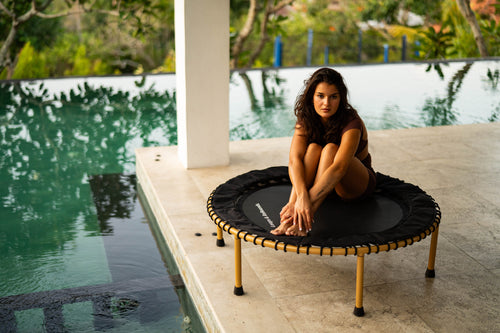
So, you're trying to figure out if a rebounder or a vibration plate is the better pick for your home workouts? It's a common question, especially when space is tight. Both offer a way to get moving without a huge footprint, but they work in totally different ways. We're going to break down what each one does, how they affect your body, and which might be best for your specific goals and living situation. Let's get into it.
Key Takeaways
- Rebounders offer a fun, cardio-focused workout that's great for lymphatic drainage, while vibration plates focus on muscle activation and neuromuscular efficiency with less joint impact.
- For calorie burn, a rebounder typically burns more during a moderate session, but vibration plates offer metabolic benefits like improved insulin sensitivity.
- Vibration plates are generally quieter and take up less floor space, making them ideal for small apartments or shared living situations compared to most rebounders.
- Adherence is often higher with rebounders due to their playful nature, whereas vibration plates might feel more clinical but can be effective for those with significant joint pain.
- The best choice depends on your personal goals: rebounders excel at toning and cardio, while vibration plates are better for balance, stress reduction, and initial joint rehabilitation.
Understanding The Core Differences: Rebounder vs Vibration Plate
Living in a small apartment doesn't mean you have to give up on fitness. When space is tight and you need something gentle on your joints, two popular options pop up: the whole-body vibration (WBV) plate and the mini trampoline, or rebounder. They both seem simple enough, right? Just stand on them and go. But how they actually work and what they do for your body are pretty different. It's not about which one is trendier; it's about figuring out which one fits your body and your living situation best.
Physiological Principles At Play
A rebounder works by having you bounce. It’s a controlled, up-and-down motion. Your feet stay on the mat, but the surface gives way, absorbing a lot of the shock you'd normally get from jumping on a hard surface. Think of it like this: when you jump on pavement, your joints take a big hit. A rebounder, especially one with bungee cords, can soak up about 80% of that impact. This means you can get your heart rate up and burn calories without pounding your knees or ankles. It's great for getting your cardiovascular system going without the usual stress.
A vibration plate, on the other hand, doesn't make you move through space. Instead, it vibrates underneath you. You stand on it, maybe do a squat or hold a pose, and the plate shakes, usually between 20 and 50 times per second. This shaking makes your muscles contract and relax really fast, without you even trying hard. It's like your body is doing tiny, involuntary workouts. This can help improve blood flow and even make your body better at using energy, which is helpful for weight loss, especially if you can't do a lot of intense cardio. It's a different kind of workout, focusing more on muscle activation and metabolic signals.
Impact On Joints And Body Sensitivity
When it comes to your joints, the rebounder is generally quite kind. The way it absorbs shock means less stress on your knees, hips, and ankles compared to running or jumping on a hard floor. This makes it a good choice if you have issues like arthritis or are recovering from an injury. You can get a good workout without that jarring feeling. However, it does require a bit more balance and coordination, which might be a challenge if you're prone to dizziness or have significant balance issues initially.
Vibration plates are also known for being gentle on the joints. Because you're not jumping or running, there's no impact. The vibrations themselves can actually help improve circulation in the joints and surrounding tissues. This can be beneficial for people with joint pain or stiffness. They can also be a good starting point for individuals who are very deconditioned or have certain health conditions that limit high-impact exercise. The involuntary muscle contractions can help build a bit of strength and stability without putting direct stress on the joints.
Neuromuscular Engagement Versus Cardiovascular Conditioning
The rebounder really shines when it comes to cardiovascular conditioning. As you bounce, your heart rate goes up, and your body uses more oxygen. You can easily adjust the intensity by bouncing higher or faster, or by adding arm movements. This makes it a solid tool for improving your stamina and overall fitness. It also engages your core and leg muscles to keep you stable, which helps with balance over time. It feels more like traditional exercise, but with less impact.
Vibration plates, however, are more about neuromuscular engagement. That rapid muscle contraction and relaxation? It wakes up your nerves and muscles in a unique way. This can lead to better muscle control and coordination. While it does increase your heart rate slightly and can contribute to calorie burn, its primary strength isn't in pushing your cardiovascular limits like a rebounder does. It's more about improving how your muscles and nerves work together, which can be beneficial for things like balance and even reducing the risk of falls. Some studies suggest it can help improve lymphatic drainage too, which is important for overall health.
| Feature | Rebounder | Vibration Plate |
|---|---|---|
| Primary Benefit | Cardiovascular Conditioning, Calorie Burn | Neuromuscular Engagement, Muscle Activation |
| Joint Impact | Low (shock absorption) | Very Low (no impact) |
| Balance Requirement | Moderate to High | Low |
| Cardiovascular Intensity | High potential | Moderate potential |
| Muscle Activation | Dynamic, full-body | Involuntary, rapid contractions |
| Perceived Exertion | Can be high, feels like play | Lower, feels more clinical |
Assessing Calorie Burn And Metabolic Impact
When we talk about fitness tools, the first thing many people think about is how many calories they burn. It's a common way to measure progress, but it's not the whole story, especially when we're looking at tools like rebounders and vibration plates. These devices work in different ways, and their impact goes beyond just burning energy.
Direct Calorie Expenditure Comparison
Let's get straight to it: how do they stack up in terms of calories burned? Generally, a 10-minute session on a vibration plate, just standing or doing light movements, might burn around 20 to 40 calories. If you add in some dynamic exercises like slow squats, you might push that up to 60 calories in 15 minutes. Rebounding, on the other hand, can potentially burn more calories if you're doing a vigorous routine with lots of movement, like knee lifts and twists. However, many studies looking at visceral fat reduction found that rebounder workouts needed to be longer and more intense to show significant results, often exceeding 25 minutes of continuous bouncing.
It's important to remember that calorie burn isn't the only factor. The metabolic benefits of vibration plates, like improved lymphatic drainage and better glucose uptake, are significant even if the direct calorie burn seems lower.
Beyond Calories: Lymphatic Drainage And Insulin Sensitivity
This is where things get really interesting. While calorie burn is one metric, both devices can influence your metabolism in other ways. Vibration plates, for instance, have shown promise in improving lymphatic drainage and enhancing how your body uses glucose. This can be particularly helpful for people with conditions like type 2 diabetes or prediabetes. Some research even suggests that vibration plates can help reduce cortisol levels, which is great for managing stress and can impact where your body stores fat. Rebounding, when done consistently and with enough intensity, can also contribute to metabolic improvements, but the evidence for specific effects like lymphatic drainage is less pronounced compared to vibration plates.
Visceral fat, the deep belly fat linked to serious health issues, doesn't just disappear with simple calorie restriction. It responds to changes in your body's hormonal signals and how your nervous system functions. Tools that influence these systems, rather than just burning calories, can be more effective for targeting this type of fat.
Sustainability For Long-Term Weight Management
When it comes to sticking with a fitness routine, sustainability is key. Vibration plates often score high here because they require minimal coordination and can feel less strenuous, leading to higher adherence rates in studies – sometimes over 90% over several months. This makes them a good option for people who might have balance issues or are recovering from injuries. Rebounding, while potentially more engaging for some, can also lead to higher dropout rates due to perceived exertion or joint discomfort, even with low-impact designs. For long-term weight management, consistency is more important than peak calorie burn. A routine you can stick with, like a 20-minute vibration plate session three times a week, might yield better results than sporadic, intense rebounding sessions that leave you feeling drained or sore. If you're looking for a vibration plate that fits your needs, this guide can help you find the ideal Lifepro vibration plate.
Here's a quick look at how they compare in practice:
| Feature | Vibration Plate | Rebounder |
|---|---|---|
| Calorie Burn (10 min) | 20-40 (standing/light) to ~60 (dynamic) | Potentially higher with vigorous, continuous use |
| Lymphatic Drainage | Supported by research | Less direct evidence |
| Insulin Sensitivity | Positive effects noted | Can improve with consistent, intense use |
| Adherence | High (low perceived exertion) | Variable (can be high or low depending on intensity) |
| Joint Impact | Very low | Low to moderate (depends on intensity) |
Space, Noise, And Practicality In Small Living
Living in a smaller place, like a studio or a one-bedroom apartment, means you have to be smart about the fitness gear you bring in. You can't just cram a giant treadmill into a corner. This is where compact options like rebounders and vibration plates really shine. But they're not exactly the same when it comes to fitting into your daily life.
Footprint and Storage Solutions
When we talk about footprint, we're looking at how much floor space each device takes up, both when you're using it and when you're not. Vibration plates are generally the winners here. Most are pretty small, often around 16 by 24 inches, and many are slim enough to slide under a bed or a couch. Some even have handles that fold down. Rebounders, on the other hand, are usually bigger. A standard mini trampoline is about 36 to 40 inches across, and you need a good amount of clear space around it to bounce safely – think a radius of about 48 inches. Storing them can also be a pain. While some newer rebounder models fold up, most don't. You might end up needing to lean it against a wall or find a dedicated spot for it, which isn't always easy in a tight space.
Here's a quick look at how they stack up:
| Feature | Compact Vibration Plate | Rebounder (Mini Trampoline) |
|---|---|---|
| Typical Footprint | 16" x 24" | 36"–40" diameter |
| Clearance Needed | Minimal | 48" radius |
| Storage Height | 4"–6" (slides under beds) | 12"–18" (needs wall space) |
Noise Levels and Neighbor Considerations
Noise is a big deal when you live close to others. A vibration plate makes a low humming sound, usually between 45 and 55 decibels. There's no impact noise from your feet hitting a surface. However, the vibrations themselves can travel through the floor, especially if you don't have any padding underneath. A rebounder makes a soft thumping sound when you bounce. This can be anywhere from 50 to 60 decibels, and it gets louder if you bounce harder or if you're on a hard floor without a rug. If you're really worried about bothering downstairs neighbors, a vibration plate is likely the quieter option.
To cut down on noise and vibration transmission, it's a good idea to put your vibration plate on a yoga mat or a foam pad. For rebounders, a good non-slip rug pad designed for heavy use is a must. Also, try not to bounce directly over areas where there are light fixtures or air vents in the ceiling below.
Ease of Setup and Daily Integration
Getting started with a vibration plate is incredibly simple. You basically just plug it in and step on. There's no assembly required, so you can go from deciding to work out to actually working out in seconds. This makes it super easy to fit into your day, even if you only have a few minutes. Rebounders take a little more effort. While some are quick to set up, others might require you to attach legs, the mat, and springs. It's not usually a huge task, maybe a few minutes the first time, but it's still an extra step. The real difference comes in how easily they become part of your routine. Because the vibration plate is so quick to use and store, people often find they use it more consistently, especially when time is short or motivation is low.
Adherence And Enjoyment: The Psychological Factor
Behavioral Differences In User Experience
Let's be real, sticking with a fitness routine is tough. It's not just about the physical benefits; it's about whether you actually want to do it. When it comes to rebounders and vibration plates, the user experience can be pretty different, and that really impacts how likely you are to keep using them.
A rebounder, for instance, is all about movement. You're jumping, bouncing, maybe even dancing. It feels more like a traditional workout, which some people love because it's active and engaging. You can easily turn on some music and just go. On the other hand, a vibration plate is much more passive. You stand on it, maybe do some simple exercises, but the machine does most of the work. This can be appealing if you're looking for something low-impact or if you find high-intensity workouts daunting. However, some find it a bit boring after a while. It's less about the 'doing' and more about the 'being' vibrated.
The Role Of Perceived Exertion And Fun
How hard you feel like you're working out, and whether you actually enjoy it, plays a massive role in sticking with it. With a rebounder, you can really control the intensity. A gentle bounce is easy, but you can push yourself to jump higher and faster, making it feel like a proper cardio session. This perceived exertion can be motivating for some, as they feel they're earning their results. Plus, the dynamic nature of bouncing can just be plain fun, especially if you're someone who likes to move to music or enjoys a bit of playfulness in their fitness.
Vibration plates, while they can be used for exercises, often have a lower perceived exertion. You might be standing still, and the vibrations do the work. This can be great for recovery or for people with physical limitations, but it might not feel as rewarding in terms of effort. The 'fun' factor is also different. It's less about active participation and more about the sensation of the vibrations. Some people find this novel and interesting, while others might find it monotonous over time. It really depends on what you're looking for in a workout experience.
Long-Term Usage Statistics And Adherence
When we look at who actually sticks with these tools long-term, the picture gets interesting. While direct, large-scale studies comparing adherence rates between rebounders and vibration plates are still a bit scarce, anecdotal evidence and smaller studies offer clues. People who enjoy the active, dynamic nature of a rebounder and can integrate it into a fun, music-filled routine often report higher adherence. They see it as a form of active play rather than a chore.
Vibration plates, while showing impressive physiological benefits, can sometimes struggle with long-term adherence if the user doesn't actively find ways to make the experience more engaging. This might involve incorporating specific exercises, focusing on the relaxation benefits, or using it as a supplement to other activities rather than the sole focus of their fitness routine. Consistency is key, and whatever tool you choose, finding a way to make it a regular, enjoyable part of your day is what truly matters for lasting results.
For vibration plates, adherence often hinges on understanding and appreciating the subtle, yet significant, physiological changes they promote, like improved circulation or muscle activation. If users are looking for a high-energy, sweat-inducing workout, they might find the vibration plate less satisfying over time compared to a rebounder. However, for those seeking low-impact benefits, recovery, or a way to passively stimulate their body, the vibration plate can be a consistent choice. Ultimately, the 'better' tool for adherence is the one that aligns with an individual's preferences, lifestyle, and what they find motivating enough to do day after day.
Specific Fitness Goals: Which Tool Excels?
So, you've got your eye on a specific fitness outcome, huh? Whether you're aiming for sculpted muscles, better balance, or just a calmer mind, the rebounder and vibration plate each bring something a little different to the table. It's not always about which one is 'better' overall, but which one is better for you and what you want to achieve right now.
Targeting Muscle Toning and Aesthetic Results
When it comes to building muscle definition and getting that toned look, neither device is a magic bullet on its own. Vibration plates can help by making your muscles work harder involuntarily. Think of it as giving your muscles a constant, low-level workout while you're just standing there. Studies show they can improve how your muscles work together, which is great for making other exercises, like strength training, more effective. However, you still need to do resistance exercises – like squats, lunges, or using resistance bands – to actually build muscle mass. Vibration plates can make those exercises more efficient, though.
Rebounders, on the other hand, engage your core and leg muscles more actively as you stabilize yourself during bouncing. It's a more dynamic movement. While it won't build big muscles like heavy lifting, it can help with muscle endurance and definition, especially in your lower body and core. For visible toning, combining either device with regular strength training is key.
Improving Balance and Proprioception
This is where both devices can really shine, but in slightly different ways. Vibration plates are fantastic for improving your balance and proprioception (that's your body's awareness of its position in space). The constant, subtle shaking forces your body to make tiny adjustments to stay upright. This is especially helpful if you have issues with balance or are recovering from an injury. It's like a constant, gentle challenge to your stability systems.
Rebounding also significantly challenges your balance. Every bounce requires you to adjust your body to land safely and prepare for the next jump. This repeated action strengthens the small stabilizing muscles in your ankles, knees, and hips. It's a more active, engaging way to improve your coordination and reaction time. If you're an athlete looking to improve agility or just want to feel more steady on your feet, both can be beneficial, but the active nature of rebounding might feel more directly impactful for some.
Stress Reduction and Cortisol Management
Feeling stressed? Both tools can offer a pathway to feeling calmer. Gentle, rhythmic movement is known to help reduce stress hormones like cortisol. Rebounding, with its fun, almost playful nature, can be a great mood booster. The act of jumping can release endorphins, those feel-good chemicals, which can counteract feelings of stress and anxiety. It's a joyful way to move your body and clear your head.
Vibration plates, while less overtly 'fun', can also contribute to stress reduction. The involuntary muscle contractions and increased blood flow can have a calming effect on the nervous system. Some research suggests that whole-body vibration might help regulate the stress response. It's a more passive approach, but for those who find high-intensity exercise stressful, the gentle, controlled stimulation of a vibration plate might be more appealing and less taxing.
When choosing based on specific goals, consider the type of engagement. Do you want active, joyful movement that boosts mood and cardiovascular health (rebounder)? Or do you prefer passive, controlled stimulation that targets neuromuscular efficiency and can aid in recovery or balance (vibration plate)? For stress, both can work, but the rebounder often wins on the 'fun factor' for immediate mood lift, while the vibration plate might offer a more subtle, systemic calming effect.
Here's a quick look at how they stack up for these goals:
| Goal | Vibration Plate | Rebounder |
|---|---|---|
| Muscle Toning (Aesthetic) | Aids neuromuscular efficiency; complements strength training | Engages core/legs; improves muscle endurance |
| Balance & Proprioception | Excellent for passive stability challenges | Active challenge; improves coordination & reaction |
| Stress Reduction/Cortisol | Calming effect on nervous system; regulates stress | Mood-boosting endorphins; joyful movement |
Integrating Both Devices For Comprehensive Fitness
Combining Workouts Without Overstimulation
So, you've got both a rebounder and a vibration plate. Awesome! But before you go thinking you need to do an hour on each every day, hold up. Your body, especially your nervous system, needs a break. Trying to do too much, too soon, can actually backfire, leaving you feeling wiped out instead of energized. The trick here is to be smart about it. Think of it like adding different spices to a dish – you want to complement, not overpower.
The key is to alternate or strategically place sessions throughout your day, not stack them back-to-back. This allows your body to recover and adapt between different types of stimulation. For instance, you might use the vibration plate in the morning to wake up your muscles and improve circulation, and then opt for the rebounder later in the day for a more cardio-focused session or some stress relief.
Here’s a way to think about it:
- Morning Activation: Start your day with 5-10 minutes on the vibration plate. Focus on simple stances like standing with soft knees, or doing shallow squats. This gets the blood flowing and primes your muscles without a huge cardiovascular demand.
- Midday Movement: If you're feeling sluggish, a quick 5-minute session on the rebounder with some gentle bouncing or marching can be a great pick-me-up.
- Evening Wind-Down: Use either device for 5-10 minutes of very gentle, rhythmic movement. This can aid lymphatic drainage and digestion. Focus on slow, controlled bounces on the rebounder or simply standing on the vibration plate with a relaxed posture.
Remember, consistency is king, especially in smaller living spaces. Shorter, more frequent sessions that you can actually stick with are far more effective than sporadic, marathon workouts that leave you dreading the next session.
Structuring A Dual-Device Daily Routine
Let's get practical. How do you actually fit both into your day without it feeling like a chore? It's all about making it easy and fitting it into what you're already doing. Forget needing special workout clothes or a dedicated hour. We're talking about integrating movement so smoothly, you'll barely notice the extra effort.
Here’s a sample structure, keeping in mind you should listen to your body and adjust:
- Morning (Approx. 10-15 minutes total):
- Drink a glass of water.
- Vibration Plate (5-7 minutes): Stand with feet hip-width apart, knees slightly bent. Try a few minutes of calf raises, holding onto a wall for balance if needed. Then, do some gentle squats, ensuring your knees track over your toes.
- Breathing (2-3 minutes): Sit comfortably and focus on deep, diaphragmatic breaths.
- Evening (Approx. 5-10 minutes total):
- Rebounder (5-10 minutes): After dinner, do some light, rhythmic bouncing. Think of it as a gentle sway rather than jumping high. You can march in place or do gentle twists. The goal is movement and circulation, not intensity.
This kind of routine respects your body's natural rhythms. The morning session is about waking up, and the evening session is about winding down and aiding recovery. No shower needed, no major disruption to your day. It's about making movement a natural part of your life, not a separate, daunting task.
When To Choose One Over The Other Initially
Okay, so you're convinced that using both is the way to go, but maybe you're wondering where to start, or if there are times when one is just plain better than the other. It really boils down to what your body needs right now and what your living situation is like.
- If your joints are protesting: Start with the vibration plate. It's incredibly low-impact and can help rebuild confidence in weight-bearing activities without jarring your system. Once your joints feel more stable, you can gradually introduce the rebounder.
- If you're looking for faster aesthetic toning (like in your glutes or calves): The rebounder often shows results quicker. The dynamic resistance and full range of motion it encourages can lead to more visible muscle definition over a few weeks.
- If stress or sleep is a major issue: Both can help, but studies suggest vibration plates, especially when used in the evening, might have a more pronounced effect on reducing cortisol levels. This can lead to better sleep quality.
- If space and noise are your biggest hurdles: A compact vibration plate is usually the winner. It takes up minimal floor space, and while vibrations can travel, the noise level is generally lower and more consistent than the thudding of bouncing.
- If you struggle with balance or feel dizzy easily: The vibration plate is likely a safer starting point. Rebounding requires more coordination and balance, which can sometimes trigger dizziness until your body adapts.
Ultimately, the best device for you today is the one that fits your current physical condition, your living space, and your personal preferences. As your fitness evolves, you can always re-evaluate and adjust your routine. It's about finding a sustainable path that works for your unique circumstances.
Want to get the most out of your workouts? Combining different fitness tools can really boost your results. Imagine using a mini trampoline alongside other gear for a super effective session. Ready to explore how you can level up your fitness routine? Visit our website to discover the best ways to combine your workouts and achieve your goals!
So, Which One Should You Choose?
Alright, so we've looked at both the rebounder and the vibration plate. Honestly, there's no single 'winner' here. It really comes down to what works best for you. If you're looking for something fun that gets your heart pumping and helps with lymphatic drainage, a rebounder might be your jam. It feels more like playing than working out, which is a big plus for sticking with it. On the other hand, if space is super tight, or you need a gentler start for your joints, or maybe you're dealing with stress, a vibration plate could be the way to go. It's more of a precision tool for getting your muscles to work without a lot of impact. Think about your living space, how your body feels, and what you'll actually do day after day. The best fitness tool is the one that fits your life and that you'll actually use.
Frequently Asked Questions
Can I use both a rebounder and a vibration plate on the same day?
Yes, you can use both, but it's best not to do them back-to-back. Try splitting them up, like using the vibration plate in the morning and the rebounder in the evening. Keep the total active time to around 20 minutes. If your joints feel sore or achy afterward, cut back on the time or how often you use them.
Do vibration plates actually help with cellulite or 'toning' muscles?
Vibration plates can improve blood flow and skin texture in specific areas, possibly making cellulite look a bit better over time. But 'toning' really comes from building muscle and losing fat. Vibration plates can make your strength exercises work better, but they can't replace doing things like squats or using resistance bands if you want to see muscles get firmer.
Is it safe to use a rebounder if I've had a hip replacement?
Usually, yes, but only after your doctor and physical therapist give you the okay. For at least six months after surgery, avoid any twisting, jumping sideways, or landing on just one foot. Stick to simple, gentle bounces in the center and hold onto something stable like a chair for support. Start with just a couple of minutes at a time and slowly increase the duration over a few weeks.
Which device is better for someone who has trouble with balance?
If you struggle with balance or feel dizzy, a vibration plate is generally safer to start with. Rebounding requires your body to constantly adjust and balance, which might make you feel unsteady at first. It usually takes a few weeks to get used to it.
If I want to see results like toned muscles in my legs and core quickly, which should I choose?
A rebounder often helps you see toning results faster. This is because it involves more movement and works your muscles through a wider range of motion as you bounce.
Which device is better for reducing stress and managing weight gained from stress?
Both can help, but studies suggest that using vibration plates, especially in the evening, might be more effective at lowering stress hormones like cortisol. This could be beneficial if stress often leads to weight gain for you.




0 comments