










Thinking about shaking up your fitness routine? A rebounder trampoline might be just the thing. These little trampolines are surprisingly effective for a full-body workout, and honestly, they're pretty fun. Whether you're just starting out or you've been working out for a while, there are plenty of exercises you can do to get your heart pumping and your muscles working. We'll go over some of the best exercises for rebounder trampoline workouts that will have you feeling great.
Key Takeaways
- Rebounder trampolines offer a fun, low-impact way to improve your overall fitness, including cardio, strength, and flexibility.
- These exercises engage multiple muscle groups, making them a great option for a full-body workout.
- Trampoline workouts are adaptable for all fitness levels, from beginners to more experienced individuals.
- Jumping on a rebounder can help boost your mood and reduce stress by releasing endorphins.
- Always prioritize safety by ensuring your trampoline is in good condition and starting with basic moves.
1. Health Bounce
Starting your fitness journey on a rebounder doesn't have to be complicated. The Health Bounce is a super simple way to get moving and feel the benefits without any fancy footwork. It's all about a gentle, controlled press into the mat. Think of it as a soft push down, keeping your feet mostly in contact with the surface. This low-impact movement is fantastic for getting your blood flowing and waking up your body.
This exercise is particularly great because it's incredibly kind to your joints. Unlike high-impact activities, the rebounder absorbs a lot of the shock, making it a good choice if you're just starting out or have any joint concerns. It's a way to get your body moving and improve circulation, which is a big plus for overall well-being. You can even add slight variations, like a gentle step in place, to keep things interesting.
The Health Bounce is a foundational movement that helps prepare your body for more vigorous activity. It's about controlled movement and gentle engagement, making it accessible to almost everyone.
Here's why it's a great starting point:
- Low Impact: Easy on your knees, ankles, and back.
- Circulation Boost: Helps get your blood moving.
- Mind-Body Connection: Encourages focus on controlled movement.
- Lymphatic System Support: Gentle bouncing can aid in lymphatic drainage [76ae].
It's the perfect way to ease into your workout, warm up your muscles, or cool down afterward. Don't underestimate the power of these simple, gentle movements; they lay the groundwork for a more robust fitness routine and contribute to better physical function [6ec2].
2. Marching
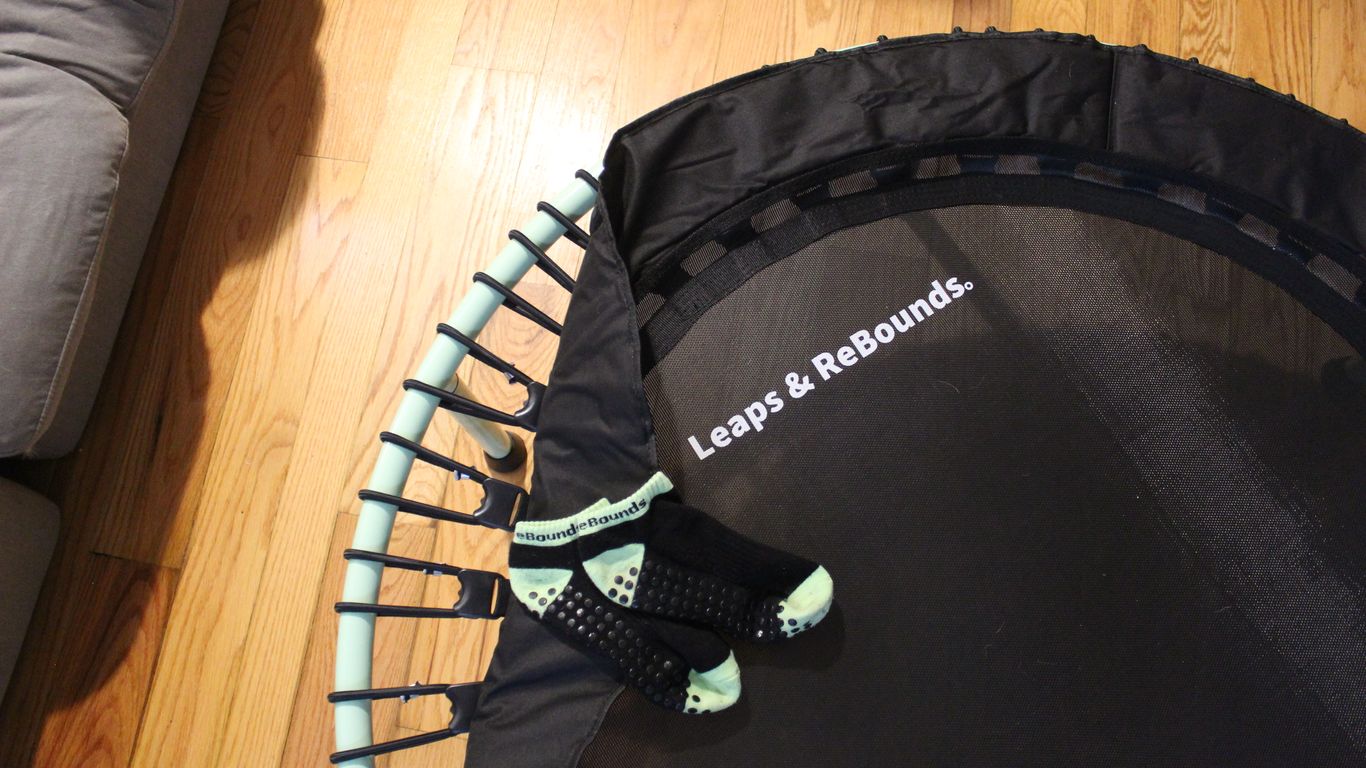
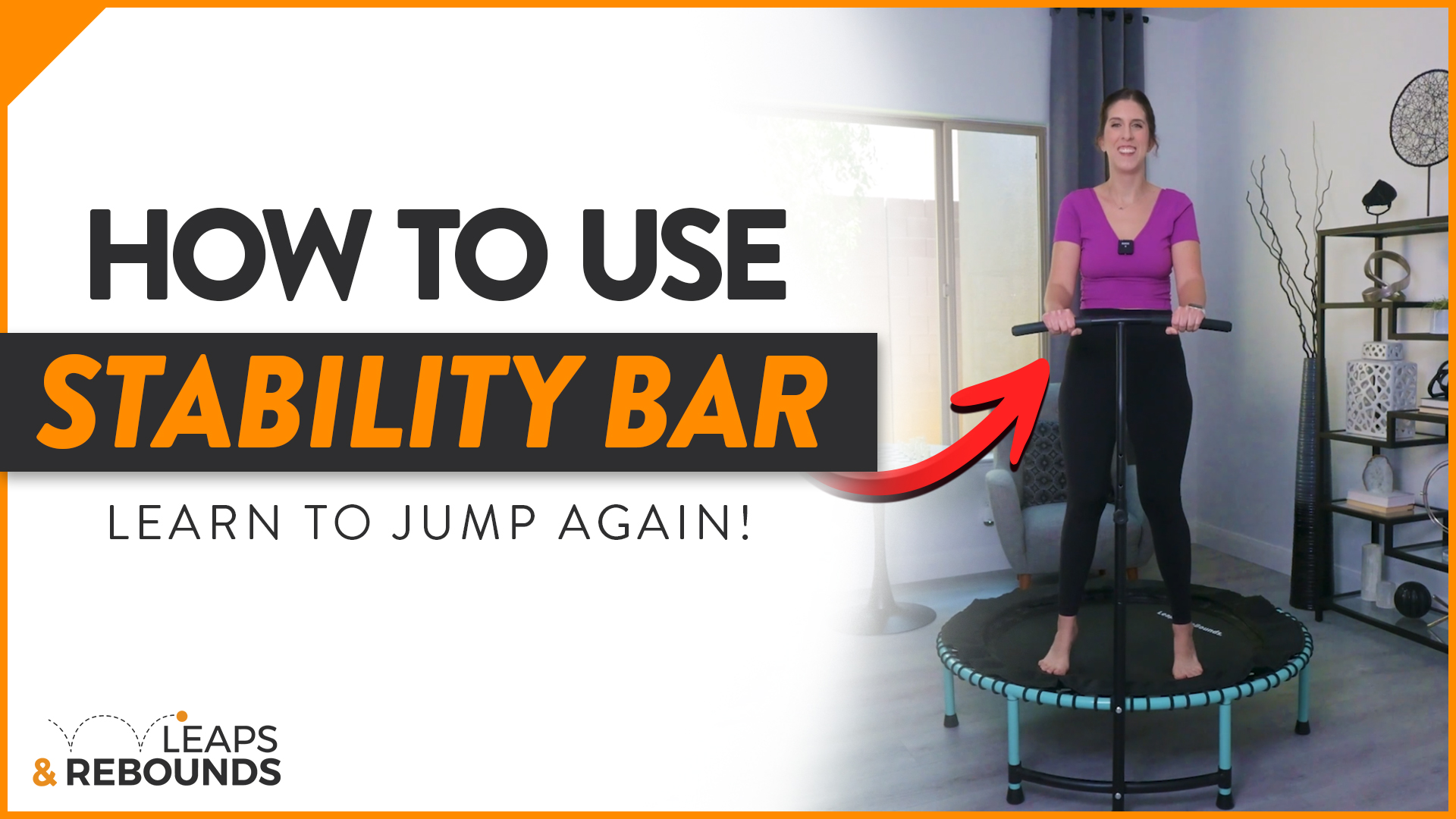
Marching on your rebounder is a fantastic way to get your heart rate up without any jumping. It's super simple to start, making it perfect for beginners or when you need a lower-impact cardio option. Just stand in the center of the trampoline, holding onto the handle if you need a little extra stability, and start lifting your knees as if you were marching in place.
The key is to keep your core engaged and maintain an upright posture. You can vary the intensity by how high you lift your knees and how fast you march. For a bit more challenge, try pumping your arms along with your legs. This exercise is great for improving circulation and getting those leg muscles working.
Here’s a quick breakdown of how to get the most out of your marching:
- Start Slow: Begin with a gentle pace, lifting your knees just a few inches off the mat. Focus on your balance.
- Increase Intensity: Gradually lift your knees higher, aiming for your thighs to be parallel to the trampoline surface. Pump your arms to add a cardio boost.
- Add a Twist: For an extra core workout, gently twist your torso from side to side as you march. Keep your hips relatively stable and focus the twist in your upper body.
- Duration: Aim for 3-5 minutes to start, gradually increasing the time as your stamina improves. This is a great warm-up or cool-down activity, or it can be a standalone cardio session.
Marching is also surprisingly effective for lymphatic drainage, helping your body flush out toxins. It's a gentle yet effective way to move your body and get those health benefits rolling. You can easily incorporate this into your daily routine, making it a consistent part of your fitness journey. It's a low-impact activity, gentle on joints and muscles, providing a comprehensive workout while minimizing stress on the body [4810].
Remember, consistency is more important than intensity when you're starting out. Even a few minutes of marching each day can make a difference in how you feel.
3. Basic Bounce
Alright, let's talk about the absolute foundation of rebounding: the basic bounce. It might sound super simple, and honestly, it is, but don't underestimate its power. This is where you get comfortable with the trampoline's spring and start building a connection with the movement. The goal here is to get a gentle, consistent bounce, feeling the rhythm of the mat beneath you.
To get started, stand with your feet about hip-width apart. Keep your knees slightly bent – think of them as little shock absorbers. Let your arms hang loosely by your sides or extend them slightly forward for balance. As you push off gently with your feet, aim to land softly back on the mat. It's not about jumping high; it's about controlled, repetitive bouncing.
Here's a quick breakdown:
- Posture: Stand tall, core engaged slightly, shoulders relaxed.
- Landing: Aim for a soft landing on the balls of your feet, absorbing the impact through your knees.
- Rhythm: Find a steady, comfortable pace. Don't rush it.
- Breathing: Breathe naturally. Inhale as you go down, exhale as you push up.
This exercise is fantastic for getting your blood flowing and waking up your body. It's a great way to start any workout or even just to get a little movement in during the day. If you're new to this, just getting the hang of it is a win. You can find some great introductory workouts that focus on these foundational moves to get you started.
Remember, consistency is key. Even a few minutes of basic bouncing regularly can make a difference in how you feel. It's all about building that mind-body connection with your rebounder.
4. Single-Leg Bounces
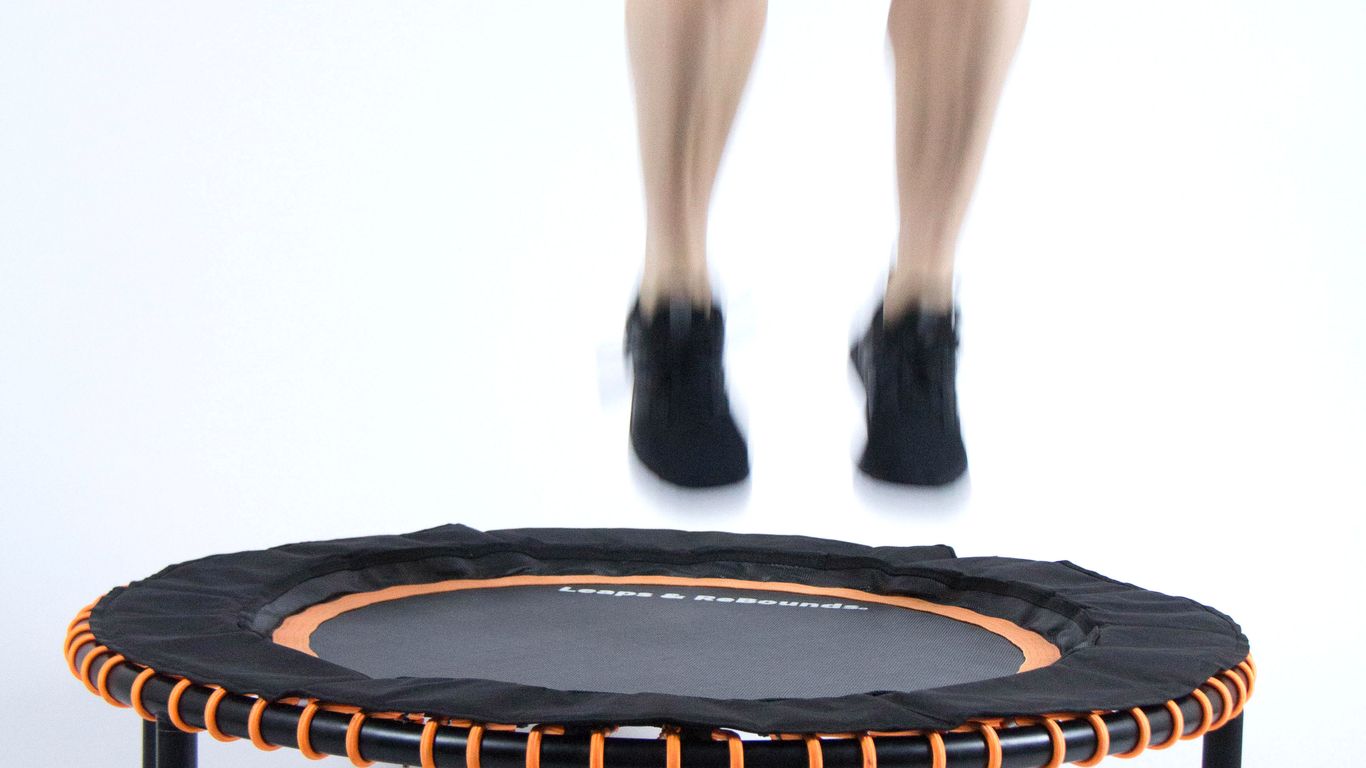
Alright, let's talk about single-leg bounces. This move is fantastic for really honing in on your balance and stability, which, let's be honest, can get a bit wobbly when you're jumping around. It might seem simple, but spending time on one leg really challenges those smaller stabilizing muscles in your ankles, knees, and hips.
Here's how to get started:
- Warm-up first: Always make sure you've done a quick warm-up before diving into more challenging moves. A few minutes of jogging in place or some light stretching will do the trick.
- Start gently: Stand on the rebounder and lift one foot a few inches off the surface. Keep your core engaged and try to maintain a steady, controlled bounce on your standing leg. Don't worry about bouncing high at first; focus on staying upright.
- Switch legs: After about 30 seconds to a minute, carefully switch legs and repeat the process. Try to keep the bounce consistent on both sides.
- Progression: As you get more comfortable, you can try increasing the height of your bounce or holding the lifted leg higher. You could even try small arm movements while balancing.
This exercise is a game-changer for improving proprioception, which is your body's ability to sense its position in space. It's super important for preventing falls and improving overall athletic performance. If you're looking to build a stronger foundation for all your other rebounder moves, dedicating time to single-leg work is a smart move. It’s a great way to build strength and coordination, especially if you're looking for low-impact options for seniors.
Don't get discouraged if you feel unsteady at first. It's totally normal! Consistency is key here. Just a few minutes each workout dedicated to single-leg bouncing will make a noticeable difference over time. Think of it as a mini-challenge that pays off big time for your balance.
5. High Knees
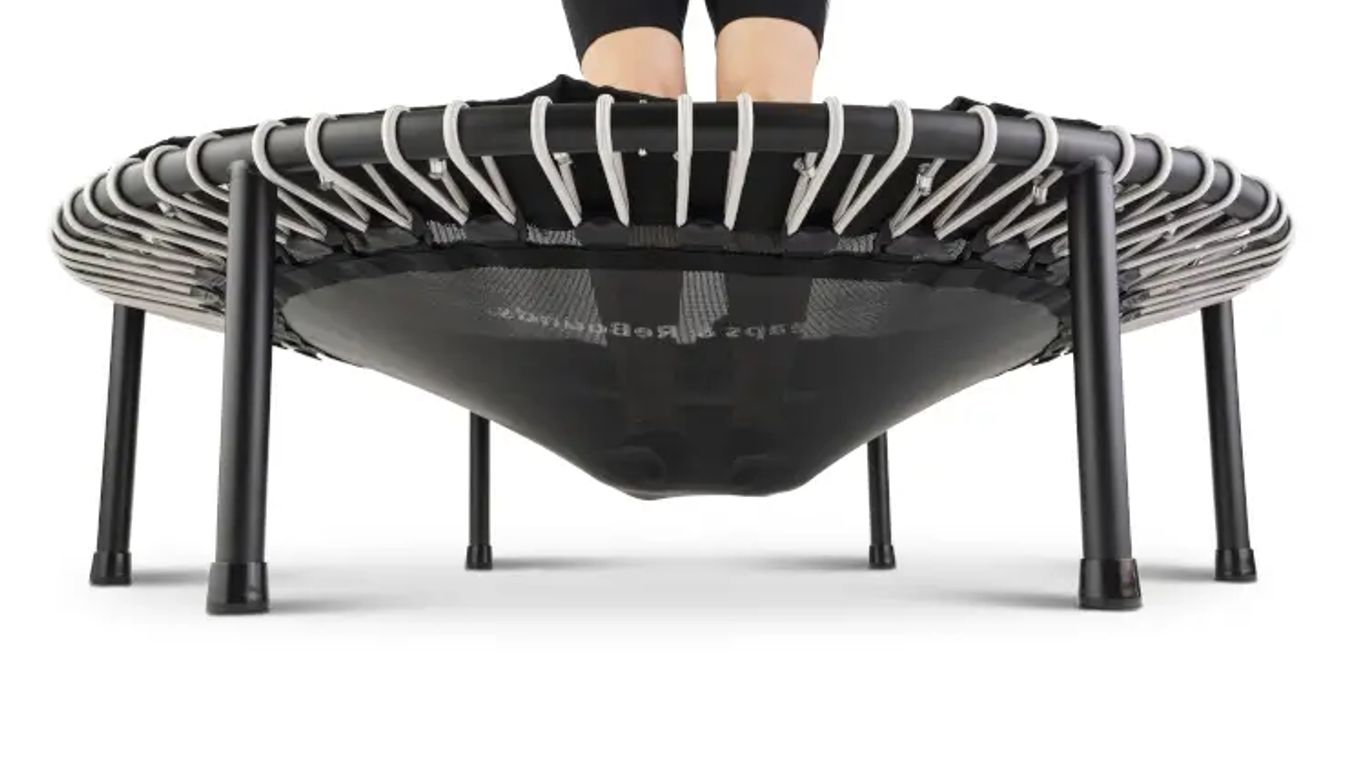
Alright, let's talk about high knees on the rebounder. This move is fantastic for really getting your heart rate up and working those core muscles. It's like a more intense version of marching, but with a serious cardio kick.
To do them, start by standing on the trampoline with your feet about hip-width apart. Bring one knee up towards your chest as high as you comfortably can, while simultaneously pumping your opposite arm forward. Then, switch legs and arms, bringing the other knee up. Keep your core engaged to help with balance and to get the most out of the exercise. Aim for a steady rhythm, alternating legs and arms with each bounce.
Here’s a quick breakdown:
- Start: Stand tall, core tight.
- Action: Drive one knee up towards your chest while pumping the opposite arm forward.
- Switch: Quickly alternate legs and arms with each bounce.
- Focus: Maintain a steady pace and keep your core engaged.
This exercise is great for improving coordination and can really torch calories. You can adjust the intensity by how high you lift your knees and how fast you move your arms. It's a good idea to warm up with some basic bounces before jumping into high knees, just to get your body ready. You can find some great warm-up ideas to help you master your bounce.
Remember, the trampoline surface is forgiving, but it's still important to land softly and control your movements. Don't just flop down; try to land with a slight bend in your knees to absorb the impact.
6. In-And-Out Jumps
In-and-out jumps are the sort of move that look simple but really wake up almost every muscle in your body once you get going. This move is all about jumping your feet from a narrow stance in the middle of the trampoline out to a wide stance, then back in again, as quickly as you can maintain good form. It’s fast, it’s sweaty, and it boosts your heart rate nearly right away.
Here’s how to get started with in-and-out jumps on your rebounder:
- Stand with your feet together in the center of the trampoline.
- Jump both feet outwards so they land slightly wider than your hips.
- Quickly bring your feet back together with control, landing softly each time.
- Swing your arms for balance, or keep hands on your hips.
- Aim for 30-45 seconds per round, or until you need a break.
Why pick this move to add to your routine? For one, it wakes up your lower body—your quads, glutes, and calves will all feel it. At the same time, it’s much easier on your knees than any traditional jumping on hard ground. The mat absorbs your landing, which is why many choose rebounding for joint-friendly cardio, as described in this rebounding overview.
| Benefit | Details |
|---|---|
| Muscles used | Quads, glutes, calves |
| Cardio boost | High, quick heart rate lift |
| Joint impact | Low, thanks to the soft mat |
In-and-out jumps are a great way to add intensity to your mini trampoline workouts without pounding your joints, making them suitable even for folks who want to keep things gentle but still break a sweat.
7. Torso Twists
Ready to add a little twist to your routine? Torso twists are fantastic for targeting your obliques and improving rotational strength. They're not just about looking good; a strong core helps with everyday movements and can even prevent back pain.
Here's how to get started:
- Start with a gentle bounce to get your body warmed up and accustomed to the trampoline's movement.
- Stand with your feet shoulder-width apart, knees slightly bent. Keep your core engaged.
- Begin to twist your torso from side to side. You can let your arms swing naturally or keep them in front of you.
- Focus on controlled movements, rather than speed. You should feel the work in your sides.
- As you get more comfortable, you can gradually increase the range of motion and the speed of the twists. Try to keep your hips as stable as possible, letting the rotation come from your waist.
Remember, the goal here is to engage your core muscles. Don't just flail your arms around; make sure your abs are doing the work to initiate the twist. It's a subtle but important difference that makes the exercise much more effective for core strength.
For an added challenge, try holding light weights in each hand or extending your arms out to the sides as you twist. This adds resistance and really makes those side muscles burn. Just be sure to maintain your balance – that's key on a trampoline!
8. Squats
Squats are a fantastic exercise for your legs and glutes, and doing them on a rebounder adds an extra challenge. It's a great way to build strength in your lower body while also getting a bit of a cardio burn. Focus on controlled movements rather than speed to get the most out of this exercise.
Here's how to do a basic rebounder squat:
- Stand on the trampoline with your feet shoulder-width apart. Keep your back straight and your chest up.
- Lower your hips as if you're going to sit in a chair. Make sure your knees don't go past your toes.
- Push back up to the starting position. You can add a small bounce at the top if you like, or just return to a standing position.
As you get more comfortable, you can try different variations. For instance, you can do deeper squats, or hold a weight for added resistance. Remember, the trampoline surface is unstable, so you'll be engaging your core muscles more to maintain balance. This makes it a really effective move for overall fitness. If you're new to this, it's a good idea to start with a mini trampoline workout that incorporates basic movements first to get a feel for the bounce.
Working on your squats on a rebounder can really help improve your leg strength and stability. It's a simple move, but doing it on an unstable surface makes a big difference in how many muscles you use. Just be sure to keep your form solid.
9. Jump Squats
Alright, let's talk about jump squats on the rebounder. This move really gets your legs and glutes working, and it's a fantastic way to boost your calorie burn. The key is to combine the power of a squat with an explosive jump.
Here's how to do them:
- Start with your feet about hip-width apart, standing on the trampoline. Keep your chest up and your core engaged.
- Lower yourself into a squat position, as if you're going to sit back in a chair. Make sure your knees don't go past your toes.
- From the squat, push off the trampoline with as much power as you can, jumping straight up.
- As you land, absorb the impact by immediately returning to the squat position. This controlled landing is super important for protecting your joints.
Try to do these in sets of 10-15 repetitions. As you get stronger, you can increase the number of reps or the height of your jumps. It's a great exercise for building lower body strength and improving your cardiovascular fitness. Remember to warm up properly before you start, and listen to your body. If you're new to this, start with smaller jumps and shallower squats. You can find more advanced trampoline routines online if you want to mix things up later on.
Jump squats on a rebounder are a dynamic exercise that targets multiple muscle groups simultaneously. They're excellent for developing explosive power and improving your overall athleticism. Just be mindful of your form to get the most out of the movement and avoid any strain.
10. Bounce Cardio
Ready to really get your heart pumping? Bounce cardio is all about sustained movement to boost your endurance and burn calories. This isn't just about jumping; it's about creating a dynamic, continuous workout that keeps you moving and grooving.
Think of bounce cardio as your personal party on a trampoline. You can mix and match different basic bounces, high knees, and in-and-out jumps to create a rhythm that works for you. The key is to keep your body in motion for an extended period. The goal is to elevate your heart rate and maintain it for a solid block of time.
Here’s a simple structure to get you started:
- Warm-up (3-5 minutes): Begin with a gentle health bounce or marching in place to get your blood flowing.
- Cardio Intervals (10-15 minutes): Alternate between higher intensity moves like high knees and jump squats with slightly less intense but still active moves like in-and-out jumps. You can also incorporate some torso twists to keep your core engaged.
- Cool-down (3-5 minutes): Gradually slow down your movements, returning to a health bounce or gentle marching until your breathing returns to normal.
This type of workout is fantastic because it's low-impact, meaning it's easier on your joints than running or jumping on a hard surface. You can easily adjust the intensity by how high you bounce or how fast you move. It's a great way to improve cardiovascular health without feeling like you're doing a grueling workout.
Bounce cardio sessions are perfect for days when you want a full-body burn without the joint stress. It's adaptable, fun, and you can tailor the duration and intensity to fit your fitness level and available time. Just keep moving and enjoy the ride!
Don't be afraid to put on some music and let loose. The more you enjoy it, the longer you'll want to do it, and the more benefits you'll see. You can even try following along with some online trampoline workouts to get new ideas for your cardio routines.
Want to get your heart pumping with some fun moves? Section 10, 'Bounce Cardio,' is all about that! It's a fantastic way to boost your energy and have a great time. Ready to jump into a healthier you? Check out our awesome mini trampolines on our website to find the perfect one for your bounce sessions!
Wrapping It Up: Keep Bouncing!
So there you have it! Rebounder trampolines are seriously a fun way to get your whole body moving. Whether you're just starting out or you've been at it for a while, these exercises can really help you feel better and get stronger. Plus, it's way easier on your joints than a lot of other stuff out there. Don't forget to stay safe, listen to your body, and just enjoy the bounce. Time to get jumping and see what a difference it makes!
Frequently Asked Questions
Is jumping on a mini trampoline good exercise?
Absolutely! Even though it's super fun, bouncing on a mini trampoline really counts as exercise. It's a fantastic way to get your heart pumping, build stronger muscles, and get better at balancing and moving.
What makes trampoline workouts so great for adults?
Mini trampolines are awesome for adults because they boost your heart health, help tone your muscles, and improve your balance and coordination. Plus, it's easy on your joints, so almost anyone can do it!
Can trampoline exercises be as tough as running?
You bet! Trampoline workouts can give you just as much of a challenge as running or biking. The cool part is that it's much kinder to your joints, making it a great choice if you want a good workout without the pounding.
What should I do to stay safe while exercising on a trampoline?
Always check that your trampoline is in good shape and on a flat surface. Wear comfy shoes and clothes. Start with simple moves and don't try anything too hard at first. Begin with just a few minutes a day and slowly add more time as you get better.
Which muscles do you work when you jump on a trampoline?
Jumping on a trampoline works your whole body! Your leg muscles get a workout pushing you up, your core muscles help you stay steady, and even your arms and shoulders can get involved with certain moves. It's a great way to tone up!
Is a mini trampoline a good investment for getting fit?
For sure! A mini trampoline is a really fun and effective way to get a full-body workout. It's especially good if you like exercises that are gentle on your body and want to add some excitement to your fitness routine.


0 comments