Want to build stronger legs? It's not just about how you look in shorts. Strong legs help with everything, from walking around to playing sports, and they're really important for your overall health. This guide is all about making your dumbbell leg exercise routine work for you, whether you're in a gym or at home. We'll cover how to build those muscles, move correctly, and keep getting better without getting hurt. Let's get those legs working!
Key Takeaways
- Using dumbbells for your leg workouts offers a lot of flexibility and can make your sessions more effective. They let you work your muscles in different ways and can be used anywhere.
- Dumbbell leg exercises work more than just your legs; they make your whole body engage, especially your core, which helps with balance and coordination.
- You can pick from a lot of different dumbbell weights, which helps you choose the right challenge for your workout and makes it easier to get stronger over time.
- When doing dumbbell leg exercises, always focus on good form first. This makes sure you're working the right muscles and avoids injuries. If your form breaks down, the weight might be too heavy.
- To keep seeing results from your dumbbell leg exercise routine, you need to gradually make things harder. This means lifting a bit more weight, doing more reps, or trying tougher versions of exercises over time.
Unlock Your Lower Body Potential With Dumbbells
So, you want to build stronger legs, huh? It’s a great goal, and honestly, dumbbells are your best friend for this. Forget those bulky machines for a minute; dumbbells offer a kind of freedom and versatility that’s hard to beat when it comes to leg training. They let you move more naturally, which means your muscles get worked in a way that feels more real, more effective. Plus, you can do a killer leg workout pretty much anywhere, whether you're at home or the gym is packed.
Benefits of a Dumbbell-Focused Leg Workout
Using dumbbells for your legs isn't just about convenience, though. It really changes how your body works. When you pick up a pair of dumbbells, your whole body has to chip in. Your core, your stabilizers – they all have to work harder to keep you steady. This means you're not just building leg strength; you're improving your balance and coordination too. It’s like a full-body engagement, even when you're just focusing on your legs. Think about exercises like split squats or lunges; they demand a lot of stability, forcing your legs, glutes, and core to work together. This teamwork leads to better overall strength and muscle development.
Here’s a quick look at why dumbbells are so good for your legs:
- Accessibility: You can find dumbbells in almost any gym, and they’re easy to use at home. No need for complicated setups.
- Full-Body Engagement: They make your core and stabilizer muscles work harder, improving balance.
- Flexibility: You can easily adjust the weight, often in small increments, to match your progress. This helps avoid hitting plateaus.
- Natural Movement: Dumbbells allow for a greater range of motion compared to many machines, leading to better muscle activation.
When you're working with dumbbells, you're not just moving weight; you're challenging your body's ability to control that weight through a full range of motion. This is key for building functional strength that carries over into everyday life and other athletic pursuits.
Full-Body Engagement Through Dumbbell Exercises
It's easy to think of leg day as just for your legs, but with dumbbells, it's a bit different. When you perform exercises like dumbbell goblet squats or Romanian deadlifts, your body has to work as a unit. Your core has to brace to keep your spine neutral, your glutes need to fire to stabilize your hips, and your upper back might even engage to help maintain posture. This integrated approach means you're building a stronger foundation overall. It’s this kind of full-body coordination that really pays off, making you more efficient and powerful in everything you do. You can find a collection of effective dumbbell leg exercises that highlight this principle.
Improved Range of Motion and Muscle Activation
One of the biggest wins with dumbbells is how they let you move. Unlike machines that often guide your movement along a fixed path, dumbbells allow your joints to move more freely. This means you can typically achieve a deeper stretch and a more complete contraction in your target muscles. For example, in a dumbbell Romanian deadlift, you can often lower the weights further than you might with a barbell, really stretching out those hamstrings. Similarly, a dumbbell goblet squat allows for a more natural squatting pattern, potentially leading to better quad and glute activation. This greater range of motion is not just about feeling the burn; it's about stimulating more muscle fibers for better growth and definition.
Mastering Key Dumbbell Leg Exercises
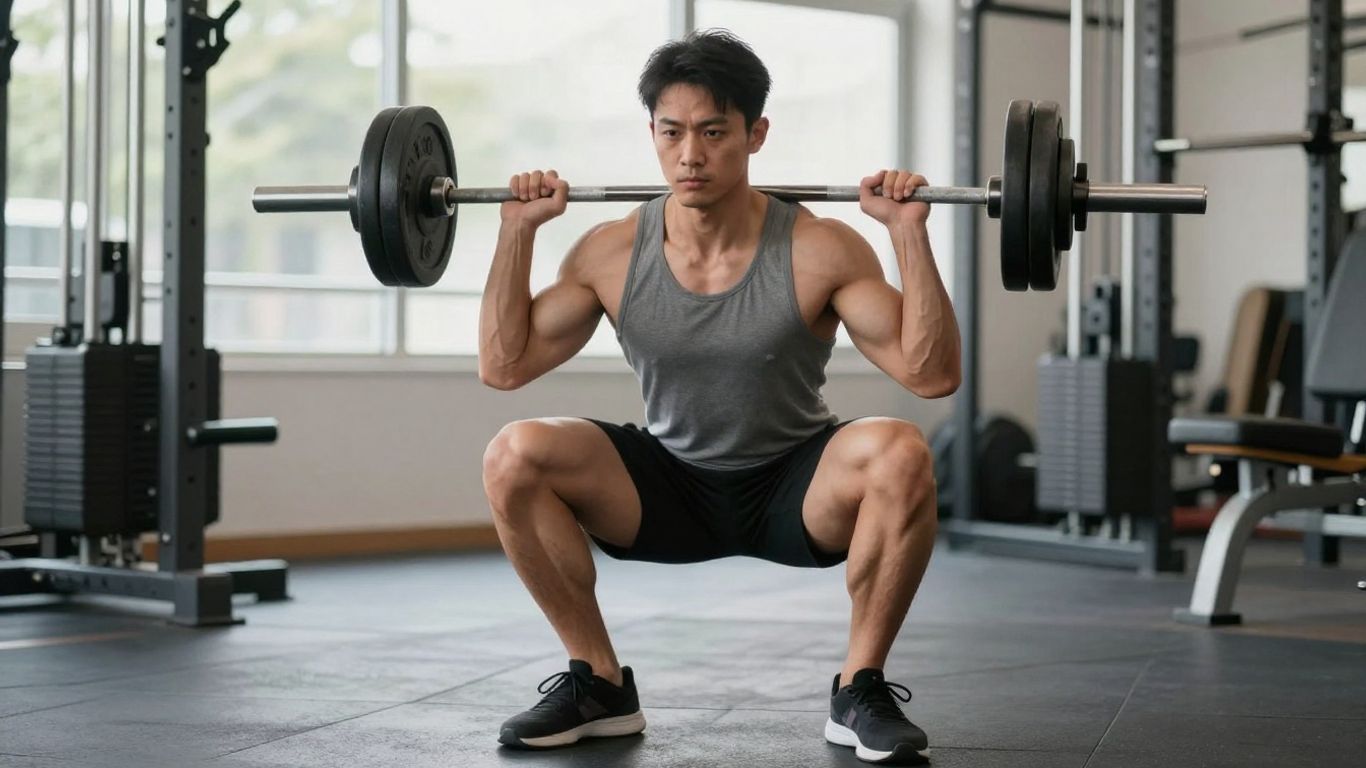
Alright, let's get down to business with some of the best dumbbell exercises for your legs. These aren't just random moves; they're designed to hit those major muscle groups – quads, hamstrings, and glutes – and really make them work. Using dumbbells means you can get a great workout pretty much anywhere, and they let you move through a full range of motion, which is key for building strength and definition.
Dumbbell Bulgarian Split Squat for Strength and Balance
This one is a killer for building up your quads, hamstrings, and glutes, all while making you steadier on your feet. It really challenges your balance.
- How to do it: Stand with one foot behind you, resting your back foot on a bench or box. Make sure the height is right so your back knee can almost touch the floor when you squat down. Hold a dumbbell in each hand. Lower yourself by bending your front knee, keeping your chest up and your core tight. Push off your front heel to stand back up. Try not to let your front knee go past your toes.
- Sets and Reps: Aim for 3 sets of 8 to 12 reps for each leg.
- Make it harder: At the bottom of the squat, hold for a couple of seconds before pushing up. This increases the time your muscles are working.
Dumbbell Romanian Deadlift for Hamstring and Glute Power
If you want to build serious power in your hamstrings and glutes, the Romanian Deadlift (RDL) is your friend. It's also great for improving how well your hips move.
- How to do it: Stand with your feet hip-width apart, holding a dumbbell in front of your thighs. Keeping a slight bend in your knees, hinge at your hips, lowering the dumbbells down your shins. Keep your back straight and feel the stretch in your hamstrings. Squeeze your glutes to pull yourself back up to a standing position.
- Sets and Reps: Try 3 sets of 10 to 12 reps.
- Focus on form: The key here is to push your hips back, not just bend over. Imagine you're trying to touch a wall behind you with your glutes.
Dumbbell Goblet Squat for Quad and Core Development
The Goblet Squat is fantastic for working your quads and also gets your core muscles involved. It's a solid all-around lower body move.
- How to do it: Hold one dumbbell vertically against your chest with both hands. Stand with your feet a bit wider than shoulder-width apart, toes pointed slightly out. Keeping your chest up and back straight, lower yourself into a squat as if you're sitting back into a chair. Go as low as you can comfortably manage while keeping good form. Push through your heels to return to the starting position.
- Sets and Reps: Do 3 sets of 10 to 15 reps.
- Tip: Keep the dumbbell close to your chest throughout the movement. This helps you stay balanced and keeps your torso upright.
These exercises are designed to be challenging but effective. Remember to focus on controlled movements rather than just rushing through the reps. Proper form will prevent injuries and help you get the most out of each exercise.
Advanced Dumbbell Leg Exercise Techniques
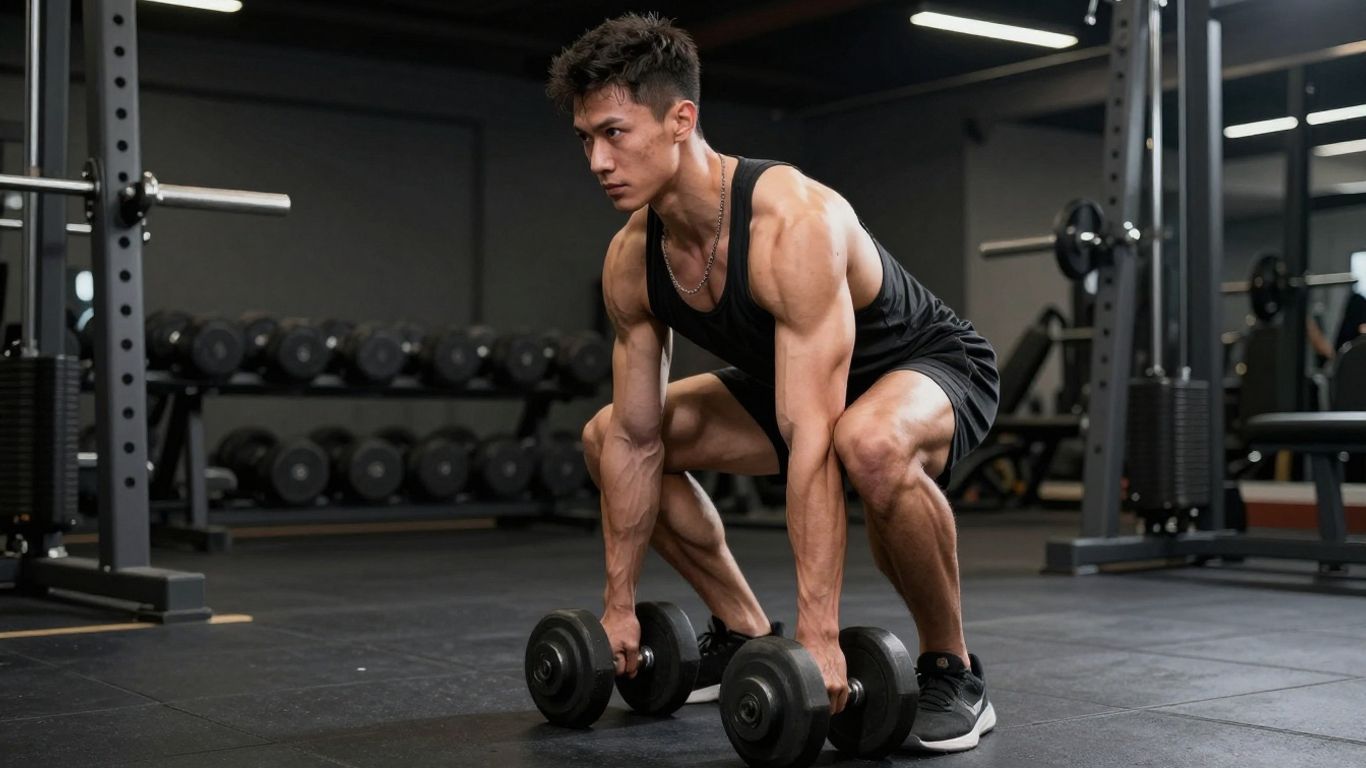
Alright, so you've got the basics down. You're comfortable with squats, lunges, and deadlifts using dumbbells. That's awesome! But if you're looking to really push your lower body and add some new challenges, it's time to get a little more creative. These next few moves are designed to hit your muscles from different angles and really test your stability and strength.
Dumbbell Reverse Lunge with a Twist for Stability
This isn't just your average reverse lunge. We're adding a rotational element that makes your core work overtime to keep you steady. It's fantastic for building that all-important core strength that supports everything else you do.
- How to do it: Start standing with a dumbbell in each hand. Step backward into a reverse lunge, lowering your back knee towards the floor. As you reach the bottom of the lunge, twist your torso towards your front leg. Keep your hips square to the front as much as possible during the twist. Push off your back foot to return to the starting position, untwisting as you come up.
- Why it's great: It works your quads and glutes like a regular lunge, but the twist forces your obliques and deep core muscles to engage to prevent you from falling over. This translates to better balance and a more resilient core.
- Progression: Try holding the bottom position of the lunge for a second before twisting, or use heavier dumbbells to really challenge your stability.
Dumbbell Hip Thrust for Glute Emphasis
If glutes are your main focus, the dumbbell hip thrust is your best friend. It allows for a really strong contraction at the top, directly targeting those glute muscles.
- Setup: Sit on the floor with your upper back against a bench or sturdy surface. Roll a dumbbell across your hips, holding it with both hands. Your feet should be flat on the floor, knees bent, and about shoulder-width apart.
- Execution: Drive through your heels, lifting your hips towards the ceiling until your body forms a straight line from your shoulders to your knees. Squeeze your glutes hard at the top. Lower back down slowly with control.
- Key Tip: Focus on the glute squeeze at the peak of the movement. It's not about how high you lift your hips, but how effectively you contract your glutes.
Progressive Overload Strategies for Dumbbell Workouts
Just doing the same thing week after week will eventually lead to a plateau. To keep making progress, you need to gradually increase the demand on your muscles. This is called progressive overload, and with dumbbells, there are several ways to do it.
Here are a few methods:
- Increase the Weight: This is the most obvious one. When you can comfortably hit the top end of your rep range for all your sets, it's time to grab a heavier dumbbell.
- Add Reps or Sets: If you don't have heavier weights available, simply doing more repetitions or adding an extra set to your existing exercises can provide a new stimulus.
- Improve Form and Range of Motion: Sometimes, just focusing on a slower tempo, pausing at the bottom of a movement, or achieving a deeper range of motion can make an exercise significantly harder and more effective.
- Decrease Rest Times: Shortening the rest periods between sets forces your muscles to work harder with less recovery time.
Remember, consistency is key. Don't try to jump too far too fast with weight increases. Listen to your body, focus on good form, and celebrate the small wins as you get stronger. It's a marathon, not a sprint, and these advanced techniques will help you keep moving forward.
Structuring Your Dumbbell Leg Day
Putting together a solid dumbbell leg day isn't just about picking a few exercises and going through the motions. It's about building a routine that makes sense, hitting all the right muscles, and setting you up for success. Think of it like building a house – you need a strong foundation before you start adding the fancy stuff.
Compound Movements to Start Your Routine
Always kick things off with the big hitters. Compound exercises work multiple muscle groups at once, giving you the most bang for your buck early on when you've got the most energy. These are your foundation builders. For dumbbell leg days, this means starting with movements like:
- Dumbbell Goblet Squats: Holding a single dumbbell at your chest, this works your quads, glutes, and core. Keep your chest up and try to get as low as you can with good form.
- Dumbbell Lunges (Forward or Reverse): Holding dumbbells in each hand, these are fantastic for quads, glutes, and hamstrings, while also challenging your balance.
- Dumbbell Romanian Deadlifts (RDLs): These are your primary hamstring and glute builders. Focus on hinging at your hips with a slight bend in your knees, keeping your back straight.
Starting with these ensures you're using your energy most effectively on exercises that give you the biggest overall stimulus. It's a smart way to begin your dumbbell-only leg workout.
Targeting the Posterior Chain with Dumbbells
After you've tackled the big compound lifts, it's time to give some extra attention to the muscles on the back of your body – your posterior chain. This includes your hamstrings, glutes, and lower back. These muscles are super important for overall strength, posture, and power. Dumbbells are great for isolating these areas.
- Dumbbell Hip Thrusts: Lie with your upper back on a bench, feet flat on the floor, and a dumbbell resting on your hips. Drive through your heels to lift your hips, squeezing your glutes at the top. This is a killer for glute development.
- Dumbbell Glute Bridges: Similar to hip thrusts but done on the floor. Place a dumbbell across your hips and lift.
- Single-Leg Dumbbell Romanian Deadlifts: This variation adds an extra challenge for balance and really targets each hamstring and glute individually.
Focusing on the posterior chain is often overlooked, but it's key for developing a balanced physique and preventing injuries. Don't skip these moves!
Incorporating Unilateral Dumbbell Exercises
Unilateral exercises mean working one limb at a time. This is super important because most of us have a dominant side, and unilateral work helps correct imbalances. It also forces your core to work harder to keep you stable. Dumbbells make these exercises really effective.
- Dumbbell Bulgarian Split Squats: Place the top of one foot on a bench behind you while holding dumbbells. Lower into a squat on your front leg. This is tough but amazing for quads, glutes, and balance.
- Dumbbell Reverse Lunge with a Twist: As you step back into a lunge, twist your torso over your front leg. This adds a core challenge.
- Single-Leg Romanian Deadlifts: As mentioned before, these are fantastic for hitting one leg at a time, building strength and stability.
By including these types of exercises, you're not just building muscle; you're building functional strength that translates to everyday movements and athletic performance. It's all about creating a well-rounded, strong lower body.
Choosing the Right Dumbbell Weight
Picking the right dumbbell weight is a big deal for getting the results you want without hurting yourself. It’s not just about grabbing the heaviest pair you can find. You need to find that sweet spot where the weight challenges you but still lets you keep good form. This is key for building muscle and getting stronger.
Finding Your Ideal Rep Max for Muscle Growth
For building muscle, aiming for a weight that lets you do between 8 and 12 repetitions with solid form is generally the way to go. The last couple of reps should feel tough, like you're really working for them, but still doable. If you can easily bang out more than 12 reps, the weight is probably too light. On the flip side, if you can't even hit 8 reps with good form, you need to lighten up. It takes a bit of trial and error to find that perfect weight for each exercise. Remember, form always comes first; don't sacrifice it just to lift heavier.
Gradually Increasing Load for Continuous Progress
Once you've found a weight that hits your target rep range, the next step is to keep challenging your muscles. This is called progressive overload, and it's how you keep getting stronger. A good rule of thumb is to increase the weight once you can comfortably complete your sets without struggling too much on the last few reps. You don't need to jump up by huge amounts; a small increase, maybe 5-10% depending on the exercise, is often enough to keep things moving forward. This steady increase helps prevent your progress from stalling. You can find a variety of weights at places that sell fitness equipment.
Tracking Your Dumbbell Leg Exercise Performance
Keeping a record of your workouts is super helpful. Write down the weights you used, how many sets you did, and how many reps you completed for each exercise. This logbook is your best friend for staying motivated and accountable. It also makes it really easy to see when it's time to bump up the weight or change things around to keep your muscles guessing. Seeing your progress laid out can be a huge motivator.
Don't get discouraged if you can't lift as much as someone else. Everyone's journey is different. Focus on your own progress and celebrate the small wins along the way. Consistency and proper form will always win out in the long run.
Wrapping It Up
So there you have it. We've gone over how dumbbells can really change up your leg workouts, making them more effective and giving you more options, whether you're at home or at the gym. We looked at some solid exercises like the Bulgarian split squat and the Romanian deadlift that hit all the right spots – your quads, hamstrings, and glutes. Remember to pick weights that challenge you but let you keep good form, and don't be afraid to slowly make things harder over time. Keep at it, and you'll definitely see and feel the difference in your lower body strength and definition.
Frequently Asked Questions
How often should I do a dumbbell leg workout?
Most people can do a dumbbell leg workout 1-2 times a week. Make sure to rest your legs for at least 48 hours between workouts so your muscles can recover and grow.
What size dumbbells should I use for leg exercises?
Pick a weight that feels challenging but lets you keep good form. For most exercises, you should be able to do 8-12 reps with the last two reps feeling tough but doable. If you can do more, try a heavier dumbbell. If you can’t do at least 8 reps, use a lighter one.
Can I build big leg muscles with just dumbbells?
Yes! Dumbbells can help you build strong, defined legs. The key is to push yourself with heavier weights over time and use exercises that work all your leg muscles, like squats, lunges, and deadlifts.
Do I need a bench for dumbbell leg workouts?
A bench is helpful for some moves, like Bulgarian split squats or hip thrusts, but you can do most leg exercises without one. If you don’t have a bench, use a sturdy chair or step, or focus on exercises that don’t need extra equipment.
What’s the best way to warm up before a dumbbell leg workout?
Start with 5-10 minutes of light cardio, like jogging or jumping jacks, to get your blood flowing. Then do some dynamic stretches, like leg swings and bodyweight squats, to loosen up your muscles and joints.
How can I keep getting stronger with dumbbell leg workouts?
To keep making progress, try to lift a little more weight, do more reps, or try harder exercise versions every few weeks. This is called progressive overload and helps your muscles keep growing and getting stronger.




0 comments