









So, we're talking about abs, right? Everyone wants that strong core, but sometimes it feels like all those crunches and sit-ups aren't really doing much. It makes you wonder if those standard ab exercises are actually good for building real strength, or if we're just spinning our wheels. Let's dig into why your core is more than just a six-pack and what it really takes to get it strong and functional.
Key Takeaways
- Your core muscles do more than just look good; they're vital for stability, posture, and preventing injuries in everyday life and during workouts.
- Just doing more reps of bodyweight ab exercises might not be enough over time. To keep getting stronger, you need to challenge your muscles, which is where progressive overload comes in.
- Adding weight to your ab exercises, like with dumbbells or machines, can help your muscles grow and get stronger faster, similar to how other muscles respond to resistance.
- Exercises like weighted crunches, focusing on lower abs, and using weight machines can be effective ways to build a stronger, more defined core.
- Planks, loaded carries, and resistance bands offer good alternatives or additions to traditional ab exercises, focusing on overall core stability and engagement.
Why Ab Exercises Are Good For More Than Just Aesthetics
The Core Muscles: More Than Just Abs
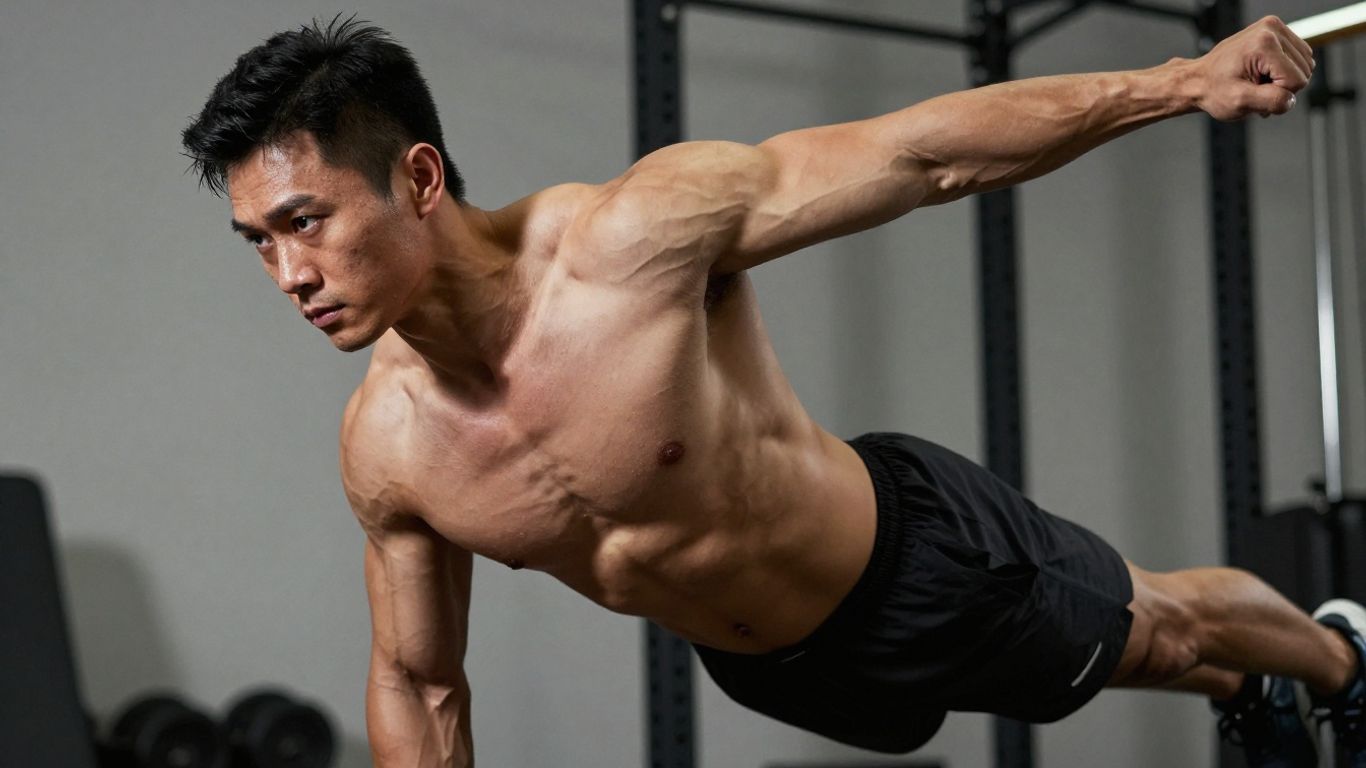
When most people think about "abs," they picture that sculpted six-pack. And sure, those muscles (the rectus abdominis) are part of it. But your "core" is a much bigger team. It includes your obliques on the sides, the deep transverse abdominis that wraps around your midsection like a natural corset, and even muscles in your back and pelvis. These muscles work together to stabilize your spine and pelvis, acting as the central link for almost every movement you make. Think of your core as the command center for your body's strength and stability. Without a strong core, even simple things like picking up groceries or standing up straight can become a struggle.
Functional Benefits of a Strong Core
A strong core does way more than just look good. It's about making your everyday life easier and your workouts more effective. When your core is solid, you'll notice a difference in:
- Better Balance: A stable core helps you stay upright and balanced, whether you're walking on uneven ground or performing complex exercises.
- Improved Movement Efficiency: Your core transfers power between your upper and lower body. A strong core means smoother, more powerful movements, whether you're swinging a golf club or just reaching for something on a high shelf.
- Increased Daily Comfort: Many people experience less back pain when their core muscles are strong and supportive.
A well-trained core isn't just for athletes; it's for anyone who wants to move through life with more ease and less discomfort. It's the foundation that supports everything else.
Preventing Injury and Improving Posture
Your core muscles are like your body's natural shock absorbers and stabilizers. When they're weak, other parts of your body, like your lower back, have to pick up the slack. This can lead to strains and injuries over time. A strong core helps to:
- Protect Your Spine: By keeping your spine in a neutral position during movement, your core reduces the stress on your back.
- Support Better Posture: When your core muscles are engaged, they help pull your shoulders back and keep your spine aligned, leading to a more upright and confident stance.
- Reduce Strain on Joints: A stable core helps distribute forces evenly throughout your body, lessening the impact on your hips, knees, and shoulders.
The Importance of Progressive Overload in Ab Training
So, you've been doing crunches and planks, and maybe you're feeling a bit stronger. That's great! But if you're looking to really build a rock-solid core, you've got to think about challenging those muscles more. Your abs, just like your biceps or quads, need a reason to grow and get stronger. That's where progressive overload comes in.
Why Bodyweight Ab Exercises May Not Be Enough
Look, bodyweight exercises are a fantastic starting point. They get the job done for beginners and can help build a basic level of core strength. Think of standard planks, basic crunches, or leg raises. They teach your muscles to engage and work. However, your abdominal muscles are pretty resilient. After a while, they get used to the same old movements. Doing 50 crunches might feel tough, but if your muscles have adapted, you're not really pushing them to get stronger anymore. You're just going through the motions. Without increasing the demand, your abs will eventually hit a plateau.
How Resistance Stimulates Muscle Growth
Muscles grow when they are challenged beyond their current capacity. This is the core idea behind progressive overload. When you introduce resistance – whether it's through added weight, more challenging variations, or increased volume – you create tiny tears in the muscle fibers. Your body then repairs these tears, making the muscle fibers thicker and stronger to handle that stress better next time. This process is called hypertrophy, and it's how you build more muscle mass and strength. Your abs are no different. They respond to resistance just like any other muscle group in your body.
Achieving Hypertrophy with Weighted Ab Work
To really get those abdominal muscles to grow and become more powerful, you need to incorporate some form of external resistance. This doesn't mean you have to go crazy with heavy weights right away. You can start small. Think about holding a dumbbell or a weight plate during your crunches, using resistance bands, or even filling a backpack with books for added weight during planks. The goal is to make the exercise harder than your bodyweight alone can handle. This added challenge signals your abs that they need to adapt and grow, leading to a stronger, more defined core over time. It's about consistently increasing the difficulty, even by small amounts, to keep your muscles responding and developing.
Maximizing Ab Engagement with Weighted Exercises
So, you've been doing your crunches and planks, and maybe you're feeling a little something. That's great! But if you're serious about building a truly strong core, it's time to think about adding some weight. Your abdominal muscles, just like any other muscle group in your body, need a challenge to grow and get stronger. Relying solely on bodyweight might get you so far, but eventually, you'll hit a plateau.
Benefits of Incorporating Free Weights
Adding free weights like dumbbells, kettlebells, or even weight plates to your ab routine can really change the game. It's not just about making the exercise harder; it's about stimulating your muscles in new ways. When you add resistance, you force your core to work harder to stabilize your body. This means you're not just hitting the rectus abdominis (the "six-pack" muscles), but also those smaller, often-neglected stabilizer muscles and even your intercostals – the muscles between your ribs.
- Increased Resistance: This is the most obvious benefit. More resistance means more work for your muscles, leading to greater strength gains.
- Versatility: Weights can be used in countless ways to modify exercises, making your routine more dynamic and preventing boredom.
- Efficiency: You can achieve a significant training stimulus with fewer reps when using weights, saving you time.
Targeting Stabilizer and Intercostal Muscles
Think of your core as a system. While the "abs" get a lot of attention, the deeper muscles and those around your rib cage play a huge role in stability and power transfer. When you hold a weight during an exercise like a weighted crunch or a Russian twist, these smaller muscles have to fire up to keep you balanced and controlled. This is where you build that robust, functional core strength that translates to better performance in sports and everyday life.
Adding weight to your ab work isn't just for aesthetics; it's about building a resilient and powerful core that supports your entire body. It helps you brace better during heavy lifts and can even improve your posture over time.
Weighted Ab Exercises for Accelerated Growth
Ready to level up? Here are a few ideas to get you started:
- Weighted Abdominal Crunch: Lie on your back, knees bent, feet flat. Hold a dumbbell or weight plate against your chest. Lift your shoulders off the ground, focusing on squeezing your abs. Control the movement down.
- Weighted Hanging Knee/Leg Raises: Hang from a pull-up bar. With a dumbbell held between your feet or wearing ankle weights, raise your knees or legs towards your chest. Lower slowly.
- Weighted Russian Twists: Sit on the floor, knees bent, feet slightly lifted (or flat for an easier version). Hold a dumbbell or kettlebell with both hands and twist your torso from side to side, tapping the weight near the floor on each side.
Remember, the goal is to challenge yourself while maintaining perfect form. Start with a weight that allows you to complete 10-15 reps with good control, and gradually increase it as you get stronger.
Effective Weighted Ab Exercises to Consider
Alright, so you've been doing your crunches and planks, and maybe you're feeling a little plateau. That's totally normal! When bodyweight just isn't cutting it anymore, it's time to think about adding some weight. It's not about showing off; it's about giving those ab muscles a reason to grow stronger and more defined. Think of it like any other muscle group – they need a challenge to adapt and get better.
The Weighted Abdominal Crunch Technique
This is a classic for a reason, but let's talk about how to do it right with some added resistance. You're basically taking the standard crunch and making it tougher by holding a weight. This really helps target that rectus abdominis, you know, the "six-pack" muscle.
Here's the rundown:
- Start: Lie on your back, knees bent, feet flat on the floor. Hold a dumbbell, weight plate, or even a kettlebell close to your chest. Make sure you've got a good grip.
- Lift: Breathe out and squeeze your abs to lift your upper body off the floor. Focus on bringing your ribcage towards your pelvis. Try not to pull with your neck or arms; it's all about those abs doing the work.
- Hold: At the top, give your abs a little squeeze for a second.
- Lower: Breathe in and slowly lower yourself back down. Control is key here, don't just drop.
Aim for about 3 to 4 sets of 10 to 15 reps. Pick a weight that makes those last few reps feel tough but doable without messing up your form. It's better to use a slightly lighter weight and do it perfectly than to struggle with something too heavy.
Exploring Weighted Lower Ab Moves
The lower abs can be a bit tricky to target, and often they're the weakest part of the core. That's why focusing on them when you're fresh can be a good strategy. When you're not tired, you can really concentrate on engaging them properly.
Some solid options include:
- Weighted Leg Raises: Lie on your back, legs straight. You can hold a dumbbell between your feet or strap on ankle weights. Lift your legs up towards the ceiling, then lower them slowly without letting them touch the floor.
- Hanging Knee Raises: Hang from a pull-up bar. Bring your knees up towards your chest. Again, ankle weights or a dumbbell held between your feet can add that extra challenge.
- Reverse Crunches: Lie on your back, hands by your sides or behind your head. Bring your knees towards your chest, lifting your hips slightly off the floor. Holding a light weight at your chest can increase the intensity.
Leveraging Weight Machines for Core Strength
Gyms have machines for a reason, and they can be super useful for your core too. They offer stability and controlled movement, which can be great for focusing on specific muscles or for when you're just starting out with weighted ab work.
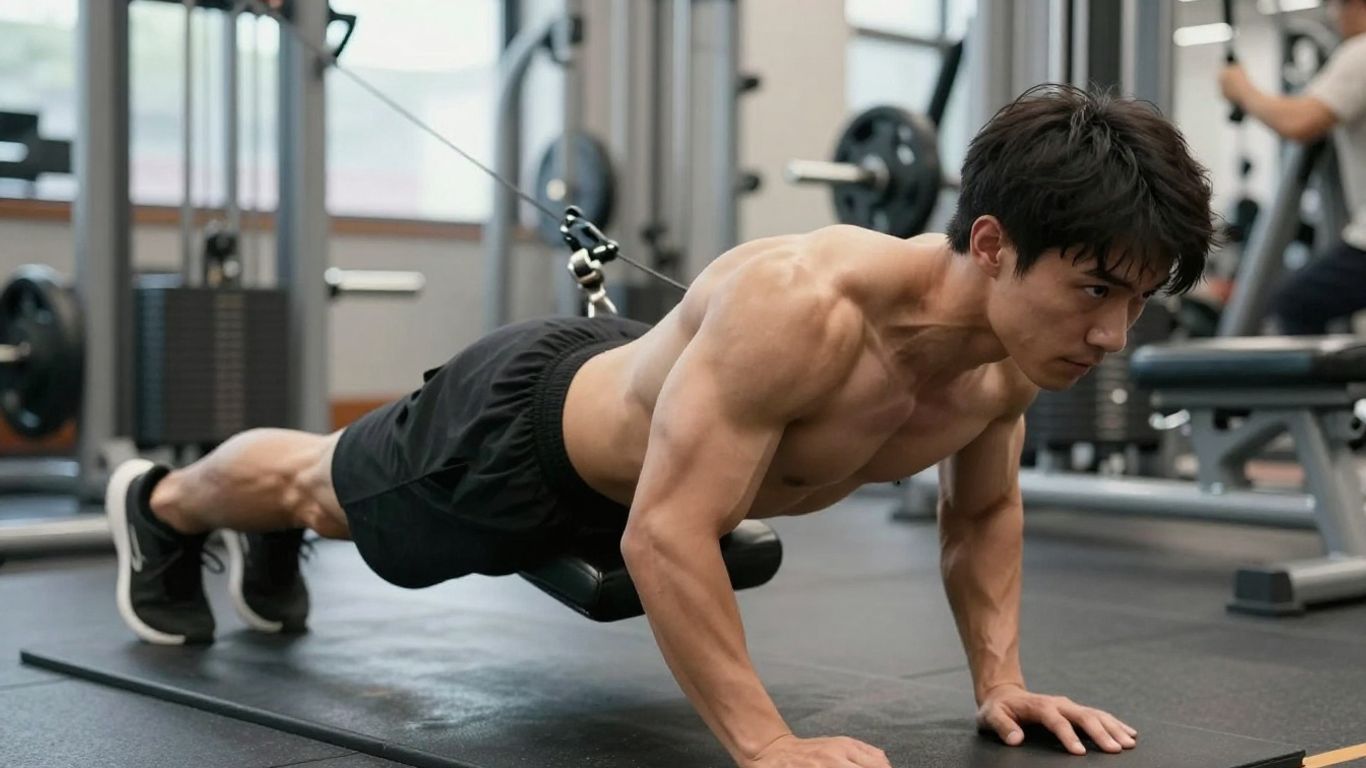
- Cable Crunches: These are fantastic because the cable provides constant tension throughout the entire movement. You can adjust the weight easily, making it simple to progress.
- Abdominal Crunch Machine: Many gyms have dedicated machines for crunches. You load the weight and then perform the crunch motion. It guides your movement, which can help with form.
- Smith Machine for Weighted Sit-ups: You can use a Smith machine to hold a barbell across your chest or behind your neck for weighted sit-ups, offering a stable way to add resistance.
Remember, the goal with any weighted exercise is to challenge your muscles effectively. Don't be afraid to experiment with different weights and exercises to see what feels best for your body and helps you progress. It's all about finding that sweet spot where you're working hard but still maintaining good form.
Alternative Approaches to Ab Training
While crunches and sit-ups have their place, relying solely on them might not be the most effective way to build a truly robust core. Your core is a complex system, and it needs more than just repetitive bending to get strong. Let's look at some other ways to challenge it.
The Role of Planks Over Sit-ups
Planks are often touted as a superior core exercise, and there's good reason for that. Unlike sit-ups, which primarily focus on flexing the spine, planks engage your core isometrically. This means your muscles are working hard to hold a position without moving. This type of engagement is fantastic for building endurance and stability throughout your entire midsection, including those deeper muscles that often get missed.
- Full Body Engagement: Planks activate your rectus abdominis (the 'six-pack' muscles), but also your transverse abdominis (your internal corset), obliques, lower back, and even your glutes and shoulders.
- Posture Improvement: Holding a plank correctly helps train your body to maintain a neutral spine, which can translate to better posture throughout the day.
- Scalability: You can easily modify planks to make them harder or easier. Start on your knees if a full plank is too tough, or add variations like side planks or plank jacks as you get stronger.
While sit-ups involve a dynamic movement that targets specific abdominal muscles, planks offer a more comprehensive, static hold that builds foundational core strength and stability. Both have their benefits, but for overall core resilience, planks often take the lead.
Incorporating Loaded Carries for Core Stability
Loaded carries, like farmer's walks or suitcase carries, might seem like they're all about your arms and grip, but they're secretly a killer core workout. When you're holding a heavy weight in one or both hands and walking, your core has to work overtime to keep your torso upright and stable. This isn't just about flexing; it's about resisting unwanted movement, which is a huge part of what a strong core is for.
- Anti-Lateral Flexion: Carrying weight on one side forces your obliques on the opposite side to work hard to prevent you from bending sideways.
- Improved Grip Strength: Holding onto heavy objects naturally strengthens your hands and forearms.
- Functional Strength: This type of exercise mimics real-life activities, like carrying groceries or heavy luggage, making your core more useful outside the gym.
Resistance Bands for Anywhere Ab Workouts
Resistance bands are super versatile and can add a great challenge to your ab training, no matter where you are. They provide constant tension, which means your muscles are working throughout the entire range of motion, not just at the hardest part of the movement. This is different from how free weights often work.
- Rotational Movements: Bands are excellent for exercises like woodchoppers or Russian twists, where you're resisting the pull of the band to control the rotation.
- Anti-Rotation: You can also use them to work against rotation, like in Pallof presses, which are fantastic for building core stability.
- Portability: Bands are lightweight and easy to pack, making them perfect for travel or home workouts when you don't have access to gym equipment.
Best Practices for Safe and Effective Ab Workouts
Alright, so you're ready to really get serious about your abs, maybe even add some weight. That's awesome! But before you go loading up a barbell and doing sit-ups, let's talk about how to do this right. Because, honestly, nobody wants to end up with a tweaked back or some other issue just trying to get a stronger core. It’s all about being smart with your training.
Prioritizing Proper Form and Mind-Muscle Connection
This is probably the most important thing, seriously. When you're doing any ab exercise, especially with added weight, you've got to focus on how you're moving. It’s not just about getting the reps in; it’s about actually feeling those muscles work. Think about squeezing your abs, pulling your belly button towards your spine, and controlling the movement throughout. If you're just flinging weights around or rushing through reps, you're not going to get the best results, and you're definitely increasing your risk of injury. Paying attention to the details makes all the difference.
Understanding and Managing Diastasis Recti
Now, this is something that can pop up, especially if you're doing a lot of intense core work or if you've had kids. Diastasis recti is basically when the two big ab muscles on the front of your stomach separate. It can happen from too much pressure on that area. You might notice a bulge or a "cone" shape when you do certain exercises, and it can also lead to back pain or other issues.
Here’s the deal with it:
- Focus on engaging your deep core muscles, not just the "six-pack" ones.
- Try to keep your abs flat during movements, rather than letting them bulge out.
- Some people find that certain exercises, like traditional crunches or planks, can make it worse. It’s worth looking into modifications if you suspect you have this.
- If you think you might have diastasis recti, it’s a good idea to talk to a doctor or a physical therapist who specializes in this stuff. They can give you specific advice.
It's easy to get caught up in the idea of pushing harder and lifting heavier, but when it comes to your core, especially the deep stabilizing muscles, gentler and more controlled movements can often be more effective. Think quality over quantity, always.
When to Seek Professional Guidance
Look, we all want to be self-sufficient in the gym, but sometimes you just need a little help. If you're new to weighted ab exercises, or if you're feeling any sharp or unusual pain, don't just push through it. That's your body telling you something's not right. A good trainer can show you the correct form for exercises like weighted crunches or Russian twists, making sure you're targeting the right muscles and not putting yourself at risk. They can also help you figure out if you need to adjust your routine because of something like diastasis recti. It’s an investment in your long-term health and fitness, and honestly, it’s worth it.
So, What's the Verdict on Ab Exercises?
Look, doing endless crunches probably isn't the magic bullet for a rock-solid core that some people think it is. While they can be part of the picture, focusing solely on them might not be the best move. A truly strong core involves more than just the "six-pack" muscles; it's about stability, balance, and supporting your whole body. Adding resistance, whether through weights or other challenging movements, seems to be the way to go if you're serious about building real strength. Remember to keep good form, listen to your body, and maybe mix things up a bit. Your core will thank you for it, and you'll likely feel the benefits in more ways than one.
Frequently Asked Questions
Are regular ab exercises enough to build a strong core?
While doing ab exercises is a good start, just doing them over and over might not be enough. Your muscles get used to the same movements. To keep getting stronger, you need to challenge them more over time, like lifting heavier weights or doing harder versions of exercises. This is called progressive overload, and it's key for building real strength.
What does 'progressive overload' mean for ab workouts?
Progressive overload means gradually making your workouts harder. For abs, this could mean adding weight, doing more reps, or trying more challenging exercises. It's like telling your muscles they need to work harder to get stronger, just like any other muscle in your body.
How do weights help build a stronger core?
Adding weights to your ab exercises makes them tougher, forcing your muscles to work harder. This helps build more muscle and strength faster than just using your body weight. It also helps train the smaller muscles around your abs that help with stability.
Are there specific weighted exercises that are best for abs?
Yes, there are! Exercises like weighted crunches, where you hold a weight against your chest, are great. Also, trying weighted moves for your lower abs or using weight machines designed for core work can give you a really good challenge and help you build strength quickly.
What's the difference between planks and sit-ups for core strength?
Planks are often better because they work more muscles in your core at once, front to back and side to side, without putting too much strain on your back like sit-ups can. Sit-ups tend to focus more on just a couple of muscles and can sometimes cause back pain if not done perfectly.
What is diastasis recti, and how does it affect ab workouts?
Diastasis recti is when the main ab muscles separate, often happening after pregnancy. If you have this, some regular ab exercises like crunches or planks might make it worse. It's important to focus on exercises that gently bring those muscles back together or avoid movements that put too much pressure on them. If you think you have it, it's best to talk to a doctor or physical therapist.


0 comments