









So, you want to build up those quads, huh? Most of us just stick to the same few leg exercises, thinking that's enough. But honestly, there's a whole world of movements out there that can really target the front of your thighs. This guide is all about showing you some great exercise for the quads that will not only make them bigger and stronger but also help you move better and stay injury-free. We'll dive into what your quads actually do and why your current routine might be falling a bit short.
Key Takeaways
- Knowing the four muscles that make up your quads helps you target them better when you do an exercise for the quads.
- Front squats and exercises like hack squats are often seen as top choices for building quads because you can lift heavy and load them directly.
- Using different moves such as dumbbell TKE split squats, leg extensions, and hack squats makes sure your quads are worked from all sides.
- Adding in things like heavy bike sprints or dumbbell Spanish squats can provide unique stress and build up endurance in your quads.
- Even with just a few well-chosen exercises, a good workout plan can be enough to build strong quads, especially when you eat right and rest well.
Understanding Your Quadriceps
Anatomy Of The Quadriceps
Alright, let's talk about the muscles at the front of your thighs – the quadriceps, or quads for short. Most people think of them as one big muscle, but it's actually a team of four, each with its own job. They're located on the front of your thigh and are pretty important for a lot of what you do. Knowing these muscles helps us target them better when we're working out.
Here's a quick rundown of the four muscles that make up your quads:
- Rectus Femoris: This one runs from your hip bone down to your knee. It helps you straighten your leg and also helps when you lift your knee up, like when you're kicking a ball.
- Vastus Lateralis: This is the big one on the outside of your thigh. It gives your quads that wide look and is a major player in straightening your leg.
- Vastus Medialis: You'll find this one on the inside of your thigh, near your knee. It's key for knee extension and helps give that teardrop shape.
- Vastus Intermedius: Tucked away between the vastus lateralis and vastus medialis, this muscle also works hard to extend your knee.
Why Strong Quads Matter
So, why should you care about building up these four muscles? Well, they do a lot more than just look good in shorts. Strong quads are the powerhouse behind many everyday movements. Think about standing up from a chair, climbing stairs, or even just walking around. Your quads are working hard without you even realizing it. They're also super important for athletic activities like running, jumping, and cycling, helping you perform better and with more power.
Beyond performance, strong quads play a big role in keeping your knees healthy. They help stabilize the knee joint, which can reduce the risk of injuries. It's like having a natural brace supporting your knee. Plus, having good quad strength can even help with your posture and overall balance as you get older.
It's easy to get stuck doing the same old exercises, but if you're not feeling your quads work, you might be missing out. Sometimes, common exercises hit your glutes or hamstrings more, or they don't allow for the full range of motion needed to really challenge those quad muscles. If you've hit a plateau or just want to see better results, it's time to look at exercises that specifically target these four muscles.
Foundation: Essential Quad Exercises
Alright, let's talk about the bedrock of your quad training. If you're looking to build some serious leg power, you absolutely have to nail these foundational movements. They're the heavy hitters, the ones that give you the most bang for your buck when it comes to building strength and size in your quadriceps. Think of these as the non-negotiables for anyone serious about leg development.
Barbell Back Squat
This is the classic for a reason. The barbell back squat is a compound movement that works your entire lower body, but it really hammers the quads, especially when you focus on depth. Getting below parallel is key here for maximum quad engagement. It's not just about lifting heavy; it's about controlled movement and proper form to really feel it in those front thigh muscles.
Front Squat
If the back squat is the king, the front squat is its powerful cousin. By holding the barbell in front of your body, you're forced into a more upright torso. This shift in weight distribution puts a ton more emphasis directly onto your quadriceps. It's a fantastic exercise for building quad size and strength, and it also challenges your core and upper back stability.
Leg Press
The leg press machine is a great tool for piling on volume without the same systemic fatigue as barbell squats. You can load up some serious weight here and really focus on pushing through your quads. It's also a good option if you have any lower back issues that make barbell squats uncomfortable. Just make sure you're not letting your lower back round off the pad at the bottom of the movement.
Walking Lunges
Lunges are brilliant for working each leg independently, which helps iron out any strength imbalances. Walking lunges add a dynamic element, challenging your balance and coordination while still giving your quads a solid workout. Focus on keeping your front knee tracking over your ankle and driving through your heel to maximize quad activation on that lead leg.
Advanced Quad Strengthening Moves
Alright, so you've got the basics down and you're ready to really push those quads to the next level. This is where we get into some serious muscle-building territory. These aren't your everyday exercises; they demand more control, more focus, and they'll definitely make you feel the burn in a whole new way. These moves are designed to challenge your quads from different angles and with greater intensity.
Bulgarian Split Squats
This exercise is fantastic for really isolating each leg. It challenges your balance and forces your quads to work hard to stabilize your body. Start with just your bodyweight to get the form right. You'll stand facing away from a bench or sturdy surface, placing the top of one foot on it behind you. Then, lower your back knee towards the floor, keeping your front shin as vertical as possible. Push back up through your front heel. It feels tough, but it's great for building unilateral strength.
Sissy Squats
Don't let the name fool you; sissy squats are no joke. They put a huge emphasis on the quads by allowing for a deep stretch and contraction. The key is to keep your body in a straight line from your knees to your head as you lean back and lower yourself, bending your knees. You'll want to hold onto something for balance initially. It's a move that really targets the rectus femoris, one of the main quad muscles.
Hack Squats
While often done on a machine, the hack squat allows for a very deep range of motion, which is excellent for quad development. The angled platform lets you lean back slightly, which can help keep the stress off your lower back compared to some other squat variations. You can load this up pretty heavy, so focus on controlled movements and feeling that stretch at the bottom. It's a solid choice for adding serious mass to your thighs. You can find machines for this at most gyms, which makes it easier to load up safely for serious quad gains.
Dumbbell Spanish Squats
This is a less common but highly effective move. You'll need a dumbbell and something to sit on, like a low bench or box. Stand with your back to the bench, holding a dumbbell vertically between your feet. Sit back onto the bench, keeping your feet flat on the floor and your knees bent. The dumbbell stays wedged between your feet. Stand back up, driving through your heels. This variation creates a unique tension and stretch in the quads, really working them through a different plane of motion.
When you're tackling these advanced moves, remember that form is everything. It's better to do fewer reps with perfect technique than to rush through and risk injury. Listen to your body, and don't be afraid to start lighter than you think you need to. The goal is progressive overload, not just ego lifting.
Here's a quick look at how these might fit into a routine:
- Bulgarian Split Squats: 3 sets of 8-12 reps per leg. Focus on control on the way down.
- Sissy Squats: 3 sets of 10-15 reps. Use support if needed, and aim for a deep stretch.
- Hack Squats: 3 sets of 8-12 reps. Load progressively, but maintain good form.
- Dumbbell Spanish Squats: 3 sets of 10-15 reps. Feel the unique tension in your quads.
Home-Based Quad Workouts
Bodyweight Squats For Quad Strength
Alright, let's talk about the OG of leg exercises: the bodyweight squat. You don't need fancy equipment for this one, just your own body and a little space. It's a fantastic way to get your quads working, and honestly, it's the foundation for a lot of other movements.
Here's the rundown:
- Stand with your feet about shoulder-width apart. Think about where you'd plant your feet if you were about to jump.
- Keep your chest up and your core tight. This isn't just about your legs; your whole body needs to be engaged.
- Lower yourself down like you're about to sit in a chair. Go as low as you comfortably can while keeping your back straight.
- Push through your heels to stand back up. Feel that squeeze in your quads.
Start with 3 sets of 15-20 reps. As you get stronger, you can add more reps or even try variations like jump squats to make it tougher.
Bodyweight exercises are super accessible. They're great for building a base level of strength and getting used to the movement patterns before you add weight.
Lunges For Balance And Strength
Lunges are another powerhouse move you can do anywhere. They're brilliant because they work each leg independently, which is great for spotting and correcting any imbalances you might have. Plus, they really challenge your balance.
How to do them:
- Take a big step forward with one leg.
- Lower your body until both your front and back knees are bent at roughly 90-degree angles. Make sure your front knee doesn't go way past your toes.
- Push off your front foot to return to the starting position.
- Repeat on the other side, or alternate legs with each rep.
Aim for 3 sets of 10-12 reps for each leg. If you want to make it harder, hold some dumbbells or even water bottles.
Step-Ups For Lower Quad Development
Step-ups are awesome for really targeting the lower part of your quads. You just need a stable elevated surface, like a sturdy chair, a bench, or even a low step outside your house.
Here’s how it’s done:
- Stand facing your step or bench.
- Place one foot firmly on top of it.
- Drive through that front foot to lift your body up, bringing your other foot to meet it on the step.
- Step back down slowly, one foot at a time.
Do 3 sets of 12-15 reps on each leg. Focus on controlling the movement, especially as you step down. This helps build strength and stability.
Wall Sits For Quad Endurance
If you want your quads to feel like they're on fire (in a good way!), try wall sits. This is an isometric exercise, meaning you hold a position rather than moving through a range of motion. It’s fantastic for building endurance in your quadriceps.
To perform a wall sit:
- Stand with your back against a wall.
- Slide down the wall until your thighs are parallel to the floor, like you're sitting in an invisible chair. Your knees should be bent at about 90 degrees.
- Hold that position for as long as you can. Try to aim for 30-60 seconds per set.
Do 3 sets. This might not seem like much, but trust me, your quads will be feeling it. It’s a great way to finish off a leg workout or to do on its own when you’re short on time.
Maximizing Quad Development
So, you've got the exercises down, but how do you really make those quads grow? It's not just about doing a bunch of moves; it's about being smart with how you train. Think about mixing things up to keep your muscles guessing and growing.
Targeting Quads With Specific Exercises
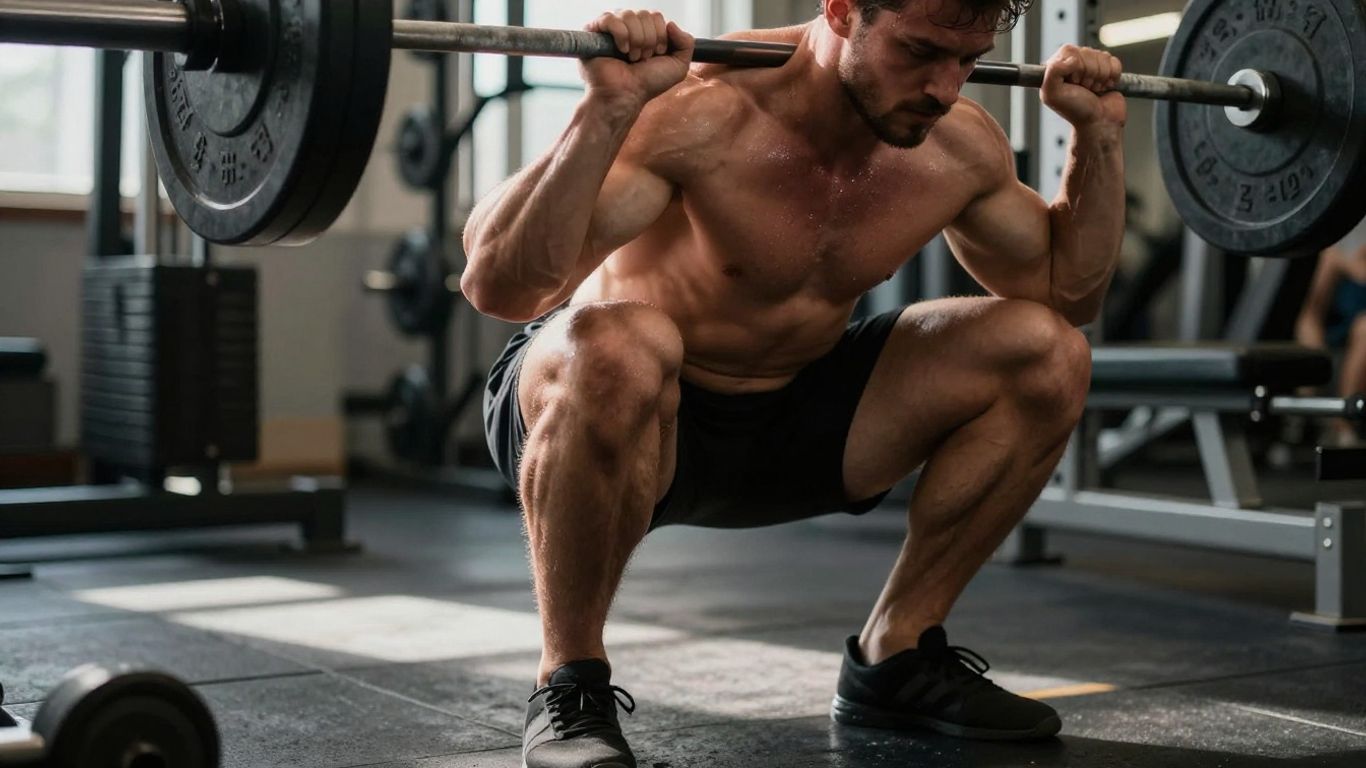
To really zero in on your quadriceps, pay attention to exercise selection and how you perform them. Some moves naturally put more stress on the quads. For instance, keeping your torso more upright during squats, like in a front squat or a goblet squat with a heel elevation, forces your quads to do more of the heavy lifting to extend your knees. It's about shifting that emphasis.
Effective Quad Training Techniques
Variety is key here. You can't just do the same thing every workout and expect continuous progress. Try playing with different rep ranges. Lifting heavier weights for fewer reps (think 5-8 reps) is great for building raw strength. On the other hand, using moderate weights for higher reps (12-15 reps) can really build muscle endurance and give you that satisfying burn. Don't forget about tempo, too. Slowing down the lowering part of a lift, known as the eccentric phase, can create a lot of muscle-building stimulus. Adding a brief pause at the bottom of a squat can also increase the time your quads are under tension.
Here's a quick look at how different techniques can impact your training:
- Heavy Lifting (Strength Focus): Lower reps (5-8), heavier weight. Builds power and muscle density.
- Moderate Lifting (Hypertrophy Focus): Mid-range reps (8-12), moderate weight. Great for overall muscle size.
- High Reps (Endurance Focus): Higher reps (12-15+), lighter weight. Builds muscular endurance and can lead to a significant pump.
- Tempo Training: Controlling the speed of each phase of the lift, especially the eccentric (lowering) part.
- Isometric Holds: Pausing at a specific point in the movement to increase time under tension.
Paying attention to the details, like how you move through each repetition and the specific exercises you choose, can make a significant difference in how your quads develop over time. It's the small adjustments that often lead to the biggest gains.
Structuring Your Quad Workout Routine
How often should you hit your quads? For most people looking to build muscle, training a muscle group twice a week hits a sweet spot. This allows for enough work to stimulate growth while giving your muscles enough time to recover. Aim for at least 10 sets of quad work per week. If you're doing 3-4 sets per exercise, that means you'll likely need 2-3 different quad exercises per workout. Remember, this is a general guideline. Your fitness level, how much time you have, and your overall training split will all play a role. If building bigger quads is your main goal, you might even do 3 or 4 quad exercises in a single session, just make sure you're giving yourself at least 48 hours of rest before training them again.
Finishing Strong: Quad Isolation Exercises
Alright, so you've put in the work with the big compound lifts, and now it's time to really zero in on those quads. This is where isolation exercises come into play. They're like the finishing touches on a masterpiece, helping to really carve out definition and push those muscles to their limit when they're already tired. Think of them as the final push to really make those quads pop.
Leg Extensions For Quad Burnout
This machine-based exercise is a classic for a reason. Leg extensions let you focus solely on your quadriceps without any other muscles stepping in to help. It's pretty straightforward: you sit down, strap your ankles in, and extend your legs against the resistance. The real magic happens when you focus on squeezing your quads at the top of the movement and controlling the descent. This controlled tension is what really fatigues the muscle fibers, leading to that satisfying burn.
- How to do it: Sit on the leg extension machine, adjusting the back pad so your knees are at the edge of the seat. Place the roller pad just above your ankles. Extend your legs upwards, squeezing your quads at the top for a second. Slowly lower the weight back down, resisting the pull of the machine.
- Sets and Reps: Aim for 3-4 sets of 12-15 repetitions. Because this is an isolation move, you can often go a bit lighter and focus on the mind-muscle connection.
- Pro Tip: Try a drop set on your last set. After reaching failure, immediately reduce the weight by about 20-30% and do as many more reps as you can. It's brutal, but effective!
Dumbbell TKE Split Squats
This variation of the split squat is a bit different and really targets the terminal knee extension part of the quad. TKE stands for Terminal Knee Extension, and it's that final push at the end of a squat or lunge where your quads are working hardest. This exercise helps build strength and control in that specific range of motion.
This move is fantastic for improving knee stability and can be a great way to finish off your quads after heavier lifting. It forces each leg to work independently, highlighting any imbalances you might have.
- How to do it: Stand with your back foot elevated on a bench or step, similar to a Bulgarian split squat. Hold a dumbbell in the hand opposite your front leg. Instead of just lowering straight down, focus on driving your front knee forward over your toes as much as possible while keeping your heel down. You'll feel a deep stretch in your quad. Push back up, focusing on extending your knee.
- Sets and Reps: Perform 3 sets of 10-12 repetitions per leg. Focus on a controlled movement, especially on the way down.
- Variations: You can also do this with a resistance band wrapped around your front shin and anchored behind you, adding accommodating resistance that gets tougher as you extend your knee.
Wrapping It Up
So, we've gone over a bunch of ways to really work those quad muscles. Remember, building strong quads isn't just about looking good; it helps with everyday stuff like walking and climbing stairs, and it keeps your knees feeling solid. Whether you're hitting the gym or just working out at home, mixing in these exercises with good form is the way to go. Don't forget to give your muscles time to recover so they can get stronger. Keep at it, train smart, and you'll definitely see and feel the difference in your legs.
Frequently Asked Questions
What are the quadriceps and why are they important?
Your quadriceps, or quads, are the four muscles at the front of your thighs. They're super important for moving your legs, like when you walk, run, jump, or even just stand up. Having strong quads helps keep your knees safe, makes you better at sports, and can even help you stand up straighter.
What are some basic exercises to start building my quads?
Great starting exercises include bodyweight squats, where you pretend to sit in a chair without actually sitting down. Lunges, where you step forward and bend both knees, are also good. Step-ups onto a sturdy surface and wall sits, where you lean against a wall with your knees bent, are excellent for building a solid quad foundation.
Can I build strong quads without going to a gym?
Absolutely! You can get a fantastic quad workout at home. Exercises like bodyweight squats, lunges, step-ups, and wall sits use your own body weight effectively. You can also add resistance with things you find around the house or simple weights if you have them.
How often should I work my quads?
For most people, working your quads one to two times a week is a good amount. It's important to give your muscles enough time to rest and recover between workouts so they can get stronger.
What's the difference between basic and advanced quad exercises?
Basic exercises often use just body weight or lighter weights and focus on fundamental movements. Advanced exercises might involve heavier weights, more challenging variations like Bulgarian split squats or sissy squats, or require more balance and control to really push your muscles harder.
How can I make my quad workouts more effective?
To get the most out of your quad workouts, focus on doing the exercises correctly with good form. Make sure you're using a full range of motion, meaning you go as deep as you safely can. Slowing down the part where you lower the weight (the eccentric phase) can also help build muscle more effectively.


0 comments