














Lately, you might have heard people talking about bouncing on a trampoline to help your body's waste removal system, the lymphatic system. It's often called 'rebounding' or 'trampoline lymph drainage.' The idea is that this kind of jumping can help move things along, getting rid of waste and boosting your health. But does it really work like people say? Let's take a closer look at what's going on with the lymphatic system and what science actually says about using a trampoline to help it out.
Key Takeaways
- Trampolining, or rebounding, is promoted as a way to help the lymphatic system clear waste from the body.
- The concept of 'detox' in wellness is not scientifically supported; our bodies have natural systems for waste removal.
- There's no solid scientific proof that trampolining significantly improves lymph flow.
- While exercise is good for health, trampolining carries risks of serious injury, especially for children.
- For specific conditions like lymphedema, safer and more proven methods like compression and massage are recommended over trampolining.
Understanding The Lymphatic System

The Body's Waste Removal Network
Think of your lymphatic system as your body's internal cleanup crew. It's a complex network of vessels, tissues, and organs that works alongside your circulatory system, but it has a different job. Its main role is to collect extra fluid, waste products, dead cells, and even harmful invaders like bacteria and viruses from all over your body. This fluid, called lymph, is then filtered and cleaned, mostly in your lymph nodes, before being returned to your bloodstream. Without this system, your body would quickly get bogged down with waste. It's a pretty vital part of keeping everything running smoothly.
More Than Just A Sewer System
While it's often called the body's waste removal network, the lymphatic system does more than just act like a simple drain. It's deeply involved in your body's defense. The lymph fluid carries white blood cells, which are key to fighting off infections and diseases. It also plays a role in absorbing fats from your digestive system and helps manage fluid balance throughout your body. So, it's not just about getting rid of trash; it's about maintaining overall health and immunity.
- Fluid Balance: Collects excess fluid from tissues to prevent swelling.
- Immune Defense: Transports white blood cells to fight pathogens.
- Fat Absorption: Helps absorb fats from the intestines.
The lymphatic system doesn't have a pump like the heart. Instead, it relies on the movement of your muscles and body to push the lymph fluid along its path. This is why being active is so important for keeping it working well.
Poor lymph flow can happen, especially if you lead a more sedentary lifestyle. When lymph doesn't move efficiently, waste products can build up, potentially making you feel sluggish or more prone to getting sick. This is where ideas like trampoline lymph drainage come into play, aiming to give this system a helpful nudge. You can learn more about how lymph works by visiting the lymphatic system.
The Concept Of Trampoline Lymph Drainage
What Is Rebounding?
So, what exactly are we talking about when we say 'trampoline lymph drainage'? It's basically a catchy name for a practice that involves bouncing on a small trampoline, often called a mini-trampoline. This activity is also frequently referred to as 'rebounding.' The core idea is that the simple act of jumping up and down on this equipment can help get your lymphatic system moving more efficiently. It's a pretty straightforward concept: you bounce, and the motion is supposed to encourage the flow of lymph fluid throughout your body.
The Claim Of Detoxification
A big part of the appeal behind this practice is the idea of 'detoxification.' Proponents suggest that our bodies accumulate waste products and 'toxins' from daily living, and that rebounding offers a way to help flush these out. It's framed as an internal 'house cleaning' method. The belief is that the lymphatic system, which is responsible for managing waste, can be given a boost to perform its job better through this type of exercise. The central argument is that the rhythmic bouncing aids the body's natural waste removal processes.
Historical Context Of The Idea
This whole notion isn't exactly a brand-new invention. You can find discussions about using trampolines for lymphatic health popping up online, particularly in the early 2000s. It seems to have gained a following in certain wellness communities over the years. Sometimes, people will mention a NASA study from the 1980s, suggesting it showed benefits related to exercise and changes in gravity. However, that particular study was focused on astronaut fitness and didn't directly investigate lymph flow. So, while it's a popular idea that's been around for a while, it doesn't have a long, well-documented history rooted in scientific research specifically on lymph drainage.
The theory suggests that the up-and-down motion, especially the shifts in gravitational force experienced during bouncing, plays a key role. When you jump, you briefly feel lighter, and upon landing, your body can experience a force that feels stronger than gravity. This push-and-pull effect is thought to be beneficial for the lymphatic system.
How Trampolining May Stimulate Lymph Flow
So, how exactly is bouncing around on a mini trampoline supposed to get your lymphatic system moving? The idea is that the up-and-down motion, especially the changes in gravity, plays a role. When you jump, you briefly experience a feeling of weightlessness, and then upon landing, your body can feel a force greater than gravity. This push and pull is thought to help.
Gravity's Effect On Lymphatic Vessels
Think about it: your lymphatic system doesn't have a central pump like your heart. It relies on muscle contractions and body movements to push lymph fluid along. When you bounce, the rapid shifts in gravitational force are believed to cause the lymphatic vessels to expand and contract. This action is theorized to help propel the lymph fluid through the system. Some proponents suggest that landing on the trampoline can create a force up to four times that of gravity, which they claim is more effective than running for stimulating lymph flow.
The 'Health Bounce' Technique
There's a specific type of bounce often mentioned in relation to lymphatic drainage: the 'Health Bounce'. This isn't about high-flying acrobatics. It's described as a gentle, rhythmic up-and-down motion. The idea is to maintain a consistent, controlled bounce that allows your body to experience these gravitational changes without excessive strain. It's about consistency rather than intensity, aiming to create a steady pumping action for the lymph.
Lymphatic Valve Stimulation
Your lymphatic vessels have one-way valves that ensure lymph flows in the correct direction. The theory behind trampoline lymphatic drainage is that the bouncing motion, particularly the changes in pressure, helps to open and close these valves. This repeated opening and closing action is thought to act like a pump, pushing the lymph fluid forward. Some sources suggest that even a few minutes of this gentle bouncing can significantly aid in moving stagnant lymph.
The lymphatic system, unlike the circulatory system, lacks a central pump. Its fluid movement relies heavily on external forces like muscle contractions and body movements. The up-and-down motion of rebounding is theorized to provide these necessary forces, potentially aiding in the propulsion of lymph fluid through its one-way valves.
Potential Benefits Of Trampoline Lymph Workouts
So, you're wondering if bouncing on a mini-trampoline could actually help your lymphatic system do its job better. It's a popular idea in some wellness circles, and the theory is pretty straightforward. The up-and-down motion, especially that brief moment of feeling weightless before you land, is thought to give your lymphatic fluid a gentle push.
Enhancing Lymph Circulation
The lymphatic system is kind of like your body's internal cleaning service, but it doesn't have a pump like your heart to keep things moving. It really relies on movement to get the lymph fluid flowing. When you bounce, the idea is that the changing forces of gravity help the one-way valves in your lymphatic vessels open and close more effectively. This could potentially speed up how quickly lymph fluid moves, and that fluid is what carries waste products away from your tissues.
- Gentle bouncing can get lymph flow going.
- The up-and-down movement might help move fluid through the vessels.
- This could help clear out waste products from your body.
Supporting Immune Function
If lymph circulation gets a boost, it's thought that this could indirectly help your immune system. Your lymph fluid is where a lot of your white blood cells hang out, and those are the guys that fight off infections. Better circulation might mean these cells can travel around your body more easily, doing their important work. It's like making sure the delivery trucks for your immune system are running on time.
Assisting With Lymphedema Management
For people dealing with lymphedema, a condition where lymph fluid builds up, especially in the arms or legs, anything that might help reduce swelling is worth looking into. Some early studies have explored whether exercises like rebounding could be helpful for individuals with lower limb lymphedema. The gentle, low-impact nature of bouncing might be a way to encourage fluid movement without putting too much stress on the body. However, it's really important to talk to a doctor before trying this if you have lymphedema, as it's a medical condition that needs careful management.
While the concept of improving lymphatic flow through bouncing is intriguing, it's important to remember that the lymphatic system is complex. Direct, strong scientific evidence specifically linking trampoline use to significant lymphatic drainage benefits is still limited. General physical activity is known to support overall health, including lymphatic function, but specific claims about rebounding require more research.
Scientific Scrutiny Of Trampoline Lymph Claims
Addressing Unscientific Claims
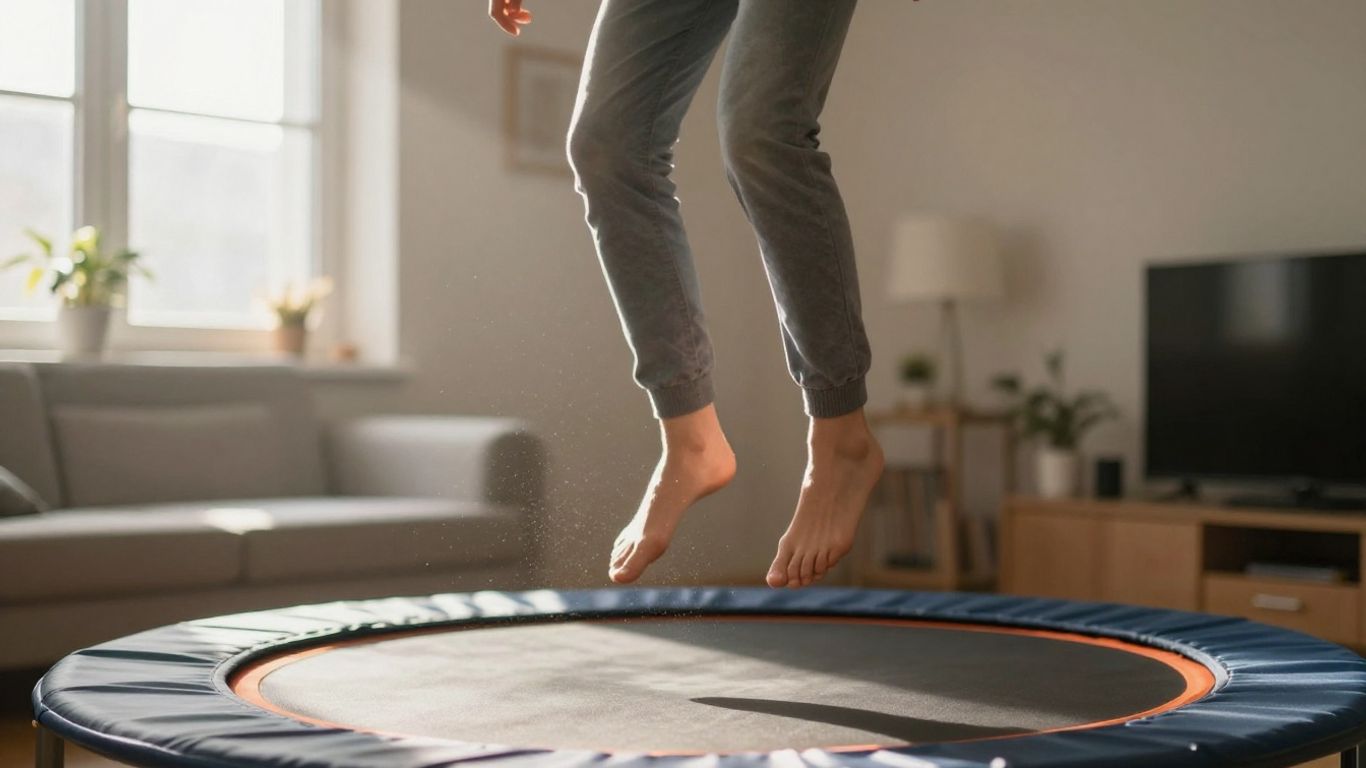
It's easy to get excited about a new health idea, especially one that sounds as fun as bouncing on a trampoline to help your body clear out waste. But when we look closely at the science behind trampoline lymph drainage, the picture gets a bit blurry. A lot of what you hear about "detoxing" your lymph system through rebounding comes from the wellness community, and frankly, it's not backed by solid research. Your body is already pretty good at managing waste, thanks to your liver, kidneys, and other systems working hard every day. Relying on bouncing as a primary way to "detox" might be overstating its actual impact.
Limited Direct Evidence
When you start digging for studies that specifically look at trampolining and the lymphatic system, you don't find much. There was a small study a few years back that involved women with lymphedema, a condition where fluid builds up in the limbs. The researchers wanted to see if exercises, including using a trampoline, could help. But here's the catch: only seven women were able to participate. That's a really small group, making it tough to draw any firm conclusions. It's more like a starting point, a pilot study, to see if a larger study might be worth doing, not really proof that it works for everyone.
The idea that a specific NASA study from the 1980s supports trampoline lymph drainage is a common misconception. That research focused on astronaut fitness and didn't measure lymph flow at all. It seems this connection was made by misunderstanding the study's purpose.
Here's a quick look at why the evidence is thin:
- Lack of direct lymph flow studies: Most research focuses on general fitness benefits of rebounding, not specific lymphatic system responses.
- Anecdotal evidence vs. scientific proof: Many claims are based on personal experiences rather than controlled scientific trials.
- Misinterpretation of existing research: Studies like the NASA one are often cited out of context.
- Small sample sizes in relevant studies: When studies do touch on lymph issues, they often involve too few participants to be conclusive.
Considering The Risks And Alternatives
Potential For Serious Injuries
While the idea of bouncing your way to better health sounds appealing, it's important to look at the potential downsides of using a trampoline, especially when it comes to lymphatic drainage claims. Trampolines, while fun, do carry a risk of injury, and it's not a one-size-fits-all solution for everyone's health needs. The U.S. Consumer Product Safety Commission has reported hundreds of thousands of trampoline-related injuries requiring medical attention annually. While children often account for the majority of these incidents, adults are certainly not immune. Fractures, dislocations, and head injuries are among the more severe outcomes. It's always wise to stay centered on the mat and be aware of your surroundings to minimize the chance of falling off, which can lead to serious harm. Always consult with a doctor before starting any new exercise program, especially if you have pre-existing health conditions.
Safer Alternatives For Lymphatic Health
If your primary goal is to support your lymphatic system, there are established and less risky methods available. For instance, manual lymphatic drainage (MLD) is a specialized massage technique performed by trained therapists. Compression therapy, using garments or bandages, is another well-regarded approach, particularly for managing conditions like lymphedema. These methods are designed to directly assist lymph flow without the impact and potential hazards associated with bouncing. Consulting with a healthcare professional can help you find the most appropriate and safe strategy for your specific health situation. You might also find that simple activities like walking or swimming can positively impact circulation. For those looking for direct lymphatic support, manual lymphatic drainage is a recognized therapy manual lymphatic drainage.
It's important to remember that while exercise is generally good for health, specific claims about trampolines and lymphatic drainage often lack strong scientific backing. Your body has its own systems for waste removal, and relying solely on bouncing might not be the most effective or safest approach for everyone.
So, What's the Takeaway?
Look, the idea of bouncing on a trampoline to help your body's cleanup system sounds pretty neat, right? It's definitely a fun thought. But when you look at what science actually says, the evidence for it being a major lymph mover just isn't really there. Your body's already got its own ways of dealing with waste, and those are pretty good. Plus, trampolines can be risky, leading to injuries for both kids and adults. If you're really looking to help out your lymphatic system, especially if you have something like lymphedema, there are safer, proven methods out there, like special massages or compression. So, while a little bounce might feel good, it's probably best not to count on it as a miracle cure for your lymphatic health. Always chat with your doctor before trying new things, especially if you have any health concerns.
Frequently Asked Questions
What is the lymphatic system and what does it do?
Think of your lymphatic system as your body's super-organized cleanup crew. It's a network of tiny tubes and little filters (called lymph nodes) that moves a special fluid all around your body. This fluid, called lymph, helps carry away waste, like old cells and germs, and it's a big part of how your body fights off sickness. It's more than just a drain; it also helps your body use fats from food and keeps swelling in check.
What is 'rebounding' or trampoline lymph drainage?
Rebounding is just a fun way to say bouncing on a trampoline, usually a small one you can use at home. The idea behind 'trampoline lymph drainage' is that this bouncing motion helps your body's cleanup system, the lymphatic system, work better by moving the lymph fluid around more easily.
Does bouncing on a trampoline really 'detox' my body?
The idea that you need to 'detox' your body with special exercises or diets isn't really proven by science. Your body already has amazing systems, like your liver and kidneys, that are great at getting rid of waste. While exercising is always good for you, there's no strong proof that trampolining specifically 'detoxifies' you in the way some wellness claims suggest.
How is trampolining supposed to help lymph flow?
People who believe in this say that the up-and-down bouncing motion changes how gravity affects your body. They think this causes tiny one-way doors, called valves, in your lymph tubes to open and close, which helps push the lymph fluid along. Some suggest a gentle bounce, called the 'Health Bounce,' is especially good for this.
Are there any proven benefits to using a trampoline for lymph health?
While the thought of boosting lymph circulation is appealing, there's limited scientific proof that trampolining is a primary way to do it. Some people suggest it might help with immune function because lymph carries important immune cells. For conditions like lymphedema (swelling caused by fluid buildup), some early ideas suggest gentle bouncing might help, but it's crucial to talk to a doctor first.
Are there safer ways to support my lymphatic system?
Yes, definitely! If you want to help your lymphatic system, there are safer and more proven methods. A special type of massage called manual lymphatic drainage (MLD), done by trained professionals, is very effective. Wearing compression garments can also help manage swelling. Simple activities like walking, swimming, or deep breathing exercises can also support healthy lymph flow without the risks associated with trampolines.


0 comments