










So, you've got one of those big, bouncy balls, huh? Maybe you're wondering what all the fuss is about. Well, let me tell you, this balance ball for exercise isn't just some fancy piece of equipment; it's a game-changer for your core. Forget boring floor exercises, this thing makes your muscles work in a whole new way, just trying to keep you from rolling off. It's a simple tool, but it can seriously amp up your fitness routine and give you that strong middle you've been after. Let's get into it.
Key Takeaways
- Using a balance ball for exercise makes your core muscles work harder because it's an unstable surface, helping to build strength and stability.
- The ball improves your balance and coordination by forcing your body to make constant small adjustments to stay upright.
- Exercises on the balance ball activate more muscles overall compared to doing them on a flat surface, giving you a more complete workout.
- Basic exercises like seated squeezes and wall sits with the ball are great starting points for beginners to feel how the ball engages their core.
- You can make many standard exercises more challenging and effective by incorporating the balance ball, but always progress slowly and listen to your body to avoid injury.
Understanding The Power Of The Balance Ball For Exercise
So, you've got your balance ball, and you're ready to see what it can really do. This isn't just some fancy prop; it's a tool that can seriously change how you work out, making things tougher and, honestly, more interesting. It's all about making your workouts more dynamic and getting more muscle engagement.
Boosting Core Strength And Stability
This is where the balance ball really shines. When you sit or exercise on it, your body has to constantly make tiny adjustments to stay upright. This means your core muscles – the ones deep inside your belly and back – are working overtime, even when you're not actively doing a crunch. It's like giving your core a non-stop workout without even realizing it. Constant muscle engagement is the key benefit here. Unlike a stable chair or floor, the ball forces continuous activation of your stabilizing muscles. This leads to improved posture and can reduce that nagging lower back ache. Think of it this way: trying to balance on a wobbly surface requires a lot more effort from your midsection than sitting on a solid chair. That extra effort is building real strength, which can help with everyday movements like lifting or bending, making them feel easier and safer. It's a great way to alleviate back and neck tension.
Improving Balance And Coordination
It might seem obvious, but using a balance ball is a fantastic way to get better at, well, balancing. Every time you shift your weight or make a small movement, your body has to react. This constant need for adjustment sharpens your reflexes and makes you more aware of your body's position in space. It's a great way to train your brain and body to work together more efficiently. Balance isn't just for athletes; it's a part of our daily lives. From walking on uneven surfaces to reaching for objects, good balance and coordination are key for preventing falls and injuries. The stability ball is a great tool for improving this. By creating an unstable surface, it challenges your body's awareness of its position, which translates to better overall balance and coordination in your daily activities and sports performance.
Enhancing Overall Muscle Activation
When you do exercises on a balance ball, you're often using more muscles than you would on a flat surface. Take squats, for example. Doing them on the ball means your legs are working, but your core, glutes, and even your shoulders are firing up to keep you steady. This means you're getting more bang for your buck with every move. The increased muscle recruitment means you're building a more well-rounded physique and getting a more complete workout, all thanks to the instability the ball provides.
Here's a quick look at how different exercises get more out of you:
- Squats: Standard surface engages legs and glutes. On the ball, you add core and shoulder stability.
- Push-ups: Standard surface targets chest, triceps, and shoulders. On the ball, you significantly increase core engagement.
- Lunges: Standard surface works legs and glutes. On the ball, you also activate core and hip stabilizers.
Using a balance ball turns standard exercises into full-body challenges. It forces your body to work harder just to stay upright, which means you're burning more calories and getting a core workout at the same time. It’s a win-win for your fitness goals.
Foundational Balance Ball Exercises For A Stronger Core
Getting started with a balance ball doesn't have to be complicated. These basic moves are designed to help you get a feel for the ball and start waking up those core muscles. Think of these as your entry point into building a more stable and strong midsection. The key is to focus on controlled movements and really feel your muscles working to keep you steady.
Basic Stability Ball Workouts
These exercises are your first step. They're great for getting comfortable with the ball's instability and learning how your body needs to react. Don't rush through them; the goal is to build a solid foundation.
- Stability Ball Crunches: Sit on the ball with your feet flat on the floor, about hip-width apart. Gently walk your feet forward, allowing the ball to roll under your back until you feel supported. Your lower back should feel secure. You can place your hands behind your head or cross them over your chest. As you exhale, lift your head and shoulders off the ball, focusing on squeezing your abdominal muscles. Inhale as you slowly return to the starting position.
- Wall Sit with Ball: Stand with your back against a wall, placing the balance ball between your lower back and the wall. Position your feet shoulder-width apart and a short distance from the wall. Slowly slide down the wall as if you're sitting into a chair, letting the ball roll with you. Aim to get your thighs parallel to the floor if you can, but go only as low as feels comfortable. Push back up to the starting position using your leg muscles.
- Seated Ball Squeeze: Sit upright on the ball with your feet flat on the floor. Place a smaller ball or a rolled-up towel between your knees. Squeeze your knees together, engaging your inner thighs and also your core muscles. Hold this squeeze for a few seconds, then release. This simple action helps activate stabilizing muscles.
Remember, consistency is more important than intensity when you're starting out. Even a few minutes of focused work each day can make a big difference over time. Pay attention to how your body feels and adjust as needed.
Seated Ball Squeeze
This exercise is fantastic for engaging your inner thighs and, surprisingly, your core. Sit tall on the balance ball with your feet flat on the floor, hip-width apart. Place a small object, like a rolled-up towel or a small yoga block, between your knees. Now, gently squeeze your knees inward, pressing the object between them. You should feel your inner thighs working, but also notice your core muscles tightening to help you maintain an upright posture. Hold the squeeze for about 15-30 seconds, then release. Repeat this for several repetitions. It's a subtle move, but it really helps build awareness in those often-forgotten muscles. This is a great way to start mastering the fitness ball for core strength.
Targeting Deeper Core Muscles With Advanced Balance Ball Moves
Alright, so you've moved past the beginner stuff and are feeling pretty good about your balance ball skills. That's awesome! Now, let's talk about really digging into those deeper core muscles. These aren't the flashy abs you see in magazines, but the muscles that actually keep you stable and strong day-to-day. Using the ball for these moves makes them way more effective.
Stability Ball Pike
This one is a serious challenge for your entire core, especially your lower abs. You start in a plank position, but instead of your feet on the floor, they're on the ball. Keep your body straight. Then, using your core, lift your hips up towards the ceiling, making your body look like an upside-down 'V' or a pike. It's tough to hold, and getting back down smoothly is part of the exercise. You'll really feel this one working.
Single-Leg Ball Roll-Outs
Think of the basic ball roll-out, but now we're adding a twist. You'll be on your knees, forearms on the ball, but one leg will be extended straight back. This immediately makes your core work harder to keep you from tipping over. You have to fight that imbalance. Slowly roll forward, keeping that extended leg steady, and then pull yourself back. It's a great way to build stability and strength on one side at a time.
Ball Push-Ups
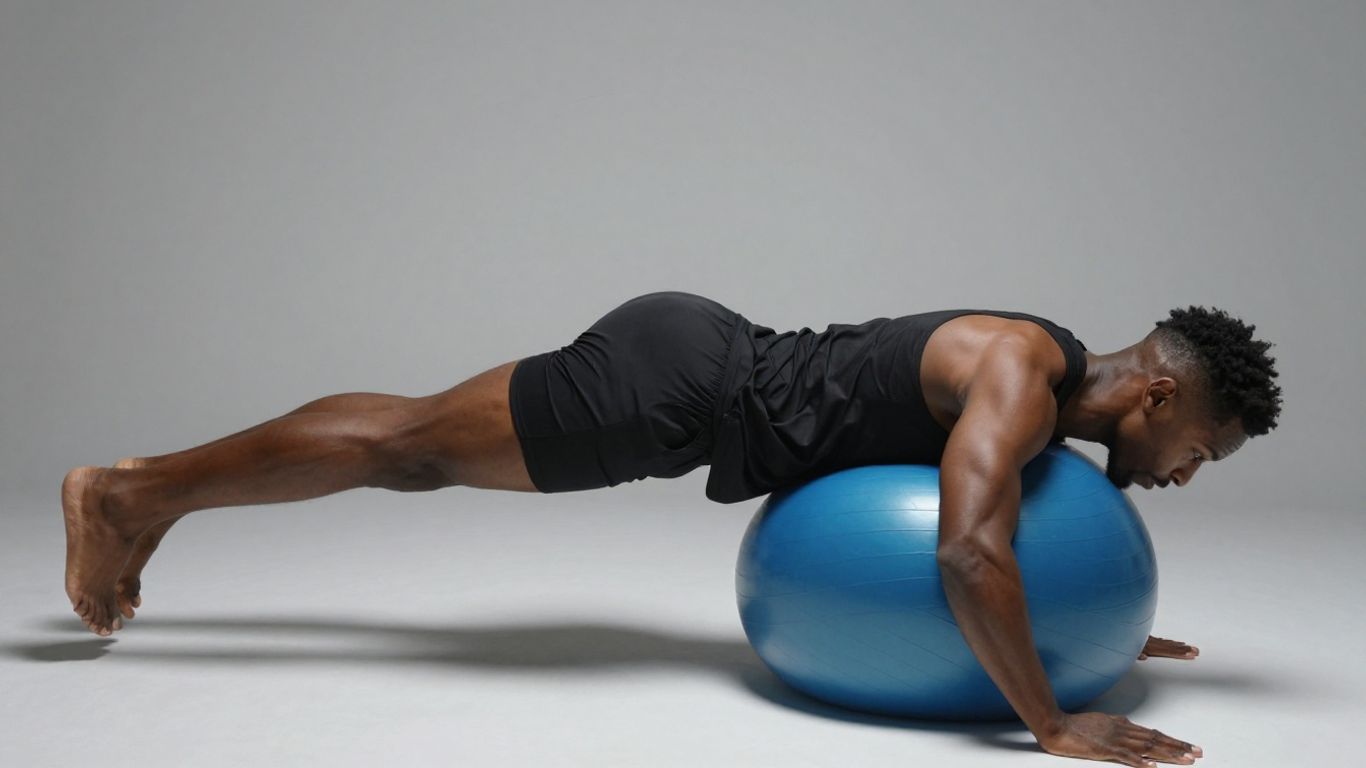
Push-ups are a classic, but putting your hands on the ball changes everything. When your hands are on the unstable surface, your core has to constantly engage to keep your body steady. You can't just rely on your arms and chest. Try to keep your body in a straight line from head to heels. If this is too much, you can start with your knees on the floor. It's a fantastic way to build upper body strength while still getting a solid core workout. Remember, the goal is control, not just reps. You can find more advanced balance ball core exercises that build on these principles.
These advanced moves require a good amount of control and strength. Don't rush into them. Make sure you're comfortable with the basic and intermediate exercises first. Listen to your body and focus on form over speed. That's how you get the best results and avoid injuries.
Here's a quick look at how these exercises target your core:
| Exercise | Primary Muscles Targeted |
|---|---|
| Stability Ball Pike | Transverse Abdominis, Rectus Abdominis |
| Single-Leg Ball Roll-Outs | Obliques, Transverse Abdominis |
| Ball Push-Ups | Rectus Abdominis, Obliques, Serratus Anterior |
Effective Balance Ball Exercises For Core Strength
Plank Variations On The Ball
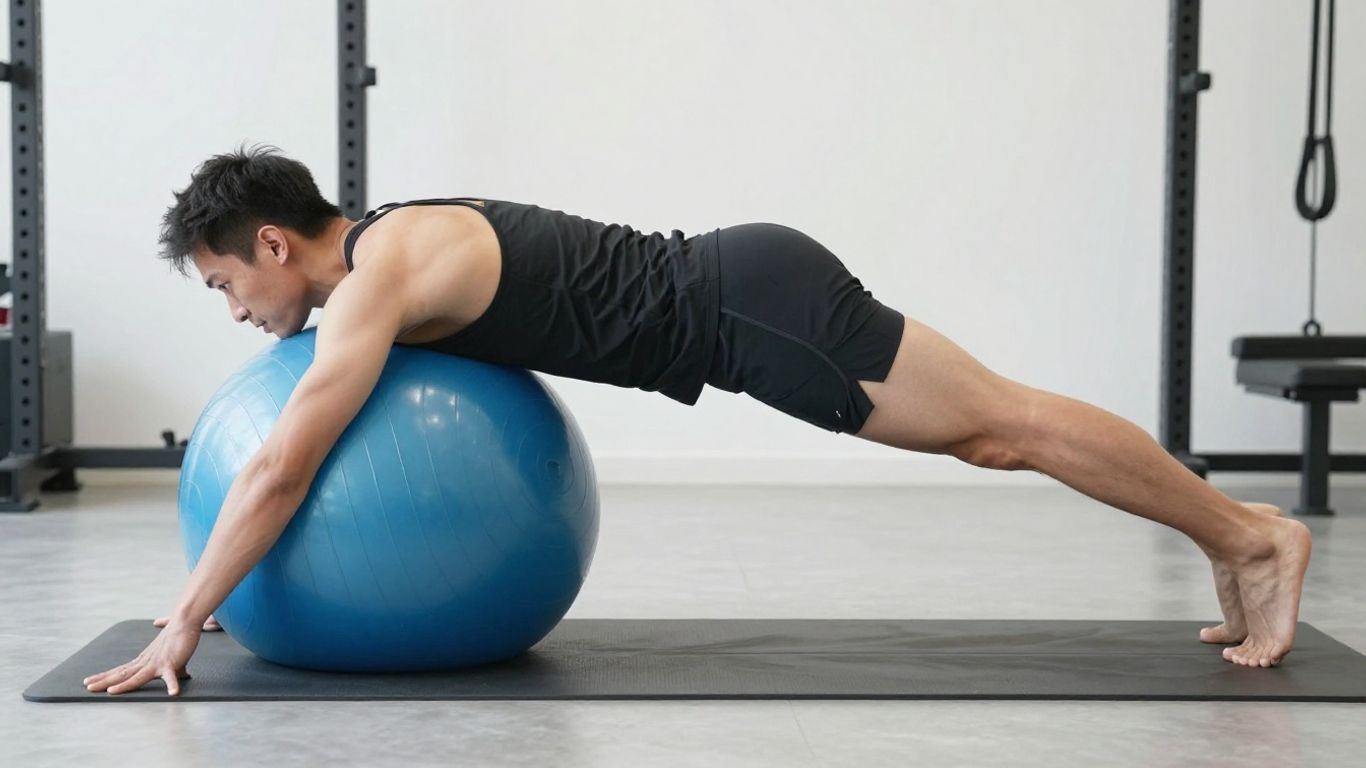
Planks are already a fantastic core exercise, but putting your body on a wobbly ball really cranks up the difficulty. It forces your stabilizing muscles to work way harder to keep you from tipping over. Start with your forearms on the ball, elbows directly under your shoulders. Extend your legs back so your body forms a straight line from head to heels. Keep your core tight and don't let your hips sag or pike up too high. Hold this for as long as you can maintain good form, aiming for 30 seconds to a minute. You can also try placing your feet on the ball instead of your hands, which makes it even more challenging.
Ball Roll-Outs For Core Engagement
This move is a killer for your abs and lower back. Get on your knees facing the ball, with your hands resting on top. Slowly roll the ball forward, extending your arms and letting your body stretch out. The key here is to keep your core braced the entire time, preventing your back from arching. You should feel a deep pull in your abdominal muscles. Roll back to the starting position with control. If this is too tough, start with a smaller range of motion and gradually increase it as you get stronger.
Bridge With Feet On The Ball
This exercise targets your glutes and hamstrings, but it also requires a lot of core stability to keep your hips level. Lie on your back with your knees bent and your feet flat on the top of the balance ball, about hip-width apart. Lift your hips off the floor, creating a straight line from your shoulders to your knees. Squeeze your glutes at the top. Hold for a moment, then slowly lower back down. Make sure you're not rocking side to side; that's your core working to keep things steady. You can make it harder by extending one leg off the floor while holding the bridge.
Remember, the instability of the ball is what makes these exercises so effective. Don't be discouraged if you can't hold the positions for long at first. Focus on controlled movements and feeling the muscles work. Consistency is more important than intensity when you're starting out.
Integrating The Balance Ball Into Your Fitness Routine
So, you've got your balance ball and you're ready to mix things up. That's awesome! This ball isn't just for sitting or doing basic crunches; it's a tool that can seriously spice up your regular fitness routine. Think of it as a way to add a little challenge and a lot more engagement to exercises you already do. It's all about making your workouts more dynamic and getting more bang for your buck, muscle-wise.
Cardio Enhancements With The Ball
Who says cardio has to be a monotonous slog? Your balance ball can turn a standard cardio session into something way more interesting and effective. By introducing instability, you force your body to work harder just to stay upright, which means you're burning more calories and getting a core workout at the same time. It’s a win-win. For instance, try doing jumping jacks with your feet on the ball – it's a whole new level of challenge!
Making Classic Exercises More Challenging
It's surprisingly easy to take exercises you've been doing for years and make them tougher with just a ball. Think about push-ups. Placing your hands on the ball instead of the floor means your core has to work overtime to keep you stable. Or consider squats; doing them with the ball behind your back against a wall adds a dynamic element that really targets your glutes and quads differently. The instability is your new best friend for building strength.
Progressing Your Routine Safely
It's easy to get excited and want to do everything at once, but that's how injuries happen. The key is slow and steady progress. Think about adding just one new challenging exercise per week, or increasing the reps or hold time of an exercise you already do. Always remember that your body will tell you when it's had enough. Pushing through sharp pain is never a good idea. It's better to back off, rest, and try again when you're feeling stronger. Consistency over intensity is the name of the game here.
Here’s a simple way to think about increasing difficulty:
- Increase Reps: If you can do 10 reps of an exercise, try for 12 or 15.
- Increase Hold Time: For exercises like planks, try holding for 30 seconds, then 45, then 60.
- Decrease Rest: Shorten the time you rest between sets.
- Add Complexity: Move from basic planks to planks with leg lifts, or from basic squats to single-leg variations.
Remember, the goal is to build strength and improve your fitness over time. Rushing the process can lead to setbacks. Listen to your body, focus on good form, and celebrate the small victories along the way. Your core will thank you for it.
Keep Rolling With It
So, there you have it. Using a balance ball is a pretty straightforward way to make your workouts tougher and get more out of them. It’s not just about doing crunches on a ball; it’s about making your whole body work harder to keep you steady. Remember to start with the basics, focus on how you’re moving, and don’t be afraid to try new things as you get stronger. Keep at it, and you’ll definitely notice a difference in your core strength and overall stability. Happy rolling!
Frequently Asked Questions
What exactly is a balance ball and why is it good for workouts?
A balance ball, also called a stability ball or exercise ball, is a big, inflatable ball. It's great for workouts because it's an unstable surface. This means your muscles, especially your core, have to work harder to keep you steady. It helps improve your balance and makes exercises tougher.
How do I know if I'm using the right size balance ball?
The best way to tell is by sitting on it. When you sit with your feet flat on the floor, your knees should be bent at about a 90-degree angle, or slightly more. This means your knees are about the same height as your hips. If your knees are way higher, the ball is too big. If your hips are higher than your knees, it's too small.
What are the main benefits of using a balance ball?
Using a balance ball is fantastic for strengthening your core muscles and improving your stability. It also helps you get better at balancing and coordinating your movements. Plus, it makes your muscles work harder during exercises, so you get a more effective workout and can even improve your posture.
Can I use a balance ball for exercises other than just core work?
Definitely! Balance balls are super versatile. You can use them to make regular exercises like squats or push-ups more challenging, for stretching, or even just to sit on as a chair to help improve your posture throughout the day. They can add a new level of difficulty to many different types of workouts.
What are some important safety tips when using a balance ball?
Always focus on doing the exercises with good form and controlled movements. Make sure the ball is properly inflated and clear the area around you so you don't trip. Most importantly, listen to your body. If you feel sharp pain, stop. It's better to rest than to push through an injury.
How can I start adding a balance ball to my regular workouts?
You can start with simple exercises like basic crunches or planks on the ball. Once you feel more comfortable, you can try more challenging moves. You can also use it to make cardio exercises more intense or create full-body routines. Just add one or two new exercises at a time and gradually increase the difficulty.


0 comments