









Getting started with exercise for beginners to lose weight at home doesn't need to be complicated. You don't need a gym or fancy gear to see results. This guide will show you how to make simple workouts work for you, right in your own living space. We'll cover how to begin, what moves to do, and how to stick with it so you can reach your weight loss goals.
Key Takeaways
- Home workouts are effective for weight loss because they are convenient and can be tailored to your fitness level.
- Consistency is more important than intensity when starting out with exercise for beginners to lose weight at home.
- A mix of cardio and strength training exercises is best for burning fat and building muscle.
- Listen to your body to avoid injury and ensure you can recover properly between workouts.
- Combining your exercise routine with healthy eating habits will significantly boost your weight loss results.
Getting Started With Home Workouts For Weight Loss
Why Home Workouts Are Effective for Beginners
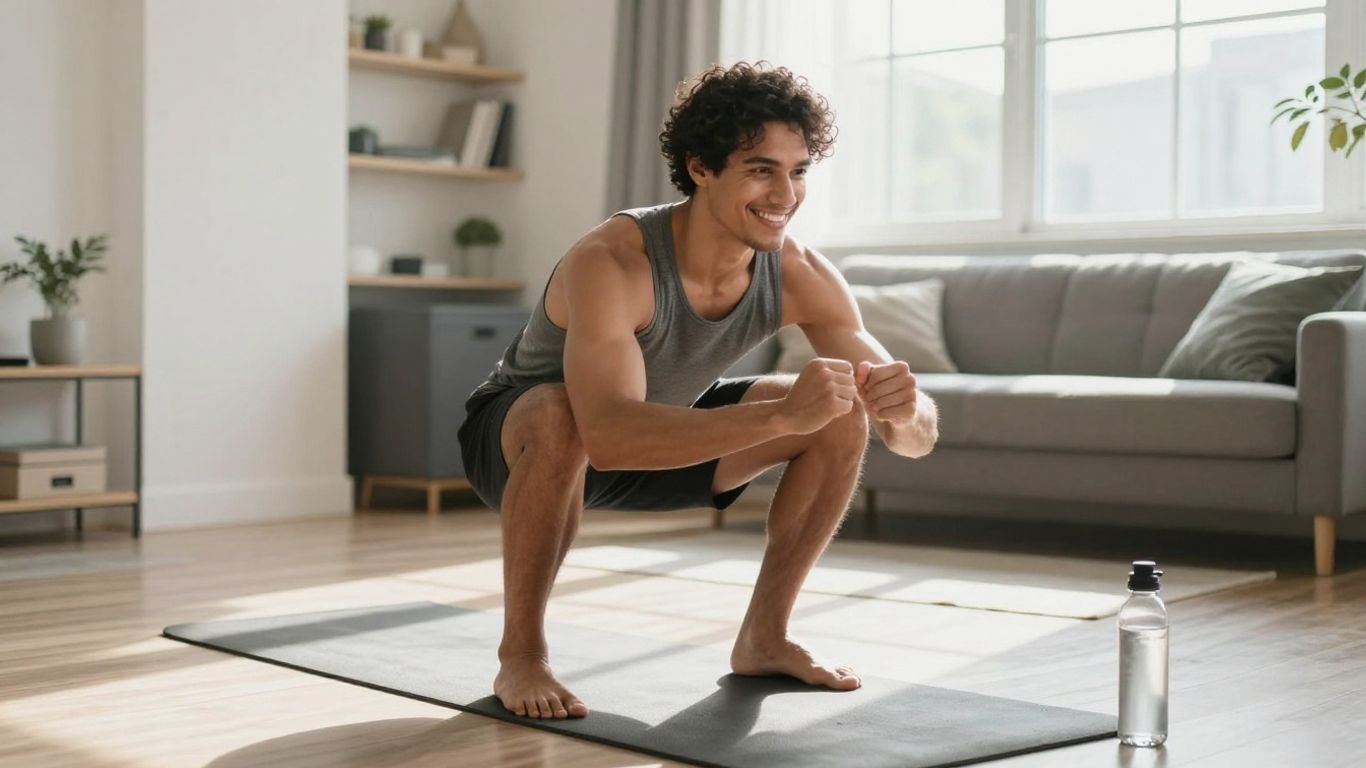
Starting a weight loss journey can feel like a big hurdle, especially if you're new to exercise. The good news is, you don't need a fancy gym or expensive equipment to see results. Home workouts are incredibly effective for beginners because they offer convenience and a comfortable environment. You can fit them into your schedule whenever it works best, whether that's first thing in the morning or after dinner. Plus, working out at home means no travel time and no waiting for machines. The key is consistency, and home workouts make it easier to stick with a routine. By focusing on simple, effective movements, you can start burning calories and building strength without feeling overwhelmed.
Setting Up Your Home Workout Space
Creating a dedicated space for your workouts, even a small one, can make a big difference. You don't need a lot of room – just enough to move around freely. Think about clearing a corner of your living room or bedroom. Make sure the floor is clear of clutter and has enough space for exercises like jumping jacks or lunges. You might want a yoga mat for comfort during floor exercises. If you plan to use resistance bands or light weights, have a spot where you can easily access them. Having a water bottle nearby is also a good idea.
The Importance of Consistency
When it comes to losing weight and getting fitter, consistency trumps intensity, especially when you're just starting out. It's much better to do a short, moderate workout every day than to do one super intense session once a week and then skip the rest. Your body needs regular activity to adapt and change. Think of it like building a habit. Small, regular efforts add up over time.
Here’s a simple way to think about it:
- Daily Movement: Aim for some form of movement each day, even if it's just a 15-minute walk or some stretching.
- Scheduled Workouts: Plan 3-4 dedicated workout sessions per week, focusing on the exercises in this guide.
- Listen and Adjust: If you miss a day, don't beat yourself up. Just get back on track the next day. Life happens!
Building a consistent routine helps your body adapt and makes exercise a natural part of your life, rather than a chore. This steady progress is what leads to lasting weight loss and improved fitness.
Essential Beginner Exercises For Burning Fat
Alright, let's talk about the exercises that are actually going to help you burn fat when you're working out at home. You don't need a fancy gym or a ton of equipment to get your heart rate up and build some muscle, which is key for weight loss. We're going to focus on movements that work multiple parts of your body at once, because that's where you get the most bang for your buck.
Cardiovascular Movements to Elevate Heart Rate
Cardio is your best friend when it comes to burning calories. The goal here is to get your heart pumping faster than it normally does. This not only burns calories during the workout but also keeps your metabolism humming afterward. For beginners, it's smart to start with things that are easy on your joints but still get the job done.
- Jumping Jacks: A classic for a reason. Stand with your feet together and arms at your sides, then jump, spreading your legs wide and bringing your arms overhead. Return to the start and repeat. If jumping is too much, try 'walking jacks' where you step one leg out to the side at a time while raising your arms.
- High Knees: March or jog in place, bringing your knees up towards your chest as high as you can. Pump your arms too, like you're really running. This is a great way to get your heart rate up quickly.
- Butt Kicks: Stand tall and jog in place, but this time, try to kick your heels up towards your glutes. It feels a bit silly, but it's a good way to work your hamstrings and get your heart rate up.
- Mountain Climbers: Start in a push-up position. Bring one knee towards your chest, then quickly switch legs, as if you're running in place. Keep your core tight and your hips low.
Strength Training Basics for Muscle Building
Building muscle is super important for weight loss because muscle burns more calories at rest than fat does. You don't need heavy weights to start. Your own body weight is a fantastic tool.
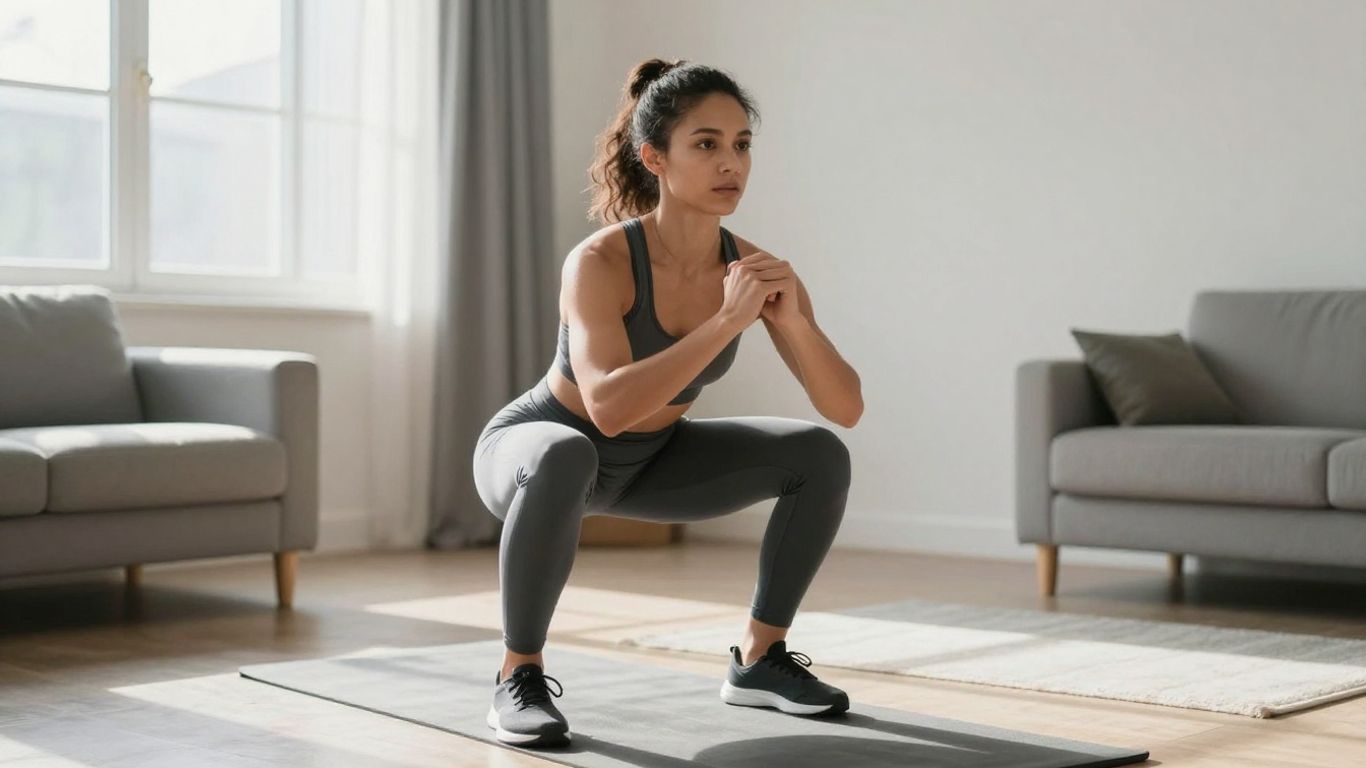
- Bodyweight Squats: Stand with your feet about shoulder-width apart. Lower your hips back and down as if you're sitting in a chair, keeping your chest up and your back straight. Make sure your knees don't go past your toes. Push back up through your heels.
- Push-ups (on knees or incline): Start on your hands and knees, or place your hands on a sturdy chair or table for an incline. Lower your chest towards the floor, keeping your body in a straight line from head to knees (or heels). Push back up. This works your chest, shoulders, and triceps.
- Lunges: Step forward with one leg and lower your hips until both knees are bent at about a 90-degree angle. Your front knee should be directly above your ankle, and your back knee should hover just off the floor. Push off your front foot to return to the starting position. Alternate legs.
- Plank: Get into a push-up position, then lower yourself onto your forearms. Keep your body in a straight line from your head to your heels. Engage your core and hold. If this is too hard, you can do it on your knees.
Incorporating Compound Movements
Compound movements are exercises that work more than one muscle group at the same time. They're super efficient for burning calories and building overall strength. Think of them as multi-tasking exercises for your body.
- Squats: As mentioned, squats work your quads, hamstrings, and glutes all at once. It's a foundational movement.
- Push-ups: These hit your chest, shoulders, triceps, and even your core.
- Lunges: These work your quads, hamstrings, glutes, and also challenge your balance.
- Burpees (modified): While a full burpee can be intense, you can modify it. Start by standing, drop into a squat, place your hands on the floor, step your feet back into a plank, step them forward again, and stand up. You can skip the push-up part if needed. This is a full-body burner!
Remember, the goal when you're starting out is to get your body moving and build a habit. Don't worry about doing everything perfectly right away. Focus on good form and gradually increasing the duration or repetitions as you get stronger. Consistency is way more important than intensity when you're just beginning.
Structuring Your Weekly Exercise Routine
Okay, so you've got your space set up and you're ready to move. But what exactly should you be doing each week? It's easy to get lost in a sea of exercises, but having a plan makes a huge difference. We're going to break down a simple, effective weekly structure that hits all the right spots for weight loss without feeling like a chore. The goal here is to mix things up enough to keep your body guessing and your motivation high.
Full Body Fat-Burning Circuits
Circuit training is your best friend when you're trying to burn calories and build some muscle at home. The idea is to move from one exercise to the next with very little rest in between. This keeps your heart rate up, which means you're burning more fat during and after your workout. Think of it as a mini-marathon of strength and cardio moves.
Here’s a sample circuit you can do:
- Jumping Jacks: 3 sets of 30 seconds. Get that heart pumping right away.
- Bodyweight Squats: 3 sets of 12 reps. Focus on good form, going as low as you comfortably can.
- Incline Push-ups: 3 sets of 10 reps. Use a sturdy chair or table for your hands to make it easier.
- Standing Knee Raises: 3 sets of 15 per side. This works your core and balance.
- Marching in Place: 3 sets of 1 minute. A little active recovery before you repeat the circuit.
Remember to repeat this circuit 2-3 times, with a minute or two of rest between each full round.
Low-Impact Cardio Sessions
Not every workout needs to be high-intensity. Low-impact cardio is fantastic for burning calories, improving your cardiovascular health, and giving your joints a break. It's also great for active recovery days or when you just don't feel up for jumping around.
Try incorporating these into a 20-30 minute session:
- Brisk Walking (Indoors or Outdoors): Just pick up the pace. If you're inside, you can march in place or walk laps around your living room.
- Side Step Touches: Stand with your feet together, step out to the side with one foot, touch the floor with your hand if you can, and bring your feet back together. Repeat on the other side.
- Arm Circles: Stand tall and make small circles with your arms, first forward, then backward. You can also do larger circles if you feel comfortable.
These sessions are perfect for days when you need to move your body but want to avoid jarring impacts. They help keep your metabolism humming without adding extra stress.
Core and Glute Focused Workouts
Building a strong core and powerful glutes is super important for overall strength, posture, and even boosting your metabolism. These muscles help stabilize your body and are involved in almost every movement you make. Plus, a strong backside looks and feels great!
Here are some moves to focus on:
- Glute Bridges: Lie on your back with knees bent, feet flat on the floor. Lift your hips off the ground, squeezing your glutes at the top. Lower slowly.
- Bird-Dogs: Start on your hands and knees. Extend one arm straight forward and the opposite leg straight back, keeping your core tight and back flat. Hold briefly, then switch sides.
- Standing Oblique Crunches: Stand with feet shoulder-width apart, hands behind your head. Bring one knee up towards your chest while crunching your elbow towards that knee. Alternate sides.
- Plank: Hold a plank position (either on your hands or forearms, and on your toes or knees). Focus on keeping your body in a straight line from head to heels and engaging your core.
Aim for 3 sets of each exercise, adjusting reps or hold times based on your current fitness level.
Maximizing Your Home Workout Results
So you've got your routine down, you're showing up, and that's awesome. But how do you make sure you're actually getting the most out of all that effort? It's not just about doing the exercises; it's about doing them smart. We want to keep you moving forward, not just spinning your wheels.
The Role of Progressive Overload
This is a big one, honestly. If you do the same workout, with the same reps, at the same intensity, your body will eventually just get used to it. It’s like trying to learn a new song on the guitar – at first, it’s tough, but after a while, you can play it without even thinking. To keep seeing changes, you need to keep challenging yourself. This is what we call progressive overload. It means gradually increasing the demand on your muscles over time. Think about it: if you can do 10 squats easily today, next week maybe aim for 12, or try to do them a little slower to make them harder. It’s about making things a bit tougher each time. You can do this by:
- Increasing repetitions: Doing more reps of an exercise than you did last time.
- Adding sets: Completing an extra set of your current reps.
- Reducing rest time: Shortening the breaks between sets or exercises.
- Increasing difficulty: Moving to a harder variation of an exercise (like from knee push-ups to full push-ups).
The key is to consistently push your muscles just a little bit beyond what they're comfortable with. This is how you build strength and keep your metabolism humming along, which is super important for weight loss.
Active Recovery and Mobility
Rest days aren't for sitting on the couch doing nothing, necessarily. They're for recovery, and that can include active recovery. This means doing light activities that help your muscles repair and get ready for the next tough workout. Think gentle walks, some light stretching, or even just some easy movement. It helps with blood flow and can actually make you feel less sore. Mobility work, like dynamic stretches or foam rolling, is also super helpful. It keeps your joints moving freely and can prevent injuries. You don't need a lot of time for this, maybe 10-15 minutes on your rest days or after a workout. It makes a big difference in how you feel and perform long-term.
Listening to Your Body
This might sound obvious, but it's something a lot of people forget. Your body sends signals, and it's important to pay attention. Feeling a little muscle soreness after a workout? Totally normal. Feeling a sharp, sudden pain? That's your body telling you to stop. Pushing through sharp pain is how you get injured, and then you're out of commission for weeks, which is the opposite of what we want. It’s okay to modify an exercise or take an extra rest day if you need it. Your fitness journey is a marathon, not a sprint, and listening to your body helps you stay on track for the long haul. Don't be afraid to adjust your plan based on how you're feeling. Sometimes, a lighter day is exactly what you need to come back stronger.
Beyond the Workout: Supporting Your Goals
So you've been hitting those home workouts, feeling the burn, and maybe even seeing some changes. That's awesome! But here's the thing: exercise is only part of the weight loss equation. To really see lasting results, you've got to look at what you're doing outside of your sweat sessions too. It's about making smart choices day in and day out.
Nutrition's Impact on Weight Loss
Let's be real, what you eat plays a massive role. You can do all the squats and jumping jacks in the world, but if your diet isn't on point, the scale might not budge. Think of food as fuel for your body. You want to give it the good stuff – lean proteins, plenty of veggies, whole grains, and healthy fats. Cutting back on sugary drinks and processed snacks is a big win. It's not about starving yourself; it's about nourishing your body so it can perform at its best and shed that extra weight.
Here’s a simple breakdown to get you started:
- Lean Proteins: Chicken breast, fish, beans, lentils, tofu.
- Veggies & Fruits: Aim for a rainbow of colors for a variety of nutrients.
- Whole Grains: Oats, brown rice, quinoa for sustained energy.
- Healthy Fats: Avocados, nuts, seeds, olive oil.
Tracking Your Progress
Keeping tabs on how you're doing can be super motivating. It's not just about the number on the scale, though. Think about how your clothes fit, how much energy you have, or even how many reps you can do now compared to a few weeks ago. A simple journal or a fitness app can help you log your workouts, your meals, and how you're feeling overall.
Seeing your progress laid out can be a huge boost when motivation dips.
Here’s a quick way to track:
- Workout Log: Date, exercises performed, sets, reps, and how you felt.
- Weight/Measurements: Weekly or bi-weekly weigh-ins, or take body measurements (waist, hips, etc.).
- Non-Scale Victories: Note down things like improved sleep, more energy, or fitting into old jeans.
Staying Motivated at Home
Motivation can be tricky when you're working out solo at home. Some days you'll feel like a superhero, and other days, the couch will call your name. That's totally normal! Find what keeps you going. Maybe it's setting small, achievable goals, finding a workout buddy (even virtually), or rewarding yourself for hitting milestones. Remember why you started in the first place. Was it to feel healthier? Have more energy for your kids? Keep that reason front and center.
Sometimes, the biggest hurdle isn't the workout itself, but just getting started. Acknowledging that it's okay to have off days, but still committing to just a few minutes of movement, can make all the difference. Consistency over intensity is the name of the game when you're building new habits.
Wrapping It Up
So, that's pretty much it. Getting started with exercise at home for weight loss doesn't need to be this big, scary thing. We've gone over some simple moves you can do right in your living room, no fancy gear needed. The main thing is just to get moving, even if it's only for a little bit each day. Stick with it, listen to your body, and you'll start to see and feel the difference. It’s all about taking those first steps, and you've already done that by reading this guide. You've got this!
Frequently Asked Questions
How often should I do these home workouts?
For best results, try to do these exercises 2 to 4 times a week. It's important to give your body rest days in between, especially after strength training, so your muscles can recover and get stronger. Think of it like this: strength one day, then something lighter like a walk or stretching the next.
Do I need any special equipment to work out at home?
Nope, you don't need fancy stuff! Most of these exercises use just your own body weight. If you want to add a bit more challenge later on, you could consider things like water bottles or resistance bands, but they're not necessary to start.
What if I don't have much space at home?
That's totally fine! Many exercises can be done in a small area. For example, instead of jumping jacks, you can do 'walking jacks' where you step your feet out. Even simple movements like squats or planks don't take up much room.
How long should I do each exercise for?
When you're starting out, aim for shorter periods, maybe 10-15 minutes for each exercise or circuit. As you get fitter, you can gradually increase the time or the number of repetitions. The most important thing is to keep going regularly!
Can these exercises help me lose weight all over, like my belly?
Yes, these exercises help your whole body burn calories, which leads to overall weight loss. While you can't choose exactly where you lose fat from, losing weight from your entire body will naturally include your belly. Eating healthy food is also a big part of losing weight.
What should I do if I feel pain during a workout?
It's normal to feel a little sore after exercising, especially when you're new to it. However, if you feel a sharp or sudden pain, stop immediately. Pushing through sharp pain can lead to injuries. Listen to your body and rest if needed.


0 comments