Look, basketball is a game of constant motion and quick decisions. A big part of that is dribbling, right? You can have all the fancy moves in the world, but if you can't keep the ball close and handle it well, it’s tough to get much done. This article is all about getting your dribbling to the next level. We'll cover the basics, some more advanced stuff, and how to really make your practice time count. Especially with tools that can help you get a ton of reps in, like a rapid basketball return system. Let's get into it.
Key Takeaways
- Start with the basics: Get a solid feel for the ball through stationary drills and simple hand movements before moving on to more complex techniques.
- Build hand strength and coordination: Drills like ball slaps and tennis ball tosses help improve your touch and control, making the ball feel like an extension of your hand.
- Practice with intensity: Incorporate speed and agility drills, like full-court sprints and zigzag dribbles, to prepare for the demands of a real game.
- Simulate game pressure: Practice against defenders or in game-like scenarios to learn how to maintain ball control when it matters most.
- Maximize practice efficiency: A rapid basketball return system allows for a high volume of repetitions, helping you master skills faster and more effectively.
Mastering The Fundamentals Of Dribbling
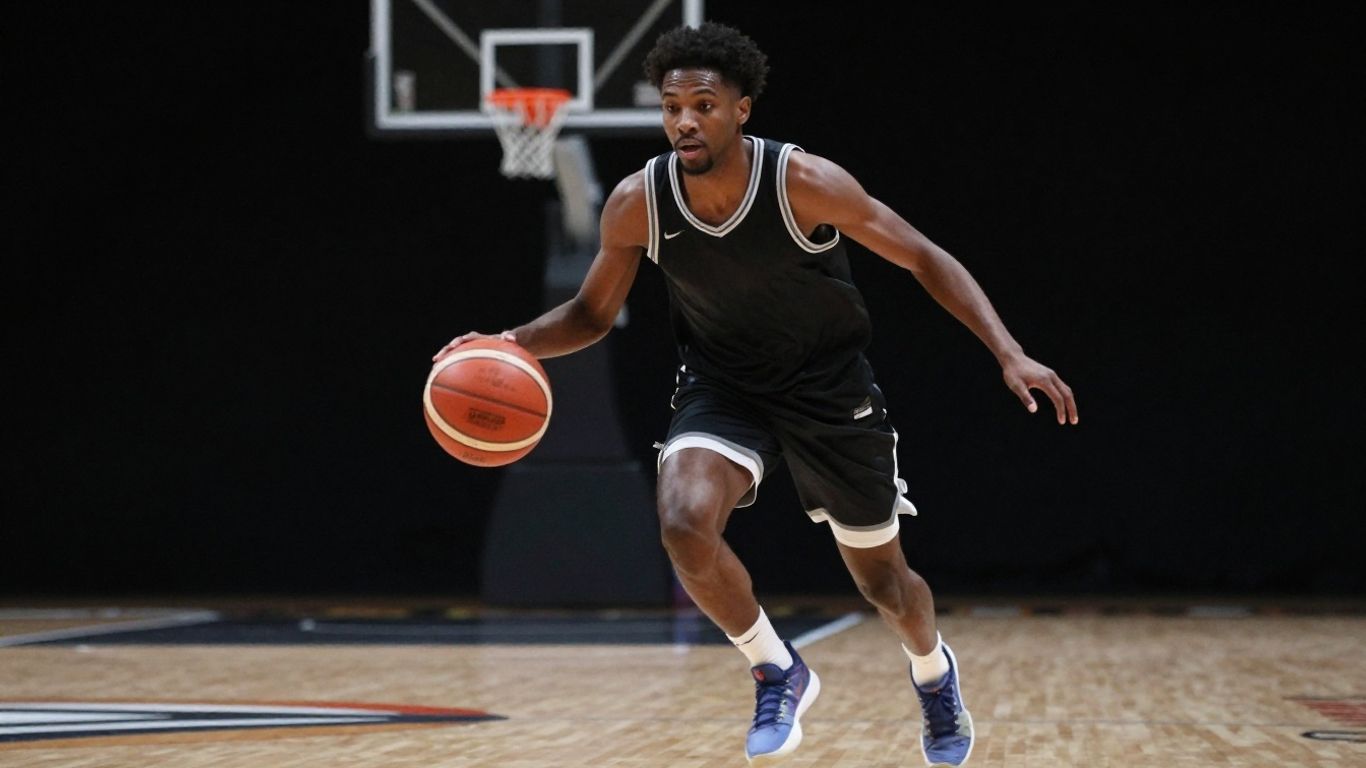
Before you can even think about fancy crossovers or no-look passes, you've got to get the basics down. Dribbling is the absolute bedrock of basketball, and if yours isn't solid, everything else you try to build on top of it is going to crumble. It's like trying to build a house on sand, you know?
Stationary Ball Handling Drills
This is where you get comfortable with the ball when you're not moving. It’s all about feel and control. You want the ball to feel like an extension of your hand, not something you're wrestling with. Start by just getting a feel for the ball. You can do this by simply holding it and getting a sense of its weight and texture. Then, move on to some simple stationary drills.
Developing Your Touch With Finger Taps
Grab the ball and hold it out in front of you. Now, using just your fingertips, tap the ball back and forth between your hands. Don't use your palms at all. The goal is to move the ball quickly, keeping it light and controlled. This drill really helps build finger strength and that soft touch you need for delicate passes or floaters. It might seem simple, but doing this for a few minutes every day makes a big difference.
Building Hand Strength With Ball Slaps
This one is pretty straightforward. You're going to firmly slap the ball from one hand to the other. It’s a good way to warm up your hands before a serious practice session, but it also helps you get used to the feel of the ball and builds up some forearm and hand strength. Think of it as a quick handshake with the basketball.
Getting these basic stationary drills down is key. It's not the most exciting part of basketball, for sure, but without this foundation, you'll struggle when the game speeds up and defenders start getting in your face. Focus on control and feel before anything else.
Here's a quick rundown of how to approach these initial drills:
- Finger Taps: Focus on using only fingertips, keep the ball moving quickly between hands. Aim for a light, controlled touch.
- Ball Slaps: Slap the ball firmly from hand to hand. This warms up your hands and builds familiarity.
- Basic Dribbles (Right/Left Hand): Once you're comfortable, start dribbling the ball while standing. Keep it at waist height, use your fingertips, and always try to keep your eyes up. Spend equal time on both hands to develop balanced skills.
Enhancing Ball Control With Advanced Techniques
Alright, so you've got the basics down. You can dribble without looking, and your hands feel pretty good on the ball. Now, let's talk about taking that control to the next level. This is where you start making defenders look silly and really dictating the game's flow. We're talking about drills that sharpen your reflexes and make the ball feel like an extension of your own body.
Improving Hand-Eye Coordination With Tennis Ball Toss
This drill sounds a little weird at first, but trust me, it works wonders for your coordination. Grab a tennis ball and a basketball. Start dribbling the basketball with one hand, and with your other hand, toss the tennis ball up and catch it. Once you're comfortable with that, try tossing the tennis ball from hand to hand while still dribbling the basketball. The goal is to keep both balls in motion without dropping either. It forces your eyes and hands to work together in a way that regular dribbling doesn't. You can also try dribbling with one hand and tossing the tennis ball up with the same hand, catching it as it comes down. It really makes you focus and improves your feel for the ball.
Mastering Agility With Dribble Figure Eights
This is a classic for a reason. Stand with your feet about shoulder-width apart, knees bent slightly. Start dribbling the basketball. Now, move the ball in a figure-eight pattern around your legs. You'll go around one leg, then behind it, then around the other leg, and back again. Try to keep the dribble low and controlled. This drill is fantastic for developing that quick, responsive dribble needed in tight situations. It also helps you get comfortable switching the ball between your legs, which is a useful move in games. You can find progressive ball-handling and footwork drills that can be performed anywhere with just a ball and 20 feet of space.
Developing Close Ball-Handling In Tight Spaces
Ever feel like you're going to get stripped when you're near the sideline or a defender is right in your face? This is the drill for you. Imagine you're in a small square, maybe 5x5 feet. You're going to dribble the ball, keeping it super close to your body. Use quick, short dribbles, changing direction rapidly within that small space. Think about keeping the ball below your knees. This builds incredible wrist strength and control, making it much harder for defenders to get a hand on the ball. It's all about making yourself small and the ball even smaller and more protected.
Being able to handle the ball in tight spots is what separates good players from great ones. It means you can keep possession when the pressure is on and still make a play, rather than just turning it over.
Building Speed And Endurance For Game Play
Being quick on your feet and having the stamina to keep going is a big deal in basketball. It's not just about being fast for a few seconds; it's about maintaining that speed and control when you're tired, especially late in the game. Think about those fast breaks or getting back on defense – being able to do that effectively means you're always a threat. Let's look at some drills to get you there.
Full Court Dribble Sprints For Speed
This is pretty straightforward: sprint the length of the court while dribbling. The goal here is to push your top speed with the ball. You're simulating those moments when you get a steal or grab a rebound and need to get down the court fast. It's also great for getting back on defense quickly. Doing this regularly builds up your sprinting speed with the ball and really works your heart and lungs, so you don't gas out when it counts. Try to do these sprints at full intensity, focusing on keeping the ball low and close. Aim for a specific time or number of sprints each session.
Zigzag Dribble Drills For Agility
Forget just running in a straight line. Real games involve a lot of quick changes of direction, cutting through defenders, and moving around obstacles. This drill uses cones set up in a zigzag pattern. You'll dribble through them, making sharp turns and keeping the ball protected. It’s all about controlled agility. You learn to change direction fast without losing the ball, which is super important when you're trying to get past someone or move through traffic. Focus on staying low and using your body to shield the ball.
Improving Endurance With Continuous Dribbling
Sometimes, the best way to build endurance is just to keep moving. This drill involves continuous dribbling, often for extended periods. You can do this stationary, focusing on different dribble heights and hand switches, or combine it with movement, like dribbling around cones or the court without stopping. The idea is to keep your heart rate up and your legs moving for a sustained amount of time. This builds up your stamina so you can play hard for the entire game, not just the first half. It helps you maintain ball control even when you're breathing hard. You might find drills like these helpful for overall skill improvement 15 basketball practice drills.
Building speed and endurance isn't just about physical conditioning; it's about mental toughness too. Being able to push through fatigue while maintaining focus on your dribbling and the game situation is what separates good players from great ones. These drills help build that resilience.
Simulating Game Pressure With Realistic Drills
Basketball games are wild. Things happen fast, and you've got people trying to take the ball from you. Practicing without that pressure is fine for learning moves, but it doesn't really get you ready for when the clock is ticking and a defender is right in your face. That's where these drills come in. They're designed to make practice feel more like a real game, so you're not caught off guard when it counts.
One-on-One Attack and Defend Scenarios
This is pretty straightforward. You're going against a teammate, one-on-one. One person has the ball and tries to score, the other plays defense. The key here is to really go at it. The defender should try to steal the ball or force a bad shot, and the dribbler needs to use their moves to get past them. It's a great way to work on your offensive moves and your ability to stay in front of your man on defense. Try setting a time limit or a score to win to make it more intense.
Pick and Roll Dribbling Practice
The pick and roll is a staple in basketball. This drill focuses on executing it effectively. You'll need at least three people: a ball handler, a screener, and a defender. The ball handler dribbles towards the screener, who sets a pick. The defender tries to get around the screen. The ball handler then has to decide whether to drive, shoot, or pass based on how the defense plays it. Practicing this repeatedly helps you read the defense and make quick decisions.
Dribbling With Defenders to Simulate Pressure
This is where you really put yourself in a tough spot, just like in a game. You'll have one or more defenders actively trying to steal the ball while you try to dribble. It's not just about keeping the ball; it's about moving with it, changing direction, and protecting it. You can set up cones or boundaries to limit your space, forcing you to handle the ball in tight quarters under duress. The goal is to make turnovers so rare in practice that they become a shock in a real game.
- Focus on keeping your head up: Even with defenders around, try to see the court.
- Use your body to shield the ball: Make yourself bigger and harder to get to.
- Vary your dribble: Don't be predictable. Mix up low dribbles, crossovers, and behind-the-back moves.
Practicing under pressure builds confidence. When you can handle the ball with someone trying to strip it from you in drills, a regular game situation will feel much easier. It's about getting comfortable being uncomfortable.
Developing Your Weak Hand For Versatility
Being able to use both hands well on the basketball court is a game-changer. Defenders can't just focus on taking away your dominant side if you're just as comfortable dribbling, passing, or finishing with your other hand. It opens up so many more options and makes you way less predictable. Let's get that non-dominant hand up to speed.
Weak Hand Only Full-Court Dribbles
This is pretty straightforward but super effective. Grab a ball and just dribble the length of the court using only your weak hand. Don't worry about speed at first; just focus on keeping the ball low and controlled. Try to keep your eyes up as much as possible, looking ahead instead of down at the ball. Do this a few times up and down the court. It might feel awkward and clumsy initially, but that's exactly why you need to do it. Over time, you'll start to feel more natural and confident with the ball in that hand.
Mirror Dribbling With Both Hands
This drill is all about getting both hands to work in sync. Stand with the ball and dribble it back and forth between your hands. The goal is to make it look like a mirror image – as one hand moves the ball away, the other hand is ready to receive it. Start slow and focus on a smooth transfer. As you get better, you can increase the speed and even try different types of dribbles, like crossovers or between-the-legs, while mirroring the motion with your other hand. This really builds up coordination and makes both hands feel equally capable.
Improving Weak Hand Control In Tight Spaces
Games often put you in crowded situations where you need to protect the ball. This drill focuses on that. Imagine you're surrounded by defenders. You need to keep the ball close and under control using only your weak hand. Try dribbling in a small square or circle, keeping the ball very low and tight to your body. You can even use cones or chairs to simulate defenders you need to maneuver around. Focus on quick, short dribbles and using your body to shield the ball. The key is to develop that soft touch and quick wrist action with your weak hand, even when space is limited.
Working on your weak hand isn't just about adding a new move; it's about becoming a more complete player. It forces you to be more deliberate with your practice and builds a different kind of muscle memory that can be a lifesaver when a defender forces you to your off-hand.
Integrating A Rapid Basketball Return System
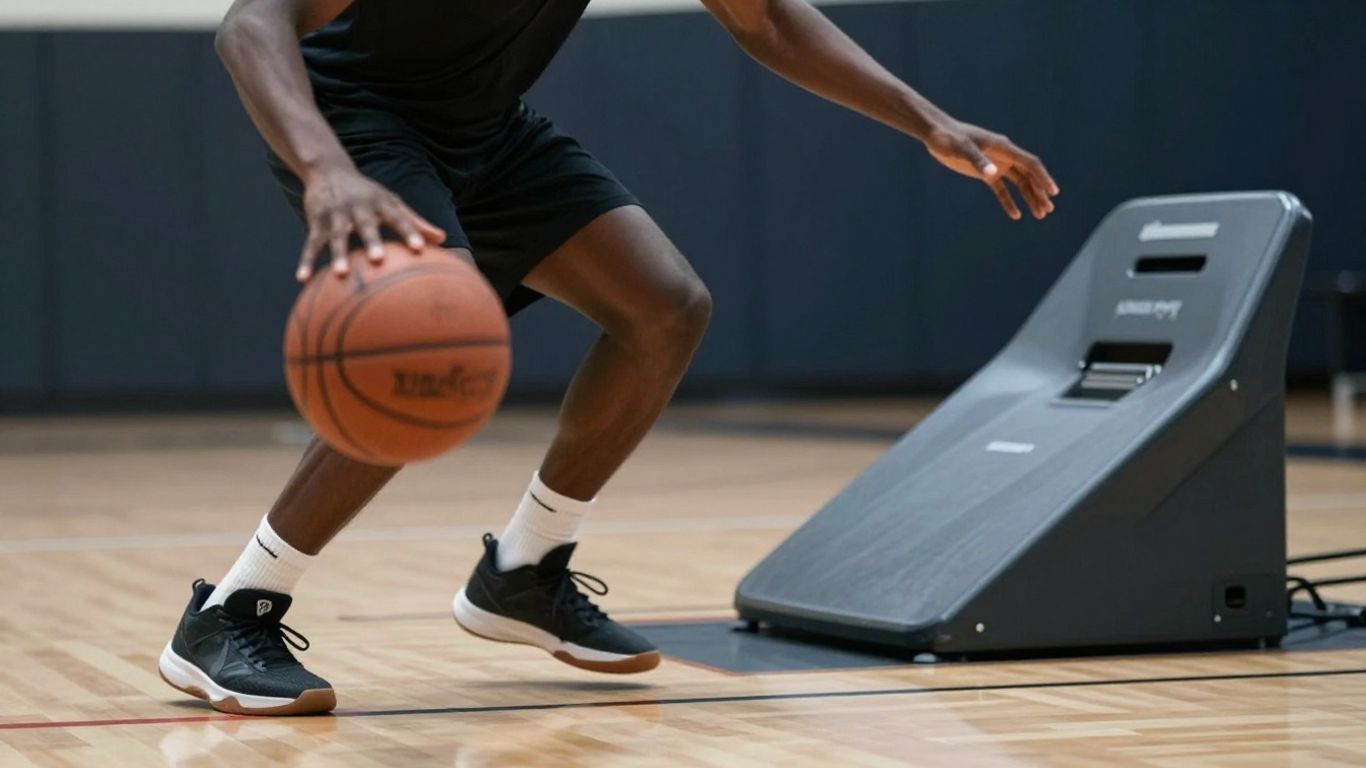
Alright, let's talk about something that can seriously change your practice game: a rapid basketball return system. You know how it is – you're working on your dribbling, maybe trying to get a hundred reps in, and half the time is spent just chasing down the ball. It’s a real buzzkill, right? A good return system cuts out all that wasted time. This means you can focus on the actual skill, not the retrieval. It’s like having a personal ball boy who never gets tired.
Maximizing Repetitions With A Return System
This is where the magic happens. With a system that sends the ball right back to you, you can rack up an insane number of dribble repetitions in a single session. Think about it: instead of dribbling, chasing, dribbling, chasing, you're just dribbling, dribbling, dribbling. This constant repetition is key to building muscle memory and making those moves second nature. You can set up drills that focus on specific dribble types, like crossovers or between-the-legs, and just keep going.
Here’s a quick look at how it boosts your reps:
- Stationary Dribbling: Easily get 200-300+ reps in a 15-minute session focusing on hand speed and control.
- Dribble Moves: Practice a specific move, like a crossover, and get immediate feedback and another ball to repeat.
- Weak Hand Work: Dedicate time to your weaker hand without the frustration of constant ball retrieval.
Practicing Game-Like Scenarios With A Return System
It’s not just about raw reps, though. These systems can be set up to mimic game situations. Some advanced models let you program sequences, so you can practice dribbling out of a double team or reacting to a pass. You can even use it with a partner, where one person dribbles and the other simulates defense, with the return system keeping the balls flowing. This kind of practice helps you make quicker decisions on the court because you've already seen and reacted to similar situations.
You're not just practicing moves; you're practicing reacting to the game. The ball comes back fast, forcing you to think and move quickly, just like you would when a defender is closing in. It bridges that gap between drills and actual play.
Utilizing A Rapid Basketball Return For Skill Development
Beyond just dribbling, these systems are great for overall skill development. You can use them for shooting drills, passing drills, and even agility work. For dribbling specifically, you can work on changing pace, direction, and incorporating different moves all in one continuous flow. It’s a versatile tool that can adapt to whatever you need to work on. If you're looking to really improve your ball handling and make your practice time count, investing in a system like this is a smart move. It’s a way to get more focused work in, faster. You can find some great options that integrate with workout apps to track your progress, which is pretty neat for seeing how far you've come. Check out training tools that can help you get there.
Keep Practicing, Keep Improving
So, we've gone over a bunch of ways to get better at dribbling, from the basic stuff to some more advanced moves. Remember, just reading about it isn't going to cut it. You've got to get out there and put in the work. Use these drills, mix them up, and don't be afraid to try new things. The more you practice, the more natural it'll feel, and soon enough, you'll be moving with the ball like it's glued to your hand. Keep at it, and you'll definitely see a difference on the court.
Frequently Asked Questions
What is a rapid basketball return system and how does it help me dribble better?
A rapid basketball return system is a cool tool that bounces the ball back to you after you dribble it. Think of it like a rebounder, but for dribbling! It helps you get way more practice in a shorter amount of time because you don't have to chase the ball. This means more reps, which leads to better control and a stronger feel for the ball.
How many times should I practice dribbling each week?
Consistency is key! Aim to practice dribbling at least 3-4 times a week. Even short, focused sessions of 15-20 minutes can make a big difference. The more you touch the ball, the better your hands will become.
Is it important to practice dribbling with my weaker hand?
Absolutely! Being able to dribble well with both hands makes you a much tougher player to guard. Defenders can't just force you to your weaker side if you're comfortable dribbling with either hand. Practicing with your weak hand might feel awkward at first, but it's super important for becoming a well-rounded player.
What's the difference between stationary dribbling and dribbling on the move?
Stationary dribbling is when you're standing still, focusing on ball control and hand feel. Dribbling on the move involves dribbling while walking, running, or changing directions. You need to master stationary drills first to build a solid foundation before moving on to more complex drills while you're running.
How can I improve my dribbling speed?
To get faster, you need to practice dribbling as hard and as fast as you can while still keeping control. Drills like full-court sprints with the ball and zigzag dribbles between cones help improve your speed and agility. A return system can be great for practicing fast dribbles without losing the ball.
Can a rapid return system help with defense?
While a return system is mainly for offense and ball handling, it can indirectly help with defense. By improving your overall ball control and confidence, you'll be better equipped to handle pressure when defending. Plus, practicing game-like scenarios with the return system can help you react quicker when you get the ball back on defense.




0 comments