
Lately, you might have heard people talking about bouncing on a trampoline to help your body's waste removal system, the lymphatic system. It's often called 'rebounding' or 'trampoline lymph' drainage. The idea is that this kind of jumping can help move things along, getting rid of waste and boosting your health. But does it really work like people say? Let's take a closer look at what's going on with the lymphatic system and what science actually says about using a trampoline to help it out.
Key Takeaways
- Trampolining, or rebounding, is promoted as a way to help the lymphatic system clear waste from the body.
- The concept of 'detox' in wellness is not scientifically supported; our bodies have natural systems for waste removal.
- There's no solid scientific proof that trampolining significantly improves lymph flow.
- While exercise is good for health, trampolining carries risks of serious injury, especially for children.
- For specific conditions like lymphedema, safer and more proven methods like compression and massage are recommended over trampolining.
Understanding The Lymphatic System
The Body's Waste Removal Network
Think of your lymphatic system as your body's internal cleanup crew. It's a complex network of vessels, tissues, and organs that works alongside your circulatory system, but it has a different job. Its main role is to collect extra fluid, waste products, dead cells, and even harmful invaders like bacteria and viruses from all over your body. This fluid, called lymph, is then filtered and cleaned, mostly in your lymph nodes, before being returned to your bloodstream. Without this system, your body would quickly get bogged down with waste. It's a pretty vital part of keeping everything running smoothly.
More Than Just A Sewer System
While it's often called the body's
The Concept Of Trampoline Lymph Drainage
What Is Rebounding?
Rebounding is basically just bouncing on a small trampoline, often called a mini-trampoline. People who are into this kind of thing believe that the up-and-down motion can help move things along in your lymphatic system. It's a pretty simple idea, really: you jump, and the bouncing is supposed to get your lymph fluid flowing better.
The Claim Of Detoxification
A big part of the trampoline lymph drainage idea is that it helps your body 'detoxify.' The thinking goes that our bodies build up 'toxins' from everyday life, and bouncing on a trampoline is a way to help flush them out. It's presented as a way to clean house internally. The core belief is that the lymphatic system, which handles waste, needs a little push to do its job more effectively.
Historical Context Of The Idea
This whole concept isn't exactly brand new. You can find mentions of using trampolines for lymphatic health going back to the early 2000s online. It seems to have gained traction in certain wellness circles over the years. Some proponents point to a NASA study from the 1980s, suggesting it showed benefits for exercise and gravity changes, but the actual study focused on astronaut fitness, not lymph flow. It's more of a popular idea that's been around for a while rather than something with a long, documented scientific history.
How Trampolining May Stimulate Lymph Flow
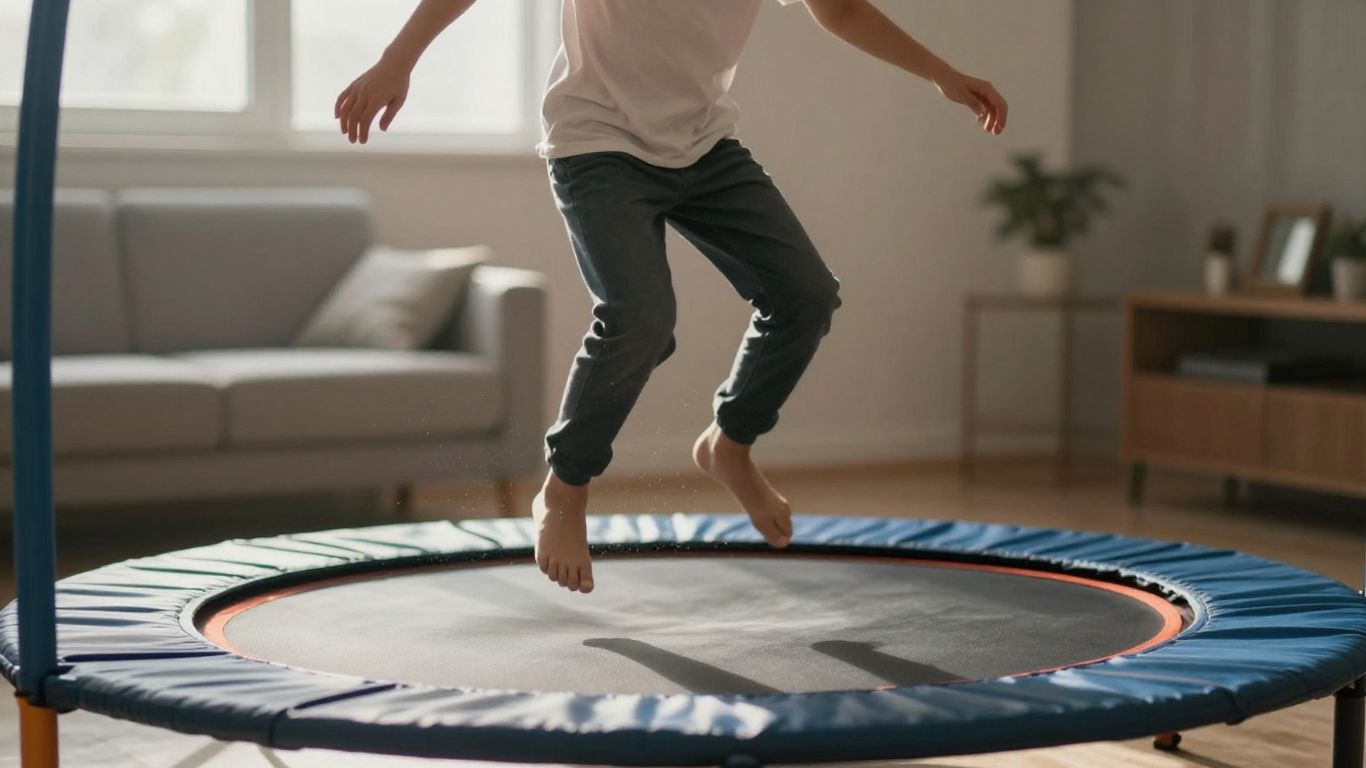
So, how exactly is bouncing around on a mini trampoline supposed to get your lymphatic system moving? The idea is that the up-and-down motion, especially the changes in gravity, plays a role. When you jump, you briefly experience a feeling of weightlessness, and then upon landing, your body can feel a force greater than gravity. This push and pull is thought to help.
Gravity's Effect On Lymphatic Vessels
Think about it: your lymphatic system doesn't have a central pump like your heart. It relies on muscle contractions and body movements to push lymph fluid along. When you bounce, the rapid shifts in gravitational force are believed to cause the lymphatic vessels to expand and contract. This action is theorized to help propel the lymph fluid through the system. Some proponents suggest that landing on the trampoline can create a force up to four times that of gravity, which they claim is more effective than running for stimulating lymph flow.
The 'Health Bounce' Technique
There's a specific type of bounce often mentioned in relation to lymphatic drainage: the 'Health Bounce'. This isn't about high-flying acrobatics. It's described as a gentle, rhythmic up-and-down motion. The idea is to maintain a consistent, controlled bounce that allows your body to experience these gravitational changes without excessive strain. It's about consistency rather than intensity, aiming to create a steady pumping action for the lymph.
Lymphatic Valve Stimulation
Your lymphatic vessels have one-way valves that ensure lymph flows in the correct direction. The theory behind trampoline lymphatic drainage is that the bouncing motion, particularly the changes in pressure, helps to open and close these valves. This repeated opening and closing action is thought to act like a pump, pushing the lymph fluid forward. Some sources suggest that even a few minutes of this gentle bouncing can significantly aid in moving stagnant lymph.
While the concept sounds plausible, it's important to remember that the scientific evidence directly supporting trampoline bouncing as a primary method for lymphatic drainage is limited. Many claims are based on anecdotal reports or extrapolated from general exercise principles rather than specific studies on lymph flow during rebounding.
For those looking for gentle ways to support their lymphatic system, techniques like gentle massage are well-established. It's always a good idea to discuss any new exercise routine with a healthcare provider, especially if you have existing health conditions.
Potential Benefits Of Trampoline Lymph Workouts

So, you're curious about what jumping on a mini-trampoline might do for your lymphatic system. It's a pretty interesting idea, and proponents suggest it could help things move along better. The main thought is that the up-and-down motion, especially the brief moments of weightlessness followed by landing, could give your lymphatic fluid a nudge.
Enhancing Lymph Circulation
The lymphatic system is like the body's internal cleanup crew, and it doesn't have a pump like your heart. It relies on movement to get things flowing. When you bounce, the theory is that the changing gravity helps the one-way valves in your lymphatic vessels open and close more effectively. This could potentially speed up the movement of lymph fluid, which carries waste products away from your tissues.
- Gentle bouncing can stimulate lymph flow.
- The up-and-down motion may help move fluid through the vessels.
- This could aid in clearing out waste products from the body.
Supporting Immune Function
If lymph circulation gets a boost, it's thought that this could indirectly support your immune system. Your lymph fluid contains white blood cells, which are key players in fighting off infections. Better circulation might mean these cells can travel more efficiently throughout your body, doing their job.
The idea is that by encouraging lymph to move more freely, you're helping your body's natural defense mechanisms work a bit better. It's like making sure the delivery trucks for your immune system are running on time.
Assisting With Lymphedema Management
For individuals dealing with lymphedema, a condition where lymph fluid builds up, especially in the limbs, anything that might help reduce swelling is worth exploring. Some early research has looked into whether exercises like rebounding could be beneficial for people with lower limb lymphedema. The gentle, low-impact nature of bouncing might be a way to encourage fluid movement without putting too much stress on the body. However, it's really important to talk to a doctor before trying this if you have lymphedema, as it's a medical condition that needs careful management.
Scientific Scrutiny Of Trampoline Lymph Claims
Examining The NASA Study
Lots of folks who are really into trampoline workouts for lymphatic drainage like to bring up a study done by NASA. They say NASA found that bouncing on a trampoline is great for moving lymph. This study actually happened way back in 1980. The NASA researchers weren't looking at lymph at all, though. They were trying to figure out the best exercises for astronauts to do in space to keep their hearts, muscles, and bones healthy when they're not dealing with gravity. They measured how fast different body parts moved during exercises like running and jumping on a trampoline. There was absolutely no measurement of lymph flow or waste removal in that NASA study. It seems like the idea that this study supports trampoline lymph drainage is a bit of a stretch, or maybe just a misunderstanding that got passed around.
Limitations Of Pilot Research
When you look for actual studies on trampolining and the lymphatic system, you don't find much. There was a small study in 2018 that looked at women with lymphedema, which is when fluid builds up in the limbs. The researchers wanted to see if exercises, including using a trampoline, could help. But here's the thing: they only managed to get seven women to participate. That's a really tiny group, so it's hard to draw any solid conclusions from it. It's more of a starting point, a pilot study, to see if a bigger study might be worthwhile, not proof that it works.
Absence Of Robust Evidence
So, where does the idea that trampolining helps detoxify your body through your lymphatic system really come from? It seems to be a popular concept in the wellness world, where people believe modern life fills us with "toxins" that need to be flushed out. However, our bodies already have systems like the liver, kidneys, and lymphatic system that handle waste removal quite well. There's no solid scientific evidence to show that bouncing on a trampoline actually improves lymph flow or "detoxifies" the body in the way some claim. The lymphatic system moves fluid through muscle contractions and breathing, not really needing a special pump like the heart does for blood. While exercise is generally good for health, the specific claims about trampolines and lymph lack strong backing.
The idea that we need to "detox" our bodies with special exercises or diets is a common theme in wellness circles. However, our bodies are generally quite good at managing waste products on their own. Relying on unproven methods like trampoline bouncing for detoxification isn't supported by science and might distract from more effective, evidence-based approaches to health.
Risks And Considerations For Trampoline Use
While the idea of bouncing your way to better health sounds appealing, it's important to look at the potential downsides of using a trampoline, especially when it comes to lymphatic drainage claims. Trampolines, while fun, do carry a risk of injury, and it's not a one-size-fits-all solution for everyone's health needs.
Potential For Serious Injuries
Trampolines can be a source of significant injuries, and this isn't just a concern for kids. The U.S. Consumer Product Safety Commission has reported hundreds of thousands of trampoline-related injuries requiring medical attention annually. While children often account for the majority of these incidents, adults are certainly not immune. Fractures, dislocations, and head injuries are among the more severe outcomes. It's always wise to stay centered on the mat and be aware of your surroundings to minimize the chance of falling off, which can lead to serious harm.
Safer Alternatives For Lymphatic Health
If your primary goal is to support your lymphatic system, there are established and less risky methods available. For instance, manual lymphatic drainage (MLD) is a specialized massage technique performed by trained therapists. Compression therapy, using garments or bandages, is another well-regarded approach, particularly for managing conditions like lymphedema. These methods are designed to directly assist lymph flow without the impact and potential hazards associated with bouncing. Consulting with a healthcare professional can help you find the most appropriate and safe strategy for your specific health situation. You might also find that simple activities like walking or swimming can positively impact circulation.
Addressing Unscientific Claims
It's easy to get caught up in the hype surrounding new health trends. However, when it comes to trampoline lymphatic drainage, the scientific evidence is quite thin. Many claims about "detoxification" through bouncing lack robust support. While exercise in general is beneficial for overall health, attributing specific, powerful lymphatic benefits solely to trampoline use without strong scientific backing can be misleading. It's important to approach such claims with a critical eye and prioritize evidence-based health practices. Remember, if you have any underlying health conditions, it's always best to talk to your doctor before starting a new exercise regimen, including rebounding.
So, What's the Verdict on Trampoline Lymphatic Drainage?
Alright, so we've bounced around the idea of using trampolines to help our lymphatic systems. While the thought of a simple, fun way to potentially boost our body's natural cleanup crew sounds pretty appealing, the science just isn't really there to back it up. Most of what we hear about 'detoxing' with a trampoline comes from the wellness world, and it's not based on solid research. Your body is actually pretty good at handling waste on its own, thanks to your liver, kidneys, and other systems. And honestly, when it comes to safety, trampolines can lead to some pretty serious injuries, especially for kids. If you're dealing with specific issues like lymphedema, there are definitely safer, more proven methods out there. So, while a little bounce might feel good, it's probably best not to rely on it as a miracle solution for your lymphatic health.
Frequently Asked Questions
What exactly is the lymphatic system and what does it do?
Think of your lymphatic system as your body's cleanup crew. It's a network of vessels that carries a fluid called lymph. This fluid helps remove waste, like old cells and germs, from your body. It's also a big part of your immune system, helping to fight off sickness. It's much more than just a simple drain; it helps with things like absorbing fats from food and managing swelling.
What is 'rebounding' or trampoline lymph drainage?
Rebounding is just a fancy term for bouncing on a trampoline, usually a small one called a mini-trampoline. The idea behind 'trampoline lymph drainage' is that this bouncing motion helps your lymphatic system work better by moving the lymph fluid around more effectively.
Does bouncing on a trampoline really help 'detox' my body?
The idea that you need to 'detox' your body with special exercises or diets isn't really supported by science. Your body already has built-in systems like your liver, kidneys, and lymphatic system that are great at getting rid of waste. While exercise is good for you, there's no solid proof that trampolining specifically 'detoxifies' you in the way some wellness claims suggest.
How is trampolining supposed to help lymph flow?
Supporters believe that the up-and-down motion of bouncing changes gravity's effect on your body. They say this causes tiny one-way doors, called valves, in your lymphatic vessels to open and close, pushing the lymph fluid along. Some suggest a gentle bounce, called the 'Health Bounce,' is especially good for this.
Are there any studies that show trampoline bouncing helps the lymphatic system?
There have been a few small studies, like a pilot study done in Montreal with women who had swelling in their legs (lymphedema). Researchers looked into whether trampolining could help. However, these studies often involve very few people, so it's hard to draw big conclusions. The famous NASA study often mentioned actually looked at exercise for astronauts in space, not specifically lymph flow.
Is trampolining safe, and are there other ways to support my lymphatic system?
Trampolining can lead to injuries, especially for kids. While it might offer some general exercise benefits, it's not necessarily safer than activities like jogging. If you're concerned about your lymphatic system, especially if you have conditions like lymphedema, safer and more proven methods include gentle exercise, massage (manual lymphatic drainage), and wearing compression garments. It's always best to talk to a doctor about the best ways to support your health.




0 comments