









Figuring out the best machines for your back workout can feel a bit like a puzzle. There are so many options in the gym, and knowing which machine targets which muscle group is half the battle. This guide is here to help clear things up, focusing on the names of common back workout machines and how to use them effectively. We'll break down the equipment so you can stop guessing and start building a stronger back.
Key Takeaways
- The Lat Pulldown machine is great for building width in your upper back, hitting your lats primarily. You can change up your grip to slightly alter which parts of your back get the most work.
- Seated Cable Rows are excellent for developing the muscles in your mid-back, like the rhomboids and traps, and they also help with posture.
- For lower back strength, the Back Extension machine is a go-to. It directly works the erector spinae muscles that support your spine.
- Adjusting your setup on machines, like grip width and seat height, can make a big difference in how well you target specific back muscles based on your body.
- Combining vertical pulling (like lat pulldowns) and horizontal pulling (like seated rows) in your back workout ensures you're hitting your back muscles from different angles for balanced development.
Understanding Key Back Workout Machines Names
Alright, let's talk about the machines that are going to help you build a stronger back. You see them in every gym, and they're not just there to look fancy. These pieces of equipment are designed to target specific muscles, helping you get that V-taper or just feel more solid. Knowing their names and what they do is the first step to using them effectively.
The Lat Pulldown Machine
This is your go-to for working the big muscles on the sides of your back, the latissimus dorsi, or 'lats' for short. Think of it as an upside-down pull-up. You sit down, grab a bar, and pull it towards your chest. It's great for building width in your back and improving your posture. You can adjust the seat and knee pads to fit your body, which is pretty important for getting the most out of it.
- Primary Muscles Worked: Latissimus Dorsi (Lats)
- Secondary Muscles Worked: Biceps, Rhomboids, Traps
- Movement Pattern: Vertical Pulling
The Seated Cable Row Machine
Now, if the lat pulldown builds width, the seated cable row machine is all about building thickness and strength in the middle of your back. You sit facing the machine, grab a handle, and pull it towards your torso. This really hits those muscles between your shoulder blades, like the rhomboids and traps. It's a fantastic exercise for counteracting slouching and developing a more powerful-looking back. Make sure you keep your back straight and really squeeze those shoulder blades together at the end of the movement. This machine is a staple for anyone looking to improve their back strength.
Using machines correctly means paying attention to the setup. Adjusting the seat height and the starting position of the weight stack can make a big difference in how well you target the intended muscles and how safe the exercise feels. Don't just jump on and start pulling; take a moment to get it right.
Targeting Upper Back Muscles with Machines
Alright, let's talk about hitting those upper back muscles. This is where you get that thickness and width, making your back look powerful. We're going to focus on two main players here: the Lat Pulldown Machine and the Seated Cable Row Machine. These aren't just random pieces of equipment; they're designed to really work those muscles that give your back its shape.
Lat Pulldown Machine Variations
The lat pulldown is a fantastic exercise for building the width of your back, especially those big lat muscles. It mimics the motion of a pull-up but allows you to control the weight. The cool thing is, you can change things up to hit different parts of your upper back.
- Wide Grip: This is your go-to for really targeting the latissimus dorsi, the muscles that give you that "V-taper" look. Pull the bar down towards your upper chest, focusing on squeezing your shoulder blades together.
- Close Grip (Neutral or Underhand): Switching to a closer grip, especially with a neutral handle (palms facing each other) or an underhand grip (palms facing you), shifts more of the focus to your lower lats and can also bring in your biceps more.
- V-Bar Attachment: This attachment naturally puts you in a more neutral grip, which can be easier on the shoulders for some people and still effectively targets the lats.
The key is to feel the stretch at the top and a strong contraction at the bottom, pulling with your back muscles, not just your arms.
Seated Cable Row Machine for Rhomboids and Traps
If the lat pulldown is about width, the seated cable row is all about thickness in the mid-back. This machine is brilliant for hitting the rhomboids and traps, those muscles between your shoulder blades that are so important for posture and that dense look.
Here's how to get the most out of it:
- Setup: Sit with your feet firmly on the platform, knees slightly bent. Keep your back straight and chest up. Don't lean too far forward.
- The Pull: Grab the handle (a V-bar is common and effective here) and pull it towards your midsection. Focus on driving your elbows back and squeezing your shoulder blades together at the end of the movement. Imagine you're trying to pinch a pencil between your shoulder blades.
- Controlled Return: Let the weight slowly return to the starting position, maintaining tension in your back muscles. Avoid letting the weight just yank you forward.
Changing your grip on the cable row can also make a difference. A wider grip tends to hit the lats more, while a closer grip, especially with a neutral handle, really zeroes in on those rhomboids and mid-traps. Experiment to see what feels best for you and where you feel the strongest muscle activation.
Using these two machines with different variations will give you a solid foundation for building a strong and well-developed upper back.
Essential Machines for Lower Back Strength
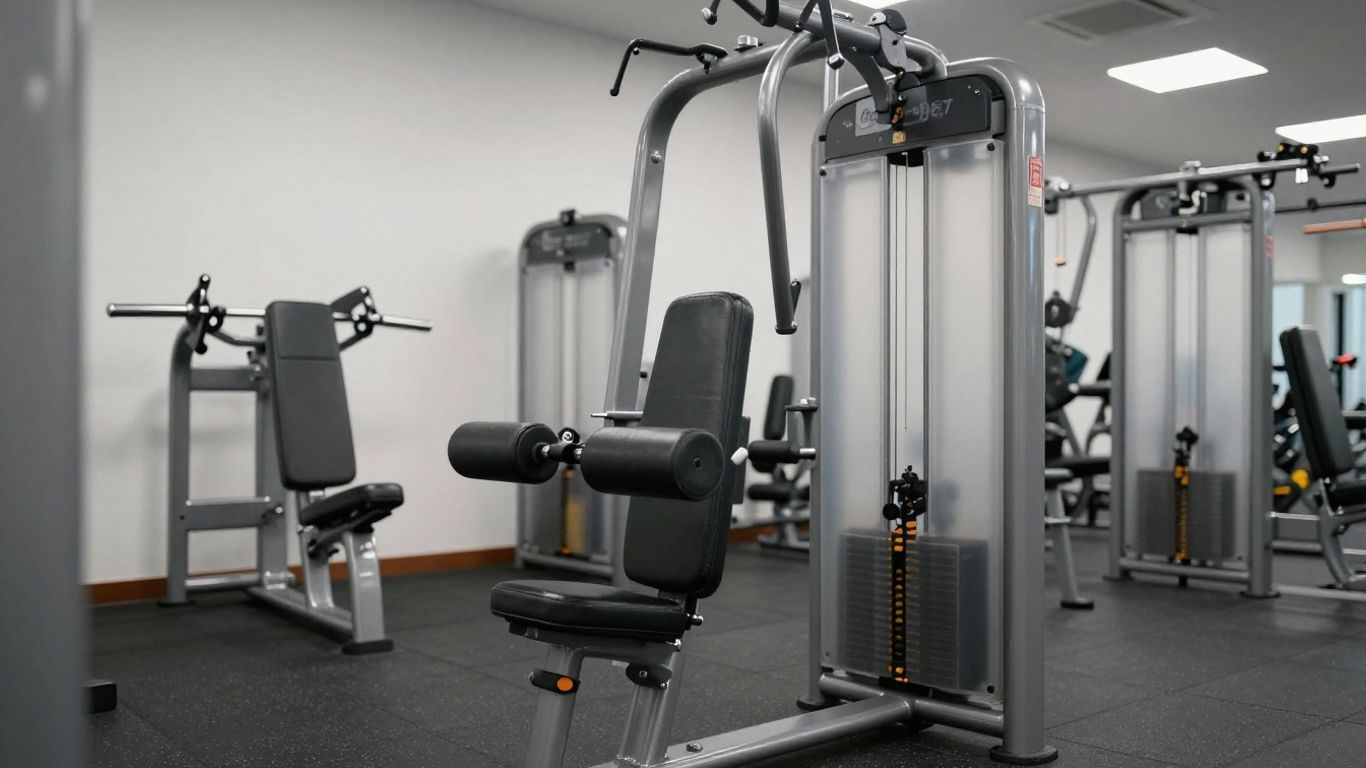
When we talk about the lower back, we're mostly talking about the erector spinae muscles. These guys are super important for pretty much everything you do that involves bending over or lifting things off the ground. They keep your spine stable, which is a big deal for everyday life and for lifting heavier weights safely.
Back Extension Machine
The back extension machine is a go-to for directly working those erector spinae. You set yourself up with your feet secured and your upper thighs resting on the pad. The idea is to hinge at your hips, letting your torso drop down, and then using your lower back to pull yourself back up to a straight line. It feels like a controlled crunch, but in reverse, focusing on that lower back power.
- Start light: If you're new to this, just use your body weight. Get the movement down first.
- Control the descent: Don't just let gravity do all the work. Lower yourself slowly.
- Squeeze at the top: Briefly hold the contracted position to really feel those muscles working.
- Full range of motion: Go as far down as you comfortably can, and then extend fully back up.
Understanding Erector Spinae Function
Think of your erector spinae as the sturdy foundation of your entire back. They're constantly working to keep you upright, whether you're sitting at a desk, standing, or performing a heavy lift. Their main job is to extend the spine (bending backward) and also to help control flexion (bending forward) and lateral flexion (bending to the side). Strengthening them helps prevent injuries and improves your overall posture.
The erector spinae are the primary muscles responsible for maintaining an upright posture and extending the spine. They play a significant role in stabilizing the torso during dynamic movements and are often overloaded during daily activities that involve bending or lifting.
While machines like the back extension are great, remember that compound lifts like deadlifts (when done correctly) also heavily engage the erector spinae, building strength through functional movement patterns. It's all about building a resilient and strong lower back.
Maximizing Your Back Workout Machines Names
So, you've got the names of the machines down, but how do you really get the most out of them? It's not just about showing up and pulling or pushing. Little tweaks can make a big difference in how your back muscles respond. Think of it like tuning a guitar – you want everything just right to get the best sound. For your back, that means paying attention to how you grip the handles and how the machine is set up for your body.
Grip Variations for Different Muscle Emphasis
Changing your grip on machines like the lat pulldown or seated row isn't just for show; it actually shifts the focus to different parts of your back. It’s a smart way to make sure you’re hitting all those important muscles without needing a whole new set of equipment.
Here’s a quick rundown:
- Wide Grip (Lat Pulldown): This is your go-to for targeting the latissimus dorsi, the big muscles on the sides of your back that give you that V-taper look. Think about grabbing the bar as wide as is comfortable, pulling it down towards your upper chest.
- Close Grip (Lat Pulldown/Seated Row): When you bring your hands closer together, you put more emphasis on your rhomboids and traps – those muscles between your shoulder blades. This is great for building thickness in your mid-back.
- Neutral Grip (Seated Row): Using handles where your palms face each other is another solid option. It often feels more natural and can be easier on the wrists, while still working a good mix of back muscles.
- Reverse Grip (Lat Pulldown): Palms facing you, similar to a chin-up grip. This variation tends to bring your biceps into play a bit more but also hits the lower part of your lats effectively.
Adjusting Machine Setup for Personal Anatomy
Everyone's built a little differently, right? That's why most machines have adjustable parts. Not using them is like trying to wear someone else's shoes – they just won't fit right, and you won't perform your best. Getting the setup dialed in means the machine works with you, not against you.
- Seat Height: For seated rows, you want your feet braced firmly and your knees slightly bent. The handle should be at a height that allows you to pull it towards your midsection without having to reach too far up or down.
- Thigh Pad (Lat Pulldown): This is super important for keeping you stable. You want it snug enough so your hips don't lift off the seat when you pull, but not so tight that it's uncomfortable or restricts your movement.
- Starting Position: For pulldowns, the bar should start above your head. For rows, the handles should be a comfortable distance away, allowing a good stretch in your back at the start of the movement.
Getting the machine set up correctly is more than just comfort; it's about safety and effectiveness. When the machine fits your body, you can focus on the muscle contraction, not on fighting the equipment. This means better results and fewer chances of tweaking something you shouldn't.
By paying attention to these details – the grip and the setup – you're not just going through the motions. You're actively making your back workout more targeted and productive. It’s these small adjustments that can really help you build a stronger, more defined back over time.
Compound Movements on Back Machines
When you're looking to build a seriously strong back, compound movements are where it's at. These are exercises that work multiple muscle groups and joints all at once, giving you more bang for your buck. On machines, this often means exercises that mimic natural pulling motions, hitting your lats, rhomboids, traps, and even your biceps in one go. It's all about efficiency and building that foundational strength.
Bent-Over Rows: A Versatile Machine Exercise
The bent-over row, whether done with dumbbells or on a machine like a T-bar row or a supported row machine, is a classic for a reason. It's fantastic for hitting the middle and upper back muscles. You're essentially pulling a weight towards your torso while hinged at the hips. This position really targets the muscles between your shoulder blades, like the rhomboids and traps, while also engaging your lats.
- Proper Form is Key: Keep your back straight, not rounded. A slight bend in your knees is fine. Focus on squeezing your shoulder blades together at the top of the movement.
- Weight Selection: Start with a weight you can control for 8-12 repetitions. It's better to go lighter and maintain good form than to lift too heavy and risk injury.
- Tempo Matters: Control the weight on the way down (the eccentric phase) just as much as you do on the way up. Don't let gravity do all the work.
Machines that offer a supported bent-over row can be a great option if you struggle to maintain strict form with free weights. They take some of the stability demands off your lower back, allowing you to focus more on pulling with your back muscles.
Seated Cable Rows for Controlled Development
Seated cable rows are another powerhouse compound movement for your back. This machine allows for a very controlled pull, making it excellent for really feeling the muscles work. You sit with your feet braced, grab a handle, and pull it towards your midsection. It's a horizontal pulling motion that's superb for thickening the muscles of your mid-back.
Here's a quick rundown:
- Setup: Adjust the footplate so your knees have a slight bend. Sit up tall with your chest out.
- The Pull: Keeping your torso relatively stable, pull the handle towards your abdomen. Focus on driving your elbows back and squeezing your shoulder blades together.
- The Return: Slowly extend your arms back to the starting position, allowing your shoulder blades to move forward slightly, but don't let your lower back round.
This exercise is brilliant for building that dense, powerful look in your upper and mid-back. You can easily change the grip (wide, narrow, neutral) to slightly alter which muscles are emphasized, making it a really versatile tool in your back-building arsenal.
Building a Complete Back Workout with Machines
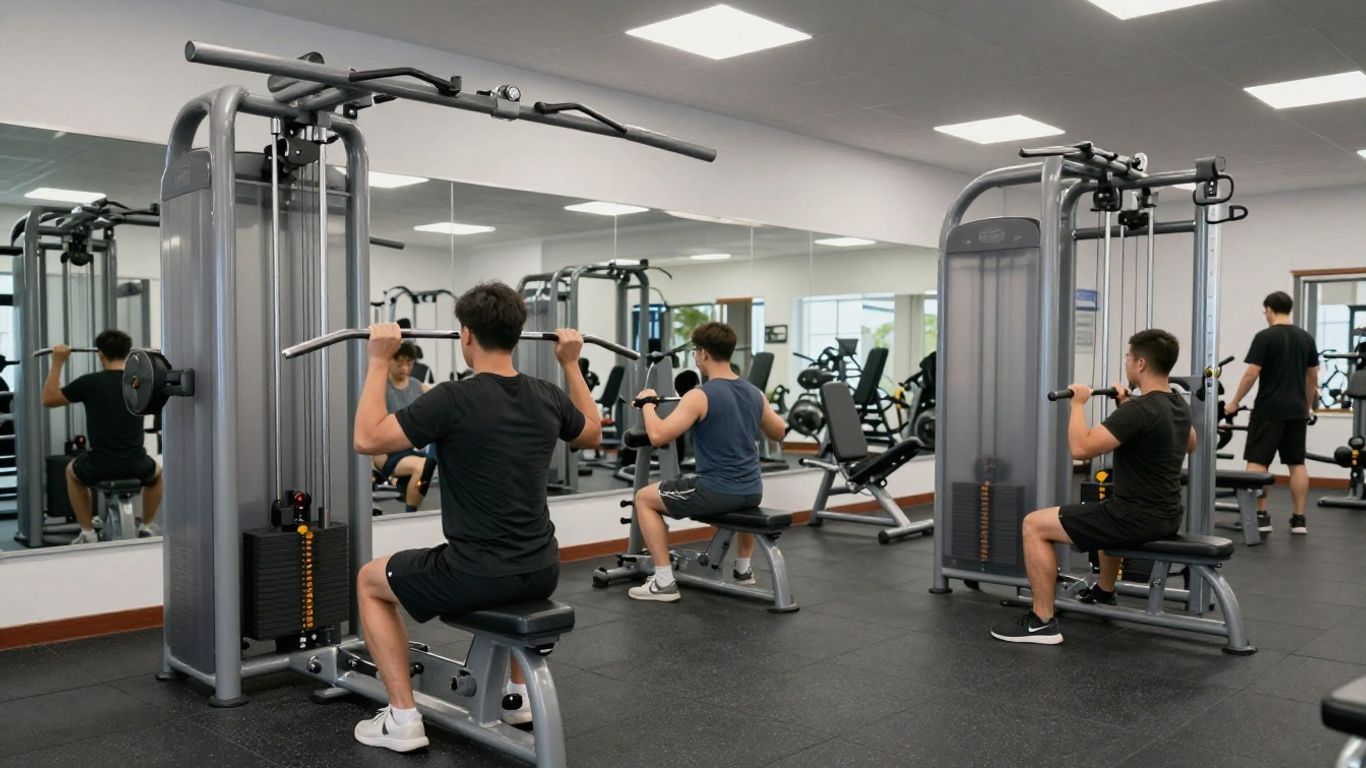
So, you've got a handle on the individual machines and what they do. Now, let's talk about putting it all together. A truly solid back workout isn't just about hitting one or two muscles; it's about creating a balanced physique that's strong and functional. This means incorporating different types of movements to make sure you're not missing anything.
Integrating Vertical and Horizontal Pulling Machines
Think of your back muscles like a team. You need different players for different jobs, right? That's where vertical and horizontal pulling machines come in. Vertical pulls, like the lat pulldown, are fantastic for building that V-taper, hitting your lats primarily. Horizontal pulls, such as the seated cable row, are your go-to for adding thickness to your mid-back, really working those rhomboids and traps. A well-rounded routine will always include both to develop your back from all angles.
Here’s a simple way to think about it:
- Vertical Pulls: Focus on width and the outer sweep of your lats.
- Horizontal Pulls: Focus on thickness and the muscles between your shoulder blades.
Trying different grip widths on these machines can also change the game. A wider grip on the lat pulldown might hit your lats differently than a closer grip. Similarly, the handle choice on a seated cable row can shift the emphasis.
The Role of Machines in Muscle Activation
Machines are great because they often allow for a more controlled movement. This means you can really focus on feeling the target muscles work. For instance, when you're doing a seated cable row, you can concentrate on squeezing your shoulder blades together at the end of the movement. This mind-muscle connection is super important for making sure the right muscles are doing the heavy lifting, not just momentum.
When you're setting up on a machine, take a moment to adjust the seat and any pads. It might seem like a small thing, but getting the setup right means you can isolate the muscles you want to work more effectively and avoid putting stress on your joints. It’s about making the machine work for you, not the other way around.
By strategically using both vertical and horizontal pulling machines, and paying attention to how you activate your muscles, you're well on your way to building a strong, balanced back.
Wrapping It Up
So, we've gone over some of the main machines you'll find in the gym that are good for your back. Things like the lat pulldown and the seated row machine are pretty common and do a good job. Remember, knowing what each machine is called and what it does is the first step. Don't be afraid to ask someone if you're not sure about how to use something. Getting your back strong is important, and using the right gear makes a big difference. Keep at it, and you'll see progress.
Frequently Asked Questions
What are the main muscles in my back that I should focus on when working out?
The most important back muscles to focus on are your lats (latissimus dorsi), traps (trapezius), rhomboids, rear delts, and erector spinae. These muscles help with pulling movements, posture, and overall back strength and thickness.
What's the difference between a lat pulldown and a seated cable row machine?
A lat pulldown machine is for 'vertical pulling,' meaning you pull a bar down from above you, mainly working your lats for back width. A seated cable row machine is for 'horizontal pulling,' where you pull a handle towards your body from the front, targeting your mid-back muscles like the rhomboids and traps for thickness.
How can I target different parts of my back using the same machine, like the lat pulldown?
You can change which parts of your back get worked more by using different grips. A wider grip on the lat pulldown machine tends to hit the outer lats more, while a closer or reverse grip can focus more on your inner back muscles.
Is the back extension machine good for my lower back?
Yes, the back extension machine is excellent for strengthening your lower back muscles, specifically the erector spinae. These muscles are crucial for supporting your spine and improving posture, especially after bending or lifting.
How do I know if I'm setting up the machines correctly for my body?
It's important to adjust the machine's settings, like the seat height or pad positions, so they fit your body's length and arm reach. Small changes can make a big difference in how effectively and safely you work your muscles. Don't be afraid to experiment a little to find what feels right.
Why is it important to use different types of pulling movements in my back workout?
Using both vertical pulling (like lat pulldowns) and horizontal pulling (like rows) ensures you work all the major muscles in your back from different angles. This leads to more balanced development, better overall strength, and can help prevent injuries.


0 comments