












When we talk about getting fit, the core is often mentioned, and for good reason. Your core isn't just your abs; it's a whole network of muscles in your midsection, including your lower back, hips, and pelvis. This group of muscles is super important for pretty much everything you do. It helps you stand up straight, keeps your spine supported, and allows you to move in all sorts of ways. A strong core is the base for all your physical activities, from just walking around to playing sports. Using a stability ball is a fantastic way to really build up that core strength because it constantly challenges these muscles to keep you stable and upright.
Key Takeaways
- Your core is more than just your abs; it includes muscles in your abdomen, lower back, hips, and pelvis, acting as the foundation for all movement.
- A strong core improves posture, boosts athletic performance, helps prevent injuries, and enhances balance and stability in daily activities.
- Foundational exercises like planks and crunches, along with compound movements like squats and deadlifts, are vital for building core strength.
- To keep making progress, gradually increase the difficulty of your exercises, incorporate variety, and focus on proper form over just doing more reps.
- Don't forget about rest and proper nutrition; they are just as important as your workouts for muscle recovery and growth.
Understanding The Core For Strength
Why Core Training Matters
Think of your core not just as your abs, but as a whole system of muscles around your midsection. This includes your abdominals, obliques, lower back, and even your glutes and pelvic floor. A strong core is the bedrock of almost every movement you make, from picking up groceries to hitting a home run. Without it, you're basically trying to build a house on shaky ground. It helps keep your spine stable, improves your balance, and can even help prevent those nagging aches and pains, especially in your lower back. It's not just about looking good; it's about moving well and staying injury-free.
The Role Of The Core In Movement
Your core acts like a natural weightlifting belt, stabilizing your spine and pelvis. When you walk, reach, twist, or lift something, your core muscles fire up to keep everything in line. Imagine trying to throw a ball with a wobbly base – it wouldn't be very effective, right? The same applies to your body. A well-trained core allows for more efficient force transfer from your lower body to your upper body, making your movements smoother and more powerful. It's the central hub that connects your upper and lower halves, allowing them to work together.
Building A Stable Platform For Movement
When we talk about a stable platform, we mean creating a solid base from which your limbs can operate. This stability is what allows you to perform actions with control and precision. Think about it: when you're doing a squat, your core needs to be tight to support your spine as you lower yourself. Or when you're reaching for something on a high shelf, your core prevents your torso from tipping over. This stability isn't just for athletic feats; it's for everyday life, helping you maintain good posture and balance, which are often overlooked but incredibly important for overall well-being.
Here's a quick look at how different core muscles contribute:
- Rectus Abdominis (The "six-pack" muscles): Primarily responsible for flexing the spine (like in a crunch).
- Obliques (Sides of your torso): Help with rotation and side bending.
- Transverse Abdominis (Deepest abdominal muscle): Acts like a natural corset, stabilizing the spine and pelvis.
- Erector Spinae (Lower back muscles): Extend and stabilize the spine.
- Pelvic Floor and Glutes: Provide a solid base and support for the entire core structure.
Foundational Exercises For Core Strength
Alright, let's get down to the nitty-gritty of building a solid core. You don't need fancy equipment or a gym membership to start. We're talking about the basics here, the moves that really get your core muscles working and build that stable base. Think of these as the building blocks for everything else you'll do, whether you're just trying to stand up straighter or you're aiming for peak athletic performance.
Plank Variations For Core Engagement
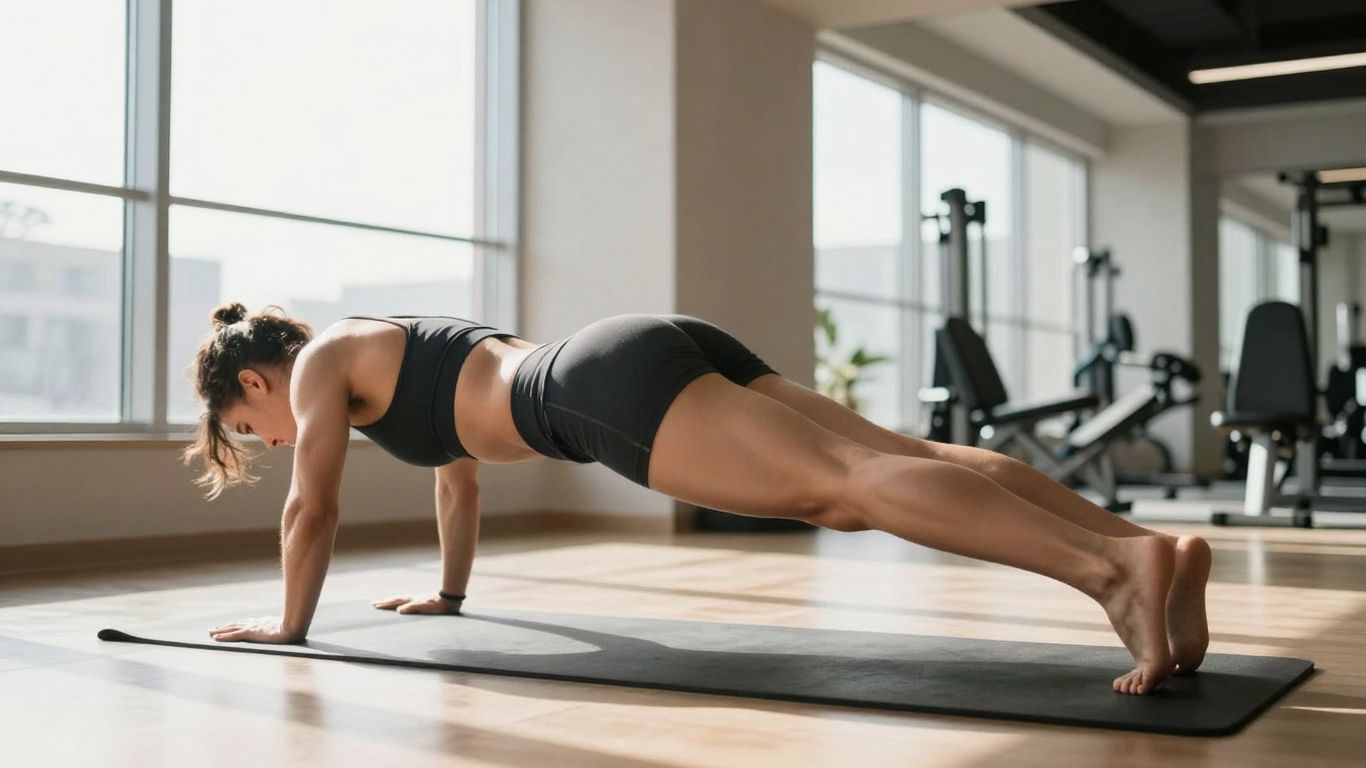
The plank is a true classic for a reason. It’s an isometric exercise, meaning you hold a position rather than moving through reps, and it hits a lot of your core muscles all at once. It’s not just about your abs; your lower back, shoulders, and even your glutes get in on the action. Focusing on proper form here is way more important than how long you can hold it.
Here are a few ways to get started:
- Standard Plank: Get into a push-up position, but rest on your forearms instead of your hands. Your body should form a straight line from your head to your heels. Keep your core tight and don't let your hips sag or pike up.
- Side Plank: Lie on your side, propped up on one forearm with your elbow directly under your shoulder. Stack your feet and lift your hips off the ground, creating a straight line from your head to your feet. This one is great for your obliques.
- Plank with Leg Lift: Start in a standard plank. Slowly lift one leg a few inches off the ground, hold for a second, and then lower it. Alternate legs. This adds a stability challenge.
Remember, the goal is to feel your core muscles working to keep your body stable. If you're shaking uncontrollably or your back is arching, you've probably gone too long or your form is off. It's better to do a shorter hold with good form than a long one with bad form.
The Power Of Crunches And Their Variations
Crunches are probably the first core exercise most people think of. They directly target your rectus abdominis – that six-pack muscle. While some people say they’re overhyped, they’re still a solid exercise when done correctly. The key is to not just yank your head and neck up, but to actually use your abs to lift your torso.
- Basic Crunch: Lie on your back with your knees bent and feet flat on the floor. Place your hands lightly behind your head or across your chest. Exhale as you lift your shoulders and upper back off the floor, squeezing your abs. Inhale as you slowly lower back down.
- Bicycle Crunch: This variation is fantastic for hitting the obliques. Lie on your back, hands behind your head. Bring one knee towards your chest while simultaneously twisting your torso to bring the opposite elbow towards that knee. Alternate sides in a pedaling motion.
- Reverse Crunch: Lie on your back with your knees bent at a 90-degree angle, shins parallel to the floor. Use your lower abs to lift your hips slightly off the ground, bringing your knees closer to your chest. Slowly lower back down.
Essential Compound Movements For Core Stability
While planks and crunches are great, you also want to include exercises that work multiple muscle groups at once. These compound movements naturally require your core to work hard to stabilize your body. Think of them as getting more bang for your buck. You can find a lot of great core exercises that fit this description.
- Squats: When you squat down and stand back up, your core has to engage to keep your torso upright and stable. Whether you're doing bodyweight squats or holding weights, your core is working.
- Deadlifts: This is a full-body exercise, but your core is absolutely critical for maintaining a neutral spine throughout the movement. It’s a serious core strengthener.
- Push-ups: Even though they're often seen as an upper-body exercise, keeping your body rigid and straight during a push-up requires significant core engagement. Your abs, back, and glutes all work together to prevent your hips from sagging.
Advanced Exercises For A Stronger Core
Alright, so you've been doing the basics, and maybe even some of the intermediate stuff. Your core feels pretty good, but you're ready to really push it. This is where we get into the exercises that demand more from your body, the ones that build that serious, functional strength. We're talking about movements that mimic real-life actions but cranked up a notch, or exercises that really isolate and challenge those deep core muscles.
Functional Movements For Everyday Strength
Think about what your core does when you're just living life. It keeps you upright, it helps you lift things, twist, and bend without falling apart. Functional exercises train your core to do just that, but with added load or complexity. They're not just about looking good; they're about being capable.
- Farmer's Walk: Grab some heavy dumbbells, kettlebells, or even just heavy grocery bags. Stand tall, shoulders back, and just walk. Keep your core braced the whole time to prevent your torso from swaying. It sounds simple, but holding significant weight while maintaining good posture is a serious core workout.
- Suitcase Carry: Similar to the farmer's walk, but you only hold weight on one side. This really challenges your obliques to keep you from tipping over. You'll feel this one working hard to stabilize your spine.
- Kettlebell Swings: This is a powerhouse move. It's not just about swinging the weight; it's about using your hips and glutes to drive the movement, with your core acting as the bridge that transfers that power. A tight core is what prevents you from hurting your back here.
These movements are fantastic because they train your core to work as a unit, just like it does in everyday life. You're not just isolating a muscle; you're teaching your body to move efficiently and safely under load.
Dynamic Exercises For Explosive Core Power
Now, let's talk about power. This is where you train your core to generate force quickly. Think about throwing a ball, swinging a golf club, or even just reacting fast. These exercises involve a bit more speed and coordination.
- Medicine Ball Slams: Grab a medicine ball, lift it overhead, and slam it down with all your might. The key is to engage your core forcefully on the way down and then quickly brace it to absorb the impact as you pick it up. It's a full-body, high-energy move.
- Rotational Throws: Using a medicine ball or a cable machine, practice throwing the ball against a wall or performing a chopping motion. This really targets your obliques and teaches your core to create and control rotational force.
- Renegade Rows: Start in a plank position with a dumbbell in each hand. Row one dumbbell up towards your chest, keeping your hips as stable as possible. Lower it down and repeat on the other side. This combines a plank with a rowing motion, demanding serious anti-rotational strength.
Leveraging Equipment For Core Development
Sometimes, you need a little help from your friends – your gym equipment, that is. Certain tools can add a new dimension to your core training, making it more challenging and effective.
- Ab Wheel Rollouts: This is a classic for a reason. Starting on your knees (or standing if you're brave), roll the ab wheel out as far as you can while keeping your core tight and preventing your back from arching. Then, pull yourself back to the start. It’s brutal but incredibly effective for the deep abdominal muscles.
- TRX or Suspension Trainers: These are great because they use your body weight and instability to challenge your core. Exercises like TRX pikes, knee tucks, or even just suspended planks force your core to work overtime to keep you stable.
- Cable Machines: The versatility of cable machines is fantastic. You can do woodchoppers, anti-rotation presses, Pallof presses, and various other movements that provide constant tension and allow for progressive overload. The Pallof press, in particular, is excellent for building anti-rotation strength, which is super important for spinal health.
Remember, with these advanced moves, form is everything. It's better to do fewer reps with perfect technique than to crank out a bunch of sloppy ones. Listen to your body, and don't be afraid to scale back if needed. You're building a stronger, more resilient core here, so take your time and focus on quality.
Structuring Your Core Workout Routine

Alright, so you've got the exercises down, but how do you actually put them together into a workout that works? It's not just about doing a bunch of crunches and hoping for the best. You need a plan, a bit of a blueprint, to make sure you're hitting everything you need to and not just wasting your time. Think of it like building something – you wouldn't just start hammering nails without a plan, right? Same idea here.
Designing Effective Core Circuits
Putting your core exercises into a circuit is a smart way to get a lot done in a shorter amount of time. It keeps your heart rate up and means you're constantly working. The idea is to move from one exercise to the next with minimal rest. This really challenges your endurance and makes your core work harder to stabilize you between movements.
Here’s a basic way to set up a circuit:
- Choose 4-6 exercises: Pick a mix that hits different parts of your core – front, sides, and back.
- Perform each exercise: Aim for a specific number of reps or a set duration for holds.
- Move to the next: Go straight into the next exercise with little to no rest.
- Rest after the circuit: Take a longer break (like 60-90 seconds) once you've finished all the exercises in the circuit.
- Repeat: Do the entire circuit 2-4 times, depending on how you feel.
Sample Routines for All Fitness Levels
Not everyone is starting from the same place, and that's totally fine. Your routine should match where you are right now. Here are a few ideas to get you started, but remember, you can always tweak these.
Beginner Routine: Focus on mastering the basic movements and building a bit of endurance.
- Plank: 3 sets, hold for 20-30 seconds
- Bird-Dog: 3 sets, 8-10 reps per side
- Glute Bridge: 3 sets, 12-15 reps
Intermediate Routine: You're comfortable with the basics and ready to add a bit more challenge.
- Side Plank: 3 sets, hold for 30 seconds per side
- Dead Bug: 3 sets, 10-12 reps per side
- Russian Twists (with or without weight): 3 sets, 15 reps per side
Advanced Routine: You've got a solid foundation and want to push your limits.
- Hanging Leg Raises: 3 sets, as many reps as possible (AMRAP)
- Pallof Press: 3 sets, hold for 45 seconds per side
- Ab Wheel Rollouts: 3 sets, 8-10 reps
Integrating Core Work Into Your Schedule
So, when do you actually do this core stuff? You don't necessarily need a separate day just for your core. You can sprinkle core exercises into your existing workouts or dedicate a short time at the beginning or end. For instance, if you're doing a full-body strength workout, add a couple of core exercises at the end. Or, if you're doing cardio, maybe do a quick core circuit before you cool down. Aim for 2-3 dedicated core sessions per week, or integrate them into 4-5 other workouts. The key is consistency, not necessarily making it a huge time commitment every single time.
It's easy to think you need to spend an hour on your core every day. But honestly, even 10-15 minutes of focused work, done consistently, can make a big difference. Pay attention to how your body feels and adjust as needed. Don't overdo it, especially when you're starting out.
Maximizing Your Exercise For Core Strength
So, you've been hitting the core exercises, but are you getting the most out of them? It's not just about doing the moves; it's about doing them right. Let's talk about how to really make your core workouts count.
Prioritizing Form Over Repetitions
This is a big one, and honestly, it's easy to forget when you're trying to push yourself. Focusing on perfect form is way more important than just racking up a high number of reps. When you rush through a crunch or a plank, you're probably not even using your core muscles effectively. You might be straining your neck or lower back instead. Take your time. Feel the muscles working. It’s better to do five really good, controlled reps than twenty sloppy ones that don't do much for your core and could even lead to an injury. Think quality over quantity, always.
The Importance Of Mind-Muscle Connection
This sounds a bit fancy, but it's really just about paying attention. It’s the idea of actively thinking about the muscles you're trying to work. When you're doing a plank, don't just hold the position. Really feel your abs tightening, your glutes squeezing, and your back staying neutral. Imagine you're trying to pull your belly button towards your spine. This mental focus helps you recruit more muscle fibers, making the exercise much more effective. It’s like giving your muscles a direct instruction to engage.
Progressive Overload For Continuous Gains
Your body is smart; it adapts. If you do the same thing over and over, your core will get used to it, and your progress will slow down or stop altogether. That's where progressive overload comes in. It means gradually increasing the demand on your muscles over time. You can do this in a few ways:
- Add more reps or sets: If you're doing 3 sets of 15 crunches, try for 18 or even 20.
- Increase the hold time: For exercises like planks, add 10-15 seconds to your hold.
- Introduce harder variations: Move from a standard plank to a plank with a leg lift, or from basic crunches to bicycle crunches.
- Add resistance: Use a weight vest during planks or hold a dumbbell during Russian twists.
Here’s a simple way to think about progression:
| Exercise Type | Beginner Progression |
|---|---|
| Isometric Holds | Increase duration by 5-10 seconds |
| Rep-Based Exercises | Increase reps by 2-3 per set |
| Dynamic Movements | Add 1-2 more repetitions or slow down the tempo |
| Weighted Exercises | Increase weight by a small increment (e.g., 2-5 lbs) |
Sticking with the same routine indefinitely is a sure way to hit a wall. Your muscles need new challenges to keep growing and getting stronger. Don't be afraid to mix things up and push your limits a little bit each week.
Overcoming Common Core Training Challenges
Hitting a wall with your core workouts? It happens to everyone. You might feel like you're doing all the right things, but the progress just isn't showing up like it used to. Don't sweat it; these plateaus are normal. The trick is knowing how to push through them.
Addressing Plateaus In Core Development
When your core strength seems to stall, it's time to shake things up. Simply doing the same old routine won't cut it anymore. You need to introduce a new stimulus to your muscles. Think about increasing the difficulty. This could mean adding more repetitions, holding exercises for longer, or even trying more advanced versions of the movements you're already doing. Sometimes, just changing the order of your exercises can make a difference. Also, remember that what you eat plays a big part. Make sure you're fueling your body properly to support muscle repair and growth.
Preventing Muscle Imbalances
It's easy to get stuck doing exercises that feel comfortable or that you're naturally good at. But if you're only working certain parts of your core, you can end up with imbalances. This means some muscles get too strong while others lag behind, which can lead to issues down the road, like poor posture or even pain. To avoid this, make sure your routine is well-rounded. Include exercises that target the front, sides, and back of your core. Don't neglect your lower back muscles; they're a key part of your core! Adding some stretching and mobility work can also help keep everything balanced and flexible.
Modifying Exercises For Your Fitness Level
Not every exercise is going to be doable right away, and that's perfectly fine. The goal is to work towards them. If a particular move feels too tough, look for ways to make it easier. For instance, if a standard plank is a struggle, try doing it on your knees. You still get a great workout for your core while keeping your body in a straight line from head to knees. Similarly, if leg raises are too much, bend your knees to make them more manageable. The most important thing is to maintain good form, even when modifying. It's better to do a modified exercise correctly than a full version with bad form.
Consistency is king when it comes to building strength, but staying motivated can be a real challenge. Setting small, achievable goals, like adding just a few extra seconds to your plank hold or increasing your reps by two, can make a big difference. Tracking your progress, whether in a notebook or an app, also helps you see how far you've come and keeps you looking forward. Don't be afraid to switch things up regularly to keep your workouts interesting and prevent boredom from creeping in.
Recovery And Nutrition For Core Strength
The Crucial Role Of Rest And Recovery
Think of rest days not as downtime, but as prime time for your muscles to rebuild and get stronger. Pushing too hard without giving your body a break is a fast track to burnout and injuries. It’s during these recovery periods that your core muscles actually repair themselves after the stress of your workouts. Skipping rest is like trying to build a house without letting the foundation set – it’s just not going to hold up.
Here’s how to make recovery work for you:
- Schedule Rest Days: Aim for at least 1-2 full rest days per week, especially after intense core sessions. Listen to your body; if you feel overly fatigued, take an extra day.
- Active Recovery: Light activities like walking, gentle stretching, or foam rolling can boost blood flow and help reduce muscle soreness without taxing your system.
- Sleep: This is when the magic happens. Aim for 7-9 hours of quality sleep each night. It’s vital for muscle repair and overall hormonal balance.
Proper recovery isn't a luxury; it's a non-negotiable part of getting stronger. Your muscles grow when they're recovering, not when they're being worked. So, embrace the downtime – it's where the real gains are made.
Fueling Your Body For Muscle Growth
What you eat directly impacts how well your core muscles recover and grow. You can’t expect peak performance or solid muscle development if you’re running on empty or fueling with junk. Think of your body like a high-performance car; it needs the right kind of fuel to run efficiently and powerfully.
- Protein is Key: This is the building block for muscle repair. Include lean protein sources like chicken, fish, beans, lentils, and tofu in your meals.
- Complex Carbs for Energy: Don't fear carbs! They provide the energy you need for tough workouts. Opt for whole grains, sweet potatoes, and vegetables.
- Healthy Fats: These are important for hormone production and reducing inflammation. Avocados, nuts, seeds, and olive oil are good choices.
Staying Hydrated For Optimal Performance
Water is seriously underrated when it comes to fitness. Even mild dehydration can mess with your energy levels, muscle function, and focus during workouts. It can also make you feel more tired and sore. Keeping up with your fluid intake is simple but makes a big difference.
- Drink Throughout the Day: Don't wait until you're thirsty. Sip water consistently from morning to night.
- Monitor Your Urine: A pale yellow color is usually a good sign you're well-hydrated. Darker means you need more fluids.
- Electrolytes Matter: If you're sweating a lot, especially in hot weather, consider drinks with electrolytes to replenish what you lose.
| Nutrient | Role in Core Strength |
|---|---|
| Protein | Muscle repair and growth |
| Carbohydrates | Primary energy source for workouts |
| Healthy Fats | Hormone production, inflammation reduction |
| Water | Muscle function, nutrient transport, temperature regulation |
| Vitamins & Minerals | Overall bodily functions, recovery support |
Your Core Strength Journey Starts Now
So, we've gone over why having a strong core is so important, not just for looking good, but for how your body actually works every day. It's the base for everything you do, really. Remember to focus on doing the exercises right, not just rushing through them. Mix things up to keep your muscles guessing and don't forget to let your body rest and recover. Building this strength takes time, but sticking with it will make a big difference in how you feel and move. Keep at it, and you'll see the benefits.
Frequently Asked Questions
What are the best core exercises for someone just starting out?
If you're new to core training, simple exercises like planks, basic crunches, and leg raises are excellent ways to begin. They help build a solid foundation without being too difficult.
How often should I work on my core to see changes?
It's a good idea to do core exercises about 3 to 4 times a week. Make sure to give your muscles at least two days to rest and recover between tough workouts.
Is it okay to train my core every single day?
While you can do light core work daily, it's generally better to have rest days, especially after intense sessions. Your muscles need time to repair and get stronger.
How long will it take before I notice my core getting stronger?
With regular training, you might start to feel a difference in about 4 to 6 weeks. This can change depending on how fit you are now and how hard you work out.
Do I need any special gear to train my core?
Not at all! Many effective core exercises only require your own body weight. However, things like resistance bands or stability balls can make your workouts more interesting and challenging.
How can I avoid hurting my lower back while doing core exercises?
Always focus on doing the exercises slowly and with good control. This helps you use the right muscles and prevents strain. Also, make sure you're not overdoing it and listen to your body.


0 comments