










Thinking about setting up your own workout space at home? It's a great idea. You save time on travel, skip gym fees, and can even work out in your comfiest clothes. Plus, your home gym is always open. This guide will help you pick the right exercise machines so you can hit your fitness goals without all the fuss.
Key Takeaways
- Match your exercise machines to your specific fitness goals, whether that's losing weight, getting stronger, or building endurance.
- When setting up a home gym, choose versatile exercise machines that can do a few different things to save space and get more value.
- Figure out your current fitness level, how much space you have, and what your budget is before you buy any exercise machines.
- Look for quality and durable exercise machines that will last a long time, even if they cost a bit more upfront.
- Make your workout area a place you want to be by adding good lighting, mirrors, and keeping your exercise machines tidy.
Understanding Your Home Gym Exercise Machines Needs
So, you're thinking about setting up a home gym, huh? That's awesome! But before you go buying the first shiny machine you see, let's pump the brakes for a second. Picking the right gear is kind of like choosing the right ingredients for a recipe – you need to know what you're making before you grab the flour and sugar. Getting it wrong means you might end up with something that just sits there, collecting dust, instead of helping you get stronger or fitter.
Aligning Exercise Machines With Your Fitness Goals
First things first, what do you actually want to do with this home gym? Are you trying to drop a few pounds, build some serious muscle, train for a marathon, or just feel a bit more limber? Your main objective is the compass that points you to the right equipment. Don't just guess; really think about what you want your body to achieve.
- Weight Loss: You'll want machines that get your heart pumping and burn calories efficiently. Think things that let you move for a while.
- Muscle Gain: Focus on equipment that lets you lift heavier or add resistance over time. This is where you'll target specific muscle groups.
- Endurance: Look for gear you can use for longer periods to build up your stamina and heart health.
- Flexibility & Mobility: You might need things that help you stretch out and move more freely.
Assessing Your Current Fitness Level
Now, be honest with yourself about where you're starting from. Are you a total beginner who gets winded walking up a flight of stairs, or are you already hitting the gym a few times a week? This matters a lot. Buying super advanced equipment when you're just starting out might be overwhelming and could even lead to injuries. On the flip side, if you're already pretty fit, basic gear might not give you enough of a challenge.
Here's a quick way to think about it:
- Beginner: Start with simpler, user-friendly machines that offer good support and controlled movements. Think basic treadmills, stationary bikes, or resistance bands.
- Intermediate: You can handle more variety and intensity. Consider machines that offer adjustable resistance or more complex movements.
- Advanced: You're likely looking for equipment that allows for heavy lifting, high intensity, or very specific training.
Knowing your starting point helps you pick machines that are challenging enough to make progress but not so difficult that they discourage you or cause harm. It's all about finding that sweet spot.
Considering Available Space and Budget
Okay, let's talk practicalities. How much room do you actually have? A giant treadmill might look great in a magazine, but if you've only got a corner of your living room, it's just not going to work. Measure your space carefully and think about how much room you need not just for the machine itself, but also to use it safely. You don't want to be banging your elbows on the wall when you're on an elliptical.
And then there's the budget. Home gym equipment can range from super cheap to ridiculously expensive. It's easy to get carried away, but try to set a realistic budget beforehand. Remember, you don't have to buy everything at once. You can start with a few key pieces and add more later as your budget allows and your needs change.
Cardiovascular Exercise Machines for Enhanced Endurance
Getting your heart rate up is a big part of staying healthy, and cardio machines are your best friend for that. They help you build stamina, burn calories, and just generally feel better. When you're looking to boost your endurance, there are a few types of machines that really stand out.
Treadmills for Varied Intensity
Treadmills are probably the most common cardio machine you'll see, and for good reason. You can walk, jog, or run, and most models let you adjust the incline to make it harder. This means you can go from a gentle stroll to a tough hill climb without leaving your living room. It's a really versatile way to get your cardio in. When picking one out, think about the motor size – a bigger motor means it can handle more intense workouts and last longer. Also, check the deck size; you'll want enough space to move comfortably, especially if you're a runner. Some treadmills even have built-in programs that change speed and incline automatically, which can keep things interesting.
Elliptical Trainers for Low-Impact Workouts
If you've got sensitive knees or just prefer a smoother ride, an elliptical trainer is a great choice. It mimics running but without the jarring impact on your joints. Most ellipticals work your upper body too, thanks to the moving handlebars, giving you a full-body workout. This makes them super efficient for burning calories. You can often adjust the resistance and sometimes the stride length, so you can tailor the workout to your fitness level. They're a solid option for anyone looking to improve their cardiovascular health without putting too much stress on their body. You can find some really good ones that don't take up a huge amount of space.
Rowing Machines for Full-Body Cardio
Rowing machines offer a fantastic, low-impact, full-body workout. Seriously, you use your legs, core, and arms all at once. This makes them incredibly effective for building both strength and endurance. The resistance on most rowers is air-based, meaning the harder you push and pull, the more resistance you get. This naturally scales with your effort, making it suitable for beginners and seasoned athletes alike. They're also great for burning a lot of calories in a shorter amount of time, which is a big plus if you're pressed for time. Plus, many models can be stored upright, saving you space when you're not using them.
Exercise Bikes for Targeted Training
Exercise bikes are another staple in home gyms. They're great for steady-state cardio, interval training, and building leg strength. You can find different types, like upright bikes, recumbent bikes (which are more comfortable for your back), and spin bikes, which are designed for more intense workouts. Spin bikes, in particular, can mimic the feel of road cycling and are excellent for high-intensity interval training (HIIT). They're generally compact and don't require a massive amount of space, making them a good fit for smaller homes. If you're looking to improve your leg power and cardiovascular fitness, an exercise bike is definitely worth considering. You can find a wide range of options to fit your needs and budget.
Choosing the right cardio machine comes down to what feels good for your body and what you'll actually use consistently. Don't get caught up in all the bells and whistles if a simpler machine gets you moving more often.
Here's a quick look at how some of these machines stack up:
- Treadmill: Best for runners, walkers, and those who like incline training. Offers a high calorie burn but can be high impact.
- Elliptical: Great for joint-friendly, full-body cardio. Good for steady-state or interval training.
- Rowing Machine: Excellent for a complete body workout, building endurance and strength. Low impact and high calorie burn.
- Exercise Bike: Ideal for leg strength and cardio, especially HIIT. Compact and space-saving options are common.
When you're trying to pick the best cardio equipment for your home, it's helpful to think about what kind of workouts you enjoy most. If you love the feeling of running, a treadmill might be your go-to. If you prefer a smoother, more controlled workout, an elliptical or bike could be better. And if you want to work your whole body while getting your heart rate up, a rower is hard to beat. The goal is to find something that fits your lifestyle and helps you reach your fitness goals, whether that's burning calories or just feeling healthier overall.
Strength Training Exercise Machines for Muscle Development
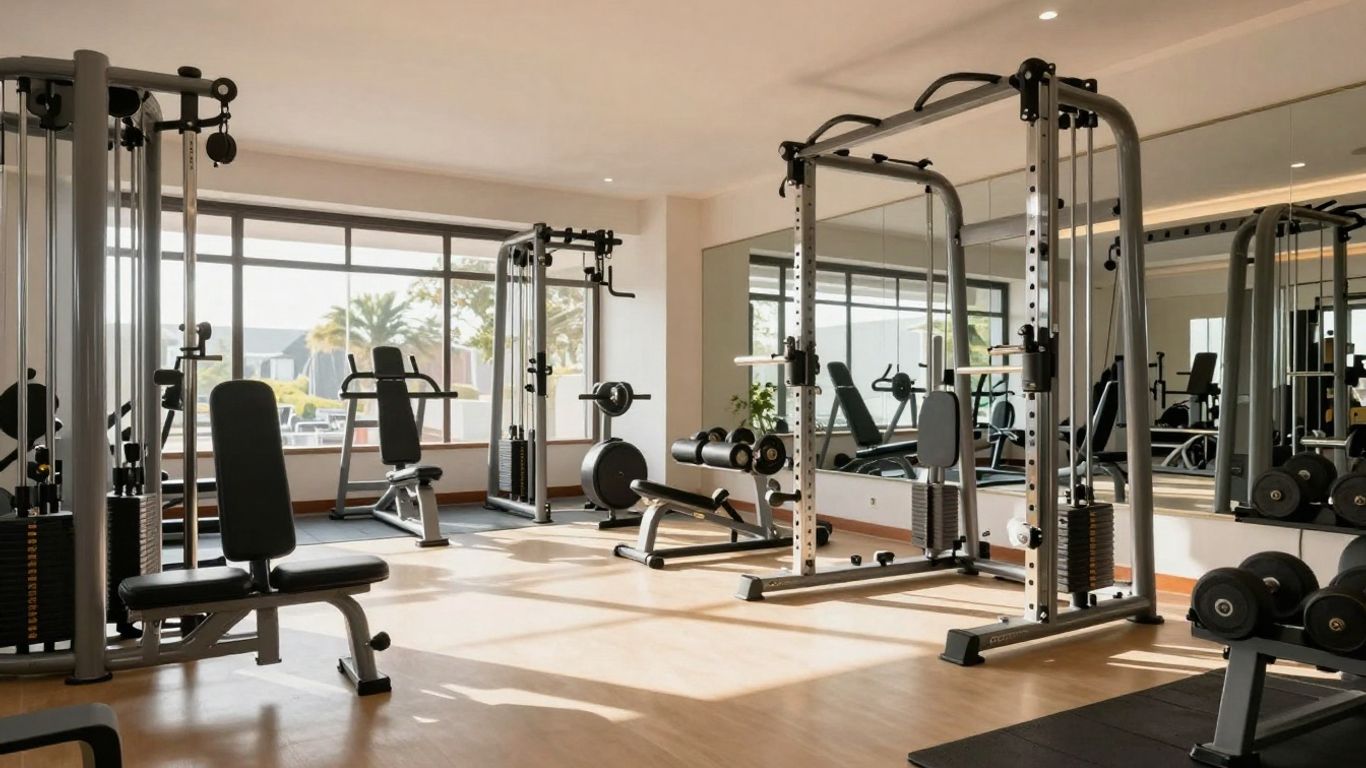
Alright, let's talk about building some serious muscle right in your own home. When you're aiming to get stronger and build muscle mass, the right equipment makes a huge difference. It's not just about lifting heavy things; it's about doing it safely and effectively so you can keep progressing.
Weight Benches and Racks for Safe Lifting
A solid weight bench is pretty much non-negotiable if you're serious about strength training. Think of it as your command center for a ton of different exercises. You can do bench presses, dumbbell rows, flyes, and so much more. An adjustable bench is even better, letting you change the angle for incline presses or decline work, which hits your chest and shoulders from different spots. This versatility means you can target muscles more precisely and keep your workouts from getting stale.
When you're lifting heavier weights, especially with barbells, a rack is a smart safety feature. A power rack or squat rack lets you load up the bar safely and gives you safety catches so you don't have to worry about getting stuck under a heavy weight. This peace of mind lets you push yourself harder, which is exactly what you need for muscle growth.
Functional Trainers for Versatile Resistance
Functional trainers are like the Swiss Army knives of strength equipment. They typically use a pulley system with weight stacks, allowing you to perform a massive variety of exercises from different angles. This is great because it mimics real-life movements more closely than traditional machines. You can do cable crossovers for your chest, lat pulldowns for your back, bicep curls, tricep extensions, and even exercises for your legs and core. The adjustable pulley heights mean you can set up the resistance exactly where you need it for any given movement. This adaptability is key for hitting muscles from all sides and preventing imbalances.
Multi-Function Gym Machines for Comprehensive Workouts
If you're looking to get the most bang for your buck in terms of space and exercise variety, a multi-function home gym machine might be your best bet. These units are designed to combine several different workout stations into one piece of equipment. You might find a lat pulldown station, a leg press, a chest press, and more, all integrated. They're often plate-loaded, meaning you add weight plates to them, giving you a lot of room to increase the resistance as you get stronger. While they can take up a bit more floor space than a single bench or a set of dumbbells, they offer a complete gym experience without needing multiple separate machines. It's a solid way to get a full-body workout in a compact setup.
Building muscle at home is totally achievable with the right gear. It's about choosing equipment that lets you safely lift challenging weights and perform a wide range of movements. Don't underestimate the power of a good bench, a sturdy rack, or the adaptability of a functional trainer. These tools are what allow you to apply progressive overload, the main driver of muscle growth.
Choosing Versatile Exercise Machines
Sometimes, you don't want to be locked into just one type of workout. Maybe you've got limited space, or perhaps you just like to mix things up. That's where versatile machines come in. They're like the Swiss Army knives of home gyms, letting you do a lot with just one piece of equipment.
All-In-One Home Gym Systems
These are the big players, designed to offer a wide range of exercises. Think of a single unit that can handle everything from chest presses and lat pulldowns to leg extensions. They often use a system of pulleys and weight stacks to provide resistance. The big advantage here is that you can get a full-body workout without needing a whole room full of separate machines. It's a smart way to get a lot of bang for your buck, especially if you're looking to build serious muscle. Some of these systems are incredibly well-designed, like the Gym Monster, which testers found really boosted workout capabilities with its accessories.
Adjustable Dumbbells and Kettlebells
Forget about having a whole rack of dumbbells taking up space. Adjustable dumbbells let you change the weight on the fly. You can go from a light weight for bicep curls to a heavier weight for shoulder presses with just a quick adjustment. This is a game-changer for saving space and keeping your workouts flowing. Similarly, adjustable kettlebells offer that same space-saving benefit for dynamic, full-body movements. They're fantastic for swings, cleans, and snatches, building both strength and cardio.
Resistance Bands and Stability Balls
Don't underestimate the power of these simpler tools. Resistance bands are super portable and can be used for a huge variety of exercises, from strength training to stretching. They provide variable resistance, meaning the tension increases as you stretch them. Stability balls, on the other hand, are great for core work and adding an unstable surface to exercises like push-ups or planks, which really challenges your stabilizing muscles. They're also pretty inexpensive, which is a nice bonus.
When you're looking at versatile equipment, think about how many different exercises you can do with it. A machine that can be used for multiple muscle groups or in different ways will give you more value over time. It's about getting the most out of your investment and your workout space.
Making Smart Investments in Exercise Machines
Alright, so you've figured out what kind of workouts you want to do and how much space you've got. Now comes the part where we talk about actually buying the stuff. It's easy to get excited and just grab the first shiny thing you see, but hold up a sec. Think of this as buying a car, not a pack of gum. You want something reliable that's going to get you where you need to go for a long time, right?
Prioritizing Quality and Durability
This is where you really want to put your thinking cap on. Buying a cheap piece of equipment that breaks after a few months is just throwing money away. Plus, dealing with broken gear is a total buzzkill for your workout routine. You want stuff that feels solid, not wobbly. Look for good materials – think heavy-duty steel for racks and benches, not thin metal that bends. For weights, cast iron or rubber-coated options are usually a safe bet. Check the welds on machines; they should look clean and strong. A well-built machine might cost more upfront, but it'll save you headaches and money down the road.
Exploring Budget-Friendly Options
Okay, I get it. Not everyone has a bottomless pit of cash for a home gym. The good news is, you don't need to spend a fortune to get a decent workout. You can build up your gym over time. Start with the basics. Maybe some adjustable dumbbells are a better bang for your buck than a whole rack of fixed ones if space is tight. Resistance bands are super cheap and surprisingly effective for a lot of exercises. You can also find great deals on used equipment if you're patient and know what to look for. Just make sure to inspect used items carefully before buying.
Reading Reviews for Informed Decisions
Seriously, don't skip this step. Before you click 'buy' or head to the store, spend some time reading what other people are saying. Look for reviews on the manufacturer's website, but also check out independent fitness blogs and retail sites. Pay attention to comments about how the equipment holds up after months or even years of use. Are people complaining about parts breaking? Is the customer service helpful when something goes wrong? These real-world experiences are gold. You can even look for videos of people using the equipment to get a better sense of its stability and how it operates.
Remember, your home gym equipment is an investment in your health and well-being. Taking the time to research and choose wisely means you'll end up with gear that you'll actually use and that will last.
Creating a Motivating Home Workout Environment
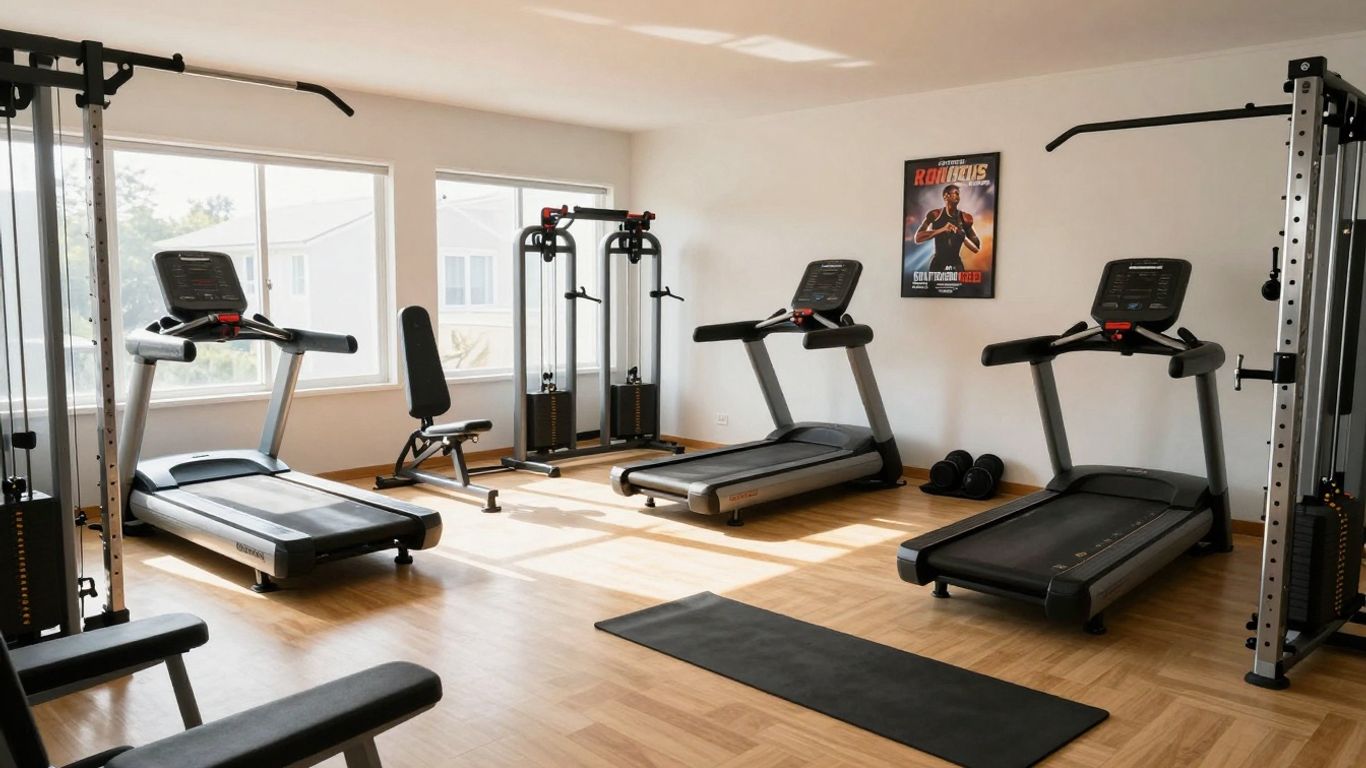
So, you've got your exercise machines all picked out and set up. That's awesome! But honestly, just having the gear isn't always enough to keep you showing up. The space itself plays a massive role in whether you actually want to work out. Making your home gym feel good can seriously make or break your motivation. Let's talk about how to make your personal fitness space somewhere you're excited to be.
Optimizing Lighting and Mirrors
First up, let's chat about mirrors. Sure, they're super handy for checking your form – nobody wants to do a squat with their back all hunched, right? But mirrors do more than just help you look good. A well-placed mirror can make a small room feel way bigger and brighter. It bounces light around and just opens the whole place up. And speaking of light, don't skimp on it. Working out in a dim, gloomy room is a total mood killer. If you've got natural light, fantastic, throw those curtains open! If not, think about adding some brighter overhead lights or even some LED strips. Good lighting makes the space feel more energetic and, let's be real, safer. You need to see what you're doing.
Incorporating Music for Energy
What are you listening to? This is a big one. For some folks, it's all about blasting high-energy music to get pumped for a tough set. For others, maybe a podcast helps distract from the burn, or calming instrumental music is the way to go for a yoga session. Figure out what gets you moving and set up a speaker or headphones accordingly. It doesn't have to be fancy, just something that works for you. Beyond music, think about the general feel. Is it cluttered? Is it clean? A tidy space just feels better to work out in. Maybe add a plant or a motivational poster if that's your thing. It's about making the space feel like yours. You can find some great ideas for home gym layouts that incorporate these elements.
Organizing Your Exercise Machines
Keeping your space tidy is more than just aesthetics; it's about functionality and safety. A cluttered gym can feel overwhelming and even dangerous. Having a designated spot for everything, whether it's a simple rack for your dumbbells or hooks for resistance bands, makes a huge difference. This not only makes your gym look better but also makes it easier to transition between exercises without tripping over equipment. Think about vertical storage options like wall-mounted shelves or racks to get things off the floor and make your space feel more open. Multi-functional gear is also a lifesaver if space is tight.
A well-organized home gym reduces distractions and potential hazards, allowing you to focus entirely on your workout. It creates a sense of order that can translate into a more disciplined and effective training session.
Here's a quick look at how different types of versatile equipment can be stored:
- Adjustable Dumbbells: Store neatly on their rack, taking up minimal floor space.
- Resistance Bands: Hang on wall hooks or store in a small bin.
- Kettlebells: Stackable racks are great for keeping these off the floor.
- Yoga Mats: Roll up and store vertically in a corner or use a wall-mounted holder.
Wrapping It Up
So, building your own home gym doesn't have to be some huge, complicated thing. It's really about figuring out what you want to do with your workouts and what fits into your life. Whether you're aiming to run a marathon, lift heavier weights, or just move more each day, there's equipment out there that can help. Don't get too caught up in having the fanciest gear. Focus on pieces that you'll actually use, that fit your space, and that don't break the bank. Your home gym is your personal fitness space, so make it work for you. Happy training!
Frequently Asked Questions
What's the best way to pick exercise gear if I'm just starting out?
When you're new to working out, it's smart to start with gear that's easy to use and can do a few different things. Think about things like adjustable dumbbells, stretchy resistance bands, or a simple weight bench. These items let you try out lots of different exercises without needing a ton of space or being too complicated. The most important thing is to pick stuff you'll actually use often!
How can I make my home workout space feel more motivating?
You can make your workout area more exciting by using mirrors to make the space feel bigger and brighter, and to check your exercise form. Good lighting also helps a lot. And don't forget music! Picking tunes that get you pumped up can make a huge difference in how much you want to exercise. Setting the right mood is key.
Is it worth it to get a home gym machine?
Yes, home gym machines can be really effective! They let you work out whenever you want, focus on specific muscles, and you can push yourself in a comfortable and safe environment. Plus, you don't have to worry about crowds or gym hours.
What kind of equipment is best if my main goal is to lose weight?
If losing weight is your main goal, you'll want gear that helps you burn a lot of calories. Machines like treadmills, rowing machines, or stair climbers are great for this. They get your heart rate up and work your whole body. Doing quick, intense workouts (called HIIT) on these machines can be super effective for burning fat.
How do I choose the right gear if I want to build muscle?
To build muscle, you'll need equipment that lets you lift heavier weights and do exercises that work big muscle groups. A barbell with weight plates, a sturdy weight bench, and maybe a power rack are excellent choices. Adjustable dumbbells are also very versatile for targeting different muscles.
What should I consider before buying exercise equipment for my home?
Before you buy anything, think about three main things: your fitness goals (what do you want to achieve?), how much space you have (measure it out!), and your budget (how much can you spend?). Also, look up reviews to see if the equipment is well-made and if people like using it. Choosing gear that fits your life is the most important part.


0 comments