Looking to add some serious fun to your backyard? A trampoline can be a fantastic way to get kids (and adults!) moving and laughing. But with so many options out there, picking the right one can feel like a big leap. This guide is here to help you sort through the best trampolines brands for 2026, focusing on what really matters: safety, durability, and that all-important bounce. We’ve checked out some top contenders to make your decision easier, so you can spend less time researching and more time bouncing.
Key Takeaways
- When picking out trampoline brands, check the frame. Heavy, hot-galvanized steel with a protective coating is a good sign it'll last.
- Look at the springs and mat. Long springs and UV-resistant mats with good airflow make for a better, longer-lasting bounce.
- Safety features like enclosures and padding are a big deal. Make sure they fit snugly and don't leave any gaps.
- Consider if you want an in-ground or above-ground model. If you go in-ground, think about how water will drain.
- Always check the warranties and look for brands with clear, real customer support when you need it.
1. Springfree Trampolines
When you think about trampolines, the first thing that usually comes to mind is a big metal frame with a bunch of springs. Well, Springfree decided to ditch that whole setup. Their whole deal is safety, and they've gone springless. Instead of those metal coils, they use flexible composite rods that are tucked away underneath the jumping surface. This means no more pinched fingers or accidental bumps on hard springs.
The biggest selling point for Springfree is definitely the safety aspect. They've really focused on removing the common injury points found in traditional trampolines. The enclosure net is also designed to flex inwards, so if you do get close to the edge, it gently guides you back to the center. It's a pretty clever design that makes a big difference.
Here's a quick look at what makes them stand out:
- Springless Design: Uses flexible rods instead of metal springs, eliminating pinch points and impact hazards.
- SoftEdge Mat: The mat is designed to absorb impact, acting as a cushion around the edge.
- FlexiNet Enclosure: A flexible net system that helps keep jumpers safely on the mat.
- Durable Materials: Built with strong, weather-resistant materials for long-term use.
Springfree trampolines are engineered to give you more jumping space than you might expect. Because there are no springs taking up room around the edge, the entire surface of the mat is usable. This means a 13-foot Springfree trampoline can feel like a much larger traditional one in terms of bounce area.
Springfree trampolines are a solid choice if safety is your top priority, and they come with a pretty good warranty too, which is always a nice bonus.
2. JumpFlex Hero Trampoline
The JumpFlex Hero 14ft trampoline is a really solid choice if you're looking for something that balances a good bounce with decent safety features. It's a popular pick, and honestly, it looks pretty sharp in the backyard too, which is always a plus.
What really sets the Hero apart is its bounce. It uses some of the longest springs in its price range, giving you a noticeably smoother and higher jump than many other trampolines out there. It's not quite a professional setup, but it's definitely a step up from the basic models.
Safety seems to be a priority for JumpFlex. The frame is built tough with steel struts connecting two rings, which gives it a stable feel on the ground. The safety net is positioned well to keep jumpers away from the springs and poles, and the padding over the springs does its job, though it might not be the thickest on the market. Still, the net placement is a big help.
Here's a quick rundown of what makes it stand out:
- Frame: Made from heavy, 2mm thick powder-coated steel that holds up well against rust.
- Springs: Features 7.1-inch springs, longer than many competitors, for a better jumping experience.
- Safety Net: Designed to keep jumpers safely inside and away from the frame and springs.
- Look: It has a sleek black design with green trim on the padding, which looks quite nice.
Putting this trampoline together can take a bit of time. While JumpFlex says it's easier than older models because there's no welding or bolts, it still took a few people a couple of hours to get it fully assembled. Also, if you're thinking about adding accessories like a basketball hoop or a slide, be prepared for those costs to add up.
Overall, the JumpFlex Hero 14ft is a strong contender, especially if you value a good bounce and a sturdy frame. Just keep the assembly time and potential accessory costs in mind when you're deciding.
3. Avyna Pro Line Trampoline
If you're looking for a trampoline that really lets you fly, the Avyna Pro Line 14′ might be your jam. Seriously, the bounce on this thing is something else. It feels way more responsive than other trampolines I've tried, and you can really get some good air. It’s like the whole surface is a sweet spot, and the energy transfer feels super smooth when you jump. The 12' Round Avyna Pro-Line In-Ground trampoline was a top seller, especially for families with young children. Its low-profile design was a key feature that parents appreciated.
One thing that really sets the Avyna apart is what comes in the box. Unlike a lot of other trampolines where you have to buy accessories separately, this one comes standard with both a ladder and an anchor kit. That’s pretty handy because those are the kinds of things you’ll definitely want to have.
When it comes to build quality, this trampoline feels solid. The materials seem tough and like they’re built to last. The jump mat has these reinforced stitches, and the padding is a good thickness – actually thicker than some of the pricier options out there. It’s covered in a durable vinyl that fits nice and snug.
And the warranty? Avyna really steps up here. They’ve got what seems like the best warranty I’ve seen. The main frame, which is pretty heavy-duty, comes with a lifetime warranty against manufacturer defects. The springs get a 10-year warranty, and other parts are covered for three years. That’s some serious peace of mind.
Here’s a quick look at some key features:
- Bounce Quality: Exceptional responsiveness and power transfer.
- Included Accessories: Comes with a ladder and anchor kit.
- Padding: Thick, durable vinyl covering.
- Frame: Heavy-gauge steel with a lifetime warranty.
- Springs: 96 springs, 8.5 inches long, for a superior bounce.
While the Avyna Pro Line offers an exceptional bounce and a robust warranty, a notable design choice places the springs inside the netting. Although it meets safety standards, this configuration means jumpers could potentially land on the springs, which is a point to consider.
4. Sportspower Bounce Pro Trampoline
If you're on the hunt for a trampoline that gives you a good bounce without emptying your wallet, the Sportspower Bounce Pro 14' Trampoline is a solid contender. It's definitely positioned as a more budget-friendly option, but it really holds its own when you compare it to some of the pricier models out there. It meets the same safety standards that you'd expect from more expensive trampolines, which is a big plus for anyone concerned about safety.
Putting this one together was surprisingly less of a headache than some others I've dealt with. While no trampoline assembly is exactly a walk in the park – this one took me about two hours – the instructions were pretty clear, and I didn't have to backtrack, which was a relief. It’s got a sturdy, powder-coated galvanized steel frame that should hold up against rust pretty well.
The Sportspower Bounce Pro 14' Trampoline is a solid choice for families who want a safe and functional trampoline without spending a fortune.
Here’s a quick rundown of what you get:
- Frame: 14-foot round, with curved poles to keep the safety net taut.
- Safety Features: Springs are located outside the safety net, and the padding covers them well. This is a good setup that meets ASTM safety requirements.
- Bounce Quality: It uses 72 springs, which are shorter than some other models. This means the bounce is a bit stiffer, especially if you're not right in the middle. It’s good for steady jumps, maybe less so for serious acrobats.
- Weight Limit: A solid 450 lbs, so it can handle teens and adults.
One thing to note is the bounce. Because it has fewer and shorter springs compared to some competitors, the jumping sensation is less springy. It’s not bad, just different. You won't get that super-high rebound, but for casual backyard fun, it’s perfectly adequate. The reversible safety padding is a nice touch, letting you flip it over to extend its life when one side starts to look worn.
When it comes to warranties, Sportspower offers a seven-year deal on the steel frame and three years on the jump mat. The overall trampoline is covered for one year. Just remember, they don't typically cover weather damage or rust, though they have been known to make exceptions. If you happen to grab this from Sam's Club, your membership might offer additional return or replacement options.
While the bounce isn't as lively as some premium models, its affordability and good safety features make it a compelling option for everyday backyard enjoyment.
5. Akrobat Trampolines
Akrobat is a brand that really focuses on making trampolines that are built tough and designed for a safer jumping experience. They seem to put a lot of thought into the materials and how things are put together, which is great if you're looking for something that will last.
One of the standout things about Akrobat is their frame. They use heavy-duty, hot-galvanized steel. This means it's got a good zinc coating, making it much less likely to rust or bend, even if you live somewhere with a lot of rain or near the coast. It just feels more solid than some other brands.
Akrobat also has some special tech like AkroVENT® and AkroSPRING®. The idea behind these is to give you a bounce that's a bit softer and easier on your joints. It’s not about getting the highest bounce possible, but more about a smooth, controlled jump that’s kinder to your knees and back. This is a big plus if you're worried about wear and tear on your body.
Here’s a quick rundown of what makes Akrobat a solid choice:
- Frame Strength: They use thick, galvanized steel that’s built to handle a lot and last for years.
- Bounce Quality: Their spring system is designed for a smoother, joint-friendly bounce, tested for lots of jumps.
- Safety Features: You'll find thick padding that's protected from UV rays and enclosures that fit well.
- Assembly: Some models use an AkroCLICK® system, which means you might not need tools to put it together.
Akrobat trampolines are generally a bit pricier than some budget options, but the longer warranties, like a lifetime one on the frame and 10 years on springs, suggest they stand behind their quality. It’s an investment in something that should hold up well over time.
If you're the kind of person who wants to buy something once and have it last, avoiding the hassle of replacing a trampoline every few years, Akrobat is definitely worth a look. They even have options if you're thinking about putting a trampoline in the ground.
6. Skywalker Trampolines
Skywalker Trampolines have become a really common sight in backyards, and for good reason. They're often seen as a go-to brand when you're trying to get a trampoline without spending a fortune. One of their big selling points is their patented "no-gap" enclosure system. Basically, this means the safety net attaches directly to the jumping mat, cutting out those awkward spaces where little fingers or toes could get caught near the springs. It's a feature that really appeals to parents who are worried about safety.
When you look at their popular models, like the 14-foot round trampoline, you get a decent amount of bouncing space for the price. The frames are usually made of galvanized steel, which helps them stand up to the weather, and they often have reinforced joints to make them feel more solid. They also tend to use UV-resistant materials for the mat, so it doesn't break down too quickly in the sun.
Here's a quick look at some common features:
- No-Gap Enclosure: This is their main safety feature, designed to keep jumpers away from the springs.
- Weather-Resistant Materials: Galvanized steel frames and UV-treated mats help the trampoline last longer outdoors.
- Reinforced Joints: These add extra stability to the frame.
While Skywalker offers a budget-friendly way to get a trampoline, it's worth noting that the materials might not be as heavy-duty as some of the more expensive brands. The warranty is also typically shorter, so if you're planning on constant, heavy use for many years, you might want to consider that. It's a great option for getting started with trampoline fun, though.
Assembly is usually manageable, with many users reporting they can get it put together in a couple of hours. However, putting on the springs can be a bit of a workout, and some people find having an extra tool or a helper makes the job much easier. Overall, Skywalker provides a good balance of safety features and affordability, making it a popular choice for many families.
7. JumpSport Trampolines
JumpSport has carved out a solid niche in the trampoline market, often hitting that sweet spot between budget-friendly and high-end. They're not usually the cheapest option you'll find, but they're also not typically the most expensive. What you're really paying for is a brand that has consistently put safety features at the forefront of its designs, coupled with a build quality that should hold up well for regular family use over several years.
When you start comparing different brands, JumpSport is definitely a name worth considering, especially if keeping everyone safe is your number one priority. They offer a good variety of sizes and shapes, so it's likely you can find a model that fits both your backyard space and your family's needs. They've put a lot of thought into how the enclosure net attaches and how the springs are positioned to keep jumpers away from any metal parts.
Here’s a quick look at what makes JumpSport a good choice:
- Safety Focus: Designs aim to minimize pinch points and keep jumpers away from springs and the frame.
- Predictable Bounce: While not always the most energetic, the bounce is generally good and consistent for casual fun.
- Decent Durability: They use materials that are meant to handle regular use without falling apart too quickly.
JumpSport trampolines often provide a balanced experience, focusing on safety without completely sacrificing the fun factor. They represent a reliable choice for families looking for a trampoline that will last and provide a secure environment for play.
8. Berg Trampolines
Berg trampolines are a pretty solid choice if you're looking for something that feels professional but is still totally doable for backyard fun. They've got a reputation for being well-made, and a lot of people seem to really like them, whether they're just messing around or trying to get some serious air.
What's cool about Berg is how they approach the bounce. They use a good number of springs, and these springs are often a bit longer than what you find on other brands. This usually means you get a really nice, springy jump. For example, their Grand Champion model, which is pretty huge at 17 feet, uses 144 springs. That's a lot of springs, and they're designed to give you a great bounce. It's the kind of thing that makes jumping feel really good.
Here's a quick look at what makes Berg stand out:
- Quality Construction: They tend to use strong materials, so the trampoline feels sturdy and built to last.
- Bounce Performance: With more and longer springs, you generally get a better, more energetic bounce.
- Variety: They offer different lines, like the Champion series, in various sizes and shapes, including round and oval.
One thing to keep in mind is that some of the higher-end Berg models can get pretty pricey. And while they're built tough, you'll want to check out the warranty details carefully. Some parts might have shorter coverage periods than others, which is something to consider when you're making the investment. It's always a good idea to look into how they handle things like weather-related damage or wear and tear.
When you're checking out Berg, pay attention to the specific model's spring count and length. These details really do make a difference in how high and how comfortably you can jump. It's not just about the size of the trampoline, but how those springs work together.
Assembly can sometimes be a bit involved, especially with the larger models. If you're not super handy, it might be worth looking into professional installation to make sure everything is put together just right for maximum safety and bounce.
9. All American Trampolines
All American Trampolines are a solid choice if you're looking for a reliable backyard bounce. They tend to offer a good variety of sizes, so you can probably find one that fits your space without being too much of an eyesore.
When it comes to safety, they usually come with padded enclosures and sturdy frames, which is always a plus when you've got kids (or even just enthusiastic adults) jumping around.
They focus on providing a safe and functional trampoline experience for everyday backyard fun.
Here's a quick look at what you might find with All American:
- Frame: Typically made with strong steel for stability.
- Safety Netting: Often includes a net to keep jumpers contained.
- Padding: Cushioned pads cover the springs and frame.
While they might not offer the absolute highest bounce compared to some specialized brands, they aim for a good balance of safety and fun that works well for most families. They're a dependable option for getting that classic trampoline experience in your own yard.
It's worth noting that while many brands don't cover weather damage, checking the specifics of the warranty is always a good idea. Sometimes, even standard wear and tear might have some exceptions, so understanding what's covered can save you a headache down the road.
10. Trampoline Frame Materials
When you're looking at trampolines, the frame is kind of a big deal. It's what holds everything up, after all. Most backyard trampolines use steel for their frames, and that's usually a good thing. You'll often see "galvanized steel," which just means it's coated with zinc to help stop it from rusting. This is super important, especially if your trampoline is going to live outside year-round.
There are a few different ways the steel is treated. "Hot-dip galvanization" is a common method, where the steel is dipped in molten zinc. This usually gives a pretty tough coating. Some frames might also have an extra powder coating on top for even more protection. The thicker and heavier the steel, generally the sturdier the frame will be.
Here's a quick breakdown of what to look for:
- Galvanized Steel: This is the standard for a reason. It resists rust and corrosion, which is key for outdoor equipment.
- Frame Thickness: Look for frames made from thicker gauge steel. This means it's less likely to bend or warp under pressure.
- Coating: Whether it's just galvanized or has an additional powder coat, a good finish protects the metal from the elements.
You want a frame that feels solid and doesn't wobble. It's the foundation of your trampoline, so don't skimp here. A well-built frame means a safer and longer-lasting jumping experience for everyone.
Some brands might use different designs for their frames, like curved poles that help keep the safety net tight. Others might have frames that are designed to be more easily integrated into the ground. Regardless of the specific design, the material itself is usually the most important factor for durability. You can find frames with a weight capacity of at least 200 lbs per leg, which is a good indicator of strength [5def].
11. Trampoline Springs
When you picture a trampoline, you probably think of those coiled metal springs. They're a pretty big deal when it comes to how high you can bounce. The number, length, and tension of these springs all play a role in the trampoline's performance.
More springs generally mean a better, more responsive bounce. Think about it: more springs working together can distribute your weight more evenly and give you that extra lift. The length matters too; longer springs often provide a deeper, more powerful bounce, while shorter ones might give you a stiffer, more controlled jump. And the tension? That's what determines how much effort it takes to get going and how high you'll fly.
The type and quality of the springs are super important for both the bounce and safety.
Here's a quick breakdown of what to look for:
- Galvanized Steel: Most good trampolines use galvanized steel springs. This means they're coated to prevent rust, which is a big deal since trampolines live outside. You want springs that can handle the weather without falling apart.
- Number of Springs: More springs usually equals a better bounce. A 14-foot trampoline might have anywhere from 72 to 100+ springs, depending on the brand and model.
- Spring Length: Longer springs (like 7.75 inches) often give a more energetic bounce compared to shorter ones (around 5-6 inches).
- Spring Placement: Some trampolines have springs inside the safety net, while others have them outside. Springs inside the net are usually covered by padding, but it's still something to consider for safety.
It's easy to overlook the springs, but they're really the engine of your trampoline. A trampoline with well-made, plentiful springs will give you a much more enjoyable experience. Cheaper models might skimp here, leading to a less satisfying bounce and potentially quicker wear and tear. So, when you're comparing trampolines, don't just glance at the springs – give them a good look.
12. Trampoline Mats
The trampoline mat is where all the bouncing action happens, so its quality really matters. Think of it as the engine of your trampoline – a good one means hours of fun, while a subpar one can be a real letdown.
Most mats are made from polypropylene, a tough, woven material designed to withstand constant jumping and exposure to the elements. The best mats are UV-resistant, meaning they won't get brittle and crack when left out in the sun all summer long. This is super important because a mat that breaks down prematurely is not only a safety hazard but also a waste of money.
When you're checking out different trampolines, pay attention to how the mat is attached. Some use traditional springs, while others, like Springfree, use flexible rods tucked underneath. The way the mat is secured affects the bounce and, importantly, the safety around the edges. A mat with a "no-gap" design, where it connects directly to the safety net or has padding that completely covers the springs, is generally a safer bet. This helps prevent little fingers and toes from getting caught.
Here’s a quick rundown of what to look for:
- Material Durability: Look for strong, tightly woven polypropylene that feels sturdy.
- UV Protection: Check if the mat is advertised as UV-resistant to prevent sun damage.
- Attachment Method: Consider how the mat connects to the frame – springs, rods, or other systems.
- Edge Design: A "no-gap" design or well-padded edges are key safety features.
The mat's condition is a big indicator of the trampoline's overall quality and how well it's been maintained. A mat that's starting to fray, has visible tears, or feels stiff and brittle is a sign that it might be time for a replacement, or that the trampoline wasn't built to last in the first place. Keeping it clean and free from sharp debris can really help extend its life.
13. Trampoline Safety Features
When you're looking at trampolines, safety is probably at the top of your mind, and for good reason. Trampolines are a blast, but they can also be a source of injuries if you're not careful. Thankfully, manufacturers have come up with a bunch of features to make them safer.
First off, you've got the safety net, also called an enclosure. This is usually a mesh material that goes all the way around the top of the trampoline. Its main job is to keep jumpers from falling off the side. A good net should be securely attached with no big gaps. Some nets are designed to flex inward, so if you get too close to the edge, it gently guides you back toward the center. It’s a pretty neat idea.
Then there's the padding. This covers up the springs and the metal frame around the edge. You want padding that's thick and durable, so it can absorb some impact if someone lands on it. It's important that this padding stays put and doesn't shift around, leaving the springs or frame exposed. Some designs place the springs outside the net, which can be a safer setup.
Here are some key safety features to look for:
- Safety Enclosure Net: Prevents users from falling off the trampoline. Check for secure attachment and no large gaps.
- Padding: Thick, durable padding covering the springs and frame. It should be UV-resistant to avoid degrading in the sun.
- Frame Design: Some trampolines have frames that are lower to the ground or have poles that curve outward, away from the jumping area.
- Springless Technology: Brands like Springfree have eliminated exposed springs altogether, using flexible rods instead.
It's worth remembering that even with all these safety features, adult supervision is still super important, especially with younger kids. Also, sticking to one jumper at a time can really cut down on accidents. It’s a simple rule, but it makes a big difference in preventing injuries.
When you're comparing different models, take a good look at how these safety features are implemented. For instance, the JumpFlex Hero 14ft Trampoline is often praised for its balance of safety and bounce quality. Checking out reviews can give you a better idea of how well these features hold up in real-world use.
14. Trampoline Accessories
So, you've got your trampoline all set up, and the bouncing is in full swing. But what if you want to add a little extra something to the mix? That's where trampoline accessories come in. They can really change the whole experience, making it more fun, more practical, or even safer.
Think about adding a basketball hoop designed for trampolines. It’s a great way to get some friendly competition going. Or, on a really hot summer day, a misting system can turn your trampoline into a cool oasis. For those who love bouncing after dark, LED lights can create a pretty cool atmosphere. And let's not forget about practicality – a good ladder is a must-have, especially for younger kids who might struggle to get up there on their own. You can find a wide selection of these at places like Wayfair.
Here are a few popular accessory ideas:
- Basketball Hoops: For slam-dunk contests.
- Misting Systems: To beat the heat on sunny days.
- LED Light Kits: For nighttime bouncing fun.
- Anchor Kits: To keep your trampoline secure in windy conditions.
- Covers: To protect the mat from debris when not in use.
When you're picking out accessories, always keep safety in mind. Make sure any add-on doesn't interfere with the trampoline's safety features, like the enclosure net or padding. For example, a basketball hoop should attach securely without creating new hazards. Similarly, anchor kits are great for stability, but you need to place them carefully so no one trips over them. It’s all about adding fun without compromising safety.
Sometimes, the simplest additions make the biggest difference. A sturdy ladder can make a trampoline accessible to more family members, and a good cover can significantly extend the life of your mat by keeping it protected from the elements when it's not in use.
15. Trampoline Warranties
When you're dropping a good chunk of change on a trampoline, you want to know it's going to last. That's where warranties come in. Think of it as the manufacturer's promise that their product won't fall apart after a season or two. A solid warranty can give you real peace of mind.
Most trampolines come with some kind of warranty, but they can vary a lot. You'll see different lengths of coverage for different parts. For example, the frame might have a 10-year warranty, while the mat and springs might only get 1, 2, or 5 years. Accessories like safety nets or pads often have the shortest coverage, sometimes just one year.
Here's a general breakdown you might see:
- Frame: Usually the longest coverage, often 5-10 years, sometimes even longer.
- Jump Mat & Springs: Typically shorter, maybe 1-5 years.
- Safety Pad & Net: Often the shortest, around 1 year.
- Accessories (Ladder, Anchor Kit, etc.): Usually 1 year.
It's super important to read the fine print, though. Almost no warranty covers damage from bad weather, like heavy winds or snow, or normal wear and tear. So, even with a great warranty, you'll still need to take steps to protect your trampoline, like using a cover or bringing it inside during harsh conditions. Some companies, like ACON, offer a solid warranty and emphasize safety in their designs. You might even find options for extended or lifetime warranties, though these often come with an extra cost.
Before you buy, check what the warranty actually covers. Does it include manufacturer defects? What about rust? And how easy is it to actually make a claim if something goes wrong? Some companies make it a real hassle, while others are pretty straightforward. It's worth looking into customer reviews specifically about warranty claims.
When comparing trampolines, don't just look at the price tag. A slightly more expensive trampoline with a much better warranty might actually be a smarter buy in the long run. It shows the company stands behind its product. For instance, the JumpFlex Hero offers a 10-year warranty on its frame and a 5-year warranty on the mat and springs, with an option for a lifetime warranty for an extra fee.
16. Trampoline Shapes
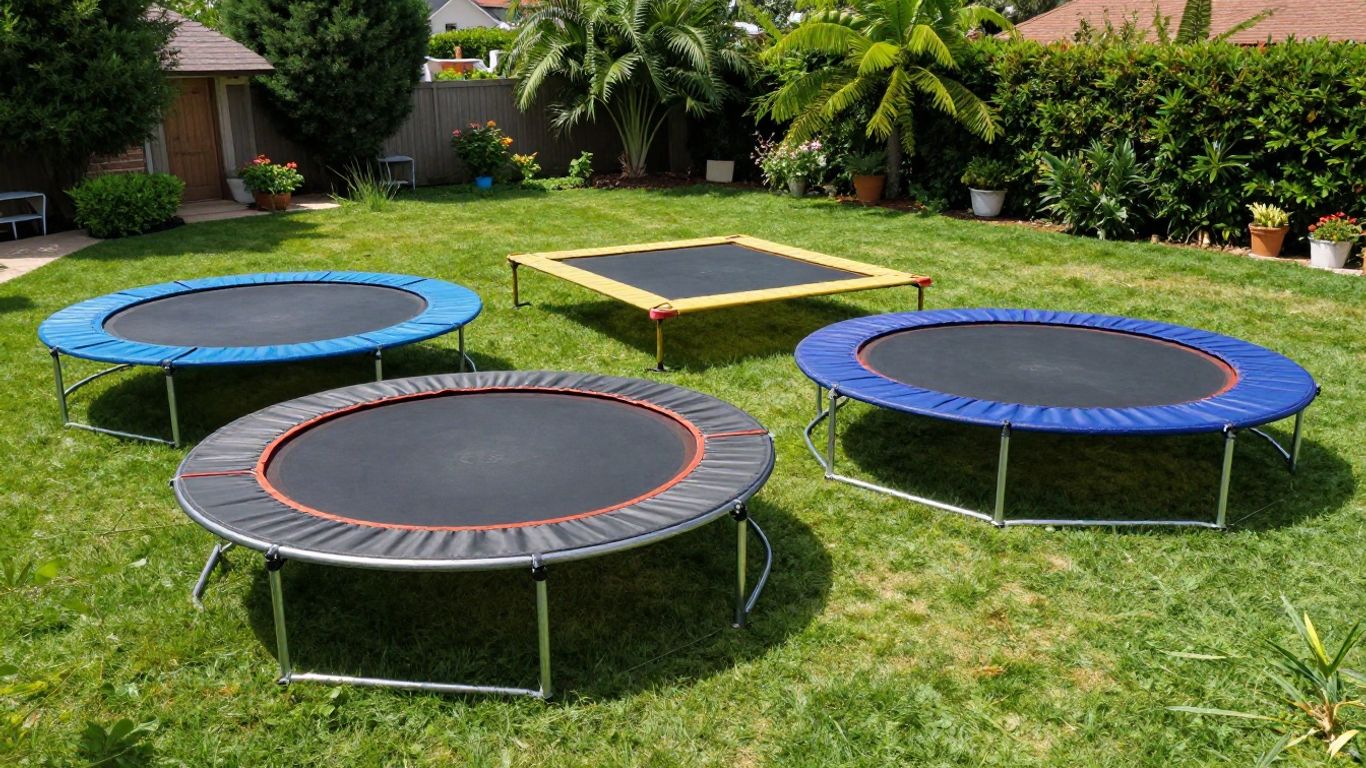
Trampoline shape actually makes a huge difference for how fun (and safe) your outdoor jumps will be. The bounce, the space you get, and even where you land on your jumps changes depending on the shape you choose. If you’re looking to buy, here’s what you need to know about which shape matches your backyard and your jumpers.
Here are some common trampoline shapes and why people pick them:
- Round trampolines: These are the ones most people have in their yards. The circular shape pulls jumpers toward the middle, so there are fewer awkward landings at the edge. They’re the everyday pick for families and casual use.
- Rectangular trampolines: Want bigger air? Rectangular models give a more even bounce, no matter where you jump. That’s why pro athletes and gymnasts train on these. They also use space more efficiently if you have a long, narrow yard.
- Square trampolines: Not as common, but they give a roomier feel than round, with predictable bounce. These blend features of round and rectangle, and they fit well in corners.
- Oval trampolines: Great for longer, more controlled bounces—also nice if more than one person is using the trampoline at once, since there’s more space to move.
- Octagonal trampolines: A bit unusual, but they offer a sturdy frame and a good amount of jumping surface—kind of like an upgrade from round for those who want something a little different.
Here’s a quick comparison:
| Shape | Common Use | Bounce Direction | Space |
|---|---|---|---|
| Round | Recreational | Toward center | Compact |
| Rectangle | Gymnastics/Tricks | Even (all points) | Wide/long |
| Square | Recreational | Toward center | Corner-fit |
| Oval | Families | Long/sideways | Spacious |
| Octagonal | All-round | Centered | Unique |
When deciding on a shape, think about your space and who’ll be using the trampoline most. The right shape means a safer, more enjoyable backyard experience—no one likes awkward landings or cramped jumps. Sometimes, it’s not just about style. It’s about safety and fun in the long run.
17. Trampoline Sizes
When you're picking out a trampoline, one of the first things you'll probably think about is size. It's not just about how much space it takes up in your yard, but also about the jumping experience itself. Generally speaking, bigger is better when it comes to bounce quality. A larger trampoline gives jumpers more room to move around without bumping into each other, which is a big plus for fun and safety.
Think about your backyard space first. You don't want a giant trampoline that leaves no room for anything else, or worse, is too close to fences or trees. A good rule of thumb is to leave at least 6 feet of clear space all around the trampoline. This gives you room to walk around it and adds a safety buffer.
Here's a quick look at common sizes and what they might be good for:
- 8-foot trampolines: These are pretty compact, good for smaller yards or younger kids who are just starting out. They don't offer a huge bounce, but they're easy to fit in.
- 10-foot trampolines: A step up in size, these are still manageable for most yards and offer a bit more jumping room than the 8-footers.
- 12-foot trampolines: This is often considered a sweet spot. It's a decent size for most families, offering a good bounce and enough space for a couple of kids to jump at once (though one jumper at a time is always safest).
- 14-foot trampolines: If you have a bit more yard space, the 14-foot model is a popular choice. It provides a really satisfying bounce and plenty of room for active jumpers. Many of the top-rated models come in this size, like the JumpFlex Hero 14ft Trampoline.
- 15-foot and 16-foot trampolines: These are the big kahunas. If you have a large yard and want the ultimate bouncing experience, these offer the most space and the best potential for high bounces. Just make sure you have the room!
Remember, even with a larger trampoline, it's always best practice to have only one person jumping at a time to minimize the risk of injuries. Safety should always come first, no matter how big the trampoline is.
When you're looking at different brands, you'll see these sizes mentioned frequently. It's worth measuring your yard and thinking about who will be using the trampoline most often before you make a decision. Getting the size right means more fun and less worry.
18. Trampoline Weight Limits
When you're looking at trampolines, one of the first things you'll want to check is the weight limit. It's not just a suggestion; it's a pretty important safety guideline. Exceeding the weight limit can put a lot of stress on the frame and springs, potentially leading to damage or even a nasty accident.
Most trampolines are designed for a single user, but families often want to know if multiple people can jump at once. It's generally safer to have just one person on the trampoline at a time, especially if there's a big difference in weight between jumpers. Think about it – if a lighter person is on there when a heavier person jumps, the lighter person could get launched unexpectedly.
Here's a general idea of what you might see:
- Small to Medium Trampolines (8-12 ft): Often have weight limits ranging from 150 to 250 pounds.
- Large Trampolines (13-16 ft): Typically support between 250 and 400 pounds, sometimes even more.
- Heavy-Duty or Professional Models: Can go up to 500 pounds or higher.
It's always best to look at the manufacturer's specific recommendations for the model you're interested in. They've tested it, and they know what it can safely handle. Don't guess – check the specs!
It's easy to get caught up in the fun and forget about the numbers, but the weight limit is there for a reason. It's about making sure the trampoline stays in good shape and, more importantly, that everyone stays safe while they're having a blast. Always err on the side of caution and stick to what the manufacturer advises.
19. In-Ground Trampolines
While most trampolines sit up on legs, there's a whole other category: in-ground trampolines. These are designed to be sunk into the ground, so the jumping surface is basically level with your lawn. It gives your backyard a cleaner look, and honestly, it feels a lot safer because there's no big drop if someone stumbles off the edge.
Setting one up is a different ballgame compared to the above-ground models. You're looking at digging a pretty big hole, which means more work upfront. Plus, you've got to think about drainage so water doesn't pool underneath. Some people go for a professional installation, especially if they want it done right and don't want to spend a weekend with a shovel.
The main draw for in-ground trampolines is the reduced fall risk.
Here's a quick look at what makes them stand out:
- Aesthetics: They blend in much better with your landscaping. No giant metal structures taking over the yard.
- Safety: The lower profile means less chance of a serious fall compared to an above-ground model.
- Accessibility: Getting on and off is usually easier, especially for younger kids or older folks.
However, they do come with their own set of considerations. The initial setup is more involved, and you'll want to make sure the area around it is clear and safe. Also, while they look great, they're a more permanent fixture, so you'll want to be sure it's exactly where you want it.
When considering an in-ground trampoline, think about the long-term commitment. It's not something you can easily move or take down if your needs change. Planning the location carefully is key to enjoying it for years to come.
20. Above-Ground Trampolines and more
When you think about trampolines for your backyard, you're probably picturing the classic above-ground models. These are the ones you see most often, the ones that come in various sizes and are generally easier to set up than their in-ground counterparts. They're a fantastic way to add some serious fun and activity to your yard without needing major landscaping.
The variety of above-ground trampolines available means there's likely one that fits your space and budget. From smaller 8-foot models perfect for younger kids to larger 14-foot or even 15-foot options that can accommodate more jumpers, the size is a big factor in how much fun you can have. Bigger trampolines generally offer a better bounce and more room to move around. When picking a size, think about who will be using it most and how much space you actually have to spare.
Setting up an above-ground trampoline can be a bit of a project. It usually takes a couple of people a few hours to get it done. You'll want to make sure you have all the parts laid out and follow the instructions carefully. Some brands even include helpful accessories like stakes to keep the trampoline from moving around too much, especially if you live in a windy area. It's a good idea to check what comes with your chosen model.
Here are some common considerations when looking at above-ground trampolines:
- Frame Material: Most use galvanized steel, which is good for resisting rust. Look for thicker gauge steel for more durability.
- Mat Quality: The jumping surface should be UV-resistant and have strong stitching around the edges where it connects to the springs or bands.
- Safety Features: This includes the enclosure net, padding over the springs (if it has them), and how sturdy the overall structure feels.
- Bounce Quality: This depends on the type and number of springs or the elasticity of the bands used.
While trampolines are designed for fun, safety should always be the top priority. Always follow the manufacturer's guidelines for weight limits and the number of users at one time. Adult supervision is also a must, especially with younger children. Checking for wear and tear regularly can prevent accidents.
Beyond the trampoline itself, there are tons of accessories that can add to the experience. Think about adding a basketball hoop for some slam-dunk action, a ladder for easier access, or even a misting system for those hot summer days. These extras can really make your trampoline the go-to spot for backyard entertainment. Just make sure any accessories you add are compatible with your specific trampoline model and don't create new safety hazards. For example, the Zupapa Saffun outdoor trampoline comes in several sizes and is a popular choice for families looking for a complete package.
Ready to Jump In?
So, we've looked at a bunch of trampolines, from the super-safe springless ones to the more traditional models. Picking the right one really comes down to what you need. Think about your yard size, who's going to be jumping, and how much you want to spend. Don't forget to check out the frame, the springs, and especially the safety features like padding and enclosures. It’s a big purchase, sure, but getting a good quality trampoline means years of fun and active play for everyone. Happy bouncing!
Frequently Asked Questions
What's the most important thing to look for when buying a trampoline?
Safety is super important! Make sure the trampoline has good padding over the springs and a strong safety net around it. Also, check that the frame is made of sturdy, rust-resistant steel. A good warranty is a plus too, showing the company believes in its product.
Are springless trampolines safer?
Yes, springless trampolines are often considered safer because they remove the risk of getting fingers or toes pinched in the springs. They use flexible rods instead, which can offer a softer bounce and reduce the chance of hitting hard metal parts.
How do I know if a trampoline is good quality?
Look for a thick, heavy-duty steel frame, often described as hot-galvanized. The jumping mat should be UV-resistant to handle sunlight, and it's good if it has some airflow. Longer springs usually mean a better, more comfortable bounce.
What's the difference between round and square trampolines?
Round trampolines are great for casual bouncing because the springs pull you back to the center, making the bounce predictable. Square or rectangular ones often give you a higher, more powerful bounce, which is better if you're into gymnastics or doing tricks.
Should I get an in-ground or above-ground trampoline?
Above-ground trampolines are easier to set up and move. In-ground trampolines look sleeker and can be safer because there's no height to fall from, but they require digging a hole and need good drainage so water doesn't collect underneath.
What should the weight limit be for a family trampoline?
It's wise to aim for a higher weight limit, usually 300-400 lbs or more. This ensures it's safe for multiple kids to jump at once or for an adult to bounce with them without worrying about it breaking or becoming unstable.













0 comments