









Let's face it, life gets busy. Between work, family, and just trying to keep up, finding time to hit the gym can feel like a luxury. But what if I told you that you don't need a fancy gym membership or a pile of equipment to get a really effective workout? You can actually build strength, boost your fitness, and feel great using just your own body. That's the beauty of a full body workout at home with no equipment needed. It's convenient, cost-effective, and can be adjusted for anyone, no matter your fitness level.
Key Takeaways
- A no equipment workout to build muscle at home offers unmatched convenience and is a cost-effective way to stay fit.
- Bodyweight exercises build functional strength that helps with everyday activities.
- Consistency and proper form are more important than intensity for long-term results.
- Progressive overload, like increasing reps or trying harder variations, is key to continued progress.
- Regularly scheduled workouts, including rest days, are important for muscle recovery and growth.
Mastering Bodyweight Basics For Muscle Growth
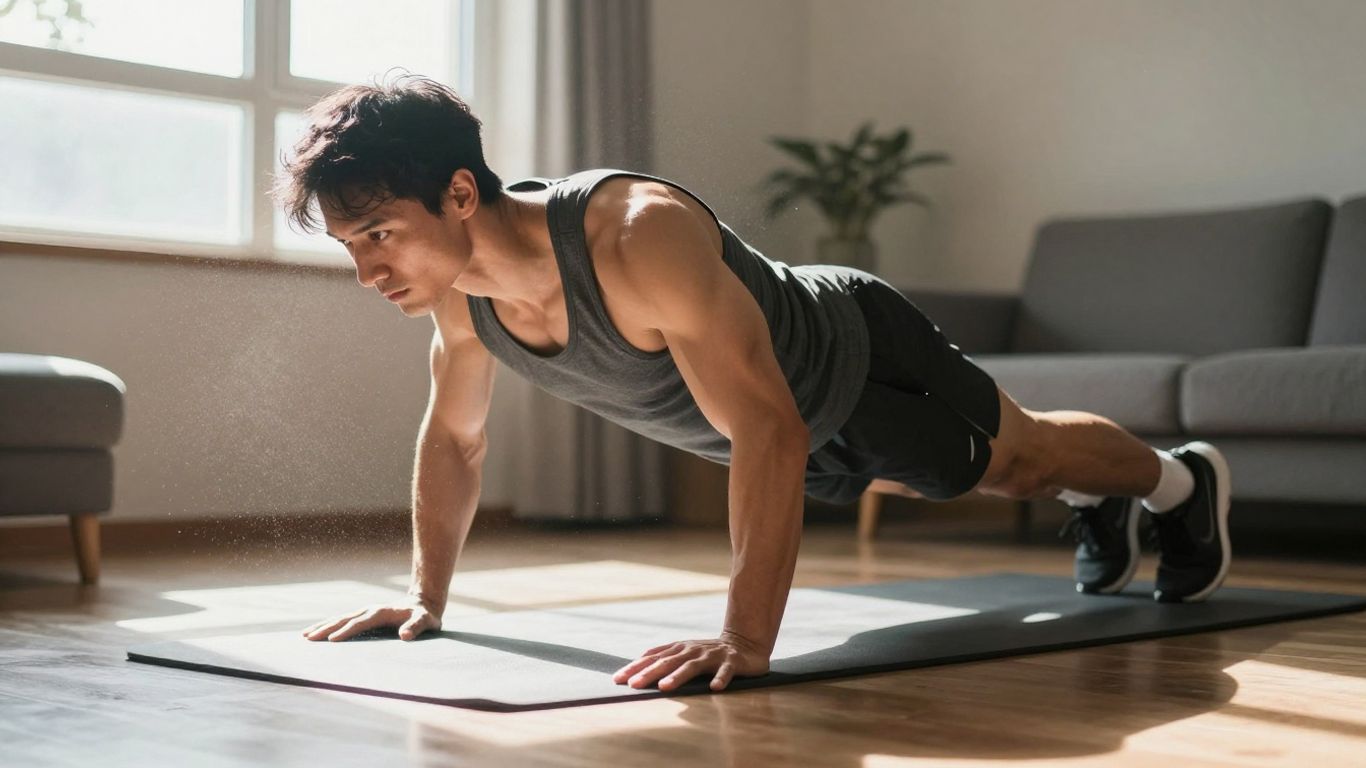
Building muscle without any equipment might sound tricky, but it's totally doable. The key is understanding how to use your own body weight effectively. Think of it as learning a new skill – it takes practice and knowing the right moves. You're not just lifting weights; you're learning to control your body in space. This approach builds functional strength that helps with everyday tasks, not just looking good at the beach.
The Foundation Of Bodyweight Squats
The squat is king when it comes to lower body exercises, and the bodyweight version is no different. It works your quads, hamstrings, and glutes all at once. To get the most out of it, focus on form. Start with your feet about shoulder-width apart, toes pointed slightly out. Keep your chest up and your back straight as you lower your hips down as if you're sitting into a chair. Aim to get your thighs parallel to the floor, or even a bit lower if you can maintain good form. Push through your heels to return to the starting position. It's a simple movement, but doing it right makes a huge difference.
Here’s how you can make squats harder as you get stronger:
- Increase Range of Motion: Try to squat deeper.
- Slow Down: Perform a slow, controlled descent (a 3-second count down).
- Add Pauses: Hold the bottom position for a second or two.
- Single-Leg Variations: Eventually, you can work towards pistol squats, but start with assisted versions.
Bodyweight training is all about making simple movements challenging through technique and progression. Don't underestimate the power of a well-executed bodyweight squat.
Effective Push-Up Variations
Push-ups are the ultimate upper body exercise you can do anywhere. They hit your chest, shoulders, and triceps, plus your core. If standard push-ups are too tough right now, don't sweat it. There are plenty of ways to start. Wall push-ups are a great entry point, followed by incline push-ups (hands on a raised surface like a table or counter). Once those feel easier, you can move to knee push-ups before tackling the full version. The goal is to keep your body in a straight line from head to heels, lowering your chest towards the floor and pushing back up. You can find some great bodyweight workout routines that incorporate these.
Building Strength With Lunges
Lunges are fantastic for working each leg independently. This helps correct muscle imbalances and improves your balance. Start with a reverse lunge: step backward with one leg, lowering your hips until both knees are bent at about 90 degrees. Make sure your front knee stays behind your toes. Push off your back foot to return to the start. You can also do forward lunges or walking lunges. As you get more comfortable, you can increase the challenge by doing them faster or adding a pause at the bottom. This unilateral work is key for building practical strength.
| Exercise | Sets | Reps per Leg |
|---|---|---|
| Reverse Lunges | 3 | 10-12 |
| Forward Lunges | 3 | 10-12 |
| Walking Lunges | 3 | 10-15 steps |
Maximizing Your No Equipment Workout To Build Muscle
So you've got your routine down, you're showing up, and that's awesome. But how do you make sure you're actually getting the most out of all those squats and push-ups you're doing in your living room? It's not just about doing the exercises; it's about doing them smart. The real gains come from consistently challenging yourself in the right ways.
The Power Of Progressive Overload
Building muscle without weights is totally possible, but you can't just do the same thing over and over and expect to get stronger. Your muscles need a reason to grow, and that reason is progressive overload. Basically, you have to keep making the exercises a little harder over time. There are a bunch of ways to do this, even without picking up a dumbbell.
- Slow Down the Movement: Try taking 3 to 4 seconds to lower yourself during a squat or push-up. This makes your muscles work harder for longer.
- Increase Reps or Sets: If you can do 10 push-ups easily, try for 12 next time, or add another set.
- Change the Angle: Elevating your feet for push-ups makes them much tougher. Or try doing lunges with a slight hop.
- Add Holds: Pause at the hardest part of an exercise, like at the bottom of a squat, for a few seconds.
- Try Harder Variations: Once regular push-ups are easy, move to decline push-ups or close-grip push-ups. For squats, you could work towards pistol squats (one-legged).
The key isn't the equipment—it was the progressive challenge, consistent effort, and proper form. Research confirms that calisthenics training can produce similar muscle and strength gains to weight training.
Enhancing Muscle Engagement Through Form
Doing an exercise with bad form is like trying to build a house on sand. It just won't hold up, and you won't get the results you want. Focusing on how you move is super important for making sure the right muscles are doing the work. For example, with squats, really think about pushing your hips back as if you're sitting in a chair, and keep your chest up. For push-ups, make sure your body is in a straight line from your head to your heels, and don't let your hips sag. Paying attention to these details means you're not just going through the motions; you're actually telling your muscles to grow. It's about quality over quantity, always.
Strategic Rest And Recovery
This is where a lot of people drop the ball. You don't build muscle while you're working out; you build it when you're resting. Your muscles get tiny tears during exercise, and your body repairs them, making them bigger and stronger. If you don't give them enough time to recover, you'll just break them down further and won't see any gains. Aim for 3-4 full-body workouts per week, with rest days in between. On rest days, you can do light activities like walking, but avoid intense training. This allows your body to rebuild and get ready for your next session. You can find great bodyweight exercises for optimal muscle building that are perfect for this kind of routine.
Upper Body Strength Without Weights
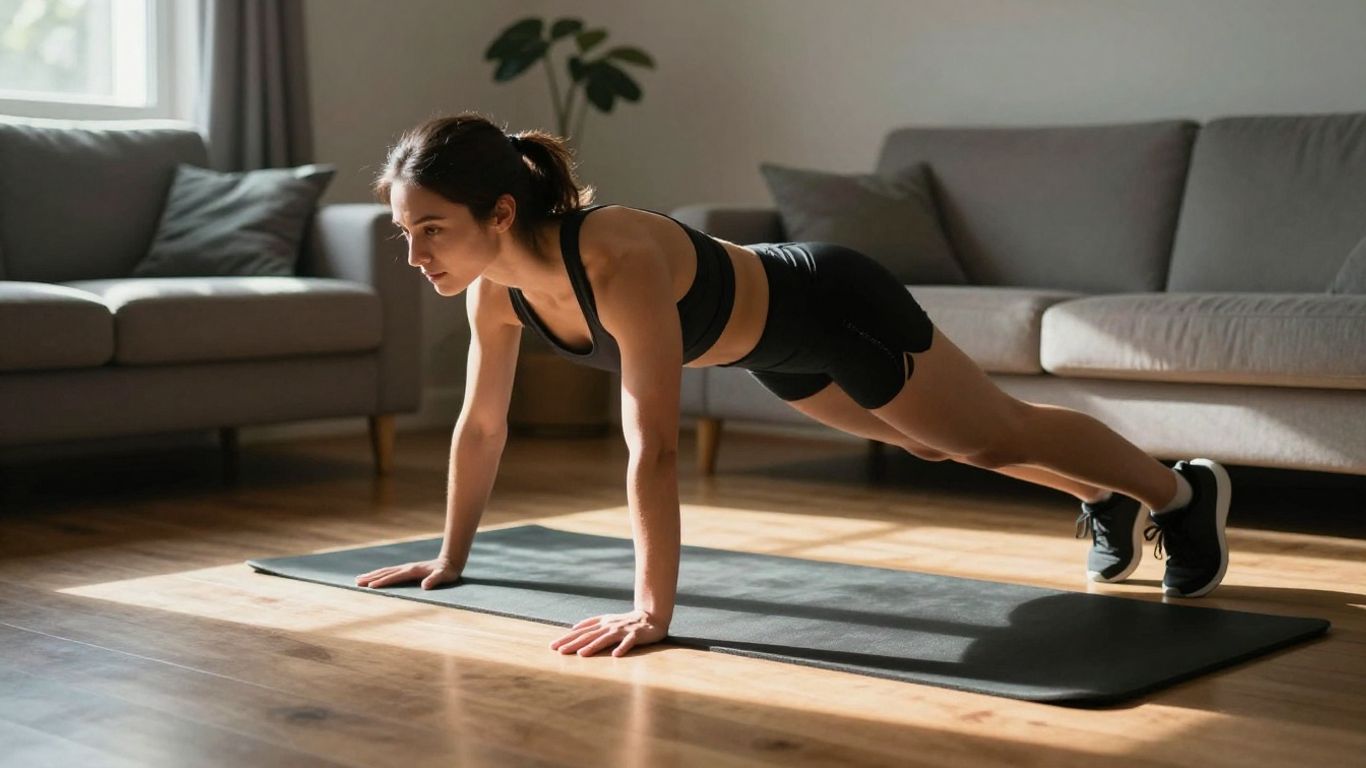
You don't need a gym or fancy equipment to build a strong upper body. Your own bodyweight is a powerful tool, and with the right approach, you can seriously challenge your chest, shoulders, triceps, and back right at home. It’s all about using smart movements and pushing yourself progressively.
Challenging Chest and Triceps With Dips
Triceps dips are fantastic for hitting those muscles in the back of your arms and also work your chest and shoulders. You can do these using a sturdy chair, a bench, or even the edge of a stable table.
Here’s how to do them:
- Place your hands on the edge of the surface, fingers pointing forward. Your hands should be about shoulder-width apart.
- Slide your hips off the edge, with your legs extended out in front of you. The straighter your legs, the harder it will be. You can bend your knees to make it easier.
- Lower your body by bending your elbows, keeping them tucked close to your body. Go down until your upper arms are parallel to the floor, or as low as you comfortably can.
- Push back up to the starting position using your triceps.
Aim for 3 sets of 10-15 repetitions. If this is too difficult, start with fewer reps or keep your knees bent.
Push-Up Progressions for Advanced Gains
Push-ups are the king of upper body bodyweight exercises, but there are many ways to make them harder as you get stronger. Once you can do standard push-ups with good form, try these variations to keep challenging yourself:
- Decline Push-Ups: Elevate your feet on a stable surface (like a chair or step). This shifts more weight to your upper body, making it tougher.
- Close-Grip Push-Ups (Diamond Push-Ups): Bring your hands closer together, forming a diamond shape with your thumbs and index fingers. This really targets the triceps.
- Wide-Grip Push-Ups: Spread your hands wider than shoulder-width. This puts more emphasis on your chest muscles.
Remember, the goal isn't just to do more reps, but to do them with control and focus on feeling the muscles work. Proper form prevents injuries and leads to better results.
Core Engagement With Planks
While planks are often thought of as a core exercise, they also require a lot of stabilization from your shoulders and upper back. They're great for building endurance and strength in your entire upper body.
- Standard Plank: Hold a push-up position, but rest on your forearms instead of your hands. Keep your body in a straight line from head to heels, engaging your core and glutes. Try to hold for 30-60 seconds.
- Side Plank: Lie on your side, propped up on one forearm. Stack your feet or stagger them for more stability. Lift your hips so your body forms a straight line. Hold for 30 seconds per side.
- Plank Jacks: Start in a standard plank position. Jump your feet out wide, then back together, like a jumping jack. Do this for 30-60 seconds.
These exercises, when done consistently, will build noticeable strength and definition in your upper body without ever needing to pick up a weight. You can find more effective upper body exercises that require no equipment to help you build strength and tone your muscles.
Lower Body Power And Stability
Building a strong lower body isn't just about looking good; it's about creating a solid foundation for everything else you do. Think about it: your legs and glutes are responsible for so much of your daily movement, from walking and climbing stairs to simply standing up. Without a strong base, the rest of your body has to compensate, which can lead to issues down the line. That's why focusing on these muscle groups is so important, even when you're working out at home with zero equipment.
Glute Bridges For Posterior Chain Strength
Glute bridges are a fantastic way to wake up those often-neglected glute muscles. They're simple to do but surprisingly effective. Lie on your back with your knees bent and feet flat on the floor, about hip-width apart. From there, squeeze your glutes and lift your hips off the ground until your body forms a straight line from your shoulders to your knees. Hold that squeeze for a second or two at the top, then slowly lower back down. This exercise is key for counteracting the effects of prolonged sitting and improving posture.
- Beginner: Focus on controlled movement and feeling the glute squeeze.
- Intermediate: Increase the hold time at the top or add a slight pause.
- Advanced: Progress to single-leg glute bridges for a much tougher challenge.
Single-Leg Variations For Balance
Once you've got a handle on basic lower body movements, it's time to challenge your stability. Single-leg exercises force your body to work harder to maintain balance, which also engages your core and smaller stabilizing muscles. Think about exercises like single-leg Romanian deadlifts (RDLs) or even just standing on one leg and reaching your arms out. These might seem simple, but they really test your proprioception – your body's awareness of its position in space. Improving this can make everyday tasks feel much easier and reduce the risk of falls.
Working one leg at a time also helps to identify and correct any imbalances between your left and right sides. This unilateral training is super important for overall athletic development and preventing injuries.
Deepening Your Squat Range
We all know squats, but are you getting the most out of them? Going deeper in your squat, as long as you can maintain good form, means you're working more muscle fibers and improving your hip and ankle mobility. Aim to get your hips below your knees if possible. If you struggle with depth, try placing a small, stable object like a book or a yoga block under your heels to give you a little lift. This can help you achieve a deeper squat position more comfortably. You can also try bodyweight leg exercises that focus on controlled descent and ascent.
Here’s a quick way to add challenge to your squats:
- Pause Squats: Hold the bottom position for 2-3 seconds.
- Tempo Squats: Slow down the lowering phase (eccentric) to 3-4 seconds.
- Jump Squats: Explosively jump up from the bottom position (for added power).
Structuring Your Weekly Routine
So, you've got your exercises down, and you're ready to get serious about building muscle at home. That's great! But how often should you actually be doing these workouts? And how long should each session last? Getting this right is super important for seeing results without burning out. It's not just about doing the work; it's about doing it smart.
Frequency For Optimal Muscle Growth
For most people looking to build muscle with bodyweight exercises, aiming for three to four full-body workouts per week is a solid plan. This frequency gives your muscles enough of a challenge to grow, but also allows for that vital recovery time. Muscles don't grow when you're working out; they grow when you're resting and repairing. So, don't skip those rest days!
- Monday: Workout
- Tuesday: Rest or Active Recovery (like a walk)
- Wednesday: Workout
- Thursday: Rest
- Friday: Workout
- Saturday: Rest or Active Recovery
- Sunday: Workout (optional, if you feel recovered)
This kind of schedule helps prevent overtraining and keeps you motivated. You can find more ideas for at-home routines that fit this structure here.
Workout Duration And Intensity
When you're working out at home, it's easy to let sessions drag on. But honestly, a focused 30-45 minute workout is usually plenty. The key isn't how long you spend exercising, but how hard you push yourself during that time. Focus on controlled movements and really feeling the muscles work. If you're finding exercises are getting too easy, it's time to ramp up the intensity. This could mean slowing down your reps, decreasing rest times between sets, or trying a harder variation of the exercise. Remember, your body adapts, so you need to keep challenging it.
It's easy to think that longer workouts mean better results, but that's often not the case. Quality over quantity is the name of the game here. A well-executed, intense 30-minute session will likely yield better muscle-building results than a sloppy, unfocused hour-long one.
Integrating Rest And Recovery
Rest days are not optional; they are when the magic happens. This is when your muscle fibers repair and grow stronger. Aim for at least one full rest day between workouts, and consider active recovery like light walking or stretching on other days. Listen to your body. If you're feeling overly sore or fatigued, take an extra rest day. Pushing through extreme fatigue can lead to injury and set you back. A beginner-friendly, 3-day plan can be a great starting point to get used to this rhythm [4e1e].
The Convenience And Cost-Effectiveness Of Home Fitness
Saving Time With At-Home Workouts
Let's be real, fitting a gym session into a packed schedule can feel like a puzzle. You've got work, family, errands, and then suddenly, the day is over. That's where working out at home really shines. You skip the commute, the locker room hassle, and the waiting for machines. Your living room becomes your gym, open 24/7. This means you can sneak in a workout whenever you have a spare 20 minutes – maybe between meetings, while the kids are napping, or even before you start your day. It's about reclaiming those lost hours and making fitness fit into your life, not the other way around.
Eliminating Gym Membership Costs
Think about how much a gym membership adds up over a year. Those monthly fees, plus potential initiation costs, can really eat into your budget. When you train at home with no equipment, that money stays in your pocket. You can use it for other things, like better groceries or maybe even a weekend getaway. It's a smart financial move that doesn't compromise your fitness goals. Building a home gym setup, even a minimal one, can be more economical in the long run compared to ongoing gym memberships and associated expenses. This allows for personalized training environments.
Adapting Routines To Your Level
One of the best things about bodyweight training is how easily you can adjust it. Whether you're just starting out or you've been exercising for years, you can make the exercises harder or easier. This means you're always challenged, but never overwhelmed. You can modify things on the fly, making it a truly personal fitness experience.
Here's a quick look at how you can adapt exercises:
- Make it easier: Reduce the range of motion, slow down the movement, or use a wall for support.
- Make it harder: Increase repetitions, slow down the eccentric (lowering) phase, or try a more advanced variation.
- Adjust intensity: Change the rest periods between sets or add pauses within the exercise.
The beauty of bodyweight training is its inherent scalability. You are the variable, and your environment is your gym. This means progress is always within reach, and plateaus are less likely because you control the challenge.
This flexibility means you can keep progressing without needing new equipment. You're constantly pushing your own limits, which is exactly what you need to build muscle and get stronger over time. Building a home gym offers significant benefits, primarily convenience and cost-effectiveness.
Keep Pushing Forward
So, there you have it. You don't need a fancy gym or a bunch of weights to get a really good workout. Using just your own body and a bit of space, you can build strength, get fitter, and honestly, feel pretty good about yourself. The main thing is to keep at it. Even a few short workouts each week can make a big difference over time. Don't worry if you can't do every single rep or exercise perfectly right away. Just keep showing up, do what you can, and try to push yourself just a little bit more each time. You've totally got this.
Frequently Asked Questions
Can I really build muscle without any weights or gym equipment?
Yes, absolutely! Your body is an amazing tool. By doing exercises that challenge your muscles, like push-ups and squats, and making them harder over time, you can definitely build muscle. Think of gymnasts – they're super strong and use very little equipment.
How long should my home workout be?
A good workout session at home usually takes about 30 to 45 minutes. This includes a little time to warm up your muscles before and cool down afterward. It’s better to have a focused workout than a really long one where you lose concentration.
How often should I do these no-equipment workouts?
For most people, working out three to four times a week is a great goal. This gives your muscles enough work to get stronger, but also enough time to rest and recover, which is when they actually grow bigger and stronger.
What if the exercises are too hard or too easy for me?
That's the great thing about bodyweight exercises! If something is too tough, you can make it easier by doing fewer repetitions or using a simpler version. If it feels too easy, you can make it harder by doing more reps, moving slower, or trying a more difficult variation, like doing push-ups on your toes instead of your knees.
Do I need to do separate cardio workouts in addition to these?
Not always! If you keep the rest time short between exercises and include moves that get your heart pumping, you can get a good cardio workout at the same time. However, adding some extra activities like walking or jogging on your rest days can also be very beneficial for your overall fitness.
Is it possible to get a full-body workout at home without equipment?
Definitely! You can combine different bodyweight exercises that work your upper body, lower body, and core all in one session. Moves like squats, lunges, push-ups, and planks hit all the major muscle groups, giving you a complete workout without needing any gear.


0 comments