









So, you want to learn how to do a backflip on a trampoline? It sounds pretty wild, I know. I used to think it was something only gymnasts on TV could do. But honestly, with the right steps and a bit of practice, it's totally achievable. It's not just about looking cool, though that's a plus. It's also a great way to challenge yourself and get fitter. We'll go through what you need to do, from getting your body ready to actually making that backward flip happen. Don't worry, we'll take it slow.
Key Takeaways
- Start by getting your body ready. This means doing exercises that make your legs and core strong, and also stretching out so you're flexible. You also need to get your mind ready, thinking about doing the flip and feeling confident.
- Before trying a backflip, get really good at basic jumps on the trampoline. Things like a straight jump and a tuck jump are super important. Practicing something called a 'pullover' can also help a lot because it feels similar to flipping.
- When you're ready to try the backflip, focus on jumping as high as you can. Then, pull your knees into your chest really tight and fast to get yourself spinning. Don't hesitate when you're in the air; just go for it.
- Landing safely is a big deal. As you come around, get ready to land on your feet. Bend your knees when you hit the trampoline to soak up the bounce. Keep practicing this part so you can land consistently.
- If you're having trouble, it might be because you're not jumping high enough, your tuck isn't tight enough, or you're moving your head the wrong way. Using safety mats can make it feel less scary, and practicing a lot will build your confidence.
Building Foundational Trampoline Skills
Before you even think about flipping backward, you need to get comfortable with the trampoline itself. It’s like learning to walk before you can run, right? This section is all about getting your body used to bouncing and controlling your movements in the air. We'll cover the basics that make all the fancy stuff possible later on.
Mastering Basic Bouncing Technique
This is where it all starts. You need to be able to bounce consistently and in control. Stand in the middle of the trampoline, feet shoulder-width apart. Keep your knees slightly bent and your arms relaxed at your sides. Push off with your legs, extending them upwards, and bring your arms up to help with momentum. As you come down, bend your knees again to absorb the impact and prepare for the next bounce. The goal is to get a steady, rhythmic bounce going. Don't lean too far forward or backward; stay centered. Practice this until it feels natural. It might seem simple, but a good, controlled bounce is the bedrock of everything else you'll do.
Developing Controlled Bounce Height
Once you've got the basic bounce down, it's time to play with height. You don't need to be clearing the safety net on your first try, but you do need to be able to get a decent amount of air. To increase your bounce height, focus on pushing off harder with your legs and swinging your arms up more forcefully. Think about driving your hips up as you jump. It's a coordinated effort. You can practice by seeing how high you can go while maintaining control. Try doing a few bounces, then a higher one, then back to a normal one. This helps you gauge your power and control. Aim for a height that feels challenging but still manageable. Getting a good, consistent height is key for having enough time to do the backflip later.
Learning the Tuck Jump
The tuck jump is super important because it’s a big part of the backflip motion. From a steady bounce, jump up and, at the peak of your jump, pull your knees up to your chest as tightly as you can. Grab your shins or the back of your thighs to hold the tuck. This makes your body spin faster. As you come down, release the tuck and extend your legs to land. Practice this jump repeatedly. You want to get to a point where you can pull into a tight tuck quickly and efficiently. It’s also a good way to get used to rotating your body in the air, even if it’s just a little bit. This move is a stepping stone to learning the backflip.
Getting comfortable with basic bouncing and controlled jumps is the first big step. It builds the physical coordination and confidence you'll need. Don't rush this part; a solid foundation makes learning harder skills much easier and safer.
Preparing for the Backflip Motion
Practicing Jumps Onto Your Back
Before you even think about flipping, you need to get comfortable going backward. Start by practicing controlled jumps that land you on your back. This isn't about just flopping down; it's about learning to absorb the impact and maintain some control. Jump straight up, and as you come down, relax your body and let yourself land on your upper back and shoulders. Think about keeping your chin tucked slightly to avoid hitting your head. The goal here is to build confidence and get a feel for backward momentum without the added complexity of a full rotation. Try to make these landings soft and controlled, almost like a gentle bounce backward.
Executing Tucked Jumps Onto Your Back
Once you're okay with landing on your back, it's time to add the tuck. This is where you'll start to mimic the rotation needed for the backflip. From a controlled jump, reach the peak of your bounce, then pull your knees sharply towards your chest, wrapping your arms around your shins. This tight tuck is what speeds up your rotation. As you land on your back, try to maintain this tucked position for a moment before releasing. This drill helps you practice the timing of the tuck and how it affects your body's spin. It's a bit like learning to curl into a ball really fast. You want to be as compact as possible.
Refining Pullover Techniques
This step bridges the gap between landing on your back and actually completing a flip. A pullover is essentially a controlled backward roll from a standing position, but on the trampoline, it involves a bit more air. Start with a good, solid bounce. As you reach the top, initiate a backward motion, tucking your knees tightly. Instead of just landing on your back, use the momentum from your tuck to continue rotating. You're aiming to come over your shoulders and land back on your feet. This requires a strong upward jump combined with a quick, powerful tuck. Don't be afraid to look over your shoulder as you initiate the movement; this helps drive the rotation. It might feel awkward at first, but it's a key step in getting the feel for the full rotation.
Getting comfortable with backward motion is a big part of this. Your brain might resist, but breaking it down into these smaller, controlled steps helps build the necessary muscle memory and confidence. Focus on the feeling of rotation and controlling your body's position in the air.
Executing the Trampoline Backflip
Alright, you've put in the work on the basics, and now it's time to put it all together for the backflip. This is the part where you actually go for it, and it requires a good mix of physical power and mental grit. It's not just about throwing yourself backward; there's a definite technique to making it happen safely and effectively.
Initiating the Jump for Maximum Height
First things first, you absolutely need height. Don't try to cut corners here. The more airtime you get, the more time your body has to complete the rotation. Think about pushing off the trampoline with everything you've got, using your legs and swinging your arms upward. It's about generating that upward momentum. Practice just jumping as high as you can, over and over. This builds the leg strength and gets you used to that feeling of being airborne. A strong jump is the foundation for everything that follows.
The Crucial Tuck and Rotation Phase
Once you're in the air, the tuck is where the rotation happens. You need to pull your knees into your chest as fast and as tight as possible. Imagine you're trying to make yourself as small as a ball. This tight tuck is what makes you spin. If you're loose, you'll just kind of tumble awkwardly. So, practice that tuck. Jump, and then bam, knees to chest. The quicker you can do it, the faster you'll rotate. Don't throw your head back; that's a common mistake that messes up your balance. Keep your head neutral and let the tuck do the work.
Committing to the Flip Without Hesitation
This is probably the hardest part mentally. Once you decide to go for the backflip, you have to commit. There's no stopping mid-air. Hesitation is what leads to awkward landings or even injuries. You've done the jump, you've tucked, now just let your body do its thing. Trust the process. It might feel scary the first few times, and that's totally normal. But you've got to push through that fear. Think of it as a leap of faith, but with a trampoline.
The key is to fully commit. Once you initiate the jump and the tuck, don't second-guess yourself. Go all in. This mental readiness is just as important as the physical technique.
Here's a quick rundown of what to focus on during the flip:
- Generate Upward Force: Use your legs and arms to push off the trampoline and gain maximum height.
- Execute a Tight Tuck: Pull your knees to your chest quickly and hold them there.
- Maintain Neutral Head Position: Avoid throwing your head back; let the tuck initiate the rotation.
- Commit Fully: Once you start, don't hesitate. Trust your training and let your body complete the movement.
Mastering the Landing
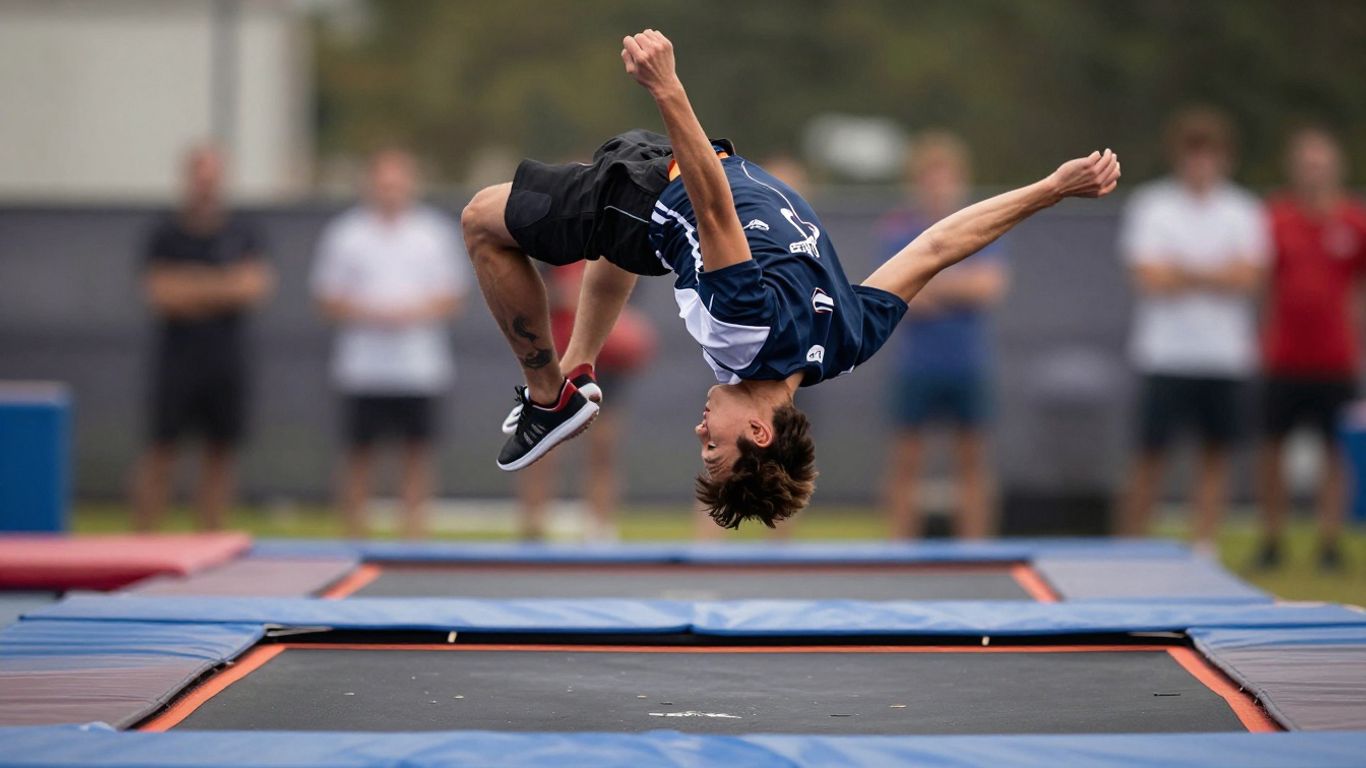
So, you've spun around and you're coming back down. Awesome! But the flip isn't really done until you're standing steady, right? This is where a lot of people get a bit shaky, and honestly, it's super important for staying safe. It's all about timing and having your body ready.
Preparing Your Legs for Impact
As you're finishing your rotation and starting to see the trampoline surface again, this is your signal to start opening up your body. Think of it like unfurling a sail. This extension is what sets you up to land on your feet instead of your back or face. It takes practice to get this timing right, so don't get discouraged if your first few landings are a bit rough. The goal is to extend your legs just as you're about to make contact with the trampoline surface. Actively looking for the ground – spotting it – helps your brain figure out where you are and adjust your body. Without it, you're basically flipping blind, making a controlled landing much harder.
Achieving a Controlled Finish
Once you've timed your extension and you're about to touch down, the next big thing is how you actually land. Landing stiff-legged is a recipe for trouble, trust me. You want to bend your knees. It's like a natural shock absorber. Imagine you're a spring. When you land, let those knees bend to soak up the bounce. This takes a lot of the force off your ankles, knees, and back. It might feel weird at first, especially when you're still a bit off-balance from the flip, but it's a habit you absolutely need to build. The goal isn't just to land the flip, but to land it with control and stability.
Practicing Consistent Landings
Getting a backflip is one thing, but being able to do it repeatedly and land it well is another. Consistency comes from repetition. You need to drill those landings. After you nail a flip, focus on the landing. Did you bend your knees? Did you stay balanced? Try to do five good landings in a row. Then try ten. It's about building that muscle memory so that the correct landing technique becomes automatic, even when you're tired or a little nervous. Don't just focus on getting the flip done; focus on sticking the landing every single time.
Here’s a quick breakdown of what to aim for:
- Spot the ground: Actively look for the trampoline surface as you come around.
- Extend your legs: Straighten your legs to prepare for contact.
- Bend your knees: Absorb the impact by bending your knees upon landing.
- Maintain balance: Keep your core engaged to stay upright.
Landing a backflip isn't just about not falling. It's about controlling your body through the entire motion, from the jump to the moment your feet are firmly on the trampoline. Each part of the landing – spotting, extending, bending, and balancing – works together. Practicing these elements separately and then combining them will make your backflip much safer and more impressive.
Seeking Expert Guidance and Safety
Understanding the Importance of Professional Help
Look, trying to learn a trampoline backflip all by yourself can be a real challenge. You might be doing something just a little bit off, and you wouldn't even know it. That's where having someone who's been there, done that, can really make a difference. A coach or even a friend who's already got the backflip down can spot those tiny things you're missing – maybe it's how you're tilting your head, or if your tuck isn't quite tight enough. These small details can seriously impact how well and how safely you land. They can also give you specific exercises to work on, which is way better than just guessing what to practice. Don't be afraid to ask for help; everyone starts somewhere, and learning from someone who knows what they're doing can save you a lot of frustration and potential bumps and bruises. They can spot you and guide you through the trickier parts, helping you progress faster and, more importantly, safer. This is a skill that benefits greatly from personalized instruction.
Utilizing Safety Mats for Practice
When you're first trying the full backflip motion, it's smart to have some extra padding around. Think of those big, soft mats you see at gymnastics gyms. Placing them around the trampoline, especially where you think you might land if things don't go perfectly, can give you a huge confidence boost. It means you can commit to the rotation a bit more without worrying about a hard impact. It's not about expecting to fail, but about creating a safer space to learn. You can even practice the tuck and rotation part while lying on a mat first, just to get the feel of the movement without the jump. This approach helps build confidence gradually.
Ensuring Trampoline Integrity
Before you even think about flipping, give your trampoline a good once-over. Make sure all the springs are attached securely and that the mat itself isn't ripped or worn thin. A damaged trampoline is a recipe for disaster. Also, be mindful of where you're jumping. Don't get too close to the edges, as this can cause an awkward backward push and lead to a bad landing. It's also a really good idea to have a clear space around the trampoline, free of any objects you could hit. A stable and well-maintained trampoline is your first line of defense.
Common issues can arise during practice. Insufficient jump height might be fixed by focusing on jumping straight up and using your arms. Slow rotation often comes down to not tucking tightly enough. Fear of going backward can be eased with drills and a spotter. Stiff landings are usually corrected by practicing landing with bent knees.
Here are some key safety points to keep in mind:
- Warm-up: Always start with a good warm-up to get your muscles ready.
- Spotter: If possible, have an experienced person watch you.
- Clear Mind: Never attempt flips if you're under the influence of drugs or medication that could affect your judgment.
- Landing Prep: As you rotate, start thinking about extending your legs to prepare for the landing.
- Head Position: Keep your head centered; don't throw it back.
Advanced Backflip Techniques
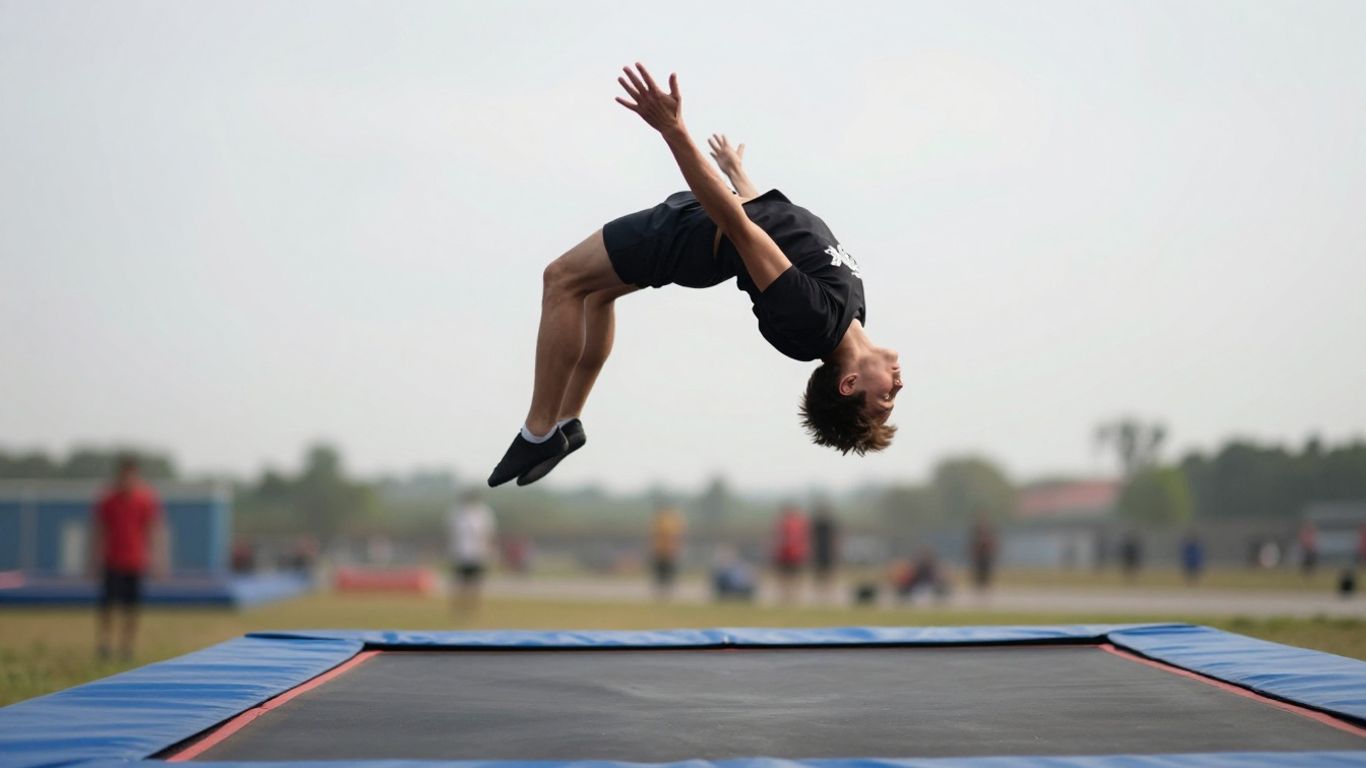
So, you've got the basic backflip down. That's awesome! But what's next? For those looking to really push their limits and add some flair, there are a couple of cool variations to explore. These aren't for beginners, mind you, but once you're comfortable with the standard flip, they can be a lot of fun.
Incorporating a One-Handed Tuck
This is where things get a bit more stylish. Instead of grabbing both knees, you'll tuck with one hand while the other arm is extended. It looks pretty neat, but it requires a good sense of balance and control.
- Initiate the flip: Start with your usual powerful jump and backward motion.
- The tuck: As you rotate, pull one knee towards your chest and grab it with the corresponding hand. Extend your other arm out to the side or slightly back.
- Maintain balance: This extended arm helps you keep your body aligned during the rotation. It's like a subtle counter-balance.
- Spot and land: Continue to spot your landing and prepare to absorb the impact.
It might feel a little weird at first, and you might over-rotate or under-rotate. That's totally normal. Just keep practicing the motion, focusing on keeping that free arm steady. It's a subtle adjustment, but it makes a big difference in how the flip looks and feels. You can find some great tips on mastering this move from professionals on trampoline tricking.
Developing Momentum Through Hip and Abdominal Power
This technique is less about a specific hand or arm movement and more about generating power from your core. Think of it as adding an extra 'oomph' to your rotation.
When you're in the air, the tighter you can pull your knees to your chest, the faster you'll spin. It's similar to how an ice skater pulls their arms in to spin faster. This is where your abs and hips come into play. You need to actively engage them to bring your legs in quickly and powerfully. It's not just about throwing your body backward; it's about using your core to drive the rotation.
Here's a quick way to think about it:
- Jump UP: Get as much height as you can. Don't just jump backward.
- Engage your core: As you leave the trampoline, actively pull your knees towards your chest using your abdominal muscles.
- Powerful hip drive: Simultaneously, use your hips to help propel your legs around faster.
The key here is to make the tuck as fast and as tight as possible. This rotational speed is what allows you to complete the flip even if your initial jump wasn't as high as you'd hoped. It's all about efficient movement in the air.
Practicing these advanced techniques takes time and patience. Don't get discouraged if you don't nail them right away. Keep working on your foundational skills, and gradually introduce these variations. Safety first, always!
You've Got This!
So, you've made it through the steps for learning a trampoline backflip. It might seem like a lot, and honestly, it is. But remember, every single person who can do a backflip started right where you are now – maybe a little nervous, maybe a bit unsure. The key is to take it slow, practice those basic jumps and tucks until they feel like second nature, and don't be afraid to use a mat when you're first trying the full flip. Patience is your best friend here. Keep at it, stay safe, and before you know it, you'll be landing those backflips and feeling pretty awesome about it. Happy bouncing!
Frequently Asked Questions
What are the most important basic skills to learn before trying a backflip?
Before you even think about flipping backward, you need to get really good at jumping on the trampoline. Practice bouncing high and controlling your jumps. Also, a 'tuck jump,' where you pull your knees to your chest in the air, is super helpful. Learning a 'pullover' is also a great idea because it feels a bit like doing a backflip.
How high do I need to jump to do a backflip safely?
You need to jump pretty high to give yourself enough time to complete the flip. The higher you go, the more time you have to spin around safely. Think about pushing off the trampoline with all your might and swinging your arms up to get that extra height. Don't rush this part; focus on getting a really good, strong jump first.
What's the best way to rotate during a backflip?
The key to rotating is the 'tuck.' Once you're in the air, pull your knees into your chest as fast and as tightly as you can, like you're trying to become a small ball. This compact shape helps you spin quickly. Try to do it as soon as you leave the trampoline. Avoid throwing your head back, as this can mess up your balance. Let the tuck do the spinning for you.
I'm scared to commit to the backflip. What should I do?
It's totally normal to feel scared! The most important thing is to commit once you decide to go for it. Hesitating in the air can lead to problems. You've practiced the jump and the tuck, so trust your body. Think of it as a leap of faith. Once you start the jump, don't stop. Pushing through that fear is a big part of learning.
How do I land safely after a backflip?
As you come around from the flip, start getting ready to land on your feet. Extend your legs and be prepared to bend your knees when you hit the trampoline. This helps absorb the impact. Keep practicing your landings until you can do them smoothly and in control. It takes time to get this part right.
When should I consider getting help from a coach or experienced person?
If you're struggling with a specific part of the backflip, or if you just want to make sure you're doing everything safely, getting help is a great idea. An experienced person can see things you might miss, like a slight head movement or timing issue. They can give you personalized tips and help you progress faster and, most importantly, safer.


0 comments