











Thinking about getting into trampoline tricks? It might seem a bit daunting at first, but with the right approach, you can go from basic bounces to some seriously cool tricks on trampoline. This guide is all about helping you get started, covering the moves you need to know, how to stay safe, and how to build up your confidence. We'll break down the steps so you can start impressing yourself and anyone watching with your awesome trampoline skills.
Key Takeaways
- Start with the basics like straight, tuck, straddle, and split jumps before moving on to more complex moves.
- Progress gradually to advanced tricks such as pike jumps, wolf jumps, and eventually flips and twists.
- Always prioritize safety by warming up properly, using protective gear if needed, and learning safe landing techniques.
- Build confidence through mental practice and by mastering skills step-by-step, overcoming any fear of trying new things.
- Address common challenges with troubleshooting tips for aerials, back handsprings, and improving your overall jump power.
Mastering Basic Jumps For Cool Tricks on Trampoline
Alright, let's get down to business. Before you're flipping and twisting like a pro, you gotta get the basics down. Think of these as your building blocks. Without a solid foundation, those epic jumps will just be… well, wobbly.
The Foundational Straight Jump
This is where everyone starts. It seems simple, right? Just jump up. But there's a bit more to it if you want to do it right and set yourself up for cooler stuff later. You want to jump straight up, keeping your body tight and your legs together. Imagine a string pulling you up from the top of your head. Keep your arms by your sides or swing them up as you jump for a little extra boost. The goal is to land in the same spot you took off, with control.
Here's a quick breakdown:
- Takeoff: Bend your knees slightly, then push off powerfully through the balls of your feet.
- In the Air: Keep your body straight and tense. Look forward.
- Landing: Absorb the impact by bending your knees. Try to land softly.
Tuck Jumps: Mastering the Tuck
Once you've got the straight jump down, it's time to learn the tuck. This is super important for many advanced tricks. A tuck jump means bringing your knees up to your chest in mid-air and holding them there. It makes you smaller and can help you spin faster later on.
To do a tuck jump:
- Start with a good straight jump.
- At the peak of your jump, pull your knees up towards your chest. Grab your shins or the back of your thighs to hold the tuck.
- Keep your head up and try to stay balanced.
- As you start to come down, release your legs and prepare for a controlled landing.
It might feel awkward at first, and you might not get a very tight tuck. That's totally normal. Just keep practicing pulling those knees up.
Exploring Straddle and Split Jumps
These jumps add a bit more flair and are great for developing body control. A straddle jump involves kicking your legs out to the sides in the air, keeping your body relatively straight. A split jump is similar, but you kick one leg forward and the other backward, aiming to get your legs as close to a 180-degree split as possible.
- Straddle Jump: As you jump, swing your arms up and kick your legs out to the sides. Try to keep your back straight. Bring your legs back together before you land.
- Split Jump: This one requires some flexibility. As you jump, kick one leg forward and the other backward. You can try to grab your front shin for balance. Again, bring your legs together before landing.
These might feel a little harder to control than a tuck, especially the split jump. Don't worry if your split isn't perfect right away. Focus on the motion and getting your legs out there with some power.
Getting these basic jumps right is more than just looking good; it's about building the muscle memory and control you'll need for everything else. Take your time, focus on form, and don't rush into the fancy stuff. Your future trampoline self will thank you.
Progressing to Advanced Trampoline Tricks
Alright, you've got the basics down. You can jump, tuck, maybe even do a straddle or split in the air. That's awesome! But now it's time to really start having some fun and pushing your limits. This is where things get exciting, moving from simple bounces to actual tricks that will make you feel like a pro.
The Pike Jump and Wolf Jump
These jumps are like the next step up from a tuck. For a pike jump, you're aiming to bring your legs up straight in front of you while you're in the air, making a sort of "V" shape with your body. It takes good core strength and control. The wolf jump is a bit different; you bring your legs up high, almost like a pike, but then bend one leg underneath you. It looks pretty cool and is a good way to work on body awareness.
Here's a quick look at how they differ:
| Jump Type | Leg Position in Air |
|---|---|
| Pike Jump | Legs straight out in front, body forms a "V" shape. |
| Wolf Jump | Legs high, one bent underneath towards the bottom. |
Adding Rotations: Turns and Twists
Once you're comfortable with the jumps themselves, it's time to add some spin. This is where you start turning your body in the air. You can add a half turn (180 degrees) or a full turn (360 degrees) to many of the jumps you already know. For example, a straight jump with a full turn is a great way to build up to more complex moves. It's all about spotting your landing and controlling your rotation. Start with half turns and work your way up. It might feel a bit wobbly at first, but with practice, you'll get the hang of it.
- Straight Jump with 1/1 Turn: A basic jump with a full 360-degree spin.
- Tuck Jump with 1/1 Turn: Adding a spin to your tuck jump.
- Straddle Jump with 1/2 Turn: Combining a straddle with a 180-degree spin.
- Wolf Jump with 1/2 Turn: A wolf jump with a half spin.
Introducing Aerials and Flips
This is where things really start to feel like advanced acrobatics. Aerials, like front and side aerials, involve flipping your body without using your hands to push off. They require a lot of courage and a good understanding of body rotation. Flips, such as back tucks and front tucks, are the next big step. Mastering a back tuck is often a goal for many beginners, and it opens the door to even more impressive skills. Remember, these moves take time and patience. Don't rush into them. Make sure you're comfortable with the preparatory jumps and twists first.
Learning these advanced tricks isn't just about physical ability; it's also about building mental confidence. Breaking down each move into smaller steps and practicing them consistently will help you overcome any fear and achieve your goals.
Safety First When Learning Cool Tricks on Trampoline
Alright, let's talk about staying safe while you're trying to get awesome at trampoline tricks. It might seem like all fun and games, but trampolines can be pretty unforgiving if you're not careful. The most important thing is to know your limits and not push yourself too hard, too fast.
Warm-Up Routines for Trampoline
Before you even think about doing a flip, you gotta get your body ready. Jumping around cold is a recipe for pulled muscles or worse. A good warm-up gets your blood flowing and your muscles prepped.
- Light Cardio: Start with a few minutes of jogging in place, jumping jacks, or high knees. Just get your heart rate up a bit.
- Dynamic Stretching: Think leg swings (forward, backward, and side-to-side), arm circles, and torso twists. These get your joints moving through their range of motion.
- Trampoline Basics: Spend a few minutes just doing basic straight jumps, tuck jumps, and maybe some controlled bounces. This helps you get a feel for the trampoline again and wakes up those jumping muscles.
Protective Gear Essentials
While you might not need a full suit of armor, some gear can make a big difference. It's not about looking like a pro; it's about protecting yourself.
- Socks with Grip: Bare feet can slip, and regular socks can be slick too. Look for socks designed for trampolines or gymnastics that have grippy soles.
- Athletic Clothing: Wear something comfortable that you can move freely in. Avoid baggy clothes that could get caught on something. Shorts or leggings are usually a good bet.
- Optional Padding: For some of the riskier moves, especially when you're first learning, consider knee pads or elbow pads. They won't stop every injury, but they can cushion a fall.
Spotting and Safe Landing Techniques
Learning from others and knowing how to land are super important. Don't be afraid to ask for help or take it slow.
- Spotting: If you have a friend or coach who knows what they're doing, have them spot you, especially when you're trying new flips. They can help guide you and prevent bad falls.
- Controlled Landings: Always aim to land in a controlled manner. Try to land with your knees slightly bent to absorb the impact. If you feel like you're going to land awkwardly, try to roll out of it if possible.
- Know When to Stop: If you're tired, frustrated, or feeling sore, it's time to take a break. Pushing through exhaustion is when mistakes happen, and mistakes on a trampoline can lead to injuries.
Trampolines are awesome for building confidence and learning cool moves, but they demand respect. Always check the trampoline itself for any tears or loose springs before you start. A little bit of caution goes a long way in keeping your trampoline adventures fun and injury-free.
Building Confidence for Bigger Jumps
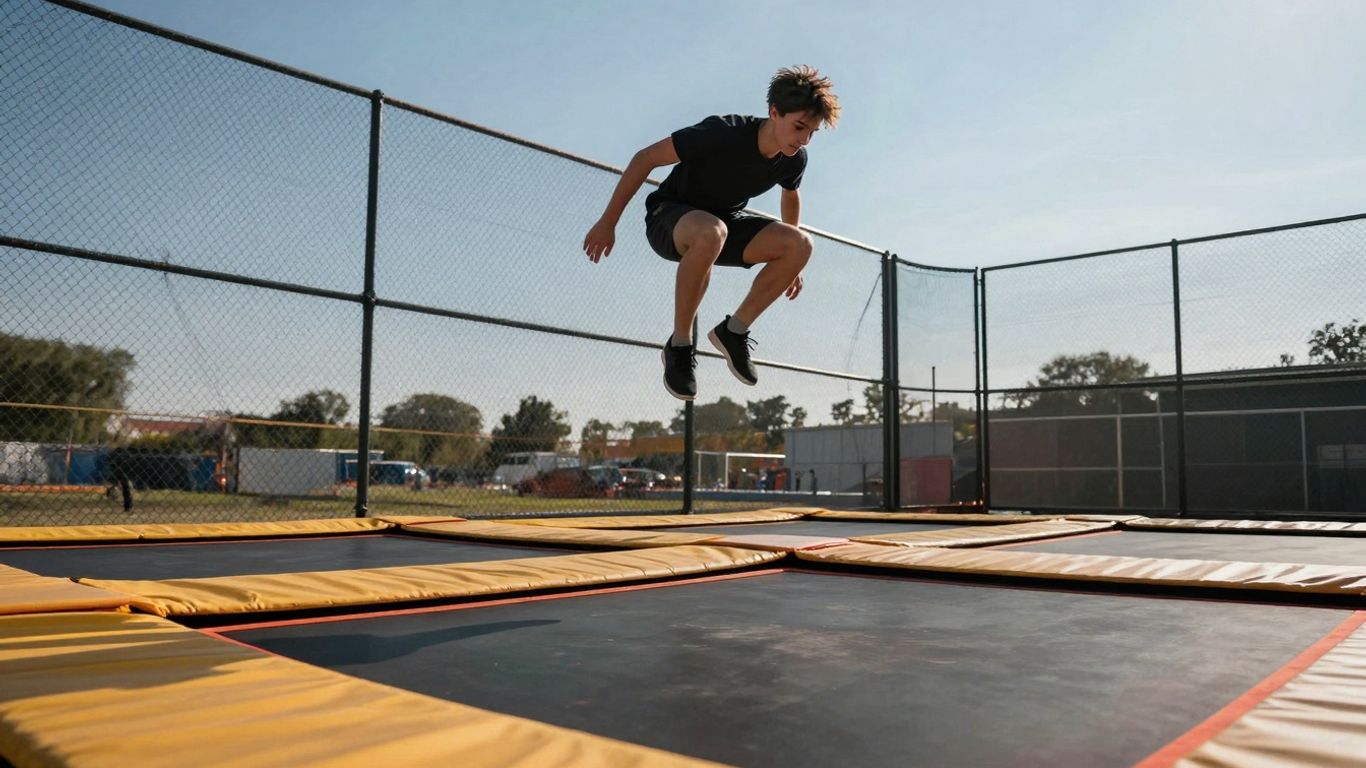
So, you've been practicing those basic jumps and maybe even a few simple tricks. That's awesome! But now you're looking at the bigger stuff, the flips and twists, and feeling a little... well, nervous. Totally normal. It's like looking at a really tall slide when you were a kid; it seems way scarier from the ground than it probably is once you're up there. The key here is building up that mental toughness and physical readiness.
Overcoming the Fear of Flips
Fear is a big one, right? It's your brain's way of saying, 'Hey, this is new and potentially risky, be careful!' But we can work with that. Instead of just jumping straight into a backflip, think about breaking it down. Start with drills that mimic the motion without the full commitment. Things like forward and backward rolls on the ground are a great starting point. They help your body get used to the feeling of rotating. You can also practice trampoline-friendly rolls on the trampoline itself, which mimic the flipping motion without the full risk. This gradual exposure helps desensitize you to the movement and builds trust in your body's ability to handle it. Remember, safely mastering trampoline flips is a process.
Mental Rehearsal and Visualization
This is where your brain becomes your best training buddy. Before you even get on the trampoline, close your eyes and picture yourself doing the trick perfectly. Imagine the feeling of the jump, the rotation, and the landing. See yourself landing it smoothly and confidently. This mental practice primes your mind and body for the actual execution. It's like rehearsing a play before opening night; the more you run through it in your head, the more natural it feels when it's time to perform.
Progressive Skill Development
Don't try to run before you can walk, or in this case, flip before you can jump high. Building confidence comes from consistent, small wins. Focus on mastering one skill before moving to the next. Here’s a way to think about it:
- Master the Basics: Ensure your straight jumps, tuck jumps, and straddle jumps are solid. You need good height and control.
- Add Simple Rotations: Practice 180-degree turns in the air. This gets you used to spinning without a full flip.
- Introduce Controlled Flips: Work on drills that simulate the flip motion, like a back handspring prep or a front flip drill. Focus on getting the rotation and spotting your landing.
- Combine Skills: Once you're comfortable with individual elements, start putting them together. A jump into a twist, or a controlled flip into a rebound.
Building confidence isn't about eliminating fear entirely; it's about learning to perform despite it. Each successful attempt, no matter how small, chips away at that fear and builds a stronger belief in your abilities. Celebrate those small victories!
Common Challenges and Solutions for Cool Tricks on Trampoline
So, you've been practicing those cool trampoline tricks, and maybe you've hit a few bumps in the road. That's totally normal! Learning new skills, especially ones that involve flipping and twisting, can be tricky. Let's break down some common problems and figure out how to get past them.
Troubleshooting Aerials
Aerials, like the front or side aerial, can be a bit intimidating because they involve going upside down without your hands touching the trampoline. A big hurdle for many is the fear of not landing on their feet or putting their hands down when they shouldn't. Another issue is not getting enough height or rotation to complete the move.
- Lack of Height: Focus on a strong, controlled bounce leading into the aerial. Make sure you're using your arms to help lift you up.
- Insufficient Rotation: This often comes down to not committing to the flip. Try practicing the motion on the ground first, or use a soft mat. Tucking your knees tighter can also speed up your rotation.
- Fear of Going Over: Visualize the movement. Break it down into smaller steps. Practice with a spotter if possible, or start with drills that mimic the aerial motion but feel safer.
Sometimes, the biggest challenge isn't the physical move itself, but the mental block. Pushing past that fear, even in small steps, is key to progress. Don't be afraid to try drills that build confidence before attempting the full trick.
Mastering Back Handsprings
Ah, the back handspring. It's a classic, but it trips up a lot of people. The fear of going backward is real, and getting the right technique for the jump, the arch, and the landing can be tough.
- Fear of Going Backwards: Start with drills that get you comfortable with backward momentum. A back roll is a good start, followed by practicing on a slight incline or with a spotter. Using a trampoline with a soft mat at the end can also help.
- Not Enough Power/Height: Your set (the initial jump) is super important. You need to jump UP, not back. Use your arms to drive upwards, and then push off the trampoline with force.
- Incorrect Hand Placement/Landing: Practice the hand placement and the push-off from your hands. Many people struggle with getting their feet back under them. Drills that focus on snapping your feet around quickly after pushing off your hands are helpful.
Here's a quick look at common back handspring issues:
| Problem | Solution |
|---|---|
| Fear of going backward | Practice drills with backward momentum, use a spotter, or incline. |
| Weak set/lack of height | Focus on jumping UP, use arm drive. |
| Poor hand placement/landing | Practice hand placement drills, focus on snapping feet around quickly. |
| Not enough rotation | Tuck knees tighter, practice with a spotter, or on a softer surface. |
Improving Jump Height and Power
No matter what trick you're trying, having a higher and more powerful bounce on the trampoline makes everything easier. It gives you more time in the air to complete rotations and makes landings softer.
- Strengthen Your Legs: Exercises like squats, lunges, and calf raises can build the muscle needed for explosive jumps. Plyometric exercises are also great.
- Perfect Your Technique: It's not just about jumping hard; it's about jumping smart. Focus on a controlled bounce, using your whole body. Keep your core tight and your arms swinging rhythmically to add momentum.
- Practice Consistency: The more you practice your basic bounce, the more powerful and controlled it will become. Try to maintain a consistent rhythm and height with each jump.
Remember, every trick has its challenges, but with patience and the right approach, you can overcome them and keep progressing on your trampoline journey.
Keep Bouncing!
So there you have it! We've gone over some cool moves you can try on the trampoline. Remember, starting out might feel a little wobbly, and that's totally fine. Just take your time, practice the basics, and don't be afraid to try new things. Falling is part of learning, so just get back up and give it another go. Keep practicing, stay safe, and soon you'll be doing some seriously awesome jumps. Have fun out there!
Frequently Asked Questions
What's the easiest way to start learning cool trampoline tricks?
Start with the basics! Get really good at just jumping straight up and down, making sure you land softly. Then, try bringing your knees up to your chest (that's a tuck jump) and spreading your legs out to the sides. Mastering these simple moves will build your confidence and get your body ready for more exciting tricks.
I'm scared to try flips. How can I get over that fear?
It's totally normal to be a little scared of flips! The best way to get over it is to take it slow. First, practice in a safe place, like with a trampoline and a soft mat, or even with a friend spotting you. Visualize yourself doing the flip perfectly. Sometimes, just knowing you have someone there to help you if you wobble can make a huge difference.
How high should I jump to do tricks like a backflip?
Getting enough height is super important for tricks, especially flips! Focus on pushing off the trampoline with your legs and arms. Think about jumping UP, not just forward. Practicing drills that make you jump higher, like tuck jumps, will help build the power you need for those bigger, cooler moves.
What's the difference between a pike jump and a wolf jump?
Both are cool ways to bend your body in the air! In a pike jump, you keep your legs straight and try to touch them with your hands while they're out in front of you. A wolf jump is a bit different; you bring one leg up almost straight, but the other leg bends underneath you. They look awesome when you nail them!
I can do some tricks on the trampoline, but I want to try them on the ground. What's the best way to transition?
That's a great goal! When you move from the trampoline to the ground, things feel different because you don't get as much bounce. Start by practicing on softer surfaces like mats or even grass. Focus on getting the same body shape and timing you use on the trampoline. Having a coach or experienced friend help you out is a really good idea.
How do I make sure I don't get hurt while learning new tricks?
Safety is the most important thing! Always warm up your body before you start jumping to get your muscles ready. Wear comfortable clothes that let you move freely. If you're trying something new and difficult, it's smart to have someone watch you, especially for flips. And remember, if you feel tired or sore, it's okay to take a break.


0 comments