









Finding a good workout routine that fits your life can be tough, especially when you're a woman. There's a lot of info out there, but not all of it really speaks to what we need. This guide is here to help you figure out how to get a great workout at home for women, no matter your fitness level or how much time you have. We'll cover everything from getting started to making sure you keep seeing results, all from the comfort of your own space.
Key Takeaways
- A workout at home for women should consider unique needs and goals, blending strength, cardio, and flexibility.
- Start with a warm-up to prepare your body and a cool-down to help it recover.
- Bodyweight exercises are a great starting point for home workouts, requiring no equipment.
- Progressive overload is key for building muscle; gradually make exercises harder over time.
- Consistency, proper nutrition, and adequate rest are vital for seeing and maintaining results from your home workout.
Getting Started With Your Workout At Home For Women
Starting a fitness routine at home can feel like a big step, but it doesn't have to be complicated. The most important thing is to just begin. You don't need fancy equipment or a gym membership to get a great workout. Many women find that a home-based routine fits their busy lives much better than heading to a gym. It's all about finding what works for you and sticking with it.
Understanding Why A Women's Workout Plan Matters
It's true, women's bodies have unique needs and respond differently to exercise than men's. A workout plan designed specifically for women often considers things like hormonal cycles, metabolism, and common fitness goals such as building lean muscle or improving bone density. Focusing on a plan that acknowledges these differences can lead to better results and a more enjoyable fitness experience. A well-rounded routine for women typically includes a mix of strength training, cardio, and flexibility work. This approach helps build a strong, capable body and boosts overall health.
Setting Realistic Fitness Goals
When you're starting out, it's easy to get discouraged if you aim too high too fast. Instead, try setting small, achievable goals. Maybe your first goal is to complete three workouts a week for a month, or to be able to do five push-ups without stopping. Once you hit those, you can set new ones. This gradual progress helps build confidence and momentum. Think about what you want to achieve, whether it's more energy, better sleep, or just feeling stronger. Having clear goals, like those in a free 30-day beginner plan, can keep you motivated.
The Importance of Warming Up and Cooling Down
Don't skip the warm-up and cool-down! A good warm-up gets your blood flowing and your muscles ready for exercise, which can help prevent injuries. It doesn't need to be long, just five to ten minutes of light movement like marching in place, arm circles, or dynamic stretches. After your workout, a cool-down helps your heart rate return to normal and can improve flexibility. Think of it as preparing your body for work and then helping it relax afterward.
Here’s a simple breakdown:
- Warm-up (5-10 minutes): Light cardio (jogging in place, jumping jacks) followed by dynamic stretches (leg swings, arm circles).
- Workout: Your main routine.
- Cool-down (5-10 minutes): Static stretches (holding stretches for 20-30 seconds) for major muscle groups.
Treating your body with care before and after exercise is just as important as the workout itself. It's about setting yourself up for success and minimizing the risk of strain or soreness.
Effective Bodyweight Routines For Home
Beginner Bodyweight Exercises
Getting started with bodyweight exercises at home is totally doable, even if you're new to fitness. You don't need fancy equipment, just a little space and the willingness to move. Think of these as your foundational moves. We're talking about exercises that build a solid base for strength and endurance. A good starting point is to aim for two sets of 10 to 15 repetitions for each exercise, with a short break of about 30 seconds to a minute in between. This kind of routine can take around 15 to 20 minutes, which is pretty manageable.
Here are a few to get you going:
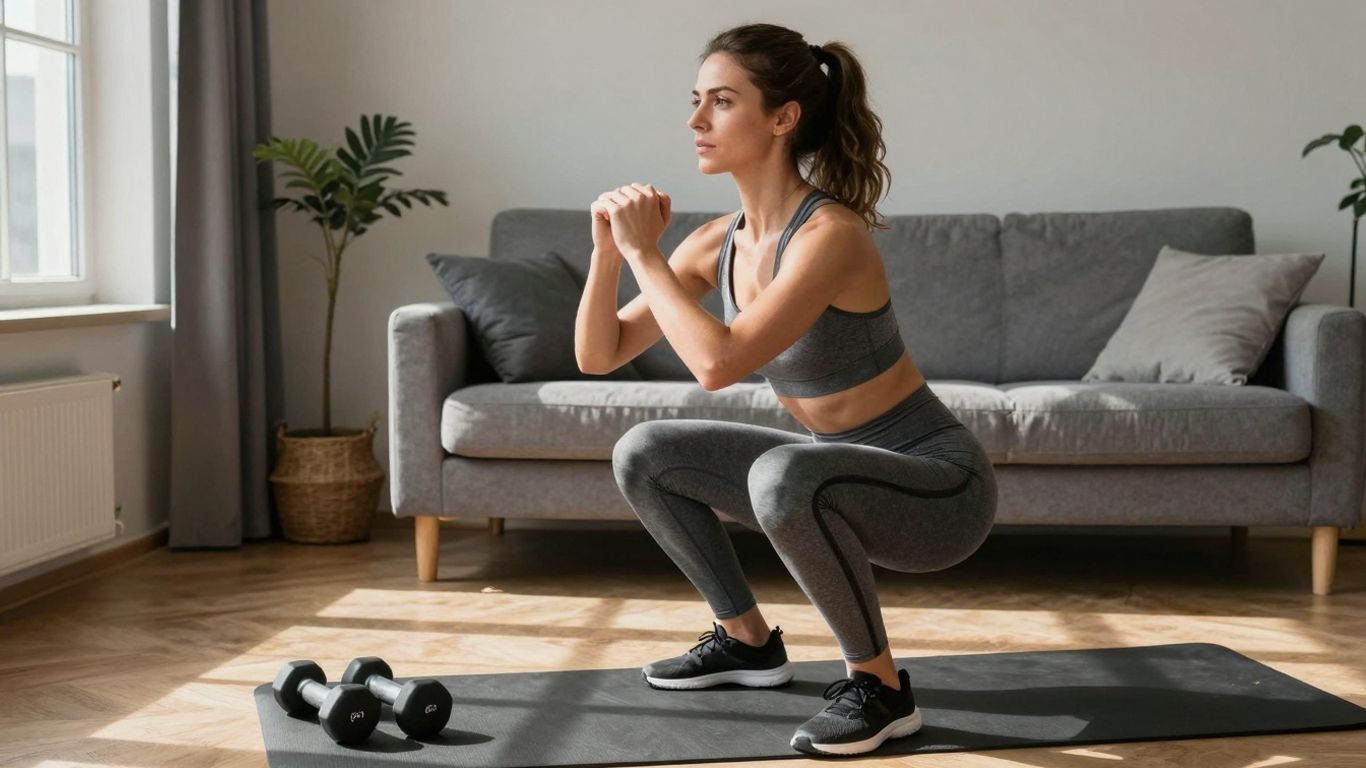
- Squats: Stand with your feet shoulder-width apart. Lower your hips as if you're sitting back into a chair, keeping your chest up and back straight. Push through your heels to return to standing. Using a chair for support initially can help you nail the form.
- Knee Push-ups: Start on your hands and knees. Lower your chest towards the floor, keeping your back straight. Push back up. This is a great way to build upper body strength before tackling full push-ups.
- Glute Bridges: Lie on your back with your knees bent and feet flat on the floor. Lift your hips off the ground, squeezing your glutes at the top. Slowly lower back down. This really wakes up your backside and core.
Remember, the goal here is to get comfortable with the movements and build a consistent habit. Don't worry about doing a ton of reps right away. Focus on good form. A recent study suggests that performing a five-minute daily routine of eccentric bodyweight exercises can lead to significant improvements in strength, flexibility, and cardiovascular fitness. This short, consistent workout offers a convenient way to boost overall physical well-being. This short routine is a fantastic way to start your day.
Intermediate Bodyweight Training
Once you've got the hang of the basics, it's time to step it up a notch. Intermediate bodyweight training involves making the exercises a bit more challenging. This could mean increasing the number of reps or sets, reducing rest times, or trying slightly harder variations of the moves. The key is to keep challenging your muscles so they continue to adapt and get stronger. You might find yourself doing three circuits of exercises, with maybe 10-20 reps each, and shorter rest periods.
Consider these progressions:
- Full Push-ups: If knee push-ups are feeling easy, try moving to standard push-ups. Keep your body in a straight line from head to heels.
- Walking Lunges: Instead of stationary lunges, step forward into a lunge, then bring your back leg forward to meet your front leg before stepping out into the next lunge. This adds a dynamic element.
- Plank Variations: Hold a standard plank for longer, or try side planks to work different core muscles.
Advanced Bodyweight Challenges
Ready to really push yourself? Advanced bodyweight training is where you get creative and tackle some serious challenges. This level is all about mastering more complex movements and pushing your strength and endurance to new limits. Think single-leg squats, handstand push-ups (with proper progression, of course!), or plyometric exercises like jump squats. These advanced moves require a good amount of strength, balance, and coordination. It's about finding exercises that are tough enough that you can only do a few more reps, really pushing close to failure. This is how you build serious muscle and strength without weights. If you're looking for ways to build your own routines, checking out the 42 best bodyweight exercises can give you tons of ideas for scaling up.
Incorporating Strength Training At Home
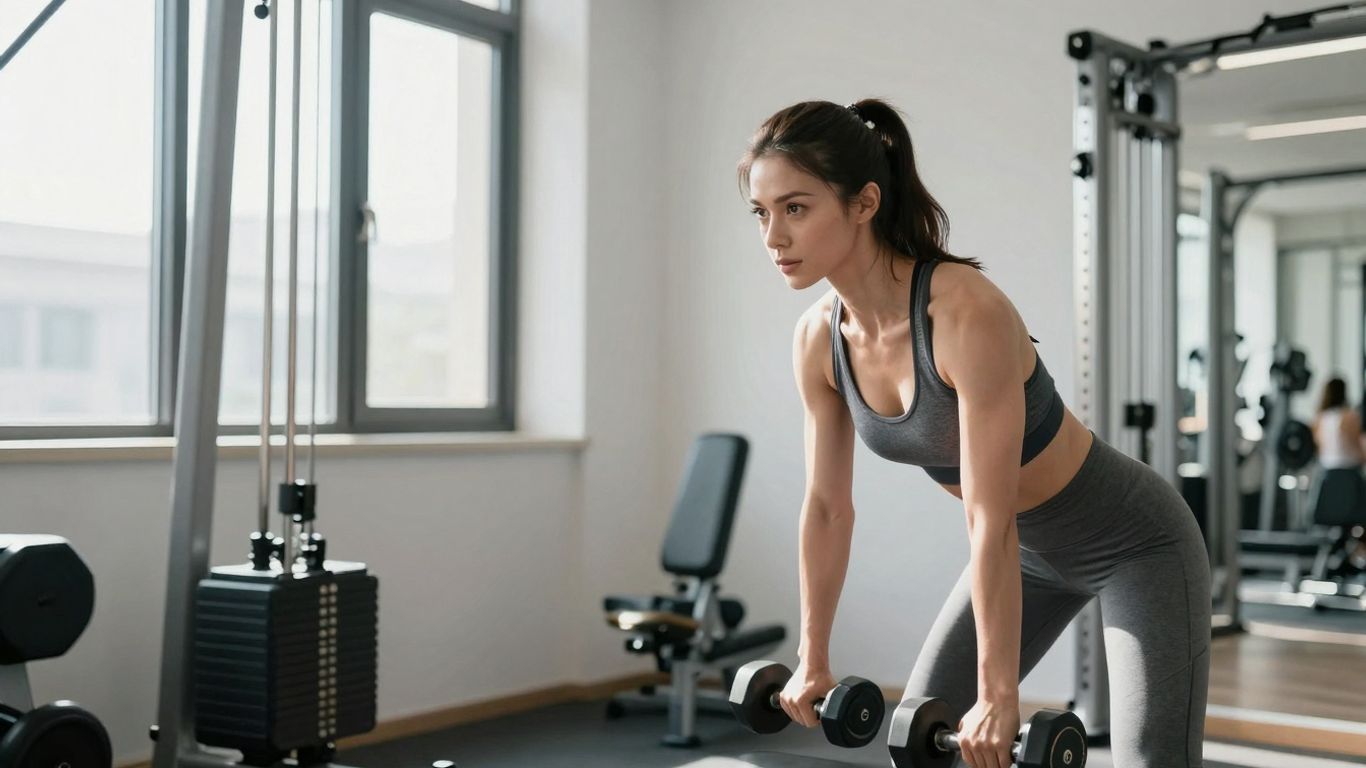
So, you want to get stronger without leaving your living room? Totally doable! Building muscle at home is absolutely possible, and it doesn't always mean you need a fancy home gym setup. The key is to be smart about how you train and to focus on progressive overload. This means gradually making your workouts more challenging over time. You can do this by increasing the number of repetitions you do, making the exercises harder, or reducing rest times. It's all about pushing your muscles just enough so they have to adapt and grow stronger.
Building Muscle With Home Workouts
Forget the idea that you need heavy weights to build muscle. Your own body weight is a fantastic tool! Exercises like squats, lunges, push-ups (on your knees or toes), and planks work multiple muscle groups at once. To really build muscle, aim to perform exercises until you feel like you can only do one or two more reps. This is called training close to failure, and it signals your muscles to get bigger and stronger. You can also increase the time you spend holding a position, like in a plank, or slow down the movement, especially the lowering phase of an exercise, to increase time under tension. This makes your muscles work harder even with the same number of reps. For a full-body strength workout that can be done at home with no weights, check out this 20-minute routine.
Progressive Overload Strategies
To keep seeing results, you can't just do the same thing forever. Progressive overload is your best friend here. Here are a few ways to implement it:
- Increase Repetitions: If you can do 10 squats easily, try for 12 or 15 next time.
- More Difficult Variations: Move from knee push-ups to regular push-ups, or from regular squats to jump squats.
- Add Sets: If you're doing 3 sets of an exercise, try adding a 4th set.
- Decrease Rest: Shorten the rest time between sets. This keeps your heart rate up and challenges your muscles more.
- Increase Time Under Tension: Perform the lowering (eccentric) part of an exercise more slowly. For example, take 3-4 seconds to lower yourself in a push-up.
Utilizing Minimal Equipment for Strength
While bodyweight is great, a few simple pieces of equipment can really boost your strength training. Resistance bands are super versatile and cheap. You can use them for added resistance on squats, for rows, or for shoulder exercises. A sturdy chair can be used for triceps dips or elevated push-ups. Even household items like water bottles or cans of food can add a little extra weight to exercises like bicep curls or lunges. If you're looking to invest in just one piece of equipment, a kettlebell offers a lot of bang for your buck, allowing for swings, squats, and presses. The goal is to find ways to make exercises harder, whether it's with your own body or with a little help from some basic gear.
Building strength at home is about consistency and smart progression. Don't get discouraged if you can't lift heavy weights. Focus on mastering the movements and gradually increasing the challenge. Your body is capable of amazing things, even without a gym membership.
Cardiovascular Workouts You Can Do At Home
Cardio is super important, no matter where you're working out. It gets your heart pumping and helps your body handle the stress of tougher exercises. Plus, it's a great way to burn extra calories. If you're new to cardio, just start slow and build up. Aim for about 20 to 30 minutes of something you actually enjoy, whether that's running, cycling, or even just a brisk walk. A good way to begin is with interval training: push yourself hard for about 30 seconds, then take a minute or two to recover by walking. Keep doing that for around 20 minutes. The idea is to get your heart rate up, then bring it back down to recover. Over time, you'll be able to shorten the recovery periods and keep your heart rate up for longer.
High-Intensity Interval Training (HIIT) at Home
HIIT is a fantastic way to get a lot of bang for your buck in a short amount of time. It involves short bursts of really intense exercise followed by brief recovery periods. This method is super effective for improving cardiovascular fitness and burning calories. You don't need any fancy equipment to do it either. Think jumping jacks, burpees, high knees, and mountain climbers. You can string these together into a circuit. For example, you could do 45 seconds of burpees, followed by 15 seconds of rest, then move on to 45 seconds of high knees with 15 seconds of rest, and so on. The key is to push yourself hard during the work intervals.
Quick Cardio Bursts for Busy Schedules
Life gets hectic, right? Sometimes finding a solid 30 minutes for a workout feels impossible. That's where quick cardio bursts come in handy. These are short, intense sessions that you can squeeze in between other tasks. Even 5-10 minutes can make a difference. Try doing a set of jumping jacks for a minute, followed by 30 seconds of rest, then move into high knees for a minute, rest, and then do some squat jumps for a minute. Repeat this circuit a few times. These little bursts add up and keep your metabolism humming throughout the day. You can find great bodyweight exercises for a quick fitness boost online.
Stair Climbing for Cardiovascular Health
If you have stairs in your home, you've got a built-in cardio machine! Stair climbing is a seriously effective way to boost your heart health and strengthen your legs. You can do it in several ways. Start by simply walking up and down the stairs at a steady pace for 10-15 minutes. As you get fitter, you can increase the duration or the intensity. Try taking two steps at a time for an extra challenge, or do quick bursts of stair climbing followed by short rests. It's a simple yet powerful way to get your heart rate up and build endurance without leaving your house.
Remember, consistency is more important than intensity when you're starting out. Even short, regular cardio sessions will yield better results than occasional, super-long workouts. Find what you enjoy and stick with it.
Flexibility and Mind-Body Workouts
Yoga and Pilates for Women
Yoga and Pilates are fantastic for building core strength, improving posture, and increasing flexibility. They're also great for stress relief, which is a big plus when you're juggling everything life throws at you. You don't need fancy equipment to get started; a mat is usually all you need. Many online classes cater specifically to women, focusing on areas like pelvic floor health and gentle strengthening. These practices help connect your mind and body, making you more aware of how you move and feel.
Active Recovery and Stretching Routines
Active recovery days are just as important as your intense workout days. Instead of just sitting around, engaging in light activities like stretching or a gentle yoga flow helps your muscles repair and reduces soreness. Think of it as giving your body a little spa treatment. Regular stretching can also help prevent injuries and improve your range of motion over time. It doesn't have to take long; even 10-15 minutes a few times a week can make a noticeable difference.
Here's a simple stretching routine you can do:
- Hamstring Stretch: Sit on the floor with one leg extended and the other bent. Reach towards your toes on the extended leg. Hold for 30 seconds, then switch sides.
- Quad Stretch: Stand tall and hold onto a wall for balance. Grab one ankle and gently pull your heel towards your glutes. Keep your knees close together. Hold for 30 seconds, then switch legs.
- Triceps Stretch: Reach one arm overhead, bend your elbow, and let your hand fall behind your head. Use your other hand to gently push down on the bent elbow. Hold for 30 seconds, then switch arms.
- Chest Opener: Stand in a doorway and place your forearms on the frame, elbows bent at 90 degrees. Lean forward gently until you feel a stretch across your chest. Hold for 30 seconds.
Don't underestimate the power of simply moving your body gently on days you're not doing a high-intensity workout. It aids in muscle repair, boosts circulation, and can significantly improve your overall sense of well-being. It's about listening to your body and giving it what it needs to recover and get stronger.
Maximizing Your Home Workout Results
So you've been putting in the work with your home workouts, which is awesome! But how do you make sure you're getting the most bang for your buck? It's not just about showing up; it's about being smart with your approach. Let's talk about how to really dial in those results.
The Role of Nutrition in Your Fitness Journey
Look, you can't out-train a bad diet. It's a saying you hear a lot, and for good reason. What you eat directly fuels your workouts and helps your body recover and build muscle. Think of your food as the building blocks for your progress. Focusing on whole, unprocessed foods is a solid start. You want a good mix of lean protein, complex carbs, and healthy fats. This isn't about strict diets; it's about making conscious choices that support your fitness goals.
Fueling your body properly is just as important as the exercises you do. It's the difference between feeling sluggish and having the energy to push through your toughest sets. Don't underestimate the power of a well-balanced plate.
Tracking Progress Beyond the Scale
The number on the scale can be a bit of a rollercoaster, right? It fluctuates for all sorts of reasons that have nothing to do with your fitness. Instead of obsessing over it, try looking at other indicators of progress. Are your clothes fitting better? Do you have more energy throughout the day? Can you lift more weight or do more reps than you could last week? These are all fantastic signs that you're moving in the right direction. Keeping a workout journal can be super helpful here. Jot down your exercises, sets, reps, and how you felt. It's a great way to see how far you've come.
Here's a simple way to track some key metrics:
| Metric | Last Week | This Week | Notes |
|---|---|---|---|
| Push-ups | 8 | 10 | Felt easier this time |
| Squat Reps (3 sets) | 12 | 15 | Increased weight slightly |
| Energy Level (1-5) | 3 | 4 | Felt more motivated during workouts |
| Sleep Quality (1-5) | 3 | 4 | Woke up feeling more rested |
Prioritizing Rest and Recovery
This is where a lot of people drop the ball. Your muscles don't actually grow stronger during your workout; they grow stronger while you're resting. Pushing yourself hard every single day without giving your body a chance to repair itself can lead to burnout and even injury. Make sure you're getting enough quality sleep – aim for 7-9 hours. Active recovery days, like gentle stretching or a light walk, can also be really beneficial. Listen to your body; if you're feeling completely wiped out, it's probably time for a rest day.
Staying Consistent With Your Routine
Consistency is king, or queen, in this case! It's way better to do a moderate workout consistently than to do an intense workout sporadically. Life happens, we get it. Some days you'll have less time, or maybe you're just not feeling it. On those days, aim for a shorter workout or a less intense version. The goal is to build a habit that sticks. Find ways to make your workouts enjoyable, whether it's listening to your favorite music, working out with a friend (virtually or in person), or trying new routines to keep things fresh. Small, consistent efforts add up to big results over time.
Wrapping It Up
So, there you have it. Getting a good workout in doesn't mean you need a fancy gym membership or a whole lot of equipment. You can totally get stronger and feel better right from your living room. Remember, the most important thing is just to start and keep going. Pick a routine that feels right for you, listen to your body, and don't get discouraged if you miss a day. Every little bit counts, and you'll start noticing the difference before you know it. You've got this!
Frequently Asked Questions
Why is it important for women to have their own workout plans?
Women's bodies and goals are unique. Workout plans designed specifically for women consider things like hormones and metabolism, helping them build strength, boost energy, and feel great. It's not just about cardio anymore; strength training is super important for women too!
Can I really build muscle by working out at home without weights?
Absolutely! You can definitely build muscle at home using just your body weight. The key is to make your workouts harder over time by doing more reps, trying tougher versions of exercises (like moving from knee push-ups to regular push-ups), or slowing down your movements.
How can I lose weight with home workouts?
Home workouts can be great for weight loss, but it's also important to pay attention to what you eat. Think of it like this: you can't out-exercise a bad diet. So, combine your home workouts with healthy eating habits for the best results.
What's the best way to start if I'm new to working out at home?
Start simple with bodyweight exercises like squats, lunges, and push-ups. Make sure to warm up your body for about five minutes before you start and cool down afterward. You can find tons of easy-to-follow videos online for beginners.
I have a very busy schedule. Can I still get a good workout?
Yes! Even with a busy schedule, you can get effective workouts. Try high-intensity interval training (HIIT) like the 7-minute workout or Tabata, which pack a punch in a short time. Even a quick 10-15 minute stair climbing session or a bodyweight circuit can make a difference.
How do I know if I'm progressing with my home workouts?
Don't just focus on the number on the scale. Track how you feel – do you have more energy? Are you sleeping better? Can you do more reps or harder exercises than before? These are all great signs that you're getting stronger and fitter.


0 comments