












Thinking about getting fit without leaving your house? It's totally doable! You don't need a fancy gym or a lot of equipment to build a solid daily exercise routine at home. The trick is to figure out what works for you, put it together smartly, and then actually stick with it. We'll walk through how to set up a routine that fits your life and helps you see real changes, all from the comfort of your own place. Let's get started on making that daily exercise routine at home a success.
Key Takeaways
- Figure out where you're starting from, what you want to achieve, and how much time you realistically have before you plan your daily exercise routine at home.
- Pick exercises that work your main muscle groups and include some cardio. Most importantly, choose movements you actually enjoy so you'll keep doing them.
- Structure your workouts with appropriate sets and reps, and don't forget to rest between sets and take days off to recover.
- To get more out of your workouts, look into techniques like supersets or circuit training, and focus on compound movements that work multiple muscles at once.
- Make your daily exercise routine at home a habit by scheduling it, being okay with shorter sessions if needed, and staying flexible when life happens.
Establishing Your Foundation For A Daily Exercise Routine At Home
Getting started with a home exercise routine can feel a bit like staring at a blank canvas. You know you want to paint something great, but where do you even begin? It's all about building a solid base before you start adding the fancy brush strokes. This means taking a good, honest look at yourself and your life right now.
Determine Your Starting Point
Before you jump into burpees and lunges, let's figure out where you're at. Are you currently active, or has your couch been your primary workout buddy lately? Be honest. This isn't about judgment; it's about setting realistic expectations. If you're new to exercise, starting with simpler movements and shorter durations is smart. For instance, you might begin with bodyweight squats and push-ups on your knees. If you're already somewhat active, you can probably aim for a bit more intensity or duration from the get-go. Understanding your current fitness level helps prevent injuries and keeps you from getting discouraged too early on. It's okay to start small; consistency is way more important than intensity when you're just beginning.
Define Your Fitness Goals
What do you actually want to achieve? Are you looking to shed a few pounds, build some muscle, increase your energy levels, or just feel generally healthier? Having clear goals gives your workouts purpose. Instead of just exercising, you're working towards something specific. For example, if weight loss is your aim, you might set a goal to lose 0.5-1% of your body weight per week. If building muscle is the target, aim for a smaller, more manageable gain of 0.25-0.5% of your body weight weekly. These specific targets help shape the kind of exercises you'll do and how often.
Assess Your Available Time
Life gets busy, right? We all have commitments. So, let's talk about time. How much time can you realistically carve out for exercise each day or week? Don't overestimate; it's better to commit to 20 minutes daily and stick to it than to aim for an hour and constantly fall short. Remember, even short bursts of activity count. You can break up your workouts into smaller chunks throughout the day if that fits your schedule better. Maybe you do 10 minutes in the morning, 10 during lunch, and 10 in the evening. It all adds up! Finding time is often about making it a priority, and understanding your constraints is the first step to making it happen. You might find that fitting in a workout is easier than you think, especially if you don't need to travel to a gym. Starting an exercise program doesn't have to be overwhelming if you plan it right.
Building a routine is a process, not an overnight event. Give yourself grace, celebrate small wins, and don't be afraid to adjust as you go. The most effective routine is the one you can actually stick with.
Selecting Exercises For Your Home Workout
Alright, so you've got your schedule sorted and you know your goals. Now comes the fun part: picking the actual exercises! This is where you get to build the engine of your home fitness. Don't overcomplicate it; the best workout is the one you'll actually do consistently. We're aiming for efficiency and hitting all the important parts of your body without spending hours on it.
Choose Exercises For Major Muscle Groups
Think of your body like a well-oiled machine. You need to make sure all the key parts are getting attention. For a solid, full-body approach at home, we want to hit the big players: your legs (front and back), your chest/shoulders/triceps (the pushing muscles), and your back/biceps (the pulling muscles). The trick here is to use compound movements. These are exercises that work multiple joints and muscle groups at once, giving you more bang for your buck. Instead of doing a separate exercise for your chest, then your shoulders, then your triceps, a push-up or an overhead press takes care of all of them.
Here’s a simple way to cover your bases:
- Quads (Front of Legs): Squats, lunges, or even step-ups onto a sturdy chair.
- Glutes & Hamstrings (Back of Legs): Glute bridges, Romanian deadlifts (with dumbbells or even a heavy household item), or good mornings.
- Push (Chest, Shoulders, Triceps): Push-ups (on your knees or toes), overhead presses (with dumbbells or resistance bands).
- Pull (Back, Biceps, Grip): Rows (using resistance bands or dumbbells), or if you have a bar, pull-ups or chin-ups.
Pick one from each category, and you've got a great foundation. You'll be surprised how much you can get done with just a few well-chosen moves.
Incorporate Aerobic Activities
While strength training is fantastic for building muscle and boosting your metabolism, you also need to get your heart pumping. Cardio is key for heart health, burning calories, and improving your endurance. You don't need a treadmill or a fancy bike to get a good aerobic workout at home. Think about activities that get your heart rate up and keep it there for a sustained period. Jumping jacks, high knees, burpees, or even just running up and down your stairs a few times can do wonders. You can also integrate short bursts of cardio between your strength exercises, which we'll talk about more later.
Prioritize Enjoyable Movements
This is a big one, honestly. If you dread your workout, you're not going to stick with it. Find exercises that you don't hate, or even better, that you actually look forward to. Maybe you love the feeling of doing squats, or perhaps you find jumping jacks kind of fun. Experiment with different movements within each muscle group category. If traditional push-ups feel too tough, try incline push-ups against a wall or a sturdy table. If lunges bother your knees, maybe focus more on squats. The best exercise routine is the one that fits your life and that you can maintain long-term. Don't be afraid to swap things out if something isn't working for you. Your workout should feel like a positive addition to your day, not a chore.
Building a home workout doesn't require a gym full of equipment or a personal trainer. By focusing on compound movements that work multiple muscle groups and incorporating some form of cardio, you can create a highly effective routine. The key is to choose exercises you enjoy and can perform consistently, ensuring that your fitness journey is sustainable and rewarding.
Structuring Your Daily Exercise Routine At Home
Okay, so you've figured out your starting point, what you want to achieve, and how much time you've actually got. Now comes the fun part: putting it all together. This is where you build the actual workout. It’s not just about doing random exercises; it’s about making them work for you, efficiently and effectively. Think of it like building with LEGOs – you need the right pieces, put together in the right order, to make something cool.
Determine Sets and Repetitions
This is how you tell your muscles how much work to do. Sets are like rounds, and reps are the number of times you do an exercise within a round. For most exercises, aiming for 2-5 sets is a good starting point. If you're new to this, start with the lower end, maybe 2 or 3 sets. For the repetitions, or reps, try to land somewhere between 5 and 15. If you're unsure, 10 reps is a solid middle ground. It’s enough to challenge you without completely wiping you out, especially when you're just getting going.
- Beginner: 2-3 sets of 8-12 reps
- Intermediate: 3-4 sets of 6-10 reps
- Advanced: 4-5 sets of 4-8 reps
Implement Rest and Recovery Periods
Your muscles don't get stronger while you're lifting weights; they get stronger when you're resting and rebuilding. So, don't skip this part! Between sets, give yourself a break. A minute or two is usually plenty. This allows your heart rate to come down a bit and your muscles to get ready for the next round. If you're doing really intense exercises, you might need a bit longer. Listen to your body on this one. If you're still gasping for air or your muscles are screaming, take a little more time.
Don't underestimate the power of rest. It's not laziness; it's a vital part of the process that allows your body to adapt and grow stronger. Pushing too hard without adequate recovery is a fast track to burnout and injury.
Optimize Workout Duration
How long should your workout actually be? You don't need to spend hours in your living room to see results. Aim to keep your total workout time under an hour. This is usually enough time to hit all your major muscle groups and get a good cardio burn without overdoing it. Shorter, more focused workouts can be just as effective, if not more so, than marathon sessions. Plus, it makes it much easier to stick with consistently. If you're short on time, even a 20-30 minute session can make a difference.
Maximizing Efficiency With Advanced Techniques
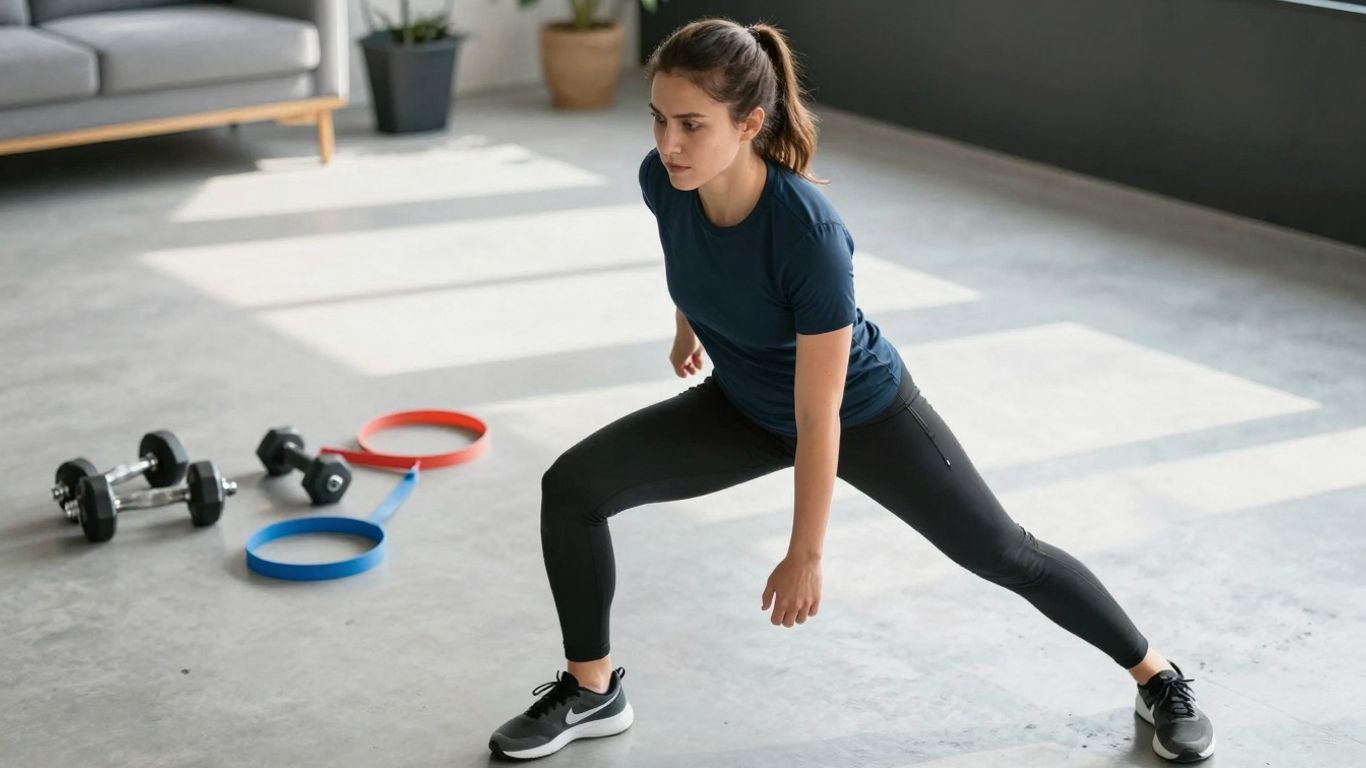
So, you've got your basic routine down, and you're feeling good. But what if you want to squeeze even more out of your home workouts without spending hours? That's where a few smart techniques come in. These aren't about making things harder for the sake of it, but about working smarter, not longer. The goal is to get more done in less time, pushing your body effectively.
Understand Superset Training
Think of supersets as a way to keep your heart rate up while you're working your muscles. Instead of resting between exercises for the same muscle group, you move immediately to a second exercise. For example, after doing a set of push-ups, you'd immediately go into a set of triceps dips without a break. Once you finish the second exercise, you take your rest. This can really cut down on workout time and boost your calorie burn.
Grasp Circuit Training Principles
Circuit training takes the superset idea and expands it. You move from one exercise to the next with minimal rest, completing a full
Integrating Your Routine Into Daily Life
Making a home workout routine stick is all about fitting it into your actual life, not the other way around. It's easy to say you'll work out, but actually doing it when life gets busy is the tricky part. We need to make it happen, right?
Schedule Your Workouts
Think of your workout like any other important appointment. If it's not on your calendar, it's easy to forget or push aside. Try putting your planned exercise sessions right into your digital calendar – Google Calendar, Outlook, whatever you use. Seeing it there makes it feel more real and harder to skip. It’s like saying, "Yep, this is happening."
Here’s a simple way to think about scheduling:
- Monday: Full Body Workout
- Tuesday: Active Recovery (light walk, stretching)
- Wednesday: Full Body Workout
- Thursday: Rest or Light Activity
- Friday: Full Body Workout
- Saturday: Longer walk or fun activity
- Sunday: Rest
This is just an example, of course. The key is to block out time and stick to it as much as possible.
Break Up Exercise Sessions
Who says you have to do your entire workout all at once? If a 45-minute session feels impossible on a busy day, split it up. Maybe you do 20 minutes in the morning and another 20 minutes in the evening. Even 10-minute bursts of activity throughout the day add up and can give you aerobic benefits. It’s way better than doing nothing at all. Think of it as weaving movement into your day rather than trying to find a giant chunk of free time.
Be Flexible With Your Schedule
Life happens. Some days you'll feel great and ready to go, and other days you might be tired, stressed, or just not feeling it. That’s totally okay. Don't beat yourself up if you miss a workout or need to adjust your plan. Maybe you planned a tough strength session but are feeling wiped out; swap it for a lighter cardio day or some stretching. The goal is consistency over perfection. If you're feeling run down, taking an extra rest day can actually help you recover better and come back stronger for your next workout. It’s about listening to your body and making smart choices for the long haul.
Trying to force yourself through a workout when you're exhausted or feeling unwell often leads to poor form, potential injury, and a generally negative experience. It's more productive to acknowledge your current state and adapt your activity accordingly. Sometimes, rest is the most productive thing you can do for your fitness goals.
Tracking Progress For Continuous Improvement
So, you've been putting in the work, hitting those home workouts consistently. That's awesome! But how do you know if you're actually getting anywhere? This is where tracking your progress comes in. It's not just about feeling good after a workout; it's about seeing tangible results and knowing what's working.
Maintain A Workout Journal
Think of your workout journal as your personal fitness diary. This is where you record the nitty-gritty details of every session. It doesn't have to be fancy. A simple notebook, a spreadsheet, or even a dedicated app will do. The key is consistency. Jot down the date, the exercises you did, how many sets and reps you completed, and the weight you used. If you did cardio, note the duration and intensity. This log becomes your history, a roadmap of your fitness journey.
Here’s a quick look at what to log:
- Date: When did you work out?
- Exercises: What movements did you perform?
- Sets & Reps: How many rounds and repetitions for each exercise?
- Weight/Resistance: What weight or resistance level did you use?
- Duration/Distance: For cardio, how long or how far?
- How You Felt: A quick note on your energy levels or any discomfort.
Monitor Key Performance Indicators
Once you're logging your workouts, you can start looking for patterns and improvements. These are your key performance indicators (KPIs). Are you able to lift a little more weight than last week? Can you squeeze out an extra rep or two with the same weight? Is your run time getting faster for the same distance? These are all signs that your body is adapting and getting stronger.
Consider these common indicators:
- Strength Gains: Increased weight lifted or more reps with the same weight.
- Endurance Improvements: Longer duration, faster times, or ability to maintain intensity for longer.
- Recovery Speed: How quickly you bounce back between sets or between workouts.
- Body Composition Changes: While not always directly tracked in a journal, noticing clothes fitting differently or changes in how you look can be indicators.
The beauty of tracking is that it provides objective feedback. It removes the guesswork and shows you exactly where you stand. If you're not seeing the progress you expect, your journal will help you pinpoint why. Maybe you need to adjust your sets, reps, or rest periods. Or perhaps it's time to switch up your exercises.
Adjust Based On Results
Your workout journal and KPIs aren't just for bragging rights; they're tools for making smart adjustments. If you've been stuck at the same weight for weeks, it might be time to increase the resistance or try a more challenging variation of the exercise. If you're consistently feeling exhausted, you might need to build in more rest days or reduce the intensity slightly. The goal is progressive overload – gradually increasing the demands on your body to keep seeing results. Don't be afraid to tweak your routine based on what your data tells you. It's your journey, and your plan should evolve with you.
Essential Components Of A Home Workout
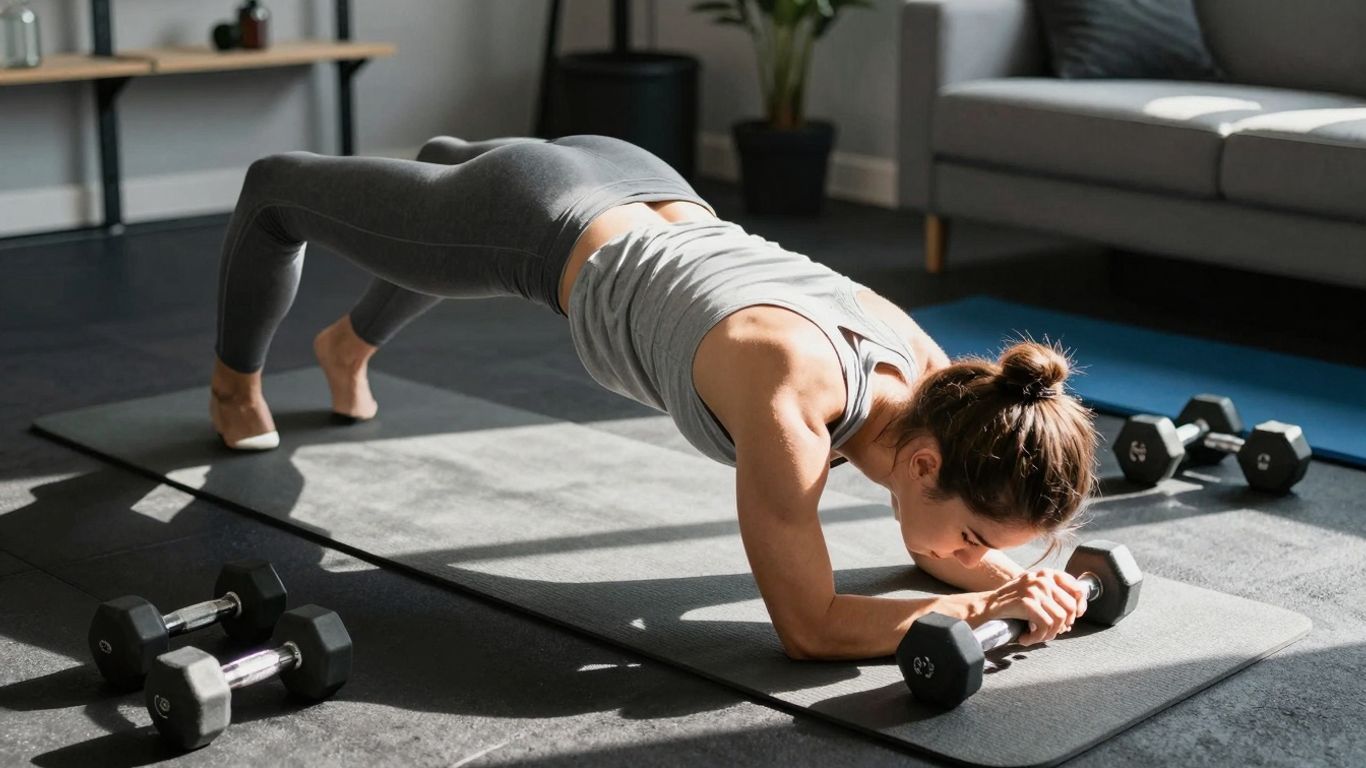
Alright, so you've got your routine planned, you know what exercises you're doing, and you're ready to get after it. But hold up a sec. Before you jump straight into your main lifts, there are a couple of things that are super important to make sure you get the most out of your sweat session and, you know, don't pull anything. Think of these as the non-negotiables for any good workout, whether you're in a fancy gym or just clearing some space in your living room.
The Importance Of A Warm-Up
Seriously, don't skip this. A warm-up isn't just about getting your heart rate up a little; it's about preparing your body for the work ahead. It gets your blood flowing to your muscles, making them more pliable and less likely to get injured. Plus, it helps your mind get into the zone. You don't need anything complicated. A few minutes of light cardio like jogging in place, some jumping jacks, or even just marching around your room can do wonders. You want to feel a little warmer, maybe break a tiny sweat, but not be tired before you even start your actual workout. It’s like revving a car engine before hitting the highway – you wouldn’t just floor it cold, right?
Cool-Down And Stretching Benefits
Once you're done with your main workout, it's time to bring your body back down. This is where the cool-down comes in. It's usually a few minutes of lighter activity, like walking, to gradually lower your heart rate. After that, stretching is key. Holding stretches for major muscle groups helps improve flexibility and can reduce that post-workout soreness. Think of it as helping your muscles recover and get ready for the next day. It’s a good idea to hold each stretch for about 20-30 seconds. This part of your routine is just as vital as the workout itself for long-term progress and feeling good.
Listen To Your Body's Signals
This is probably the most important piece of advice. Your body talks to you all the time, but we often ignore it. During your workout, pay attention. Are you feeling a sharp pain? That's a signal to stop or modify the exercise. Are you just feeling tired? That's normal, but distinguish it from pain. Pushing through pain can lead to injuries that sideline you for weeks or months. On the flip side, if you're feeling great and have energy, maybe you can push a little harder or add an extra set. Learning to interpret these signals is a skill that develops over time, but it's one of the best ways to stay consistent and safe with your home exercise plan.
Building a consistent exercise habit is fantastic, but doing it safely and effectively is even better. A proper warm-up primes your muscles, a cool-down aids recovery, and listening to your body prevents setbacks. These aren't just optional extras; they are the pillars that support your entire fitness journey, ensuring you can keep showing up and making progress day after day.
Wrapping It Up
So, there you have it. Building a solid daily exercise routine at home doesn't have to be some big, scary thing. It's really about figuring out what works for you – your schedule, what you like, and what you want to achieve. Remember to start slow, listen to your body, and don't be afraid to tweak things as you go. Keep track of what you're doing, celebrate the small wins, and most importantly, just keep showing up. Consistency is the real secret sauce here, and before you know it, you'll be feeling stronger and healthier right in your own living room.
Frequently Asked Questions
How do I know what exercises to do at home?
Start by picking exercises that work your main body parts, like your legs, chest, back, and arms. You can also add in activities that get your heart pumping, like jumping jacks or dancing. It's best to choose things you actually enjoy so you'll stick with them!
How many times should I do each exercise?
For most exercises, aim for 2 to 5 sets. A set is like one round of doing the exercise. Start with fewer sets, maybe 2 or 3, and you can add more as you get stronger. For each set, try to do between 5 and 15 repetitions (reps), which is how many times you do the movement in a row. Ten reps is a good starting point.
How much rest do I need between exercises?
Give yourself about 1 to 2 minutes to rest between sets. This helps your muscles recover a bit before you do the next set. You can adjust this time based on how you feel. The goal is to let your body catch its breath without cooling down too much.
How long should my home workout be?
Try to keep your workouts under an hour. Even shorter workouts can be super effective! If you're short on time, you can even break up your exercise into smaller chunks throughout the day, like 10 minutes here and 10 minutes there. It all adds up!
What's the best way to keep track of my progress?
The best way is to write it all down! Keep a simple journal where you note down the exercises you did, how many sets and reps you completed, and any weights you used. Seeing your progress over time, like lifting more weight or doing more reps, is a great way to stay motivated.
Do I really need to warm up and cool down?
Yes, absolutely! A warm-up for about 5-10 minutes gets your blood flowing and prepares your muscles for exercise, which can help prevent injuries. After your workout, a cool-down with some gentle stretching helps your body relax and recover. It's like giving your body a little 'thank you' for the hard work!


0 comments