









You don't need a gym to get a good workout. Seriously. There are tons of ways to get your body moving right in your own home. Whether you've got a little space or just a corner of a room, you can try out all sorts of exercises. This list covers 20 different types of exercises at-home that can help you get stronger, fitter, and feel better, all without leaving your house. It's all about making fitness work for you, on your schedule.
Key Takeaways
- You can achieve a full-body workout using just your body weight, proving that gym equipment isn't always necessary.
- Bodyweight exercises are adaptable for all fitness levels, from beginners to advanced athletes.
- Consistency is key; aiming for 3-5 days a week can significantly improve physical abilities and overall health.
- Proper form and warming up are important to prevent injuries when exercising at home.
- Combining different types of exercises, like strength training and cardio, can lead to better results.
1. Glute Bridge
Alright, let's talk about the glute bridge. This is a super simple move, but don't let that fool you – it really targets those glutes and your hamstrings. It's a fantastic way to wake up your posterior chain, especially if you've been sitting around all day.
Here's how you do it:
- Lie on your back with your knees bent and feet flat on the floor, hip-width apart. Your arms should be resting by your sides.
- Engage your core and squeeze your glutes. Lift your hips off the ground until your body forms a straight line from your shoulders to your knees.
- Hold that top position for a second, really feeling the squeeze in your glutes. Then, slowly lower yourself back down.
The key is to focus on squeezing those glutes at the top of the movement. It makes a big difference in how effective this exercise is.
This exercise is great for improving posture and can help alleviate some common back discomfort. It's a foundational move that sets you up for more challenging exercises later on.
You can make it harder too. Try doing single-leg glute bridges, where you lift one leg off the ground while lifting your hips. Or, place a weight across your hips for added resistance. It's a versatile exercise that can grow with your fitness level.
2. Chair Squat
The chair squat is a fantastic way to work your legs and glutes, especially if you're just starting out or want to focus on form. It's basically a regular squat, but with a little help from a sturdy chair.
Here's how you do it:
- Stand in front of a chair, feet about hip-width apart. You can adjust the distance slightly depending on what feels comfortable.
- Keeping your chest up and your back straight, hinge at your hips and bend your knees as if you're going to sit down. Imagine you're aiming your backside towards the chair.
- Lower yourself until your glutes lightly touch the chair. Don't just plop down; aim for a controlled movement.
- Push through your heels to stand back up to the starting position.
The key is to maintain control throughout the entire movement. It's better to do fewer reps with good form than to rush through them and risk injury. You can make this exercise harder by using a lower chair or by not touching the chair at all, just hovering above it before standing back up. This variation really helps build strength in your quads and glutes.
3. Knee Push-Up
Alright, let's talk about the knee push-up. This is a fantastic modification if you're not quite ready for the full push-up, but still want to work those chest, shoulder, and tricep muscles. It's all about building that strength progressively.
Here's how you can do them:
- Get down on your hands and knees. Make sure your hands are a little wider than shoulder-width apart, and your knees are directly under your hips.
- Walk your hands forward a bit, so your shoulders are now over your wrists. Keep your back straight and pull your belly button towards your spine to engage your core.
- Now, bend your elbows, letting them flare out slightly to the sides (think about a 45-degree angle, not straight out like a T).
- Lower your chest towards the floor. Don't worry about touching it, just go as low as you can with good form.
- Push back up to the starting position, straightening your arms.
The key here is to maintain a straight line from your head to your knees. Don't let your hips sag or stick up in the air. It might feel a bit awkward at first, but it's a really effective way to build up the strength needed for regular push-ups.
This exercise is a stepping stone. Focus on controlled movements rather than speed. It's better to do fewer reps with perfect form than many with sloppy technique. This helps prevent injuries and builds a solid foundation for more challenging variations down the line.
4. Hollow Hold To Jackknife
This exercise is a killer for your core, really working those deep abdominal muscles. It's basically two moves combined into one, so you get a lot of bang for your buck.
Here's how to do it:
- Start by lying on your back. Extend your arms straight overhead and lift your legs a few inches off the ground. This is your hollow hold position. Keep your lower back pressed into the floor – no arching!
- From that hollow hold, bring your arms forward and extend your legs up towards your hands, aiming to touch your toes. Think of making your body into a "V" shape.
- Slowly lower your arms and legs back down to the starting hollow hold position, maintaining that core tension the entire time.
The key is to keep your core engaged throughout the entire movement, from the hold to the jackknife and back down. It might feel like your whole body is shaking, and that's a good sign you're doing it right. Try to control the movement, especially on the way down, rather than just letting gravity do the work.
This move really targets your rectus abdominis and obliques. It's a great way to build up that strong midsection without needing any equipment at all. Just make sure you're breathing properly – exhale as you come into the jackknife and inhale as you return to the hold.
5. Tricep Dips
Alright, let's talk about tricep dips. These are fantastic for really hitting the back of your arms, but they also give your chest and shoulders a good workout. You don't need much equipment for this one, just a sturdy chair or a bench. The key is to control the movement, especially on the way down.
Here's how you can do them:
- Starting Position: Sit on the edge of your chair or bench with your hands gripping the edge next to your hips. Your fingers should point forward. Extend your legs out in front of you, keeping them fairly straight or slightly bent depending on your flexibility. The straighter your legs, the harder the exercise.
- Lowering Phase: Slowly slide your hips forward off the edge of the bench. Keep your back close to the bench. Bend your elbows, lowering your body until your upper arms are roughly parallel to the floor, or your elbows are at about a 90-degree angle. Make sure your elbows stay tucked in and don't flare out to the sides.
- Pushing Phase: Push back up to the starting position using your triceps. Keep your core engaged throughout the movement.
To make this exercise a bit easier, you can keep your knees bent and your feet closer to your body. If you want to make it harder, try extending your legs further out or even elevating your feet on another surface. It's all about adjusting the resistance based on how much of your body weight you're pushing.
Remember to focus on form over speed. A slow, controlled dip is much more effective and safer than a quick, jerky one. You're aiming to feel the burn in your triceps, not strain your shoulders.
This exercise is a great way to build strength in your arms, and it's a staple in many bodyweight routines. You can find more details on proper form for bodyweight exercises online if you want to double-check your technique.
6. Spider Crawl
This exercise is a bit like a bear crawl but with a twist, and it really gets your whole body working. It's fantastic for building core strength and coordination.
Here's how to do it:
- Start in a push-up position. Make sure your hands are directly under your shoulders and your body forms a straight line from your head to your heels.
- Now, bring one knee up towards the elbow on the same side. Try to get your knee as close to your elbow as you can.
- Pause for a second, really squeezing your abs, then return your leg to the starting position.
- Repeat the movement with the other leg, bringing its knee towards the opposite elbow.
- Keep alternating legs for the desired number of reps or time.
It might feel a little awkward at first, especially coordinating the leg and arm movements. The key is to keep your core tight throughout. This prevents your hips from sagging or lifting too high, which would take away from the ab workout. You're not just moving your legs; you're actively engaging your core to stabilize your body. It also works your shoulders, chest, and even your quads as you move.
Don't rush through this one. Focus on controlled movements. Bringing your knee closer to your elbow with a strong core contraction makes a big difference in how effective it is for your abs. Think about it like a crawling motion, but with a specific target for your knee.
7. Reverse Crunch
Alright, let's talk about the reverse crunch. This move is pretty awesome for hitting those lower abs, the ones that can be a bit stubborn sometimes. It's a great alternative to the standard crunch because it puts less strain on your neck and back.
Here's how you do it:
- Lie flat on your back. Keep your arms down by your sides with your palms facing the floor. This helps stabilize you.
- Bend your knees and bring them up towards your chest. You want to really feel your abs working to pull them up.
- As your knees come up, try to lift your hips slightly off the ground. Think about rolling your pelvis upwards.
- Hold that squeezed position for a second at the top.
- Then, slowly lower your legs back down until your thighs are about perpendicular to the floor. Don't just let them drop; control the movement.
This exercise is fantastic for building a strong core. It really targets the deep abdominal muscles, which are super important for overall stability and posture. You can do a few sets of these after your other exercises to really finish off your abs. It's a solid addition to any lower ab and core workout.
Remember, the key here is control. Don't rush through the reps. Focus on squeezing your abs and making the movement deliberate. Slow and steady wins the race, especially when it comes to building muscle and avoiding injury.
8. Sit-Up
Alright, let's talk about the classic sit-up. This is one of those exercises that most people have done at some point, probably back in gym class. It's a pretty straightforward way to work those abdominal muscles.
To do it, you'll want to lie down on the floor. Bending your knees is usually the way to go, and if you can, hook your feet under something sturdy like a couch or a heavy piece of furniture. This stops your feet from lifting off the ground, which is key for really feeling it in your abs. Place your hands behind your head – but be careful not to pull on your neck, okay? The idea is to use your core to lift your upper body up, aiming to create a sort of V-shape with your torso and thighs. Then, slowly lower yourself back down. The real magic happens when you control the movement, both on the way up and on the way down.
Here’s a quick breakdown:
- Lie on your back with knees bent.
- Secure your feet if possible.
- Place hands behind your head, elbows wide.
- Engage your core and lift your torso.
- Lower slowly and with control.
It's easy to rush through sit-ups, but that's not really the best way to get the most out of them. Taking your time and focusing on squeezing those ab muscles makes a big difference. You can also try variations if the standard sit-up feels a bit too much, like the basic twist and crunch motion which is a bit gentler.
Remember, the goal isn't just to get your head off the floor. It's about actively contracting your abdominal muscles throughout the entire range of motion. Think about pulling your belly button towards your spine as you lift.
9. Mountain Climber
Mountain climbers are a fantastic exercise that really gets your heart rate up while working a bunch of different muscles. Think of it like running in place, but in a plank position. It's a great way to build up your stamina and core strength at the same time.
Here's how to do them:
- Start in a high plank position, like you're about to do a push-up. Make sure your hands are directly under your shoulders and your body forms a straight line from your head to your heels. Keep your core tight – imagine someone's about to tap your stomach.
- Bring one knee up towards your chest, keeping your foot just off the ground. Then, quickly switch legs, pushing the first leg back and bringing the other knee forward.
- Keep alternating legs as fast as you can, trying to maintain that straight body line and not letting your hips sag or rise too much.
The key is to keep the movement controlled and continuous, rather than jerky. It might feel a bit like a sprint, but focus on good form. You can make it harder by trying to bring your knee towards the opposite elbow, which really targets your side abs.
This exercise is a real all-rounder. It hits your shoulders, arms, abs, and legs, all while giving you a good cardio blast. Just remember to keep your back flat and your core engaged throughout the entire movement. Don't let your hips bounce around too much; aim for a smooth, controlled alternation of your legs.
10. Pistol Squat
Alright, let's talk about the pistol squat. This is a seriously tough single-leg squat that really works your quads, glutes, and hamstrings. It's not for the faint of heart, but if you can master it, you'll build some serious leg strength and improve your balance.
To get started, stand with your feet hip-width apart. Extend one leg straight out in front of you, keeping it off the ground. Now, here's the tricky part: hinge at your hips and bend the knee of your standing leg, lowering your body down as if you're trying to sit in a chair. Try to keep your back straight and your chest up throughout the entire movement. Lower yourself as far as you can with control. Once you've reached the bottom, push through your heel to return to the starting position. That's one rep! Remember to switch legs and do the same number on the other side.
Here's a breakdown of what you're working on:
- Quads: The muscles at the front of your thigh.
- Glutes: Your butt muscles, which are key for power.
- Hamstrings: The muscles at the back of your thigh.
- Core: Your abs and lower back, which keep you stable.
- Balance: This exercise is a huge test of your stability.
If a full pistol squat feels impossible right now, don't sweat it. There are ways to work up to it. You can try using a chair or a sturdy box to lower yourself onto, which helps you get the feel for the movement without going all the way down. Another option is to do a partial squat, just going down as far as you can comfortably manage. Gradually increase your range of motion over time. Consistency is key here, so keep practicing, and you'll get there.
This exercise demands a lot of mobility in your hips and ankles, so make sure you're warmed up properly before attempting it. Don't rush the process; focus on form over speed. It's better to do fewer reps with good technique than many with sloppy form.
11. Burpee
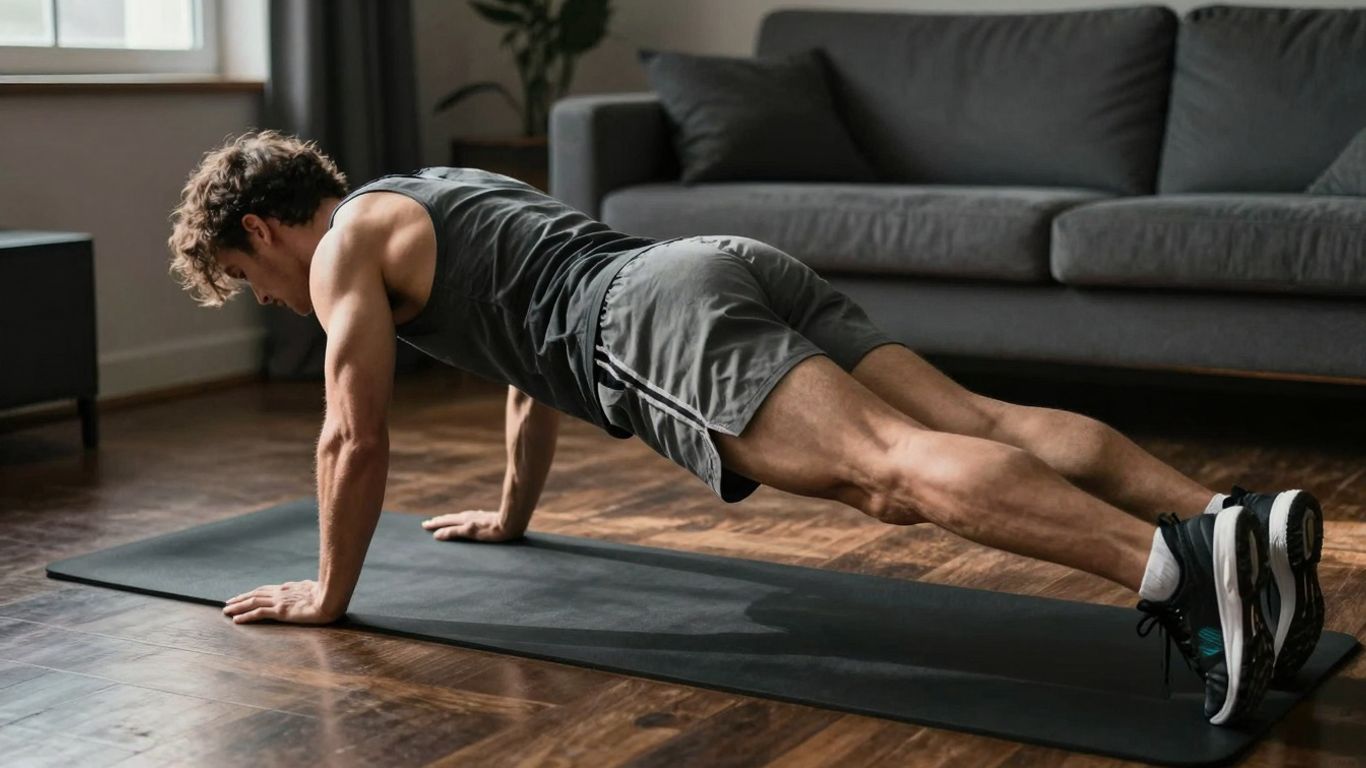
Alright, let's talk about the burpee. This exercise is a real doozy, but it's incredibly effective for a full-body blast. It combines a squat, a plank, a push-up, and a jump all into one fluid motion.
Here's how to break it down:
- Start standing with your feet about shoulder-width apart.
- Squat down, placing your hands on the floor in front of you.
- Kick your feet back into a high plank position.
- Perform a push-up (or skip it if you're just starting).
- Jump your feet back towards your hands, landing in a squat.
- Explode upwards into a jump, reaching your arms overhead.
- Land softly and immediately go into the next squat.
It might seem a bit much at first, and honestly, it is. But the payoff is huge. You're hitting your legs, chest, shoulders, core, and getting your heart rate way up there. It's a fantastic way to build strength and endurance simultaneously. If you're looking to really push yourself, consider trying a double burpee variation once you've mastered the basic move.
Don't get discouraged if you can't do a full push-up or jump very high initially. Focus on getting the movement pattern right. You can always modify it by stepping your feet back instead of jumping, or by omitting the push-up entirely. The goal is to build up to the full movement over time.
Burpees are great for burning calories and improving your overall conditioning. You can throw them into a circuit or do them as a standalone workout. Just be prepared to feel the burn!
12. Handstand Wall Walk
Alright, let's talk about the Handstand Wall Walk. This one is pretty intense and definitely not for beginners, but if you're looking to seriously challenge yourself and build some serious upper body strength, this is it. It's a fantastic way to work your shoulders, triceps, and core all at once.
Here's how you do it:
- Start by getting into a handstand position with your feet against a wall. You might need a spotter or a very stable wall for this.
- Once you're stable, slowly begin to walk your hands closer to the wall, essentially walking your feet up the wall as you move your hands forward.
- Continue this until you've walked your hands as far as you comfortably can, or until you reach the bottom of the wall.
- To come down, reverse the process, carefully walking your hands back and your feet down the wall.
This exercise requires a good amount of shoulder stability and core engagement. You're using your shoulders and triceps quite a bit, and your upper traps, lats, and serratus muscles are working hard to keep you stable. Plus, you need to engage your glutes and abs to maintain a straight line from your head to your heels.
Remember, safety first! If you're new to handstands, practice holding a handstand against the wall first before attempting the walk. Don't push yourself too hard, especially when you're starting out. Listen to your body and take breaks when you need them.
13. Standing Long Jump
Alright, let's talk about the standing long jump. This isn't just for track and field athletes; it's a fantastic way to build explosive power right in your living room. The goal is to propel yourself forward as far as possible from a stationary position. It really targets those fast-twitch muscle fibers, which are the ones responsible for quick, powerful movements. Think of it as a way to upgrade the power in your legs, making them stronger and more dynamic.
Here’s how you can do it:
- Start with your feet about shoulder-width apart, maybe a little wider if that feels more stable.
- Lower yourself into a squat position, not too deep, just enough to get some power going. Swing your arms back behind you.
- Explode upwards and forwards, using your arms to help drive you. As you jump, bring your legs forward to gain momentum.
- Land as softly as you can on the balls of your feet, bending your knees to absorb the impact. Try to stick the landing!
This exercise is great for building power, but it's also a good way to work on your coordination and balance. It's a bit like a mini-leap that engages your whole lower body and core. You'll feel it in your glutes, quads, and hamstrings.
Remember, the key here is explosiveness. You're not trying to jump high, but rather far. Focus on generating as much forward momentum as possible with each jump. It's a simple move, but don't underestimate its effectiveness for building raw power. It's a great addition to any bodyweight circuit you might be doing.
Aim for a few sets of 8-10 jumps, resting for about 30 seconds between sets. You'll be surprised at how quickly you can improve your distance and power with consistent practice.
14. Side Plank
Alright, let's talk about the side plank. This move is fantastic for hitting those oblique muscles on the sides of your torso, which are super important for stability and preventing injuries. It's not just about looking good; it's about building a strong, functional core.
The side plank is a powerhouse for strengthening your core, especially those often-neglected side muscles. It's a simple position, but holding it requires a good amount of control and strength.
Here's how to get into it:
- Start by lying on your side. You can rest your head on your bottom arm or place your hand under your head for support. Stack your legs one on top of the other, keeping them straight.
- Place your supporting forearm on the ground, making sure your elbow is directly underneath your shoulder. This alignment is key to protecting your shoulder joint.
- Engage your core and lift your hips off the ground. Your body should form a straight line from your head to your feet. Don't let your hips sag down or pike up too high.
- Hold this position. Aim for at least 20-30 seconds to start, and gradually increase the time as you get stronger. Focus on keeping your body rigid and controlled.
- To switch sides, carefully lower your hips back to the ground and then repeat the entire process on the other side.
It might feel tough at first, and that's totally normal. You might notice one side feels significantly weaker than the other. That's common, and it's exactly why doing both sides is so important. Consistency is what will make the difference here. Try to incorporate this into your routine a few times a week, and you'll start to feel a real difference in your core stability and overall strength.
15. Marching In Place
Marching in place is a super simple way to get your heart rate up without needing any fancy equipment. It’s a great way to start any workout as a warm-up, or you can just do it on its own if you're short on time. You can do this in your living room, your kitchen, anywhere really.
The basic idea is to just march like you normally would, but lift your knees a bit higher and pump your arms. It sounds basic, but it really does get you moving. If you want to make it a bit more challenging, you can speed up your marching pace or really focus on lifting those knees up towards your chest. It’s a good way to get the blood flowing and prepare your body for more intense activity.
Here’s how to get the most out of it:
- Start slow: Begin with a gentle march to get your body used to the movement.
- Increase intensity: Gradually lift your knees higher and swing your arms with more energy.
- Add variations: Try alternating between a faster march and a slower one, or add small arm circles while you march.
It’s a really accessible exercise, especially if you're just getting back into fitness or looking for something low-impact. It’s also a good option for older adults looking to maintain mobility and strength.
This exercise is fantastic because it requires zero coordination and can be done while watching TV or listening to a podcast. You can easily adjust the difficulty to match your current fitness level, making it a versatile addition to any home workout routine.
16. Single Leg Stand
Alright, let's talk about the single leg stand. This one might seem super simple, but don't let that fool you. It's a fantastic way to work on your balance and strengthen those smaller stabilizing muscles in your ankles and legs.
Think about it – most of our daily movements involve standing on one leg, whether it's walking, climbing stairs, or even just reaching for something. Being good at this helps prevent falls and makes you more agile.
Here's how you can do it:
- Start by standing tall with your feet hip-width apart. Find a spot in front of you to focus your gaze; this helps with balance.
- Slowly lift one foot off the ground, bending your knee slightly. Try to lift it just a few inches at first.
- Hold this position for as long as you can maintain good balance, aiming for at least 15-30 seconds. Keep your core engaged.
- Gently lower your foot back down and repeat on the other side. Try to do the same number of holds on each leg.
This exercise is all about control. Don't rush it. If you wobble, that's okay! Just try to regain your balance without putting your foot down. As you get better, you can try holding it for longer periods or even closing your eyes for an extra challenge (but be careful with that one!).
If holding yourself up is too tough initially, you can stand near a wall or a sturdy chair for support. Just lightly touch it with your fingertips if you feel yourself losing balance. Over time, you'll notice a big difference in your stability.
17. Hip Abduction
Okay, so let's talk about hip abduction. You might not think about it much until your hips start acting up, but strengthening these muscles is pretty important, especially if you spend a lot of time sitting down. It's all about moving your leg away from the middle of your body.
Here's how you can do a basic version at home:
- Lie down on your side. You can support your head with your bottom arm or hand. Stack your legs so they're straight and one is directly on top of the other. Your hips should be facing forward, not rolling back.
- Keeping your legs straight and your hips still, lift your top leg up as high as you comfortably can. Try not to let your hips roll backward as you lift.
- Slowly lower your leg back down to the starting position. That's one rep.
Do a set number of these on one side, then flip over and do the same on the other side. Focus on controlled movement rather than speed to really feel those muscles working.
This exercise targets the muscles on the outside of your hips, like the gluteus medius and minimus. These muscles are key for stability, especially when you're walking or running, and they help prevent injuries. Strengthening them can also help with posture and reduce lower back pain.
If you want to make it a bit tougher without any equipment, you can try doing it in a side plank position. Just get into a side plank, and then do the leg lift. This adds a core challenge to the move.
18. Yoga Poses
Yoga is a fantastic way to work on flexibility, balance, and strength all at once, and you don't need a fancy studio to do it. Just a little bit of space and a mat (or even just a rug) will do. It's a great way to connect your mind and body, and honestly, some of these poses feel amazing after a long day.
You can get a really solid full-body workout just by stringing together a few key yoga poses. It's not just about stretching; many poses require significant core engagement and muscle activation.
Here are a few poses that are great for a home workout:
- Downward-Facing Dog: This is a classic. It stretches your hamstrings, calves, and shoulders, and also strengthens your arms and legs. Start on your hands and knees, then lift your hips up and back, forming an inverted V shape with your body. Keep your hands shoulder-width apart and your feet hip-width apart.
- Warrior II: This pose builds strength in your legs and opens up your hips. Stand with your feet wide apart, turn one foot out 90 degrees, and bend the front knee over your ankle. Extend your arms out to the sides, parallel to the floor, and gaze over your front fingertips.
- Plank Pose: A core staple. Get into a straight line from your head to your heels, supporting yourself on your forearms and toes. Engage your abs and glutes to keep your body stable.
- Cobra Pose: This one is great for your spine and chest. Lie on your stomach, place your hands under your shoulders, and gently push your chest off the floor, keeping your hips on the ground. Feel the stretch in your abdomen.
- Tree Pose: Perfect for balance. Stand on one leg and bring the sole of your other foot to your inner thigh or calf (avoiding the knee joint). Bring your hands to your heart center or extend them overhead.
Remember, the key with yoga is breath and mindful movement. Don't push yourself too hard, especially when you're starting out. Focus on your form and how the pose feels in your body. It's a journey, not a race.
19. Strength Training
You don't need a gym full of fancy equipment to get stronger. Strength training at home is totally doable, and honestly, it's a fantastic way to build muscle and boost your overall fitness. The best part? You can use your own body weight as resistance. Think about it – you've got everything you need right there. This approach is great because it's adaptable to pretty much any fitness level, from beginner to more advanced. Plus, it really helps with how you move and stay balanced day-to-day.
Bodyweight exercises are brilliant for building muscle, too. Studies have shown that you can get just as strong and build muscle mass using just your body weight as you can with traditional weights, as long as you're doing the movements correctly and through their full range. It's all about challenging your muscles enough to make them adapt and grow. So, if you're looking to get stronger without hitting the gym, this is a solid path to consider. You can find a sample weekly workout plan featuring strength training exercises designed for a full-body workout at home here.
Here are a few key bodyweight exercises to get you started:
- Push-ups: Great for your chest, shoulders, and triceps. Start on your knees if a full push-up is too tough.
- Squats: Works your legs and glutes. Focus on keeping your chest up and back straight.
- Lunges: Another excellent leg exercise that also helps with balance.
- Planks: Fantastic for your core strength. Hold a straight line from head to heels.
Remember, consistency is key. Even short, regular sessions can make a big difference over time. Don't get discouraged if you can't do a lot of reps at first. Just focus on good form and gradually increase as you get stronger.
20. Cardiovascular Exercise
Cardio, short for cardiovascular exercise, is all about getting your heart rate up and keeping it there. It's super important for your overall health, not just for burning calories. Think of it as giving your heart and lungs a really good workout.
When you're at home, you don't need fancy equipment to get a solid cardio session in. Simple things like marching in place or dancing around your living room can make a big difference. The key is to find activities you enjoy so you'll stick with them. Consistency is way more important than intensity when you're starting out.
Here are a few ideas to get your heart pumping:
- Jumping Jacks: A classic for a reason. Start with your feet together and arms at your sides, then jump your feet out wide while bringing your arms overhead. Jump back to the start. You can go faster or slower, and make the jumps bigger or smaller depending on how you feel.
- High Knees: Stand tall and bring your knees up towards your chest, alternating legs. Pump your arms like you're running. To make it harder, try to bring your knees higher or move faster.
- Butt Kicks: Similar to high knees, but this time you're kicking your heels up towards your glutes. Again, pump your arms and pick up the pace if you want more of a challenge.
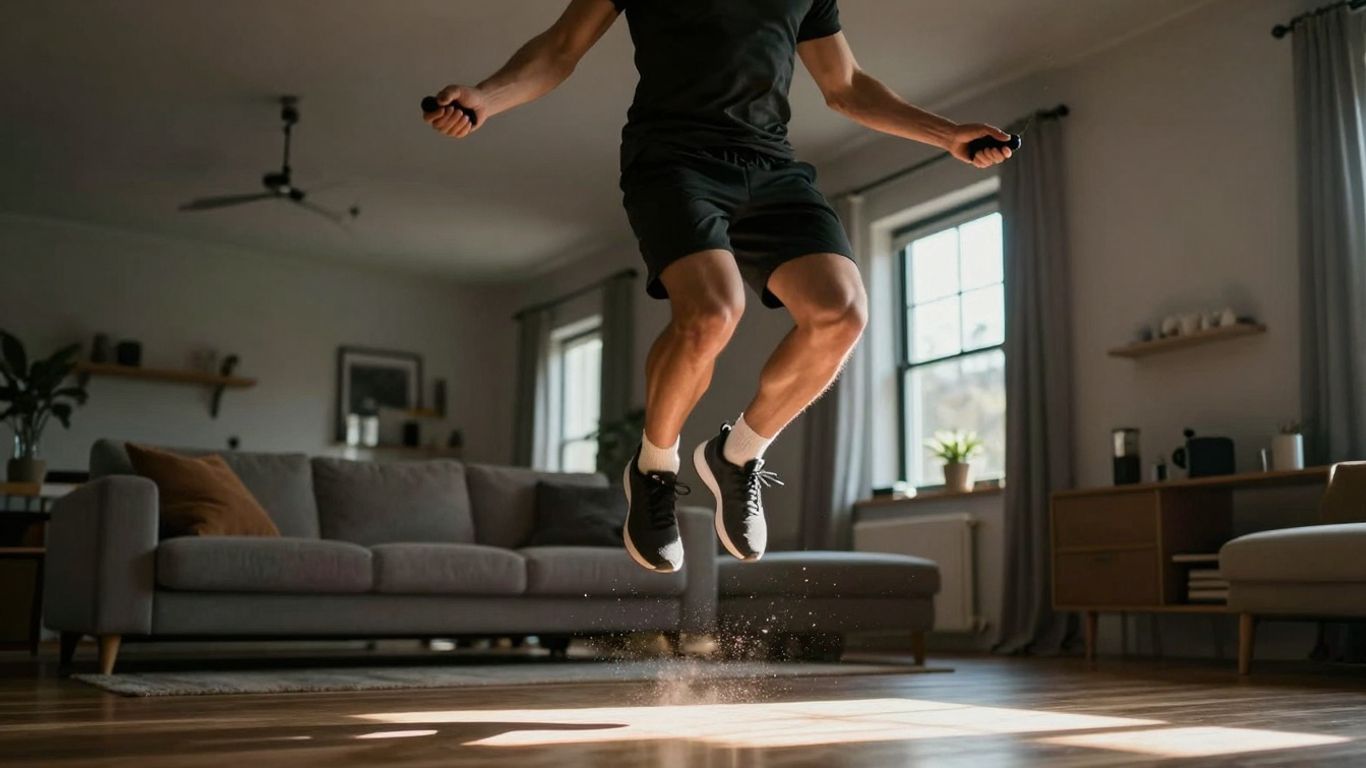
- Imaginary Jump Rope: Pretend you have a jump rope and start jumping. You can do basic two-foot jumps, or try alternating feet. Swing your arms like you're actually holding a rope.
These exercises are great because you can easily adjust the difficulty. If you're just starting, aim for about 30 seconds of each exercise with a short rest in between. As you get fitter, you can increase the time you do each exercise or reduce your rest periods. You could even try doing them in a circuit, going from one exercise to the next with minimal breaks. This kind of full-body burn can really make a difference in your fitness level.
Remember to warm up for about 5 minutes before you start and cool down afterward with some stretching. It's also a good idea to stay hydrated by drinking water throughout your workout. If you're unsure about starting a new exercise program, it's always best to chat with your doctor first.
When you're doing cardio at home, pay attention to how hard you're working. A good way to gauge this is by how easily you can talk. If you can hold a full conversation, you're likely at a moderate intensity. If you can only speak a few words at a time, you're probably working at a vigorous intensity. Aim for a level that feels challenging but sustainable for you.
There are tons of videos online too, if you want more structured routines or need some inspiration. Just search for 'at-home cardio workouts' and you'll find plenty of options.
Wrapping It Up
So there you have it – twenty different ways to get a solid workout right in your own living room. Who knew you could break a sweat and build strength without even leaving the house? Whether you're just starting out or you've been exercising for a while, there's something here for everyone. Remember, consistency is key, and even a quick 20-minute session can make a big difference. Don't overthink it; just pick a few exercises that look good to you and give them a try. Your body will thank you for it!
Frequently Asked Questions
Can I really get a full body workout at home without any equipment?
Absolutely! You can build strength and improve your fitness using just your body weight. Exercises like squats, push-ups, and lunges work many muscles at once. You can also do things like yoga and cardio to round out your workout.
How long does a typical at-home workout take?
Many effective at-home workouts can be done in about 20 to 30 minutes. Consistency is key, so aim for a few times a week rather than one long session.
Is it possible to build muscle with bodyweight exercises?
Yes, you can definitely build muscle without weights. By doing exercises through their full range of motion and challenging yourself, your muscles will grow stronger. As you get fitter, you can make the exercises harder.
What are the main benefits of working out at home?
Working out at home is super convenient – no travel time or gym fees! It's great for improving strength, endurance, and balance. Plus, many home workouts can boost your mood and energy levels.
How can I make sure I'm exercising safely at home?
Always make sure you have enough space to move around without hitting anything. Warm up your muscles before you start and cool down afterward. Listen to your body and don't push too hard, especially when you're new to exercising.
Do I need to do specific exercises for cardio versus strength?
You can get both cardio and strength benefits from many at-home exercises. For example, jumping jacks or burpees get your heart rate up (cardio) and also work your muscles (strength). You can also mix in dedicated cardio like marching in place or strength moves like squats.


0 comments