Starting an exercise routine at home can feel like a big step, and honestly, it can be a little intimidating. Maybe you're new to working out, or perhaps you're getting back into it after some time away. Whatever your situation, finding the right workout routines for beginners at home is key to building momentum. It doesn't have to be complicated; the main thing is to find a rhythm that works for you and stick with it. This guide is all about making that first move towards a fitter you, right from your living room.
Key Takeaways
- Focus on building a consistent routine that fits your life, rather than aiming for perfection right away.
- Set achievable goals to keep yourself motivated and celebrate small wins along the way.
- Start with basic bodyweight exercises like squats, lunges, and planks to build a solid foundation.
- Gradually introduce dumbbells to your workouts to increase intensity and challenge your muscles further.
- Balance your workout schedule with adequate rest days to allow your body to recover and grow stronger.
Getting Started With Your Home Fitness Journey
Starting a fitness routine at home can feel like a big step, and honestly, it can be a little overwhelming at first. You see all these people online doing crazy workouts, and you think, 'How will I ever get there?' But here's the thing: everyone starts somewhere. The most important part is just beginning and sticking with it. It’s not about being perfect from day one; it's about building habits that last.
Building A Consistent Routine
Creating a routine that you can actually stick to is key. Don't try to do too much too soon. Think about what realistically fits into your life. Maybe it's 20 minutes every other day, or perhaps you can manage 30 minutes three times a week. Whatever it is, make it something you can manage without feeling completely drained. Consistency beats intensity when you're just starting out. It’s better to do a shorter workout consistently than a long one sporadically.
Here’s a simple way to think about building your routine:
- Schedule it: Put your workouts in your calendar like any other important appointment.
- Start small: Begin with shorter durations and fewer days per week.
- Be flexible: Life happens. If you miss a workout, don't beat yourself up. Just get back on track with the next one.
- Find what you enjoy: If you dread your workouts, you won't stick with them. Try different things until you find something you look forward to.
Setting Realistic Goals
When you're new to fitness, it's easy to set goals that are too ambitious. You might want to lose 20 pounds in a month or be able to do 50 push-ups by next week. While those are great long-term aspirations, they can lead to disappointment if not met quickly. Instead, focus on smaller, achievable goals. Maybe your first goal is simply to complete three workouts this week, or to hold a plank for 30 seconds. Achieving these smaller wins builds confidence and momentum. You can track your progress with a simple plan like this 30-day beginner workout.
Setting goals is like drawing a map for your fitness journey. Without a map, you might wander aimlessly. But with a clear, realistic map, you know where you're going and can celebrate each milestone along the way.
Understanding Progressive Overload
This might sound complicated, but it's actually a pretty simple concept. Progressive overload just means gradually increasing the demand on your body as you get stronger. Your muscles adapt to the stress you put on them, so to keep getting stronger, you need to challenge them a little more over time. This doesn't mean you need to suddenly start lifting super heavy weights or running marathons. For beginners, it can be as simple as:
- Doing one or two more repetitions of an exercise.
- Reducing the rest time between sets.
- Increasing the duration of an exercise (like holding a plank longer).
- Using slightly heavier weights (if you're using them) or trying a more challenging variation of an exercise.
Think of it as a gentle nudge, not a massive shove. The goal is to consistently challenge yourself just enough to stimulate progress without causing injury or burnout.
Essential Bodyweight Exercises For Beginners
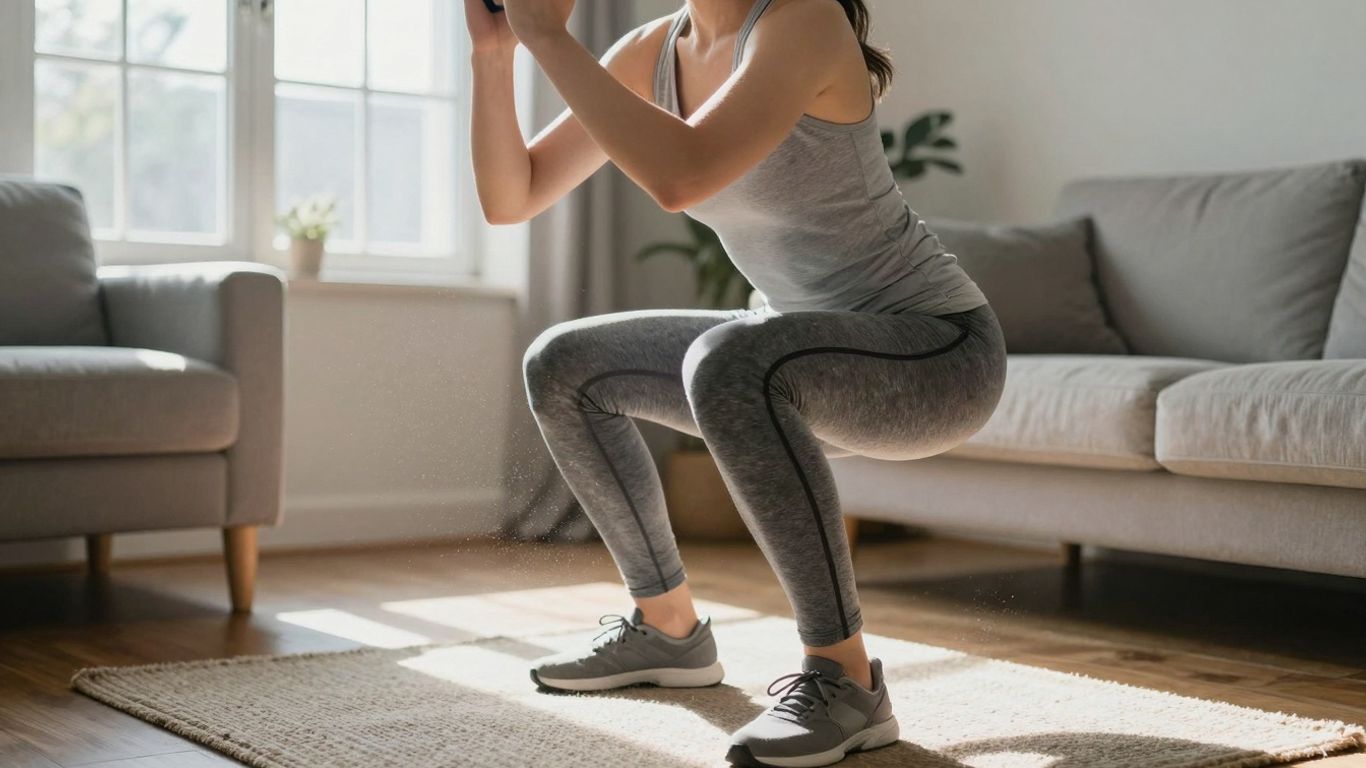
Alright, let's talk about the building blocks of your home fitness journey: bodyweight exercises. These are the moves that use your own weight for resistance, meaning you don't need any fancy equipment to get a solid workout. It's all about mastering the basics and building a strong foundation. Focus on proper form over speed or quantity when you're starting out.
Mastering Squats and Lunges
Squats and lunges are like the dynamic duo of lower body strength. They work your quads, hamstrings, glutes, and even your core. For squats, imagine you're sitting back into a chair. Keep your chest up and your back straight. For lunges, take a step forward and lower your hips until both knees are bent at about a 90-degree angle. Make sure your front knee stays behind your toes.
- Bodyweight Squat: Stand with feet shoulder-width apart, lower hips as if sitting in a chair, keeping chest up.
- Reverse Lunge: Step backward, lowering hips until both knees are bent at 90 degrees.
- Forward Lunge: Step forward, lowering hips until both knees are bent at 90 degrees.
Effective Push-Up Variations
Push-ups are fantastic for your chest, shoulders, and triceps. If regular push-ups feel too tough right now, don't sweat it! There are plenty of ways to scale them. You can start with wall push-ups, then move to incline push-ups (using a sturdy table or counter), and eventually progress to knee push-ups before tackling the full version. It's all about gradual progress.
- Wall Push-Up: Stand facing a wall, place hands on the wall, and lean in, bending elbows.
- Incline Push-Up: Place hands on an elevated surface (like a counter or chair) and perform push-ups.
- Knee Push-Up: Perform push-ups on your knees instead of your toes.
Core Strength With Planks
Your core is your body's powerhouse, and planks are a simple yet incredibly effective way to strengthen it. Get into a push-up position, but rest on your forearms instead of your hands. Keep your body in a straight line from head to heels. Engage your abs and glutes. You can start with holding for 15-30 seconds and build up from there. You can even try knee planks if a full plank is too challenging initially. A strong core helps with almost every other movement you'll do.
Holding a plank correctly means your body forms a straight line. Avoid letting your hips sag or rise too high. Focus on keeping your core muscles tight throughout the hold.
Rowing Movements At Home
While push-ups work the front of your body, rowing movements target your back muscles. You can do these without equipment by using a sturdy table or even a strong towel looped around a doorknob. If you have a resistance band, that's another great option. These exercises help balance out your upper body strength. You can find some great bodyweight exercises that include rowing variations.
Here's a simple way to think about it:
- Table Rows: Lie on your back under a sturdy table. Grab the edge and pull your chest towards it, keeping your body straight.
- Towel Rows: Loop a strong towel around a doorknob. Lean back, holding the ends of the towel, and pull yourself towards the door.
- Band Rows: If you have a resistance band, anchor it to something stable and pull it towards your chest, squeezing your shoulder blades together.
Incorporating Dumbbells Into Your Workouts
So, you've got the hang of bodyweight stuff and you're ready to add a little more challenge. That's where dumbbells come in. They're not just for the gym rats; a couple of dumbbells can seriously level up your home workouts without taking up a ton of space. Adding weights is a straightforward way to keep making progress.
Beginner Dumbbell Routines
When you're just starting with dumbbells, the key is to keep it simple and focus on form. You don't need a huge collection of weights to get a good workout. A pair of adjustable dumbbells or even just two pairs (like 5 lbs and 10 lbs) can get you started.
Here's a basic structure for a full-body routine:
- Goblet Squats: Hold one dumbbell vertically against your chest. Stand with feet shoulder-width apart, lower your hips as if sitting in a chair, keeping your chest up and back straight. Push through your heels to return to standing.
- Dumbbell Rows: Hinge at your hips, keeping your back straight, with a dumbbell in one hand. Let the dumbbell hang towards the floor. Pull the dumbbell up towards your chest, squeezing your shoulder blade. Lower it back down with control.
- Dumbbell Bench Press (or Floor Press): Lie on your back with knees bent and feet flat on the floor. Hold a dumbbell in each hand at chest level, palms facing each other or slightly inward. Press the dumbbells straight up towards the ceiling, then lower them back down slowly.
- Overhead Press: Stand or sit with a dumbbell in each hand at shoulder height, palms facing forward. Press the dumbbells straight up overhead until your arms are fully extended. Lower them back down with control.
- Dumbbell Romanian Deadlifts (RDLs): Hold dumbbells in front of your thighs. With a slight bend in your knees, hinge at your hips, lowering the dumbbells down your shins while keeping your back straight. You should feel a stretch in your hamstrings. Squeeze your glutes to pull yourself back up to a standing position.
Try to do 2-3 sets of 8-12 repetitions for each exercise. Focus on controlled movements rather than speed.
Upper Body Dumbbell Training
To really target your upper body, you can dedicate specific days or parts of your workout to these muscle groups. Dumbbells are great for isolating muscles and building strength.
- Chest: Besides the floor press, you can do dumbbell flyes. Lie on your back, hold dumbbells above your chest with palms facing each other, and lower them out to the sides in an arc, feeling a stretch in your chest. Bring them back up.
- Back: In addition to rows, consider dumbbell pullovers. Lie on your back with knees bent, holding one dumbbell with both hands above your chest. Lower the dumbbell in an arc over your head, keeping your arms mostly straight, until you feel a stretch in your lats. Pull it back over your chest.
- Shoulders: Lateral raises are good for the side of your shoulders. Stand with a dumbbell in each hand, arms at your sides. With a slight bend in your elbows, raise the dumbbells out to the sides until they reach shoulder height. Lower them slowly.
- Arms: Bicep curls (standing or seated) and triceps extensions (overhead or kickbacks) are classic dumbbell exercises.
Lower Body Dumbbell Focus
Don't forget your legs and glutes! Dumbbells can add a significant challenge to lower body movements.
- Squats: Goblet squats are great, but you can also hold a dumbbell in each hand for a different feel. You can also try dumbbell front squats, holding a dumbbell in each hand at shoulder height.
- Lunges: Hold a dumbbell in each hand and perform walking lunges or stationary lunges. Make sure your front knee doesn't go past your toes.
- Glute Bridges: Lie on your back with knees bent, feet flat on the floor. Place a dumbbell across your hips. Lift your hips off the ground, squeezing your glutes at the top. Lower back down.
- Calf Raises: Stand with a dumbbell in each hand. Rise up onto the balls of your feet, lifting your heels as high as possible. Lower slowly.
Remember, the weight you choose should allow you to complete all your reps with good form. If your form starts to break down, it's a sign the weight is too heavy or you need to rest. It's better to lift lighter and do it right than to risk injury with bad form.
When you start incorporating dumbbells, you might notice that you can lift more than you thought. That's a good thing! It means you're getting stronger. Just keep challenging yourself safely, and you'll see results.
Structuring Your Weekly Workout Schedule
Okay, so you've got your exercises down, and you're ready to get moving. But how do you actually fit this into your life without feeling totally overwhelmed? That's where planning your week comes in. It's not about being rigid; it's about creating a rhythm that works for you.
Balancing Strength and Recovery
Think of your muscles like a sponge. When you work them out, you're squeezing them. Recovery is when they soak up the goodness and get stronger. You can't just keep squeezing them day after day and expect them to improve. They need time to rebuild.
- Listen to your body: If you're feeling really sore or just plain tired, it's probably a sign you need an extra rest day or a lighter workout.
- Active recovery is your friend: This doesn't mean sitting on the couch all day. Think light walks, gentle stretching, or some easy yoga. It gets the blood flowing without taxing your muscles.
- Sleep is non-negotiable: Seriously, this is when most of the magic happens. Aim for 7-9 hours if you can.
Full-Body vs. Split Routines
For beginners, a full-body routine is usually the way to go. You hit all your major muscle groups in one session. This is great because you're training frequently enough to build that initial strength and coordination without overdoing any one area.
- Full-Body: Work your whole body 2-3 times a week. This is fantastic for building a solid foundation.
- Split Routine: This is where you focus on different body parts on different days (like 'upper body day' and 'lower body day'). You might move to this later on, once you're more advanced and need more specific focus.
The Importance of Rest Days
Rest days aren't lazy days; they are productive days for your body. They are when your muscles repair and grow. Skipping them can lead to burnout, injury, and stalled progress. Aim for at least 1-2 dedicated rest days each week. You can also incorporate active recovery on some of those days, like a leisurely walk or some stretching. It's all about finding that sweet spot between pushing yourself and allowing your body to bounce back stronger.
Building a consistent schedule means understanding that rest is just as important as the workout itself. Your body needs time to adapt and get stronger. Don't feel guilty about taking a day off; it's a smart part of the process.
Maximizing Your Home Workout Sessions
So, you've got your routine down, you're setting goals, and you're ready to get the most out of every sweat session. That's awesome! But how do you make sure you're not just going through the motions? It's all about being smart with your time and effort. Let's talk about how to really make your workouts count.
The Role of Warm-Ups
Think of a warm-up as prepping your body for action. It's not just about getting your heart rate up a little; it's about getting your muscles ready to work, improving blood flow, and reducing the chance of pulling something. Skipping this step is like trying to drive a car without letting the engine warm up on a cold day – you might get going, but it's not ideal.
Here’s a quick way to warm up:
- Light Cardio: 5 minutes of jogging in place, jumping jacks, or high knees. Just get things moving.
- Dynamic Stretches: Arm circles, leg swings, torso twists. These are active movements that prepare your joints and muscles for the exercises to come.
- Movement Prep: Do a few reps of the first exercise you'll be doing, but at a much lower intensity. For example, if squats are first, do 5-10 shallow squats.
Cooling Down and Stretching
After you've pushed yourself, your body needs a chance to wind down. A cool-down helps your heart rate return to normal gradually. Following that with some stretching can help with flexibility and might even ease some of that post-workout soreness. It’s a good habit to get into.
Here’s a simple cool-down structure:
- Gentle Movement: A few minutes of walking or slow marching in place.
- Static Stretching: Hold each stretch for about 20-30 seconds. Focus on the major muscle groups you worked. Think quad stretches, hamstring stretches, chest stretches, and triceps stretches.
Don't underestimate the power of a good cool-down. It's not just about feeling good afterward; it's part of the recovery process that helps you get ready for your next workout.
Tracking Your Progress
This is where you really see how far you've come. Keeping track of what you do in your workouts is super important. It helps you see if you're getting stronger, if you can do more reps, or if you need to lift a bit heavier. Without tracking, it's hard to know if you're actually progressing or just doing the same thing over and over.
Here’s what you should consider tracking:
- Exercises Performed: List the exercises you did.
- Sets and Reps: How many sets and repetitions did you complete for each exercise?
- Weight Used: If you used weights, note the weight for each exercise.
- How It Felt: A quick note on your perceived effort can be useful. Was it easy? Challenging? "Felt like I could do more" or "Barely finished the last rep" are good indicators.
Tracking your workouts helps you apply progressive overload, which is key to getting stronger over time. You can use a notebook, a spreadsheet, or even a fitness app. The method matters less than the consistency of actually doing it.
Beyond The Basics: Next Steps
When To Increase Intensity
So you've been sticking to your routine, feeling stronger, and maybe even finding those bodyweight squats a little easier. That's awesome! The next logical step is to start pushing yourself a bit more. This doesn't mean going all out every single day, but rather looking for ways to make your workouts a little more challenging over time. Think about adding an extra rep to each set, or maybe trying to complete an extra round of your circuit. If you're using weights, consider a slightly heavier dumbbell for your next session. The key is gradual progression; you want to challenge your body just enough to stimulate change without causing injury.
Exploring New Workout Styles
Once you've got a solid foundation, it's natural to want to mix things up. Sticking to the same exercises forever can get boring, and your body might even adapt to the point where you stop seeing the same results. Consider trying out some new things! Maybe you've seen people doing yoga or Pilates online and thought it looked interesting. Or perhaps you're curious about kettlebells or resistance bands. There are tons of different ways to move your body, and exploring them can keep your fitness journey exciting and help you discover new activities you genuinely enjoy.
Maintaining Long-Term Consistency
This is probably the most important part of all. You can have the best workout plan in the world, but if you don't stick with it, it won't do much for you. Think about what keeps you motivated. Is it tracking your progress? Working out with a friend (even virtually)? Setting small, achievable weekly goals? Finding ways to make fitness a natural part of your life, rather than a chore, is what will help you keep going for months and years to come. It's okay to have off days or weeks, but the goal is to get back on track as soon as you can.
Here's a simple way to think about progression:
- Week 1-4: Focus on learning the movements and completing the workouts consistently.
- Week 5-8: Aim to increase reps, sets, or workout duration slightly.
- Week 9+: Consider adding light weights, trying more challenging exercise variations, or exploring new workout types.
Remember, consistency beats intensity every time. Showing up regularly, even for shorter workouts, will yield better long-term results than sporadic, super-intense sessions.
Keep Going!
So, you've taken the first steps, and that's awesome. Remember, starting is often the hardest part, and you've already done that. These simple routines are just the beginning. Don't worry if every workout isn't perfect, or if you miss a day here and there. The real win is building a habit that feels good and makes you feel stronger. Keep moving, listen to your body, and know that you're building a healthier you, one workout at a time. You've got this!
Frequently Asked Questions
How often should I exercise when I'm just starting out?
For beginners, aiming for 3 to 5 workouts per week is usually a great starting point. It’s important to give your body rest days so your muscles can recover and get stronger. Think about alternating workout days with rest or lighter activities like walking.
What are the best exercises for someone new to working out at home?
Bodyweight exercises are fantastic for beginners! Moves like squats, lunges, push-ups (even modified ones against a wall or on your knees), planks, and rows using household items are excellent. They help build a solid foundation without needing much equipment.
Do I really need special equipment to get fit at home?
Not at all! You can get a really good workout using just your body weight. If you want to add a little more challenge later, a pair of dumbbells or a resistance band are good, affordable options that don't take up much space.
How can I make sure I'm actually getting stronger over time?
This is called 'progressive overload.' It means you need to gradually challenge your body more. You can do this by doing a few more repetitions of an exercise, using slightly heavier weights if you have them, reducing rest time between sets, or trying a harder version of an exercise.
Is it okay to skip a workout if I'm tired?
Absolutely! Listening to your body is super important. Rest days are when your muscles repair and grow. If you're feeling really worn out, taking an extra rest day or doing a gentle activity like stretching is often better than pushing through a tough workout.
How long should my workouts be?
When you're starting, shorter workouts are often more effective for building consistency. Aiming for 20-30 minutes per session, a few times a week, is a great way to begin. As you get fitter, you can gradually increase the length or intensity.




0 comments