









Looking for a good exercise video download? It can be tough to know where to start, right? Whether you want to get your heart rate up with some cardio, build strength, or just cool down after a workout, there are tons of options out there. You don't even need to leave your house to get a great sweat session in. We've gathered some top tips and resources to help you find the perfect exercise video download for your needs.
Key Takeaways
- Short, 10-minute cardio and strengthening workouts are great for busy schedules.
- Cool-down stretching videos help with recovery after exercise.
- Structured plans like the 'Couch to Fitness' 9-week program offer guidance for beginners.
- Apps like NHS Couch to 5K and NHS Active 10 provide easy ways to track progress and stay motivated.
- Specific exercise videos for moves like the Back Squat or Anti-Rotation Reverse Lunge can target particular muscle groups.
1. 10-Minute Cardio Workout
Need a quick way to get your heart rate up without leaving your living room? This 10-minute cardio workout is just the ticket. It’s designed to give you a good sweat and boost your energy levels, making it a great addition to your routine a few times a week. Think of it as a mini-boost for your overall fitness.
This workout is perfect for those days when you're short on time but still want to get some movement in. It's a solid way to start building towards the recommended 150 minutes of moderate activity per week.
Here’s a breakdown of what you might do:
- Jumping Jacks: Get those arms and legs moving to warm up the whole body.
- High Knees: Bring those knees up towards your chest for an extra challenge.
- Butt Kicks: Try to kick your heels up towards your glutes.
- Mountain Climbers: Get into a plank position and alternate bringing your knees towards your chest.
- Burpees (optional modification): A full-body move that really gets the heart pumping.
Remember to listen to your body. If something doesn't feel right, take a break or modify the exercise. The goal is to move and feel good, not to push yourself into pain.
Consistency is key with any exercise. Even fitting in a short 10-minute session regularly can make a real difference to how you feel, both physically and mentally. So, clear some space, put on some music, and get moving!
2. Strengthening Workout

Building strength is super important, not just for looking good, but for everyday life too. Think about carrying groceries, playing with kids, or just feeling more capable. This workout is designed to help you tone up and get a better sense of balance.
It's all about making your muscles work harder so they can get stronger.
Here are a few exercises that can get you started:
- Bodyweight Squats: Stand with your feet shoulder-width apart, then lower your hips as if sitting in a chair, keeping your chest up and back straight. Push back up through your heels.
- Push-ups: Start in a plank position. Lower your chest towards the floor, keeping your body in a straight line, then push back up. If regular push-ups are too tough, try them on your knees.
- Lunges: Step forward with one leg and lower your hips until both knees are bent at a 90-degree angle. Make sure your front knee stays over your ankle. Push off your front foot to return to the starting position and repeat on the other side.
Consistency is key here. Aim to do these exercises a few times a week. You might start with fewer reps and build up as you get stronger.
Remember to focus on good form over speed or the number of repetitions. It's better to do fewer perfect reps than many sloppy ones. This helps prevent injuries and makes sure you're actually working the right muscles.
3. Warm Down Stretching
After you finish your main workout, it's a good idea to spend some time stretching. This helps your body gradually return to its resting state and can make you feel less stiff later on. Don't skip this part; it's just as important as the workout itself.
Think of it as a cool-down period for your muscles. It doesn't need to be complicated. A simple routine can make a big difference in how you recover.
Here are a few things to focus on:
- Legs: Gently stretch your hamstrings, quadriceps, and calves. Hold each stretch for about 20-30 seconds, breathing normally.
- Arms and Shoulders: Reach your arms overhead, across your body, and behind your back to loosen up these areas.
- Torso: Gentle twists and side bends can help release tension in your back and core.
Remember to move slowly and smoothly into each stretch. You should feel a gentle pull, not pain. If you're looking for some guidance, there are videos available that demonstrate a good cool-down and stretching routine.
Taking a few minutes to stretch after exercising can really help your muscles recover. It's a simple step that pays off in the long run for how your body feels.
4. Couch to Fitness 9 Week Fitness Plan
Ready to get moving but not sure where to start? The Couch to Fitness 9 Week Plan is a fantastic option for beginners or anyone looking to get back into a routine. It's designed to gradually build your fitness over nine weeks, making it manageable and effective. You'll be guided through workouts that are about 30 minutes long, and the best part is you only need to do them three times a week. This means you can fit them into your schedule without feeling overwhelmed. It’s a structured way to improve your health and stamina.
This plan is all about progress, not perfection. It acknowledges that everyone starts from a different place. The videos are led by fitness instructors who make the exercises clear and easy to follow. You can do these workouts right in your own home, at a time that works best for you. It’s a really accessible way to start your fitness journey.
Here’s a general idea of how the weeks might progress:
- Weeks 1-3: Building a Base
- Focus on getting used to the movements and building consistency.
- Workouts are shorter and less intense.
- Weeks 4-6: Increasing Intensity
- Workouts become a bit longer or more challenging.
- You'll start to notice improvements in your stamina.
- Weeks 7-9: Consolidation and Challenge
- Workouts might introduce new exercises or increase duration.
- The goal is to feel confident and capable by the end.
This program is a great way to ease into a more active lifestyle. It breaks down the process into manageable steps, so you don't feel like you have to do too much too soon. The consistency of three workouts a week really helps build momentum.
Remember, the goal is to move your body regularly. This plan provides a clear path to help you achieve that. If you're looking for a structured approach to fitness that doesn't require a gym, this is definitely worth checking out. It’s a solid foundation for starting your fitness journey.
5. NHS Couch to 5K App
If you're looking to start running, the NHS Couch to 5K app is a really popular choice. Millions of people have used it to get off the couch and build up to running 5 kilometers. It's designed to be super accessible, even if you've never run before.
The app works by gradually increasing the amount of running you do over a period of nine weeks. You'll typically do three runs a week, and each run is guided by audio cues. This means you don't have to worry about timing yourself or figuring out when to walk and when to run – the app tells you.
Here's a general idea of how it progresses:
- Weeks 1-3: Focus on short bursts of running mixed with walking. The goal here is just to get your body used to the idea of running.
- Weeks 4-6: The running intervals get longer, and the walking breaks get shorter. You'll start to feel more like a runner.
- Weeks 7-9: You'll be running for longer stretches, aiming to complete a full 5K by the end of the program. It's pretty amazing how much progress you can make in just nine weeks.
The app is free to download and use, which is a big plus. It's a straightforward way to get started with a running routine without needing any fancy equipment or gym memberships. Just your phone and some comfortable shoes are all you really need.
It's a great way to build up your fitness gradually. You'll find yourself getting stronger and fitter week by week, and the sense of accomplishment when you hit that 5K goal is pretty fantastic.
6. NHS Active 10 App
Looking for a simple way to get more steps in your day? The NHS Active 10 app is designed to help you do just that. It's all about tracking your brisk walking and encouraging you to hit that 10-minute mark each day. This app makes it easy to see how active you're being and helps you build up your walking routine.
Here's how it works:
- Start Walking: Just pop your phone in your pocket and head out the door. The app uses your phone's sensors to track your steps and speed.
- See Your Progress: It shows you how many minutes of brisk walking you've achieved, helping you work towards the recommended daily goal.
- Get Motivated: You can set personal goals and see your achievements over time, which can be a real boost.
- Understand Your Health: Brisk walking is a fantastic way to improve your heart health and overall fitness without needing any special equipment or a gym membership.
The Active 10 app is a straightforward tool for anyone wanting to incorporate more movement into their daily life. It focuses on the quality of your walk, not just the quantity, encouraging you to pick up the pace for at least 10 minutes a day. It's a great starting point if you're new to exercise or just want to be more mindful of your activity levels.
It's a free download, so there's really no reason not to give it a try if you're looking to boost your daily activity.
7. 90 Lat Stretch
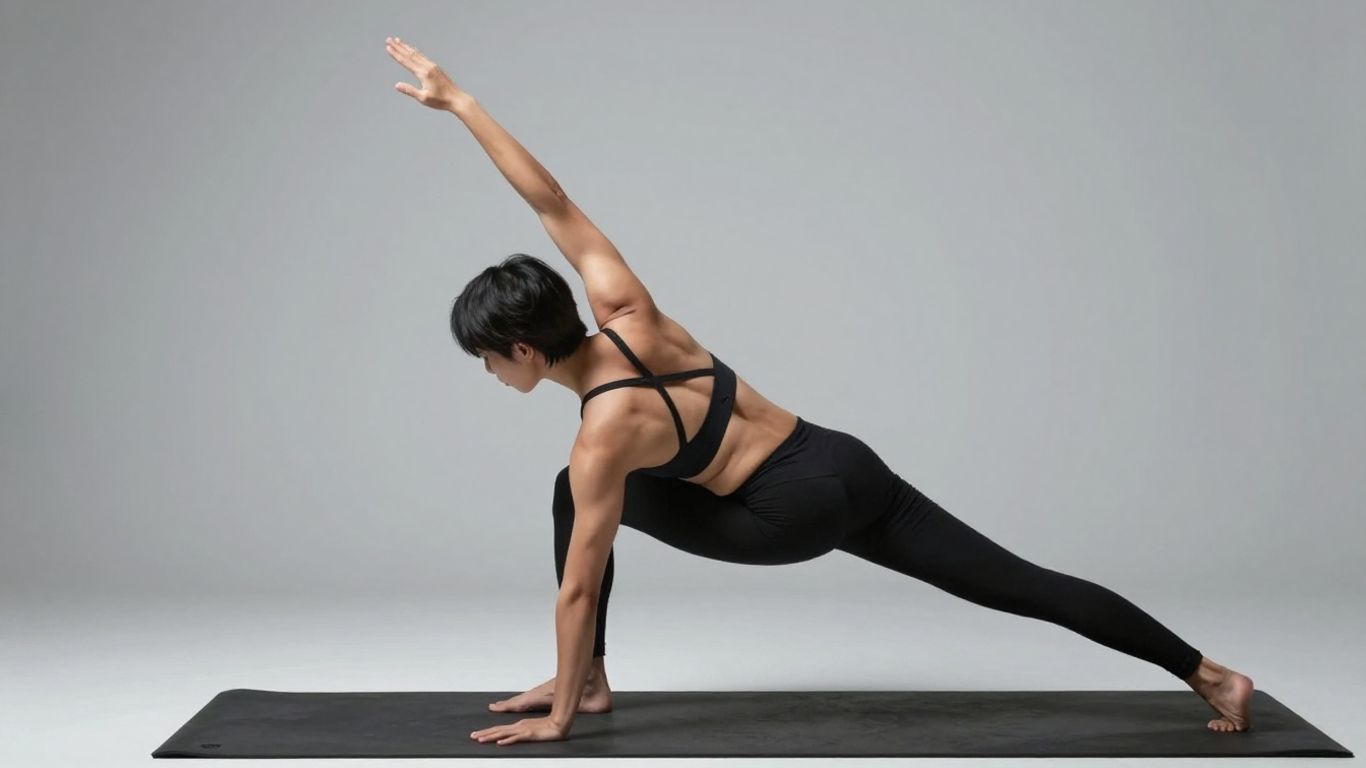
The 90 Lat Stretch is a great way to open up your upper back and shoulders. It's a simple stretch that doesn't need any equipment, making it perfect for doing at home or even at the office.
This stretch targets your latissimus dorsi muscles, which are the large muscles on the sides of your back. Tight lats can sometimes contribute to poor posture and even shoulder pain, so giving them some attention is a good idea.
Here's how to do it:
- Start by standing with your feet about hip-width apart. Let your arms hang down by your sides.
- Engage your core muscles to keep your spine stable. Think about pulling your shoulder blades down and back slightly.
- Now, reach one arm straight up towards the ceiling. As you reach up, lean your torso to the opposite side, feeling a stretch along the side of your body, from your hip all the way up to your armpit.
- Hold this position for about 20-30 seconds, breathing normally. You should feel a good stretch in your side and back.
- Slowly return to the starting position and repeat on the other side.
It's pretty straightforward, right? You can do this a few times a day, especially if you've been sitting for a long time or after a workout that involves your upper body.
Remember to focus on your breathing throughout the stretch. Don't force the stretch; just let your body relax into it. If you feel any sharp pain, ease up immediately.
8. Back Squat
The back squat is a foundational exercise for building lower body strength. It works your quads, hamstrings, and glutes all at once. Getting the form right is super important to avoid injuries and get the most out of the movement.
Here’s a quick rundown on how to do it:
- Setup: Place a barbell in a rack at about shoulder height. Step under the bar and position it across the top of your back, just below your neck. Grip the bar with your hands a bit wider than shoulder-width apart.
- Execution: Lift your chest up, then unrack the bar by stepping back a couple of paces. Stand with your feet about shoulder-width apart, toes pointed slightly out. Keep your back straight and core tight.
- The Descent: Slowly lower yourself down as if you're sitting into a chair. Keep your chest up and your back straight. Aim to get your thighs parallel to the floor, or even a bit lower if you can maintain good form.
- The Ascent: Push through your heels to stand back up to the starting position. Squeeze your glutes at the top.
It might take some practice to get the hang of it, especially if you're new to lifting weights. Don't be afraid to start with just the bar or even lighter weights to focus on your technique. You can find lots of great videos showing the back squat in action to help you visualize the movement. Downloadable exercise clips can be really helpful for practicing at home.
Remember, consistency is key. Aim to incorporate back squats into your routine a couple of times a week, gradually increasing the weight as you get stronger. Listen to your body and don't push too hard too soon.
9. Anti-Rotation Reverse Lunge
The anti-rotation reverse lunge is a fantastic exercise for building core stability and improving balance. It really challenges your body to resist twisting while you move. This move is great for strengthening your glutes and quads too, but its main superpower is in how it makes your core work to keep you upright.
Here's how to do it:
- Starting Position: Stand with your feet about hip-width apart. Keep your hips level and your knees just slightly bent. You'll need a cable machine or resistance band set up at chest height, positioned to the side of your body.
- The Movement: Grab a handle or the band with both hands. Step backward into a reverse lunge, lowering your back knee towards the ground. As you lunge, actively resist the pull of the cable or band trying to twist your torso. Keep your core tight and your hips and shoulders square to the front.
- Return and Repeat: Push off your back foot to return to the starting position. Complete your reps on one side before switching to the other.
This exercise is pretty beginner-friendly, especially if you start with a lighter resistance. It targets your whole body in an integrated way, which is super efficient for building functional strength.
Don't rush through this one. The slower and more controlled you are, the more you'll get out of the anti-rotational aspect. Focus on keeping your body steady and preventing any unwanted twisting.
10. Asynchronous Waves
Asynchronous waves, often done with heavy ropes, are a fantastic way to build power and endurance. You're basically creating waves with the ropes, moving them up and down, or side to side, in a way that isn't perfectly in sync. This kind of movement really engages your core and shoulders.
The key is to keep the movement fluid and continuous. It's not just about moving the arms; it's a full-body effort that requires you to stabilize your torso while generating the wave motion. Think of it like trying to move water with the ropes – you want that ripple effect.
Here's a basic rundown of how to get started:
- Setup: Securely attach a heavy rope to an anchor point. Grab one end of the rope in each hand, palms facing down. Stand with your feet about shoulder-width apart, knees and hips slightly bent.
- Execution: Begin by lifting one arm, then the other, creating a wave motion. You can alternate arms, move them together, or even try side-to-side undulations. The goal is to keep the rope moving without letting it go slack.
- Focus: Concentrate on engaging your core muscles to control the movement and prevent your body from swaying too much. Your shoulders and arms will do the work of creating the waves, but your core is what keeps you stable.
This exercise is pretty advanced, so don't be discouraged if it feels tough at first. It takes practice to get the coordination down.
This type of training is great because it works multiple muscle groups at once. You're not just isolating one part of your body; you're getting a more integrated workout. It's a good way to add some variety to your routine and challenge yourself in a new way.
Wrapping It Up
So, there you have it. Finding the right exercise video doesn't have to be a huge chore. Whether you're looking for a quick 10-minute cardio blast, something to build strength, or even a whole plan to follow, there are tons of options out there. Remember to check out resources like the NHS Couch to 5K or Active 10 apps if you're into walking or running. The most important thing is just to get moving in a way that feels good for you. Don't overthink it, pick something that looks fun, and just press play. Your body and mind will thank you for it.
Frequently Asked Questions
How much exercise should I be doing each week?
It's a good idea for adults to get at least 150 minutes of moderate exercise every week. That's about 20 to 30 minutes each day. You should also try to do exercises that build strength and improve your balance at least two times a week.
Can I really get fit at home?
Absolutely! You don't need to go to a gym to get a great workout. There are many videos and apps available that let you exercise right in your own home. It's a convenient way to boost your fitness.
What's a good way to start exercising if I'm new to it?
If you're just starting out or getting back into exercise, a plan like the 'Couch to Fitness 9 Week Fitness Plan' is a fantastic option. It guides you through workouts at home, three times a week, at a pace that works for you.
Are there apps that can help me get more active?
Yes, there are! Apps like the 'NHS Couch to 5K' can help you start running, and the 'NHS Active 10' app is great for tracking and building up your daily walks. They make it easy to stay on track.
What kind of exercises are included in these plans?
The plans often include a variety of exercises. You might find quick cardio workouts to get your heart rate up, strengthening exercises to build muscle and balance, and stretching routines to help you cool down safely after your workout.
Do I need any special equipment for these home workouts?
Many home workouts are designed to require no equipment at all, making them super accessible. Some might suggest using things like resistance bands or barbells for specific exercises, but there are plenty of options available for every situation.


0 comments