










Looking for a way to spice up your fitness routine? Forget the same old treadmill grind. Trampoline workout exercises are here to make cardio fun again! These bouncy routines are easy on your joints but tough on calories, and honestly, they just feel good. Whether you've got a big backyard trampoline or a small rebounder for inside, you can get a great workout. Let's dive into some top moves that will have you jumping for joy while you get fit.
Key Takeaways
- Trampoline workout exercises offer a fun and engaging way to improve cardiovascular health and burn calories.
- These exercises are low-impact, making them gentler on joints compared to activities like running.
- A variety of moves, from basic bounces to tuck jumps, can be incorporated into a trampoline workout.
- Trampoline workouts can also help improve balance, coordination, and core strength.
- Incorporating trampoline exercises into your routine can boost mood and reduce stress due to the release of endorphins.
1. Basic Bounce
Let's start with the absolute foundation of any trampoline workout: the basic bounce. It might sound too simple to be effective, but don't underestimate it! This move is your go-to for warming up your body and getting your heart rate up gently. It's all about finding a steady rhythm.
To do it, just stand with your feet about hip-width apart on the trampoline mat. Keep a slight bend in your knees and let your arms hang naturally at your sides, or use them for a little balance. Now, gently push off the mat and land softly, absorbing the bounce. The key is to keep it controlled and consistent.
Here’s a quick breakdown:
- Posture: Stand tall with your core engaged.
- Movement: A gentle up-and-down motion, pushing off and landing softly.
- Breathing: Breathe naturally; don't hold your breath.
- Duration: Aim for 2-5 minutes to start.
This exercise is fantastic because it's incredibly low-impact, making it super easy on your joints. It's a great way to get comfortable with the feel of the trampoline and build a little stamina before moving on to more complex moves. Think of it as your personal warm-up routine before the real fun begins. It’s also a good way to improve your balance and coordination over time, which is a nice bonus.
Remember, consistency is more important than intensity when you're starting out. Focus on maintaining a smooth, even bounce. This builds the base for everything else you'll do on the trampoline.
This basic bounce is the first step in getting a good cardio session in. It’s a simple yet effective way to begin your fitness journey on the rebounder, and it’s a great starting point for beginner-friendly rebounding exercises.
2. Jumping Jacks
Alright, let's talk about jumping jacks on the trampoline. This is a classic for a reason, right? It gets your heart rate up fast and works your whole body. When you do them on a trampoline, it's a whole different ballgame compared to doing them on the floor. The bounce adds this extra layer of challenge, making you really focus on your balance and keeping everything stable. It's not just about moving your arms and legs; your core has to work overtime to keep you from wobbling all over the place.
This move is fantastic for boosting your cardiovascular health and burning calories. It's a great way to get a solid cardio workout without feeling like you're doing the same old thing. Plus, the impact is actually lower on your joints than on a hard surface, which is a nice bonus.
Here’s a quick breakdown of how to get the most out of them:
- Start with a basic bounce: Get a feel for the trampoline's spring. Keep your feet hip-width apart.
- Jump and spread: As you jump, spread your legs wider than hip-width and bring your arms up overhead. Think about reaching for the ceiling.
- Jump and bring it back: Jump again, bringing your legs back together and your arms down to your sides. Repeat.
- Control is key: Try to land softly each time. Don't just stomp down. Focus on controlled movements.
Remember, the trampoline adds an element of instability. This means your stabilizing muscles, especially in your core and ankles, are getting a serious workout too. It's a full-body engagement that you might not even realize is happening.
If you want to mix it up a bit, you can try holding light weights while doing jumping jacks, or even add a little punch with your arms. Just be mindful of your form. Doing these consistently can really help improve your stamina and coordination. It's a simple exercise that packs a punch when you're on a trampoline, making it a staple for any fun cardio session. You can find some great routines that incorporate jumping jacks into a full workout.
3. High Knees
Alright, let's talk about high knees on the trampoline. This move is a fantastic way to really get your heart rate up and work those abs. It’s like sprinting in place, but way more fun and with less impact on your joints.
To do them, you're basically going to bounce gently while bringing your knees up towards your chest, one after the other. Think about driving your knees up as high as you can with each bounce. Keep your core tight to help with stability – the trampoline can be a bit wobbly, so that core engagement is key.
Here’s a quick breakdown:
- Start with a basic, steady bounce.
- As you bounce, lift your right knee towards your chest.
- As your right foot lands, immediately lift your left knee.
- Continue alternating, aiming for height with each knee lift.
- Keep your arms pumping naturally to help with momentum.
This exercise is great for improving your cardiovascular fitness and also helps build strength in your legs and core. It's a pretty simple move to grasp, but doing it for a few minutes straight will definitely get you breathing hard. You can totally adjust the speed to match your fitness level. If you're just starting out, maybe focus on getting the form right with slower, controlled movements. As you get more comfortable, you can pick up the pace and really challenge yourself. It’s a solid addition to any trampoline cardio routine because it’s so effective at burning calories.
Remember, the goal is to keep moving and make it challenging but also enjoyable. Don't worry if your knees aren't touching your chest right away; focus on consistent effort and gradually increasing the height and speed as you get stronger. It's all about progress, not perfection.
4. Tuck Jumps
Alright, let's talk about tuck jumps. These are a bit more advanced than the basic bounce, but they pack a serious punch for your workout. The idea is simple: as you jump up, you pull your knees towards your chest, almost like you're trying to hug them. This explosive movement is fantastic for building power in your legs and glutes.
To get started with tuck jumps:
- Begin with a steady, controlled bounce to get your rhythm.
- On your next upward bounce, drive your knees up towards your chest, using your hands to help pull them if needed.
- Land softly back on the trampoline, absorbing the impact by bending your knees slightly.
- Immediately push off for your next jump.
It might take a few tries to get the coordination down, but don't get discouraged. It's a great way to really get your heart rate up and challenge your muscles in a new way. You'll feel this one in your quads and your core.
Tuck jumps are a brilliant way to add intensity to your trampoline session. They require a good amount of coordination and explosive power, making them a more challenging exercise. Focus on bringing those knees up high and landing with control to get the most benefit and avoid any strain.
If you're looking to really amp up your fitness routine, incorporating exercises like tuck jumps can make a big difference. They're a key part of many jumping fitness routines that aim for high-energy cardio.
5. Scissor Kicks
Alright, let's talk about scissor kicks on the trampoline. This move is pretty straightforward but really gets your legs and lower abs working. It's like a running motion, but you're doing it mid-air!
To get started, stand on the trampoline with your feet hip-width apart, ready for a gentle bounce. As you bounce, bring one leg forward and the other back, mimicking the motion of scissors opening and closing. Then, switch them – the leg that was forward goes back, and the one that was back comes forward. Keep alternating this leg movement with each bounce.
Here’s a quick breakdown:
- Start with a steady, controlled bounce.
- Alternate your legs forward and backward.
- Keep your core engaged to maintain balance.
- Focus on a smooth, fluid motion.
This exercise is fantastic for building leg strength and improving your coordination. Plus, it adds a nice challenge to your cardio routine without being too jarring on your joints, which is a big plus for low-impact exercise.
You might feel this one in your hamstrings and hip flexors. Try to keep your movements controlled rather than jerky. It’s not about speed, but about the steady rhythm and engaging those muscles.
Aim for about 30 seconds to a minute of continuous scissor kicks, then take a short break before repeating. You can also vary the intensity by bouncing higher or faster as you get more comfortable.
6. Butt Kicks
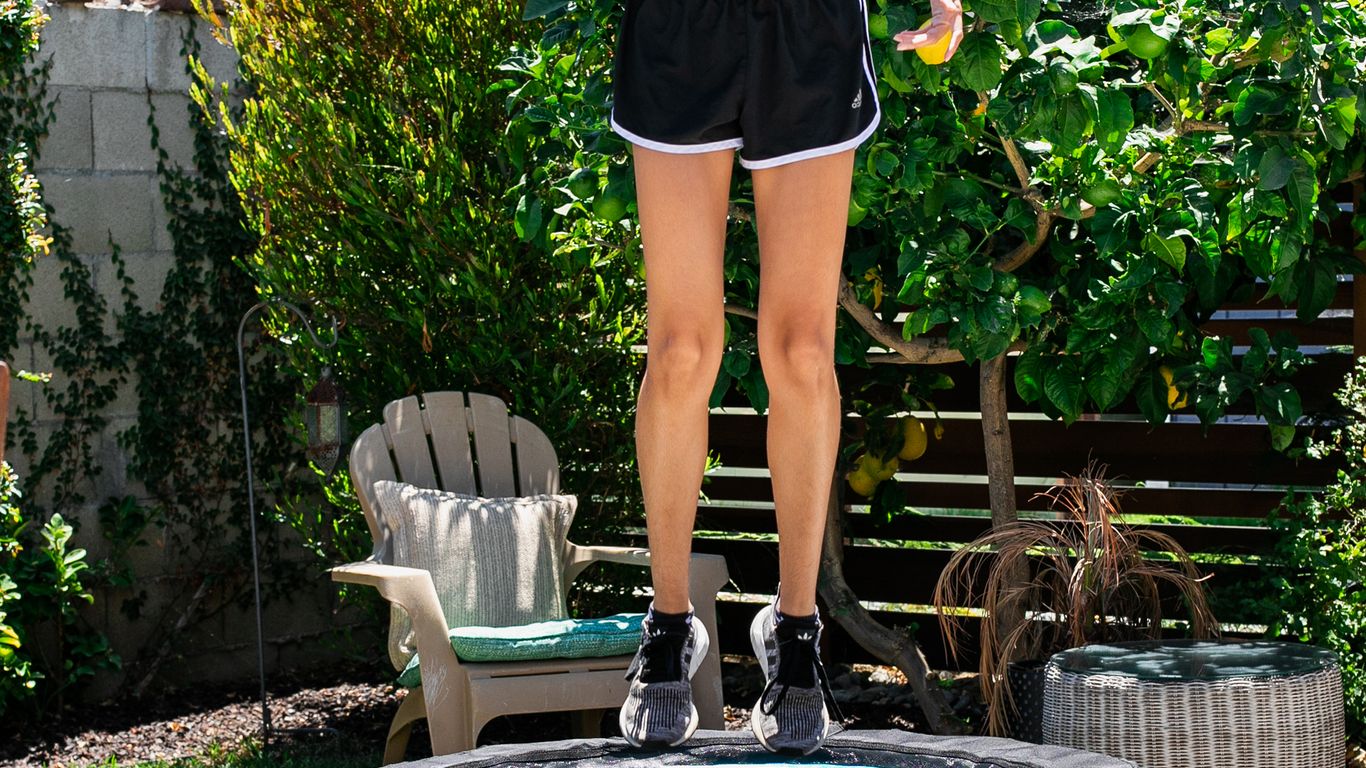
Alright, let's talk about Butt Kicks. This move is pretty straightforward but really gets those hamstrings and your heart working.
The goal here is to bring your heels up towards your glutes as you bounce. It’s a fantastic way to warm up your leg muscles and get your blood pumping.
Here’s how to do it:
- Start with a basic bounce, feet hip-width apart.
- As you bounce, consciously kick one heel up towards your backside.
- Alternate legs with each bounce, keeping a steady rhythm.
- Try to keep your upper body relatively upright.
This exercise is great for improving flexibility in the back of your thighs, which can often get tight from sitting around all day. Plus, it's a good calorie burner, contributing to overall fitness. It’s a simple addition that makes a big difference in your cardio routine. Remember, consistency is key when you're trying to build up your fitness levels.
Don't worry if you can't get your heels all the way to your glutes at first. Just focus on the motion and gradually increase the range of motion as you get more comfortable. It's all about progress, not perfection.
Butt kicks are a solid choice for anyone looking to add a bit more intensity to their trampoline session without needing complex coordination. It's a move that feels good and does good for your body, helping you get closer to your fitness goals.
7. Side-To-Side Hops
Ready to work those outer thighs and get your heart rate up a bit more? Side-to-side hops are a fantastic way to do just that. They're pretty straightforward but surprisingly effective for building agility and improving your balance.
To do them, stand with your feet together in the center of the trampoline. Give a little bounce, and as you come down, push off to your left, landing with your feet together on the left side of the mat. Immediately bounce again and push off to your right, landing on the right side. Keep this motion going, hopping from one side to the other.
The key is to keep your core engaged and your landings controlled. Don't just flop down; absorb the impact by bending your knees slightly. This exercise really targets those smaller muscles around your hips and legs that you might not usually think about.
Here’s a quick breakdown:
- Start with feet together in the middle.
- Bounce and push off to one side, landing softly.
- Immediately bounce and push off to the other side.
- Repeat, aiming for a steady rhythm.
It might seem simple, but try doing these for a full minute. You'll feel a nice burn in your legs and notice how much your coordination improves. It's a great way to add some lateral movement into your routine, which is often missing in standard cardio. This kind of movement can really help with overall athletic performance.
These hops are excellent for improving your ability to change direction quickly, which is useful not just for sports but for everyday activities too. Think about it – how often do you need to quickly step out of the way of something? This exercise trains that reaction.
As you get more comfortable, you can increase the speed or even add a small jump at the end of each hop to make it more challenging. Just remember to listen to your body and keep those landings soft to protect your joints.
8. Squat Jumps
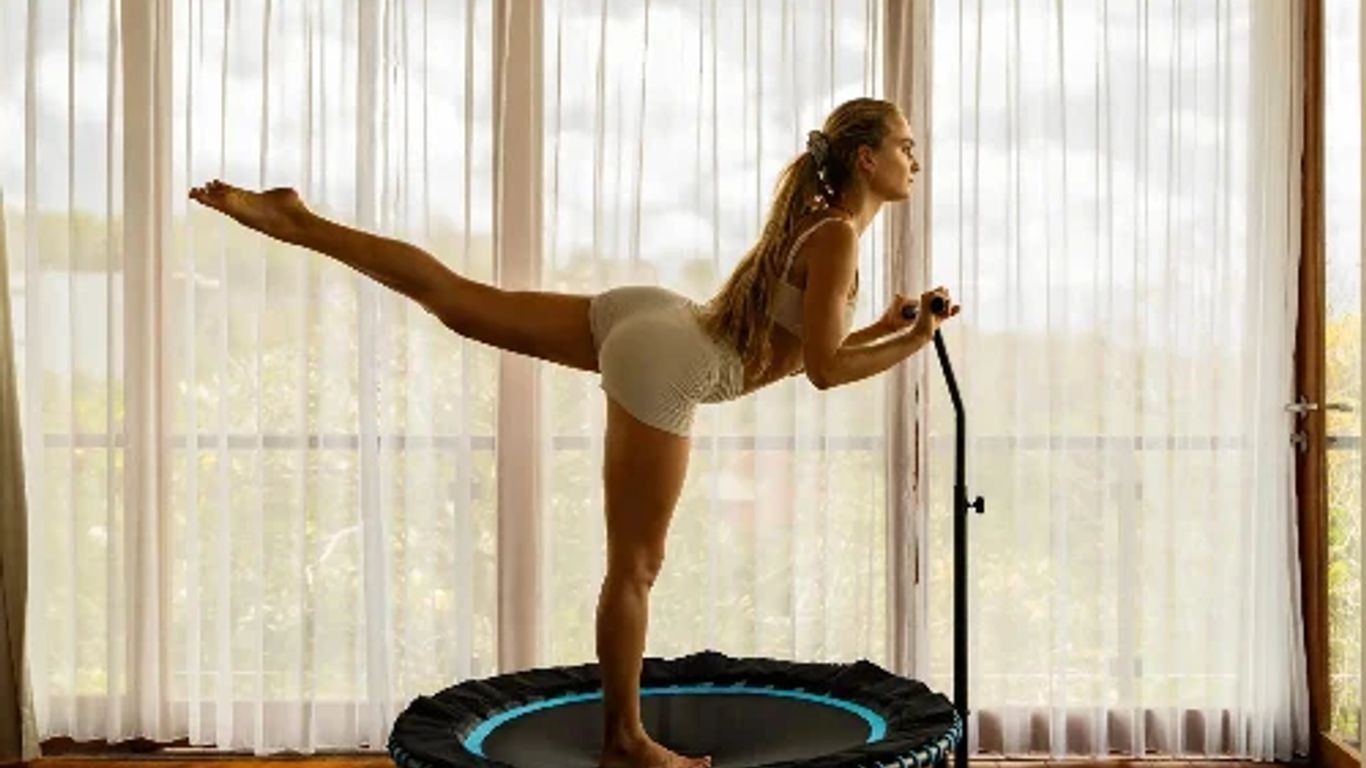
Alright, let's talk about squat jumps on the trampoline. This move is fantastic for building lower body strength and getting that heart rate up. It’s basically taking a regular squat and adding a powerful jump to it.
Here’s how to do them:
- Start with your feet about shoulder-width apart, just like you would for a normal squat.
- Lower your hips down as if you're sitting in a chair, keeping your chest up and your back straight.
- From the bottom of the squat, explode upwards into a jump. Really push off the trampoline surface.
- As you land, immediately go back into the squat position. Try to land softly and controlled, ready for the next jump.
The key is to make each jump powerful and each landing controlled. It’s a great way to work your quads, hamstrings, and glutes all at once. Plus, the trampoline makes it a bit easier on your joints than doing these on the floor, which is a nice bonus.
Remember, consistency is more important than intensity when you're starting out. Focus on getting the form right before you try to jump super high or do a ton of reps. It's better to do fewer good ones than many sloppy ones that could lead to a tweaked ankle.
These are pretty intense, so don't overdo it when you first try them. Maybe start with 3 sets of 8-10 reps and see how you feel. You can always add more as you get stronger. It’s a solid exercise for improving balance and coordination and really gets your legs burning in a good way.
9. Twists
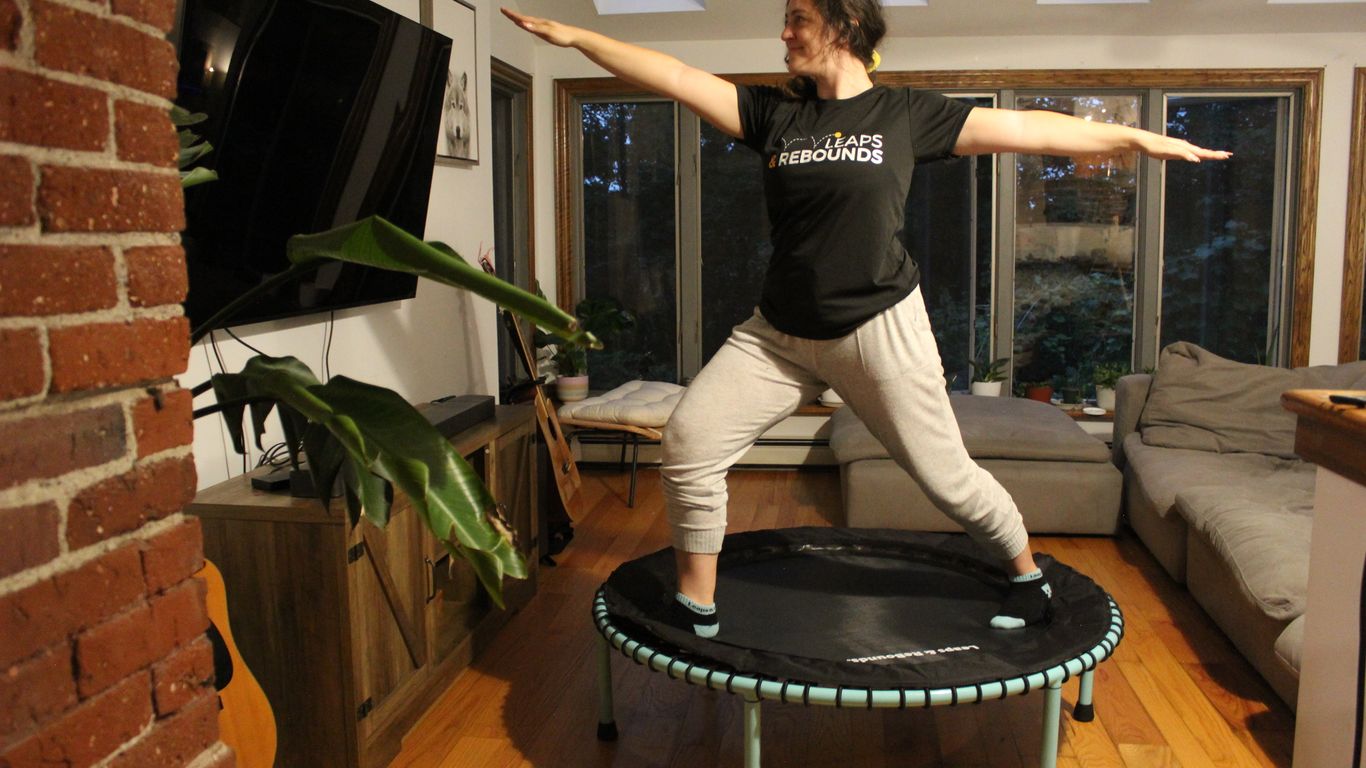
Ready to work those sides? Twists are a fantastic way to engage your core muscles, especially those often-neglected obliques, while keeping your heart rate up. It’s not just about spinning your torso; it’s about controlled movement that adds a whole new dimension to your bounce.
This exercise is great for improving your core strength and adding a bit of rotational power.
Here’s how to get started:
- Basic Twist: Begin with a gentle bounce, feet hip-width apart. As you bounce, gently twist your upper body to one side, then to the other. Keep your hips relatively stable and focus the rotation in your waist.
- Knee Twist: For a bit more intensity, try lifting one knee as you twist. So, as you twist to the right, lift your left knee, and vice versa. This adds a coordination challenge and works your legs too.
- Arm Swing Twist: Add arm movements to make it more dynamic. As you twist your torso to the right, swing your left arm across your body, and as you twist left, swing your right arm. It feels a bit like you're conducting an orchestra!
Remember to keep your movements controlled. You're not trying to whip your body around; it's more of a deliberate turn. This move is a great addition to any trampoline cardio routine and helps build a strong, stable midsection.
Twists on the trampoline are more than just a fun way to spice up your workout. They actively target muscles that help with balance and everyday movements, like reaching for something or turning to look behind you. Plus, the added core engagement means you're getting a more complete workout with every bounce.
10. Dance Routines
Ready to really let loose? Dance routines on a mini-trampoline are where the fun truly kicks into high gear. Forget just bouncing; we're talking about moving your whole body to the rhythm of your favorite tunes. It’s less about perfect choreography and more about feeling the music and letting your body respond. This is your chance to freestyle, get creative, and turn your workout into a party.
The beauty of dance routines is their adaptability – you can make them as simple or as complex as you like. Start with basic bounces and add in arm movements, hip swings, or even a little shimmy. As you get more comfortable, you can incorporate steps from other exercises we've covered, like high knees or twists, all while keeping the beat. It’s a fantastic way to boost your cardiovascular health without feeling like you're doing the same old thing.
Here’s a simple way to get started:
- Pick your playlist: Choose music that makes you want to move. Upbeat pop, energetic Latin music, or classic disco – whatever gets you going.
- Start with a basic bounce: Get a feel for the rhythm and the trampoline surface.
- Add arm movements: Swing your arms, clap to the beat, or do some simple arm waves.
- Incorporate footwork: Try stepping side-to-side, doing small kicks, or even mimicking dance steps you know.
- Don't be afraid to move your hips and torso: Add some sway and twists to really get your core involved.
Think of it like a mini dance party for one. You can even try following along with some online videos for inspiration, like a 20-minute rebounder dance workout that mixes intervals with music. It’s a great way to discover new moves and keep your routine fresh.
Remember, the goal here is enjoyment and movement. If you mess up a step, just laugh it off and keep going. The more you move and groove, the more calories you'll burn and the better you'll feel. It's a win-win!
This approach is perfect for anyone looking to add a dose of joy to their fitness. You can even aim for a 10-minute mini-trampoline workout that gets your heart rate up, all while dancing.
Ready to spice up your fitness routine? Section 10 dives into fun dance routines you can do right on your rebounder. Get ready to move and groove! For more workout ideas and to find the perfect mini trampoline for your home gym, visit our website today!
Ready to Bounce Your Way to Fitness?
So there you have it! Trampoline workouts are a seriously fun way to get your heart pumping and your body moving. Whether you're trying out some dance moves, getting your core engaged, or just doing some good old-fashioned jumping jacks, you're giving your body a great workout without feeling like you're stuck in a boring gym routine. Remember, the best exercise is the one you'll actually stick with, and trampolining definitely makes fitness feel more like play. So grab your mini trampoline or head to a class, and start bouncing your way to a healthier, happier you. You might just surprise yourself with how much you enjoy it!
Frequently Asked Questions
Is jumping on a trampoline good for beginners?
Absolutely! Trampoline workouts are great for everyone, no matter your fitness level. If you're new to it, start with simple bounces to get the hang of it. As you get more comfortable, you can try more exciting moves. It's a fun way to get moving without being too hard on your body.
What are the main benefits of trampoline exercises?
Bouncing on a trampoline is a fantastic workout! It really gets your heart pumping, which is great for your heart health. It also helps make your muscles stronger, improves your balance and how coordinated you are, and even makes you feel happier by releasing good vibes in your brain. Plus, it's a low-impact way to exercise, meaning it's easier on your joints than running on hard ground.
Can trampoline workouts help me lose weight?
Yes, definitely! Jumping on a trampoline burns a lot of calories, similar to running, but it's often more enjoyable. By combining different bouncing moves, you can create a workout that helps boost your metabolism and supports your weight loss goals. It's a fun way to sweat and see results.
What kind of equipment do I need for a trampoline workout?
The main thing you need is a trampoline! You can use a larger outdoor one or a smaller mini trampoline, also called a rebounder, which is perfect for indoor workouts. Some people like to use light weights or resistance bands for extra challenge, but they aren't necessary to get a great workout.
How often should I do trampoline workouts?
For the best results, aiming for 3 to 4 trampoline workouts each week is a good idea. You can adjust this based on how you feel and what your personal fitness goals are. The most important thing is to find a rhythm that works for you and helps you stay consistent.
Are there any safety tips I should know?
Safety first! Always warm up your body before you start jumping and cool down afterward. Make sure your trampoline is on a flat, steady surface and is in good shape. Pay attention to your body, and if something feels uncomfortable, try a different move or take a break. Wearing supportive shoes or going barefoot can also help with grip.


0 comments